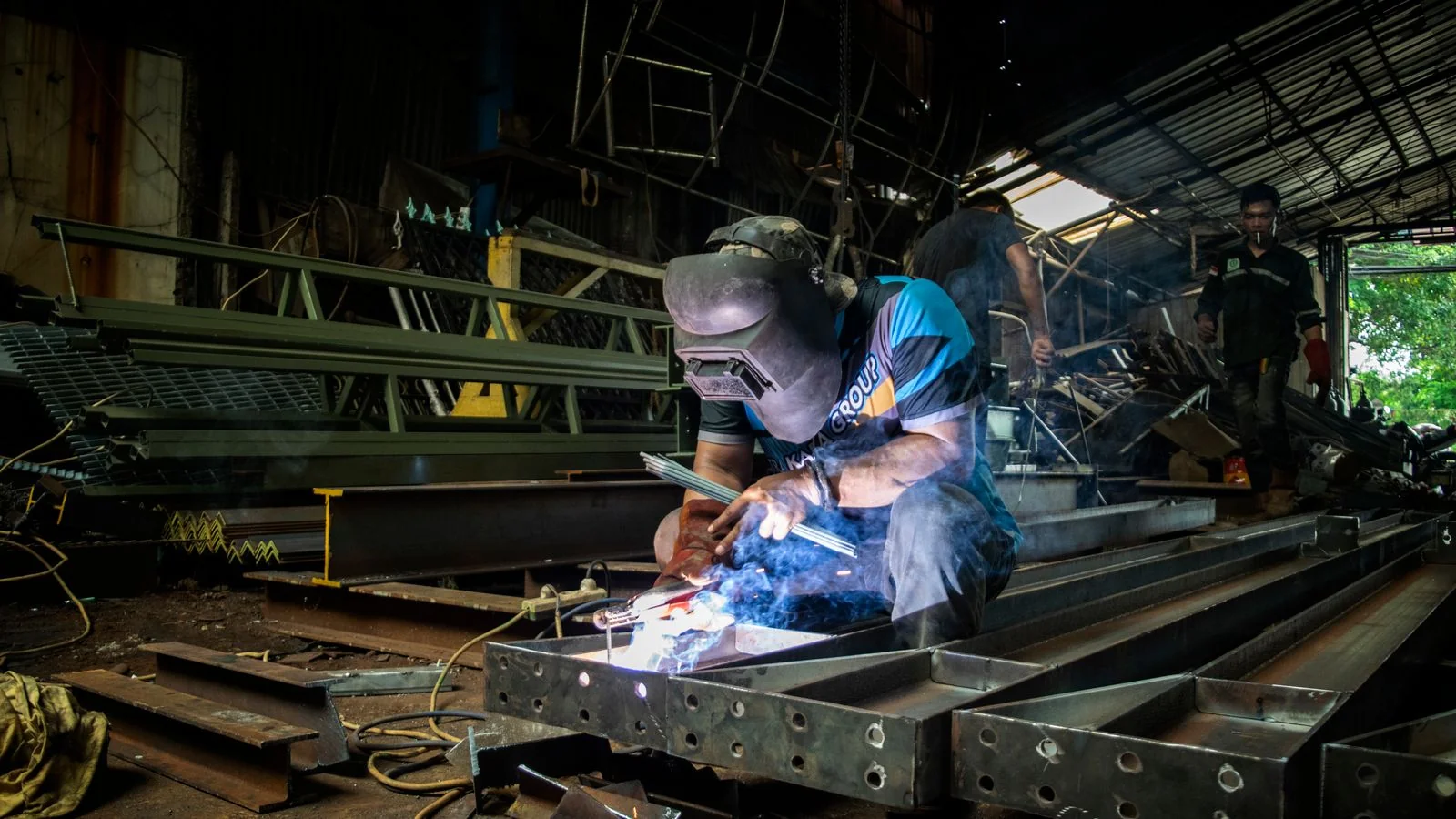
A regional business reporter opens their inbox to sixty pitches. Fifty-eight are thinly veiled ads: a new logo, a routine hire, a shop that wants free advertising dressed up as news. The reporter deletes them without finishing the subject line. Then one stands out. A local welding shop owner offers to explain why the county’s aging bridges keep failing inspection, what it would actually take to fix them, and why there are not enough certified welders left to do the work. That one gets a reply, because it is not an ad. It is a story the reporter already wanted to tell, with an expert attached.
That is the entire difference between the shops that get covered and the ones that never do. Learning how to get press for welding shops is not about having bigger news. It is about connecting the expertise you already have to the stories journalists are already chasing. Your shop sits on top of three subjects the press covers constantly, infrastructure safety, the skilled-trades shortage, and local manufacturing, and most owners never realize it. Here is how to turn that into coverage.
Your welding shop is more newsworthy than you think
Owners dismiss the idea of press because they measure their news against the wrong yardstick. A new piece of equipment or a company anniversary is not news to anyone outside the shop, and pitching it as such is what gets pitches deleted. But that is not the only kind of story you can offer. The moment you stop thinking like an advertiser and start thinking like a source, the newsworthiness appears.
Reporters need experts. Every story about a bridge closure, a building collapse somewhere in the country, a manufacturing revival, or a trades-shortage crisis needs someone who can explain the technical reality in plain language, and a certified welder is exactly that person. You are not asking the reporter to promote you. You are offering to make their story better, more accurate, and more local. That reframe, from advertiser to expert source, is the foundation everything else in getting press for welding shops is built on.
It helps to understand how a reporter’s day actually works. They are under constant deadline pressure, expected to produce accurate stories fast, and perpetually short of credible experts who will return a call and explain something clearly. A local welder who can translate a technical subject into plain English, on short notice, is not a nuisance to them. They are a gift. Once a reporter learns you are reliable, quotable, and generous with your time, they come back to you again and again, and they mention your shop each time they do. That is the quiet engine of press: not a single lucky hit, but becoming the trusted go-to source a journalist keeps in their contacts. Every part of the approach that follows is really about earning and keeping that spot.

The Failure-Point Pitch
Here is the model that makes welding genuinely newsworthy. The public does not care about welds until something breaks, and things that break are exactly what reporters cover. I call the strongest approach the Failure-Point Pitch: you connect your expertise to the points of failure the public already worries about, aging infrastructure, structural safety, the shortage of skilled hands to maintain it all, and offer yourself as the expert who can explain the risk and the fix.
The Failure-Point Pitch works because it attaches your knowledge to an existing anxiety and an existing news beat. A reporter has no reason to write about your good welds. They have every reason to write about why the local overpass is deteriorating, whether the region has enough welders to maintain its factories, or what a recent structural failure in the news means for buildings closer to home, and you are the credible local voice for all of it. Pitching from the failure point, rather than from your shop’s accomplishments, is what turns a deleted email into a callback. It is the difference between “look at us” and “here is a story your readers need, and I can help you tell it.”
Five angles that get a welding shop covered
Working from the Failure-Point Pitch, five angles reliably earn coverage. The first is local infrastructure: offer expert commentary on the condition of nearby bridges, roads, and public structures, and what maintaining them really requires. The second is the skilled-trades shortage, a story every outlet is covering, where you can speak to how hard it is to find certified welders and what it means for the local economy. The third is an unusual or large project, a striking custom fabrication, a piece of public art, a major structural job, something with visual drama and a human story behind it.
The fourth angle is safety and failure expertise, where you comment on incidents in the news and explain, calmly and accurately, what went wrong and how proper welding prevents it. The fifth is the human-interest story, the veteran who found a second career in welding, the family shop passing to a new generation, the apprentice program bringing young people into the trade. Each of these gives a reporter a real story with you as the credible center of it. Notice that none of them lead with your services. They lead with something the audience cares about, and your shop rides along as the expert, which is precisely how getting press for welding shops actually works.
The skilled-trades shortage angle deserves special emphasis, because it is close to a guaranteed yes right now. Newsrooms everywhere are running stories on the vanishing pipeline of skilled workers, the aging workforce, and the scramble to fill jobs that pay well but sit empty. As a welding shop owner, you live this story every day, and you can speak to it with authority no reporter can get from a press release: how hard it is to find certified welders, what it means for local manufacturing and infrastructure, what draws young people into the trade or keeps them away. If you also run or support an apprenticeship, you have a ready-made human-interest hook layered on top. Pitching yourself as a local voice on the trades shortage connects you to a national story with a local face, which is exactly the combination editors are looking for.
How do you actually reach a journalist?
Having a good angle is half the job. Getting it to the right person is the other half. Do not blast a generic press release to a masthead’s info address. Identify the specific reporter who covers your topic, the business writer, the local infrastructure beat, the trades or manufacturing reporter, by reading recent articles and noting who wrote them. A pitch to the right individual, referencing something they actually wrote, lands where a mass email dies.
Timing matters too. The Failure-Point Pitch is strongest when there is a news hook: a bridge closure, a published inspection report, a national incident that makes your local angle urgent. When the topic is already in the news, a reporter needs an expert fast, and the owner who reaches out that day with a clear, relevant offer often gets quoted within hours. Watch your local news for these openings and be ready to move when one appears, because a timely, relevant pitch is worth ten sent into a quiet news cycle. Reaching the right reporter at the right moment is where most efforts to get press for welding shops actually succeed or fail.
Write a pitch an editor opens
The pitch itself has to survive a busy inbox, which means it must be short, specific, and about the reader’s story rather than your shop. Lead your subject line with the story, not your company name: something like “Local welder can explain the county’s bridge-inspection failures” beats “Introducing Ray’s Welding” every time. In the first two sentences, state the story you are offering and why it matters now. Then, briefly, establish why you are the credible source, your certifications, your years in structural work, the relevant experience.
Keep the whole thing under a couple of short paragraphs, make your specific offer clear, whether that is a quote, an interview, or a site visit, and give them an easy way to reach you. Reporters work on deadlines and reward sources who make their job easier. A tight, relevant, generous pitch that hands them a ready story is the single most important tool in getting press for welding shops, and it is entirely within reach of an owner writing a careful email.
Expect a low response rate and do not read silence as failure. Most pitches go unanswered, even good ones, simply because the timing was off or the reporter was buried that week. That is normal, and it is not a reason to stop. The owners who earn coverage are the ones who pitch consistently, follow the local news for fresh hooks, and send a relevant offer whenever a story breaks in their lane. Treat it like prospecting for jobs: a steady, patient effort where most attempts go nowhere and the occasional yes pays for all of them. One strong placement can open doors for years, so a few unanswered emails are a cheap price. Keep a short list of the reporters who cover your topics, stay ready to move when the news gives you an opening, and let persistence do the work that a single perfect pitch never could.
Turn one placement into lasting authority
A single article is a beginning, not an end. When you earn coverage, put it to work. Add the outlet’s logo to your website as proof, share the piece across your channels, and reference it in future pitches, because coverage begets coverage once you can show you have been quoted before. One placement makes the next reporter more comfortable saying yes, and the credibility compounds.
The deeper payoff is in search and AI. Coverage on real news sites builds authoritative mentions and backlinks that lift your rankings, and it feeds the AI answer engines that weigh third-party credibility when they decide which expert to cite. A welder quoted in trusted local and industry press becomes a source those systems can name when someone asks who to trust, which extends the value of a single article far past the day it runs. That lasting payoff is the real reason to get press for welding shops in the first place. Press is not a one-time hit of attention. It is a durable authority asset you keep drawing on.
So here is the question to leave with. Your shop is sitting on top of three stories reporters are actively trying to tell right now, infrastructure that is aging, a trade that is short of hands, and the failures that make both urgent. You have the expertise those stories need. The only real question is whether you will pick up the phone and offer it, or keep waiting for a slow news day that never quite comes.