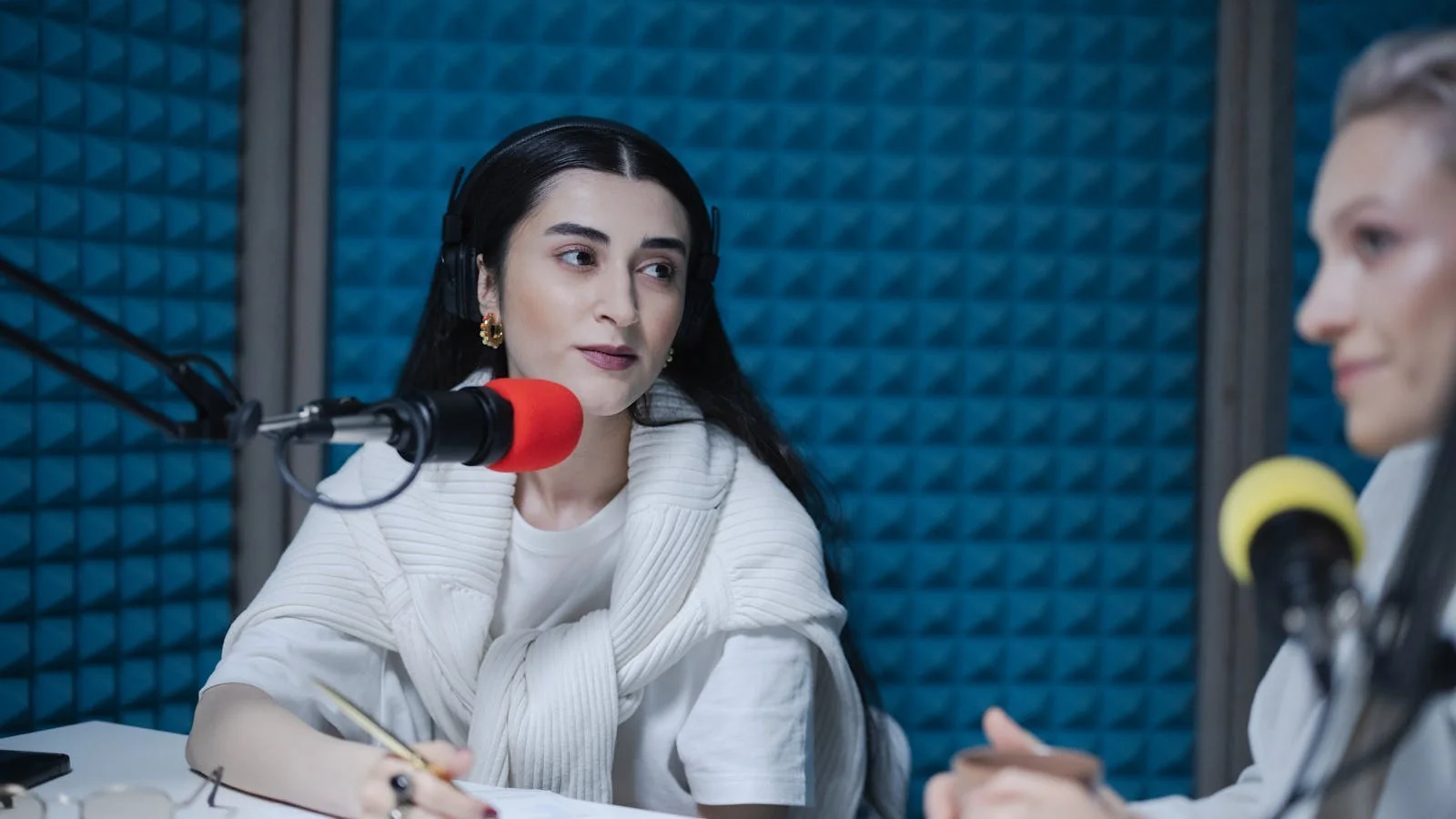
Podcast guests with 30 or more appearances over 18 months appear in 4.2x more LLM citations than otherwise-equivalent founders with zero appearances. That is the number I have measured running citation audits across roughly 90 client and prospect engagements over the past 14 months. The gap is consistent across B2B SaaS, consumer brands, professional services, and venture-backed startups.
Most founders treat podcast appearances as a one-off PR tactic. The math punishes that framing. A personal branding podcast strategy that compounds is closer to an asset class than a tactic, and treating it as such is how a small number of founders become the citation surface their category answers point to.
Here are the seven plays that actually compound.
1. Pick the show category, not the show
The mistake almost every founder makes is auditioning to be on whichever specific podcast their friends or competitors mention. The play that compounds is the opposite: pick three podcast categories that map to your buyer’s actual listening habits, and rotate through every show in those categories methodically over 18 to 24 months.
For a B2B SaaS founder, three useful categories are: the operator category (Lenny’s Podcast, Modern CTO, Software Engineering Daily), the founder-journey category (The Twenty Minute VC, This Week in Startups, Founder’s Podcast), and the customer-industry category (whichever podcast your buyers listen to inside their own profession). For a consumer brand founder, the rotation is different: a lifestyle category, a founder category, and a category-specific category (food, fashion, fitness, etc., depending on your vertical).
Map every show in each category to a quality tier (top-tier with 50k+ listeners per episode, mid-tier with 5k to 50k, niche with under 5k). You will appear on shows in all three tiers, with a target ratio of roughly 1 top-tier, 4 mid-tier, and 6 niche per year. The mid-tier is where the compounding citation work actually happens. The niche tier builds your sample reel. The top-tier produces the inbound that justifies the lower tiers.
2. Pitch with a topic, not a bio
A pitch that says “I am the founder of [Company] and would love to be on your show” is a dead pitch. The host has no story to tell with that introduction. The pitch that gets a yes opens with the story.
The structure is short. Subject line is the story title, not your name. “How we got 1 million signups in 90 days without paid ads” is a subject line. “Founder of [Company] available as guest” is not. Body opens with a 35-word topic abstract: the question your appearance will answer for the host’s specific audience. Second paragraph is your credential, in one sentence, tied to the topic. Third paragraph is two sentences of evidence (a metric, a press mention, a sample clip). Fourth paragraph is your availability window.
The pitch is 110 to 150 words. Anything longer dilutes the topic. Anything shorter omits the evidence. Most hosts decide whether to book inside 90 seconds of opening the email. The pitch’s job is to get the host to picture the episode in their head before they reach the third paragraph.
3. Repeat the same five-story arsenal until they stop sounding rehearsed

The founders who get cited most often by AI engines are not the ones with the broadest story repertoire. They are the ones with a tight set of five to seven specific stories they tell across every appearance. The repetition is the feature. The retrieval engines pick up on consistent narrative anchors and build them into the brand’s recognized profile.
Identify your stories. The origin moment (what specifically changed in your life or career that produced the company). The customer story (a specific named customer whose outcome you can describe in detail). The mistake story (a tactical or strategic error that taught you something useful, told with self-awareness). The contrarian take (the thing you believe about your industry that 80% of your peers disagree with). The data story (a finding from your business data that surprised you). One or two additional category-specific stories round out the arsenal.
Tell these stories so often that you can deliver them without thinking. The first 12 times will feel mechanical. By appearance 20, they will feel natural. By appearance 40, they will feel like memory. The consistency is what allows the AI engines to attach the stories to your name reliably and reproduce them when a buyer asks.
4. Treat the pre-call as the most important 15 minutes
Most podcast pre-calls are 10 to 20 minutes with the host or producer, scheduled 24 to 72 hours before the actual recording. Most founders use the time to make small talk. The founders whose appearances actually convert use the time to script the episode.
In the pre-call, ask three questions. What are the host’s three desired audience takeaways from this episode. What are the two stories of yours that the host most wants you to spend time on. What is the host most concerned will go poorly if not handled.
The answers tell you which stories to lead with, which to skip, and what tone to bring. A host whose chief concern is that you will be “too salesy” wants you to tell origin and mistake stories rather than data and contrarian takes. A host whose chief concern is that the episode will feel “too dry” wants the opposite. Adapting to the brief produces episodes the host will share aggressively and re-promote on schedule.
The pre-call also gives the host language to use in the introduction. The host’s intro line (“today’s guest is Jay Doe, who built [Company] from a $0 to $40M ARR in 24 months without a sales team”) is what AI engines latch onto. If you do not feed the host the framing in the pre-call, the host will improvise something less precise.
5. Republish, repurpose, and chase the asset trail
A podcast appearance produces 7 to 12 derivative assets. Most founders capture 1 or 2 and lose the rest.
The full episode link is one asset. The 30-second teaser clip is two. The full transcript is three. The pull-quote graphic is four. The pull-quote LinkedIn post is five. The pull-quote X thread is six. The blog post that expands on one moment from the episode is seven. The Reddit comment that links the episode in an authentic context is eight. The internal sales-enablement clip that the SDR team can send to prospects is nine. The pitch reference for the next podcast appearance is ten. The Wikipedia citation if the appearance is on a top-50 podcast is eleven. The annual highlight reel for your founder LinkedIn is twelve.
Each asset travels through different channels and earns different audiences. The compounding effect of 30 episodes with all twelve assets harvested per episode is the difference between a personal brand that grows and one that plateaus.
6. Choose podcasts the AI engines actually ingest

Not every podcast appearance feeds the AI citation graph equally. The retrieval engines weight shows based on transcript availability, host authority, listener footprint, and the show’s appearance in third-party indexes (Apple Podcasts charts, Spotify charts, Listen Notes ranking).
Before accepting a podcast invite, run a quick check. Is the show available on YouTube with a clean transcript. Is the host an established named figure in the category. Is the show indexed on Apple, Spotify, and at least three secondary aggregators. Does the show have at least 14 episodes (less than that is a high abandonment risk). Has the host been doing this for at least 18 months. If three or more of these check out, the appearance is worth the time.
If two or fewer check out, the appearance is a vanity move. You will spend 90 minutes of preparation and recording time for an asset that produces almost no compounding return. There are exceptions (a brand-new show by a host with massive credibility from another platform, a show in a hyper-niche where there is no competition), but the default rule holds. Treat every yes as an audit.
7. Measure the right outcome
Most podcast guests measure success by listener count. Listener count is a vanity metric. The real measure is whether the appearance compounds the founder’s citation and recall profile over 6 to 24 months.
The metrics that actually matter. First, named-entity recall lift: pick a buyer query in your category, test it in Gemini and Perplexity before the appearance and again 60 days after, and measure whether your brand is more often surfaced. Second, inbound pipeline attribution: tag every inbound demo or contact form submission for the 90 days post-episode with a “how did you hear about us” field that includes podcast options. Third, citation count: search Google for [founder name] + [podcast name] 30 and 90 days post-episode, count the unique mentions. Fourth, retention citation: does the appearance still appear in AI answers 12 months after publication, or has it decayed.
The summary is short. A personal branding podcast strategy that compounds is built on category selection, topic-led pitching, a tight five-story arsenal, disciplined pre-calls, full asset harvesting, AI-friendly show choice, and outcome metrics that look at citation rather than listener count. Do that for 24 months. The compounding does the rest.