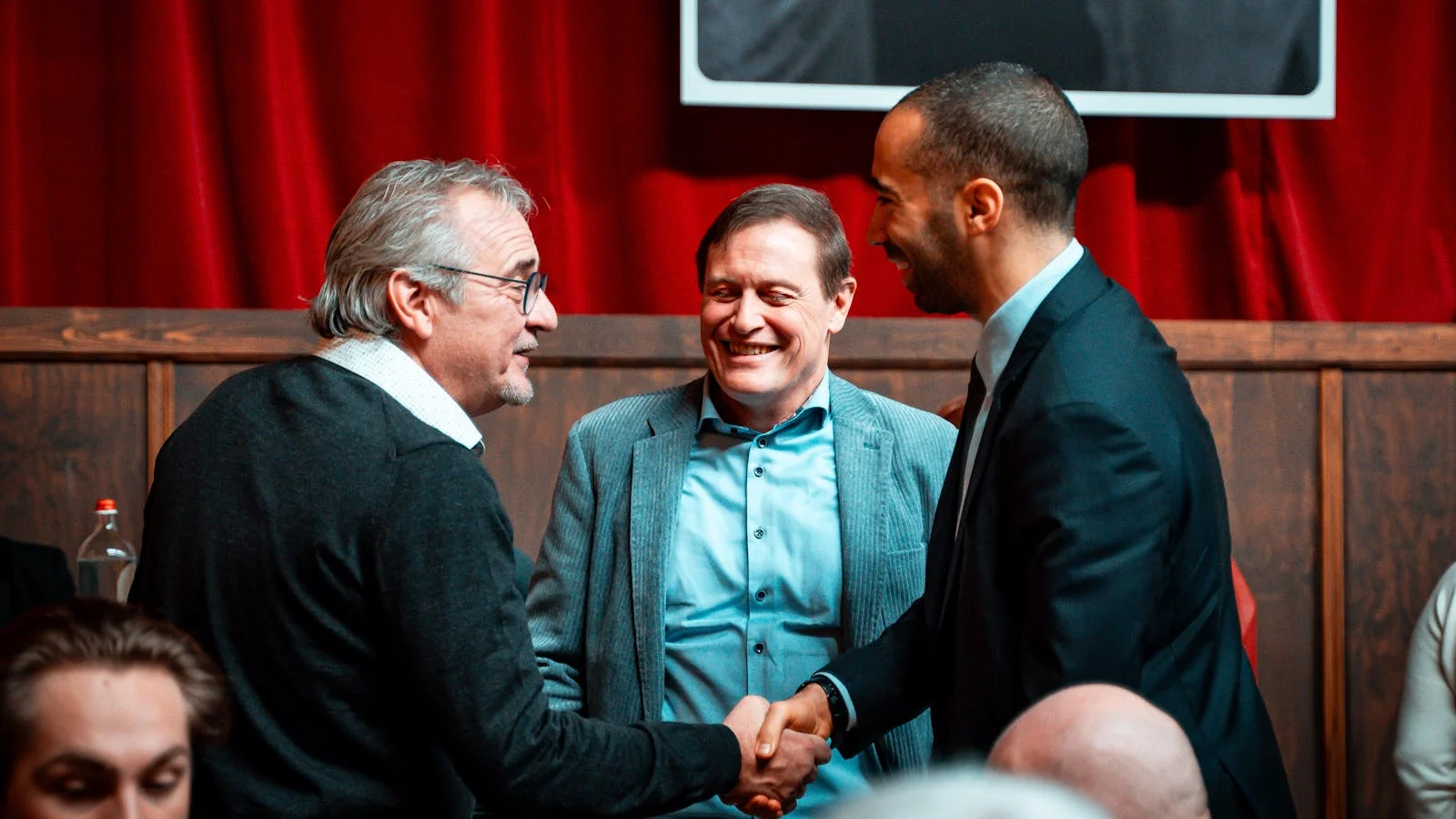
The networking that compounds is not the networking founders are taught to do. Conference cocktail hours produce business cards that go straight to the trash. LinkedIn connection sprees produce inboxes full of pitches nobody opens. Coffee chats with people who cannot help you produce nothing but a longer calendar. The networking that actually moves the needle on your fundraise, your hiring, and your first 50 customers looks completely different, and most founders do not learn it until five years into their second company. The five plays below are what it looks like.
This is not theoretical. The plays come from observing how the founders who consistently get the meeting, the term sheet, and the candidate actually spend their relationship budget. They follow the same patterns. The patterns are unsexy, slow, and almost entirely unrelated to attending more events.
Play 1: Build the asymmetric value list, not the contact list

Stop thinking about networking as a contact list. Start thinking about it as an asymmetric value list. The list is a working document of 30 to 80 people you can credibly help right now, in ways they would actually find useful, with no expectation of return.
The asymmetric framing matters because most founder networking inverts it. The default move is to identify people who could help you and to try to get on their calendar. This is the path that produces the lowest reply rates and the worst meetings, because everyone you are trying to reach is also being reached by 200 other founders in the same posture.
The asymmetric move is to identify people you can help and to actually help them. A founder who runs a Series A B2B SaaS company can introduce her seed investors to other Series A founders looking for board members. A founder with a strong engineering team can refer engineers she did not hire to companies actively hiring. A founder with a clean dataset on her market can share an anonymized cut of it with an industry reporter she has never met. These moves cost nothing and produce the kind of relationship debt that compounds.
The list gets updated quarterly. Each entry includes the person, the specific value you can offer them, and the date you last delivered it. After 18 months of running this list, your network is structurally different from the network of founders who attended 40 events in the same time. The people on your list know you as someone who delivers, not someone who asks.
Play 2: The 30/60/90 follow-up that nobody runs
After every meaningful first conversation, run the 30/60/90 follow-up. Most founders run the 30-day follow-up and then stop. The 60 and 90 day follow-ups are where the relationship actually moves from “we met once” to “I know this person.”
The 30-day note is the recap and the introduction. One paragraph thanking the person for the conversation by name, citing one specific thing from the conversation, and offering one piece of value. The value is usually an introduction to someone the person would benefit from meeting. This is your asymmetric value list at work.
The 60-day note is the proof point. Not “I just wanted to check in.” Specific: “you mentioned you were exploring [topic] when we met. I came across [specific resource, article, person, dataset] that connects to it. Sharing in case useful.” The 60-day note is the moment the relationship moves from one-off meeting to ongoing connection. Most founders skip this note because they think it is intrusive. It is the opposite. The recipient remembers you as someone who listened and acted, which is the rarest quality in the contact-list networking world.
The 90-day note is the ask, if you have one. Not “let’s catch up,” which is the founder equivalent of “we need to talk.” Specific: “I am working on [thing] and you came to mind because of [specific reason]. Would you be open to [specific small ask]?” The 90-day ask works because the relationship has been built through two prior asymmetric interactions. Without those, the ask reads as transactional and gets discounted.
The math: a founder who runs 30/60/90 on 40 new relationships per year ends the year with roughly 12 to 18 people who would take her call inside 24 hours. A founder who runs only the 30-day note on the same 40 relationships ends the year with roughly 2 to 4. The ratio matters more than the volume.
Play 3: Borrow distribution, do not build it
Most founder networking time gets spent trying to build personal distribution: a LinkedIn following, a Twitter presence, a newsletter. This works eventually for some founders, but it takes 3 to 5 years and most founders quit by month nine because the slope is too flat.
The faster move is to borrow distribution from people who already have it. Specifically: write guest pieces for established newsletters and podcasts where the audience is already your ICP. Lenny Rachitsky’s newsletter for product folks, Packy McCormick’s Not Boring for tech-curious investors, Ben Thompson’s Stratechery for strategic operators, Casey Newton’s Platformer for tech press, Sam Parr and Shaan Puri’s My First Million for entrepreneur audience. Each of these has guest spots, sponsor slots, or feature opportunities that are accessible to founders who have something specific to say.
The structural advantage of borrowed distribution: one feature in a newsletter with 80,000 subscribers in your ICP outperforms 18 months of organic Twitter growth, and the relationship with the newsletter owner becomes a long-term asset. The newsletter owner is also high-value on the asymmetric value list. You can introduce her to interesting founders, share early data with her under embargo, and become a recurring source for her future pieces. This is how some founders end up being quoted in every third piece in a specific publication; the relationship is built before the quoting starts.
The work to earn the guest slot is real. A pitch to Lenny’s Newsletter that says “I would love to write for you” gets nowhere. A pitch that says “I built X in Y company over Z timeline and here are the three counterintuitive findings nobody is writing about” gets a response. The pitch is itself an audition for how the writing would read.
Play 4: The dinner is the relationship surface
The single highest-impact networking format is a small dinner you host yourself, 6 to 10 people, in a private dining room at a restaurant where the food is good and the noise is manageable. The dinner has a theme that is not your company. The guests are chosen because they would benefit from meeting each other, not because they would benefit from meeting you.
Why this works: a curated dinner where the host has done the matching produces 6 to 9 conversations that would not have happened otherwise. The guests credit you with the introductions, and the credit compounds over years. The dinner format also extracts a different quality of conversation from the same people. A 90-second conference hallway chat reveals nothing. A 90-minute dinner conversation about a substantive topic reveals working concerns, recent failures, and emerging interests in a way no cocktail event can match.
The format is repeatable. The dinner happens quarterly. The guest list overlaps about 30% across dinners (a core of recurring relationships) and 70% rotates (new connections you are integrating). The cost is meaningful (typically $1,500 to $4,000 per dinner depending on the city), and the return is the warmest, most reliable network a founder can build.
The single piece of advice most underweighted by founders who try this format: do not pitch your company at the dinner. Not once. Not in the welcome remarks. Not in the closing toast. The guests already know what you do because you invited them. Pitching at your own dinner reads as a bait-and-switch and destroys the trust the dinner is structurally building. The pitch happens later, in 1:1 follow-ups, after the dinner has done its relational work.
Play 5: The “warm intro for a stranger” play

The hardest networking play and the one with the largest long-term return is making a warm introduction for a stranger who would benefit from your network, with no commercial benefit to you. A junior founder you met once who needs an introduction to a specific investor. A first-time author who needs an introduction to a podcast host. A career-pivot candidate who needs a warm intro to a hiring manager in your network.
The reason this works long-term is the multiplier effect. The stranger you helped becomes a permanent supporter. The person on the other end of the introduction (your existing relationship) sees you as someone who finds and routes value. Both sides talk about you to other people. The network grows in directions you did not plan for.
The behavioral pattern worth studying here is the way Patrick McKenzie (patio11) and Tyler Cowen have both publicly described running their networks. Both have written about deliberately spending a meaningful share of their relationship time on warm introductions for people they have weak ties to, specifically because the marginal return on those introductions is higher than the return on cultivating their existing strong ties. McKenzie has documented this in his writing about how he ended up advising the US government on pandemic response, and Cowen has documented it in his pieces on talent search. Both ended up with networks that produced disproportionately useful surface area because of the warm-intro-for-strangers play, not despite it.
The discipline this requires is saying yes to small asks from people you do not yet know well, and routing those asks productively. Most founders feel they cannot afford the time. The founders who reach a critical mass of network density find that they actually cannot afford not to, because the asks they will eventually need to make of their own network depend on having built the muscle.
If your next 90 days have to include only one of these plays, pick Play 2: the 30/60/90 follow-up on every meaningful conversation already on your calendar. Do nothing else differently. Run it for one quarter, count the warm replies, and the case for the rest of the plays will write itself.