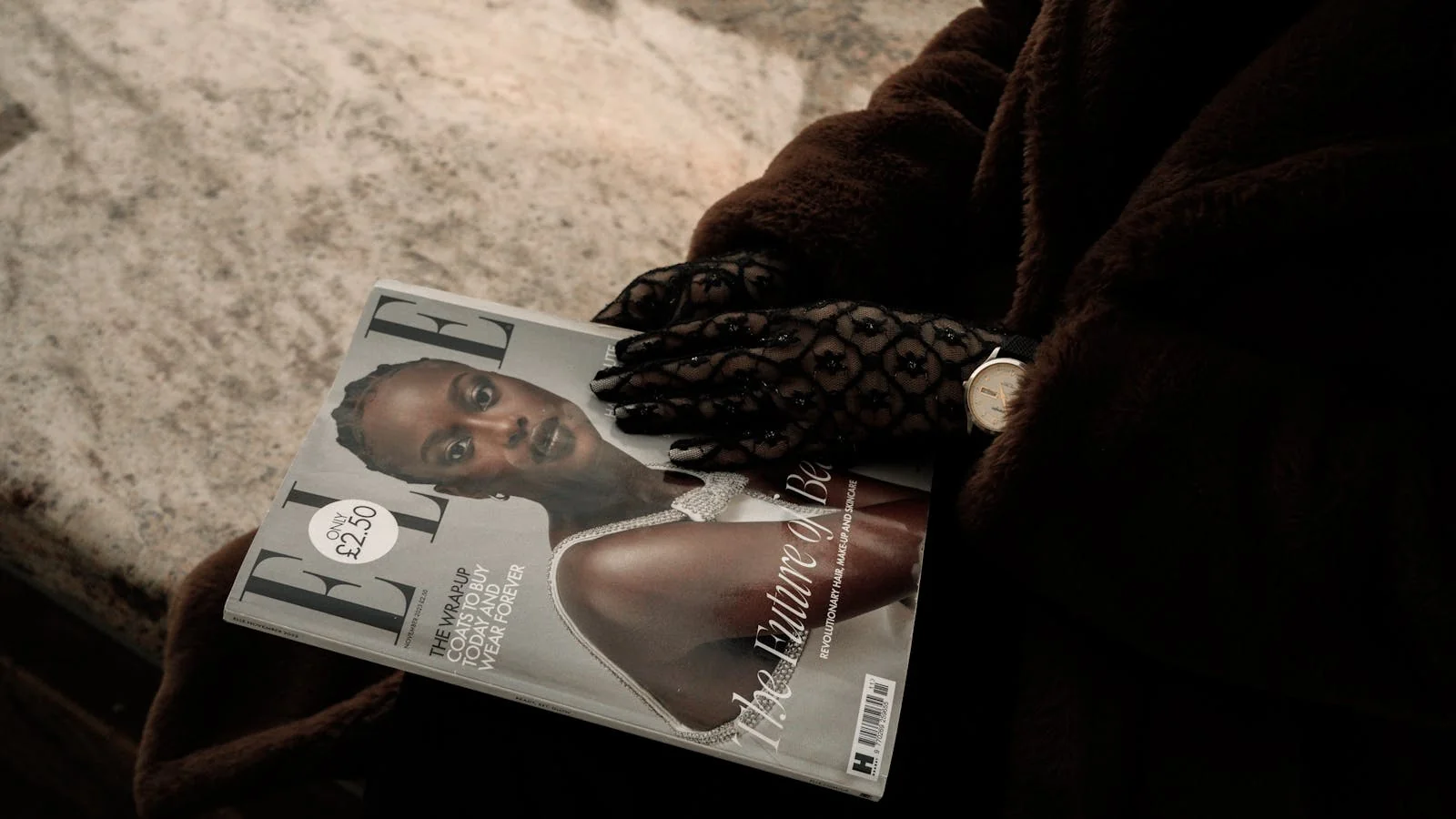
Hearst’s most recent published data on ELLE’s editorial operation indicated the magazine’s beauty, fashion, and culture desks collectively receive roughly 30,000 to 40,000 pitches across a typical quarter, and the working editors on those desks have a window of less than 90 seconds per pitch on the first pass. Most pitches die in the subject line. A small share survive to the first paragraph. A smaller share survive to a callback or coverage decision. The math is brutal and stable.
The four pitch patterns below are what survive at meaningfully higher rates than the average. They have been described publicly by ELLE editors past and present in various industry roundtables and Cherry Bombe interviews, by Anna Holmes, by Sophie Carbonari, and by working freelance writers who pitch the magazine consistently. They are not secrets. They are also not the patterns most brands actually use.
Why most ELLE pitches die before the first paragraph
The most common failure mode for an ELLE pitch is treating the magazine like a press release distribution channel. A subject line that reads “New collection launch from [brand name] arriving June 15” tells the editor exactly nothing she needs to know to open the email. There is no hook, no angle, no reason to spend 90 seconds reading further. The pitch is also indistinguishable from 200 other pitches landing in her inbox that morning.
The second failure mode is the cold pitch with no context for why this specific editor at this specific desk is the right recipient. ELLE has separate editors for beauty, fashion (subdivided into market editors by category), culture, features, accessories, weddings, and home. A pitch for a new fragrance sent to the features editor is a pitch that will not be forwarded. A pitch for a designer collaboration sent to the beauty director is dead on arrival. The relationship between the pitch and the desk has to be obvious in the first line.
The third failure mode is the missing visual. ELLE is a visual publication. Pitches without high-resolution images attached or linked in the first email get a much lower response rate because the editor cannot evaluate whether the story is visually executable in a magazine context. This is not optional. A pitch without four to eight editorial-quality images is incomplete.
The four patterns below assume none of these failure modes are present. The pitch has reached the desk, includes the visuals, and is being read past the subject line. The question is whether the angle survives the next 60 seconds.
Pattern 1: The cultural-moment angle

The first pattern that lands is a brand or product positioned inside a cultural moment ELLE is already covering. Not “we made a new sustainable handbag.” Specific: “we made a sustainable handbag from upcycled wedding-dress tulle, launching alongside the Met Gala’s circularity theme, with four named celebrities photographed wearing the bag on red carpets in the last 30 days.”
The pattern works because ELLE editors plan editorial calendars around cultural moments. Met Gala, NYFW, Coachella, Oscars season, awards season more broadly, election cycles, royal events, major celebrity book or album launches, the Olympics, Cannes. Each of these has a window where editors are explicitly seeking brand stories that connect to the moment, and pitches that arrive inside the window with a credible connection get prioritized.
The structural requirements: the cultural moment has to be on ELLE’s known editorial calendar (most of the moments above are), the brand’s connection to the moment has to be specific and verifiable (not a hypothetical alignment), and the lead time has to be appropriate. For print features tied to a moment, pitches should arrive 3 to 4 months before the issue date. For digital features, 2 to 6 weeks before the moment.
The mistake brands make under this pattern: trying to force a cultural-moment connection that doesn’t exist. An ELLE editor can tell the difference between a brand that genuinely intersects with the moment and a brand that is reverse-engineering the connection to get coverage. The forced version reads as opportunistic and damages the relationship for future legitimate pitches.
Pattern 2: The named-talent or named-collaboration story

The second pattern is the brand story that hinges on a specific named person or named collaboration. Not “we partnered with an influencer.” Specific: “we collaborated with [named talent] on a six-piece capsule, the talent’s first design venture, with the proceeds going to [named verifiable cause].” The pattern works because named-talent stories have built-in narrative structure and built-in social media amplification, which is part of how ELLE measures the digital pickup of its features.
The named talent does not have to be A-list. ELLE features specifically rising talent across music, film, sports, literature, activism, and design, and a thoughtful pitch about a partnership with a credibly rising figure can convert at higher rates than a pitch about a more famous person whose ELLE coverage has already been done multiple times. The freshness of the talent matters more than the size.
The structural requirements: the talent has to be actually contractually attached to the brand (not just a one-off appearance), the talent’s involvement has to be visible in the product or campaign (named credits, specific contributions), and the talent has to be willing to participate in the ELLE coverage (interview, photography, social posting). Brands that pitch a celebrity collaboration but cannot deliver the celebrity for the editorial process lose the story.
A subtler version of this pattern: the named-collaboration with another brand or institution that has cultural weight ELLE recognizes. A streetwear brand collaborating with a named museum on a capsule. A beauty brand collaborating with a named gallery on a launch event. A wedding designer collaborating with a named florist on a runway show. Each of these gives the editor a reason to write a story about a relationship rather than a product.
Pattern 3: The behind-the-business story
The third pattern is the operational story behind a brand that produces visible product output ELLE readers already know. The pitch is built around how the brand actually works, what its founder’s background is, what the production process involves, or what the brand’s economics look like. The product is the entry point. The business is the story.
This pattern has expanded meaningfully in the last five years because ELLE’s features and culture desks have invested in business-of-fashion and business-of-beauty coverage that competes with The Business of Fashion, Glossy, and the WSJ’s Style section. The behind-the-business pitch works when the brand has reached enough recognition that ELLE readers know the product, and when the founder or operator behind the brand is willing to be the subject of the piece rather than the spokesperson for the product.
The structural requirements: the brand has to have enough consumer recognition that ELLE readers will be interested in the operational story (a pre-launch brand does not qualify), the founder has to be available for interviews and photography, and the story has to have specific operational detail that distinguishes the brand from peers. Generic founder-story pitches (left a job in tech, started a beauty brand, the rest is history) get filtered. Specific founder-story pitches (third-generation perfumer from Grasse who left a job at a major fragrance house to revive a 1920s formula her grandmother had archived) get read.
Sophia Amoruso’s Nasty Gal, Christene Barberich’s Refinery29, Babba Rivera’s Ceremonia, Nadya Okamoto’s August, and Emi Jay each landed multiple features in ELLE during their key growth phases on variations of this pattern. The piece was about the founder’s working life and decisions. The product was the proof.
Pattern 4: The first-of-its-kind product or aesthetic claim
The fourth pattern is the brand or product story that makes a specific first-of-its-kind claim that ELLE can evaluate and report. Not “we are the most innovative skincare brand.” Specific: “we are launching the first FDA-cleared at-home microcurrent device under $400, with clinical data from a 12-week trial of 240 women published in a named dermatology journal.” The pattern works because first-of-its-kind claims are easy for editors to fact-check and produce defensible story angles that compete favorably with thin trend coverage.
The first-of-its-kind claim has to be defensible. ELLE’s beauty desk, in particular, has reporters who will check claims against the FDA’s 510(k) database, against published clinical literature, and against competing brand timelines. An overstated first-of-its-kind claim that turns out to be false gets the brand a fact-check call the editor will not forget. A well-documented first gets the brand a feature.
Adjacent versions of this pattern: the first-of-its-kind aesthetic position (the first major perfume brand to refuse any synthetic musks, with published ingredient sourcing for every component), the first-of-its-kind business model (the first ready-to-wear designer to commit publicly to one-size-fits-all pricing across the entire size range with published cost breakdowns), the first-of-its-kind retail format (the first beauty brand to operate a permanent showroom without commerce, with documented attendance and conversion data from a 12-month pilot).
The structural requirement under this pattern is the most universal: the claim has to be backed by something an editor can independently verify. The strongest first-of-its-kind pitches arrive with a one-page methodology document attached, written for editorial fact-checking rather than for consumers.
What to do this week
If your brand has not been featured in ELLE and you want to start the path, the first action is to map the editorial calendar against your actual story inventory. Most brands have one or two of the four patterns above latent in their operation and have not noticed. The cultural-moment pattern is the easiest entry for brands with relevant timing. The behind-the-business pattern is the most durable entry for brands with strong founder stories. The pitches that ultimately land are the ones where the angle was already true about the brand before the pitch was written. The editor’s job is to find that truth. Your job is to make it obvious.