Knowledge Graph Explorer FAQ
What is Google's Knowledge Graph?
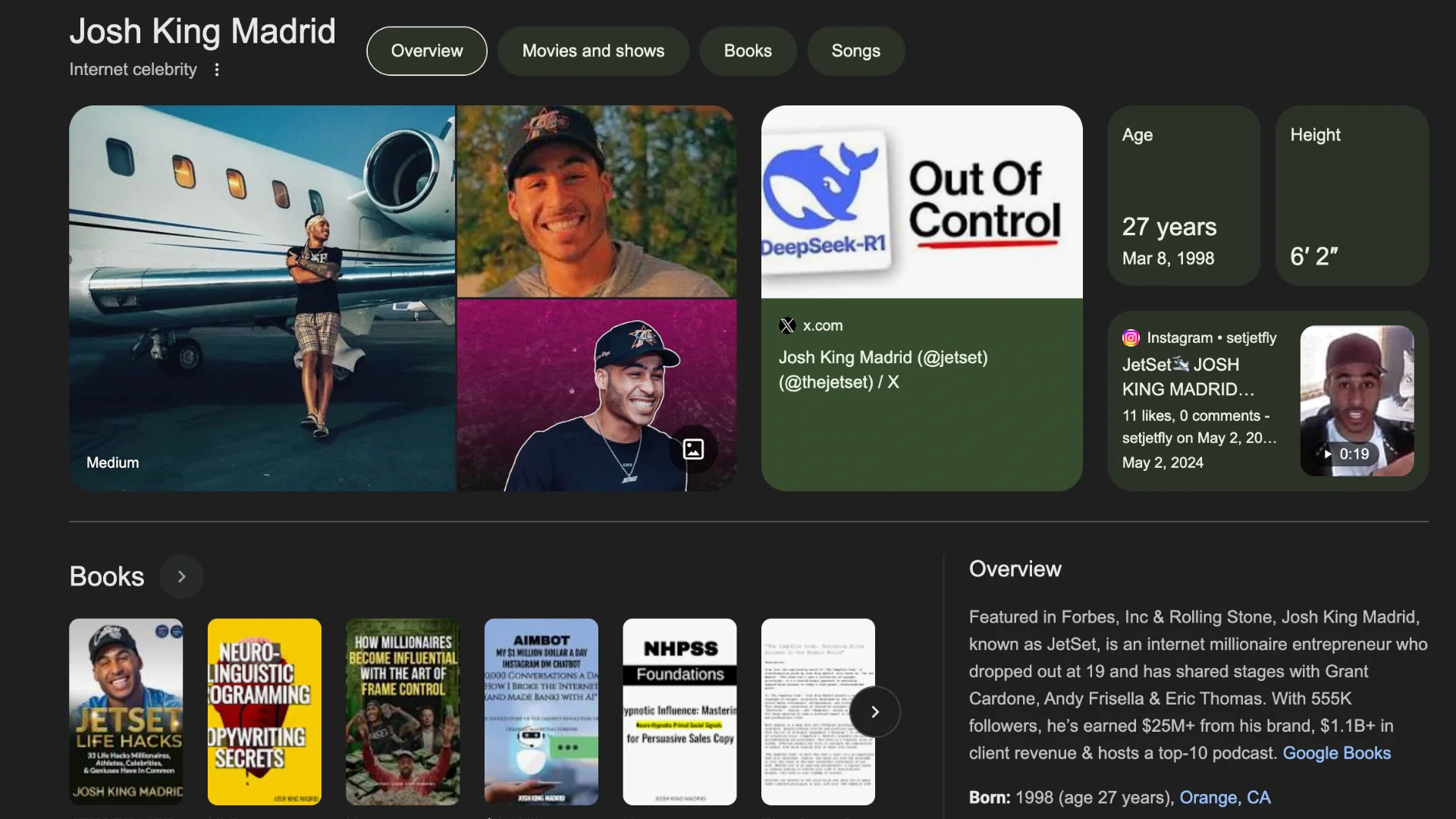
Google's database of people, companies, places and things, plus the facts that connect them. Google uses it to work out what a name refers to. The knowledge panel beside search results on desktop, and near the top on mobile, shows facts from one of those entities.
Does a Knowledge Graph entity mean I have a knowledge panel?
It means Google holds the record a panel is built from. Google still decides when to show the panel, and that depends on the search. Your report links to a Google search tied to your entity ID so you can see what Google shows for it.
Why doesn't my name show up?
Google creates entities for names it can confirm across independent sources, and most people and young companies don't have that footprint yet. News coverage, consistent profiles, structured data on your own site and a Wikidata item are the usual inputs. Google's public API can also miss entities, new ones most of all, so if you already see a panel when you search your name, trust that.
What is a Knowledge Graph ID?
Every entity carries a machine ID, such as /m/0dl567 or /g/11j866wb1q. IDs that start with /m/ come from Freebase, a database Google acquired in 2010 and later retired. IDs that start with /g/ were created by Google. Both work the same way.
Why do you ask for my email?
We email you a copy of the report. Your details also go to the Instant Press team, who may reach out if your results show gaps we can fix. The newsletter is a separate box you can untick.
How do I get a knowledge panel?
Give Google sources it trusts that agree about who you are: news articles about you, a website with Person or Organization schema, matching profiles on LinkedIn and Crunchbase, and a Wikidata item that cites your coverage. GoogleMe, our 90-day program, handles the press coverage, wiki pages and website for you.
Can I check a company or a competitor?
Yes. The explorer works for any person, company, brand or product. Enter the name the way people search for it.