
Smart speaker ownership just hit an all-time high, and the voice search industry that sold you on it has almost nothing to show for it. Edison Research’s Infinite Dial 2026 found that 39% of Americans aged 12 and older own a smart speaker, roughly 112 million people, up from 7% in 2017. Over the same stretch, the “optimize for voice search” playbook (long-tail question keywords, FAQ schema, a featured snippet for every query) quietly stopped producing anything a CFO would recognize as revenue.
Both things are true because the device won and the category lost. People talk to machines more than ever. They just are not “searching” in the ten-blue-links sense when they do it. They are asking a model for one answer, and in 2026 every major assistant, from Alexa+ to Gemini to the new Siri, is a large language model wearing a microphone. That changes which voice search statistics matter and what you should do about them.
The voice search statistics that hold up in 2026
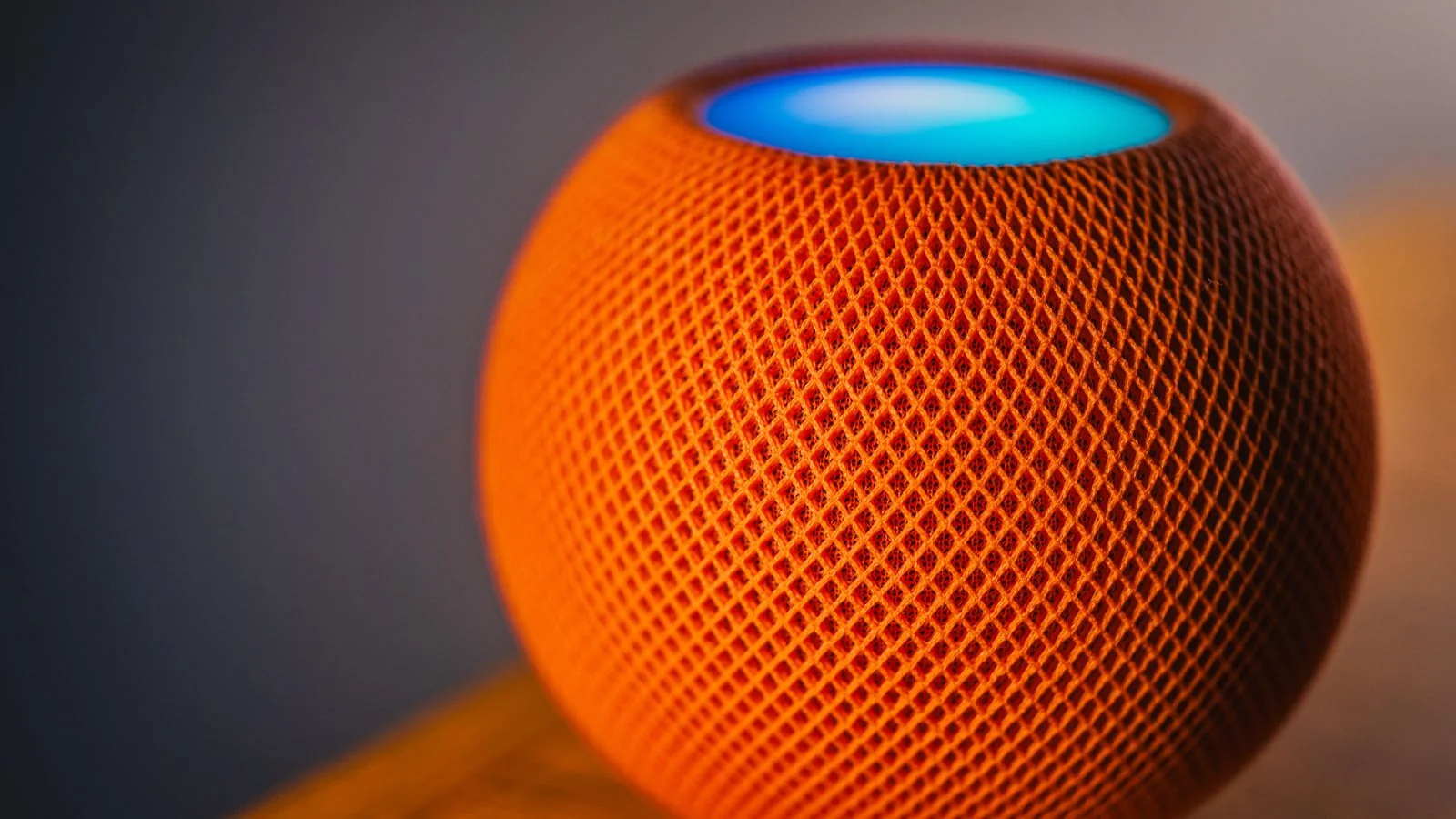
Most voice search statistics pages recycle the same dozen numbers from 2018. Here is what we could verify against a primary source this year, with the source and date attached so you can check every one.
| Statistic | Figure | Source and date |
|---|---|---|
| Americans 12+ who own a smart speaker | 39% (about 112 million) | Edison Research, Infinite Dial 2026 (fielded Jan. 2026) |
| Same measure one year earlier | 35% (about 101 million) | Edison Research, Infinite Dial 2025 |
| U.S. adults with a smart speaker | 35% | Pew Research Center, survey Feb. 17 to 23, 2026 |
| U.S. voice assistant users, 2029 forecast | 168.2 million | eMarketer, Voice Assistant User Forecast 2025 |
| Gemini app monthly active users | 950 million | Alphabet Q2 2026 earnings slides |
| ChatGPT weekly active users | 900 million | OpenAI via TechCrunch, Feb. 27, 2026 |
| Alexa for Shopping users, trailing 12 months | 350 million+ | Andy Jassy, Amazon Q2 2026 call |
A few notes on reading that table. The Infinite Dial 2026 is a nationally representative online survey of 2,050 people, half drawn from the probability-based SSRS Opinion Panel. A four-point jump in a single year (Inside Radio reported the 2025 figure at 35%) is a meaningful move for a mature category, and the timing lines up with Amazon and Google pushing generative AI onto existing hardware. Pew’s February 2026 survey lands close at 35% of adults, which gives you two independent methods agreeing within a few points.
eMarketer’s forecast is the slow-growth counterweight: about 139.8 million U.S. voice assistant users in 2022, rising to roughly 168.2 million by 2029. That is a mature category adding users at the edges, not a rocket.
What you will not find in the table is a credible “percentage of all searches done by voice” for 2026. Google does not publish it, Apple does not publish it, and OpenAI has not published a share of ChatGPT conversations that happen in voice. Any page quoting a precise number for that metric is guessing or recycling. We would rather tell you it is unpublished than hand you a decimal point with no source.
Where the “50% of searches by 2020” claim came from
If you sat through a marketing conference between 2016 and 2020, you heard it: “comScore says 50% of all searches will be voice searches by 2020.” It never happened, and comScore never said it.
The trail starts in September 2014, when Andrew Ng, then chief scientist at Baidu, told Fast Company that “in five years’ time at least 50% of all searches are going to be either through images or speech.” Econsultancy’s reconstruction of the quote points out three problems the industry ignored. Ng was talking about Baidu and the Chinese market. He bundled image search and voice together. And he conditioned the forecast on speech recognition improving at its then-current rate, at a time when voice made up about 10% of Baidu queries.
The second hop came in June 2016, when Mary Meeker presented her Internet Trends findings at the Code Conference and repeated the projection, citing Ng. CNBC’s headline kept the “voice and image” framing. Within a year the image half had fallen off in most retellings, and the attribution had drifted to comScore. SEO Brodie Clark emailed comScore in January 2020 to find the source and reported that comScore had never published the prediction.
The lesson for anyone building a content strategy on statistics is uncomfortable. A Baidu-specific, image-plus-voice, conditional forecast became an American, voice-only, guaranteed outcome through nothing more than repetition. That is the same mechanism large language models now use to decide what is “true” about your brand, which is why it matters more in 2026 than it did in 2020.
The 2025 to 2026 assistant reset: Alexa+, Gemini and Siri

In roughly eighteen months, all three of the legacy voice assistants were rebuilt on generative AI. This is the part of the story most statistics roundups miss, because it does not show up as a single number. It shows up as a change in what happens after someone speaks.
Amazon went first. It unveiled Alexa+ on February 26, 2025, ran an early access program that Amazon says “tens of millions” joined, and in February 2026 opened it to everyone in the US: free with Prime, $19.99 a month without it. Amazon says customers interact with Alexa+ more than twice as much overall as they did with the old Alexa. On its Q2 2026 earnings call, Andy Jassy said Alexa for Shopping had been used by more than 350 million shoppers in the prior twelve months, and Retail Dive reported that shoppers who try Alexa+ join Prime at nearly 25% higher rates.
Google retired Assistant in stages. BGR reported in November 2025 that support documents set March 2026 as the end date for Assistant on Android phones, with Android Auto and Google TV already moving to Gemini. On the home side, Gemini for Home began US early access on October 28, 2025, and by June 2026 The Gadgeteer reported it was replacing Assistant across Nest speakers, displays, cameras and doorbells in 16 countries. Google says a household that switches cannot revert. The new $99.99 Google Home Speaker shipped June 25, 2026.
Apple took the longest route and ended up somewhere surprising. On January 12, 2026, Apple and Google announced a multi-year deal under which future Apple Foundation Models are based on Gemini. The new Siri slipped out of iOS 26.4, Google Cloud chief Thomas Kurian confirmed in April that Gemini would power “a more personalized Siri coming later this year,” and Apple showed it at WWDC in June. iOS 27 shipped on September 14, 2026 with Siri in beta, in English first, drawing on messages, email, photos and on-screen context. It is not available in the European Union at launch.
Put those three together and the U.S. voice market looks like this: one assistant running on Amazon’s models, and two of the three biggest running on Google’s Gemini. The “voice search” fragmentation SEOs used to worry about (optimize for Bing because Alexa uses it, optimize for Google because Assistant uses it) has collapsed into a question about which model trusts your brand.
Chatbots are the new voice channel, and they barely report it
The most interesting voice behavior in 2026 is not happening on smart speakers at all. It is happening inside chat apps.
OpenAI said ChatGPT reached 900 million weekly active users in February 2026, up from 800 million the previous October. Alphabet’s Q2 2026 earnings slides put the Gemini app at 950 million monthly active users. Both apps have full voice modes. In November 2025, OpenAI folded ChatGPT Voice into the regular chat window on mobile and web, so a spoken conversation now sits in the same thread as a typed one, and it keeps running when the phone is locked. Paid users can share their camera or screen mid-conversation.
Here is the gap that matters for marketers. Neither OpenAI nor Google publishes what share of those conversations happen by voice. The metric that would settle the “is voice search big?” debate for good is sitting inside two companies that have chosen not to disclose it. What we can say with confidence is that the pool of people who have a capable voice interface in their pocket is now in the hundreds of millions, and the interface answers in full sentences rather than links.
Edison’s 2026 data points the same direction from a different angle: 93% of Americans are now aware of at least one generative AI brand. Awareness is not usage, and we will not stretch it into one. But when you combine near-universal awareness with assistants that can talk back, the old divide between “voice search” and “AI search” stops being useful. They are the same retrieval problem with a different input device.
The SOLO model: why voice answers are single-answer AI results
A desktop results page gives you ten organic slots, ads, a map pack and an AI Overview. A smart speaker gives you one sentence. So does Siri reading a Gemini answer while you drive, and so does ChatGPT Voice when you ask it which PR firm to call. Voice has always been a winner-take-all channel. What changed in 2025 and 2026 is that the winner is now chosen by a language model synthesizing sources, instead of by whichever page held the featured snippet.
We use a scoring model we call SOLO to rate how likely a brand is to be the one answer a voice assistant gives. Each letter is scored from 0 to 3, for a maximum of 12.
S is for Singular entity. Can a model tell exactly who you are? A brand that shares a name with three other companies, has inconsistent descriptions across its own site, LinkedIn and directories, and no Knowledge Panel scores 0. A brand with one consistent description everywhere and a verified Knowledge Panel scores 3. Voice cannot show a disambiguation page, so ambiguity is fatal here in a way it is not on a screen.
O is for Opening answer. Does your page state the answer in its first sentence, in words a person would say out loud? A page that buries the answer under 400 words of preamble scores 0. A page where the first line answers the question and the next paragraph supports it scores 3. Language models lift clean, quotable sentences, and voice reads them back verbatim.
L is for Lift from third parties. How many independent, indexed publications describe you the same way you describe yourself? This is the factor brands most underrate. A model choosing one answer leans on corroboration, the same repetition effect that turned Andrew Ng’s caveated forecast into a “fact.” Zero independent mentions scores 0. A dozen or more consistent mentions on established outlets scores 3. For context, across the 1,016 publications in the Instant Press catalog, mean Domain Authority is 62.3 and 96% are Google-indexed, which is the kind of footprint that gets crawled and absorbed into training and retrieval.
O is for Operational facts. Can the assistant act on the answer? Hours, location, pricing, booking links and product availability, stated plainly and consistently, let Alexa+ or Gemini complete a task instead of just naming you. Missing or contradictory operational data scores 0. Structured, current, consistent data scores 3.
A score of 9 or above means you have a real chance of being the spoken answer in your category. Between 5 and 8, you are probably being named sometimes and losing the rest to a competitor with better corroboration. Below 5, voice assistants either do not know you or do not trust you enough to say your name. The framework is deliberately simple, because the channel is simple: one question, one answer, one brand.
What to do with these numbers
The practical conclusion from the 2026 data is that you should stop running a separate “voice search strategy.” There is no separate index to win. Alexa+, Gemini and the new Siri all resolve a spoken question through a language model, which means your voice visibility and your AI search visibility are the same asset. Improve one and you improve the other.
Start with the S and L in SOLO, because they compound. Fix your entity description so it is identical across your site, social profiles and directories, then earn independent coverage that repeats it. If you want to see where you stand before spending anything, our AEO rating scores your brand on these factors, and the Instant Press blog covers the publication side in more depth. Placements on standard outlets in our network run 1 to 3 days, top-tier outlets 1 to 4 weeks, and you can compare options on our pricing page.
Then rewrite the opening sentence of your ten most important pages so each one answers a real question in a form someone would say out loud. That single change helps featured snippets, AI Overviews, ChatGPT citations and voice answers at the same time.
Consider what happened on September 14, 2026. Every iPhone that runs iOS 26, back to the iPhone 11, became eligible for a Siri that can answer open-ended questions using a model built on Google’s Gemini. A person in Phoenix asking Siri for a recommendation is now, functionally, asking Gemini, the same model behind 950 million monthly app users and every Nest speaker that has switched over. Whichever brand Gemini trusts most in that category gets said out loud, on an iPhone, an Echo, a Nest Hub and a car dashboard. The brands that won “voice search” in 2026 never optimized for voice at all. They made themselves the obvious single answer, and Siri’s switch to Gemini is the clearest proof yet that one answer is all the channel ever offered.