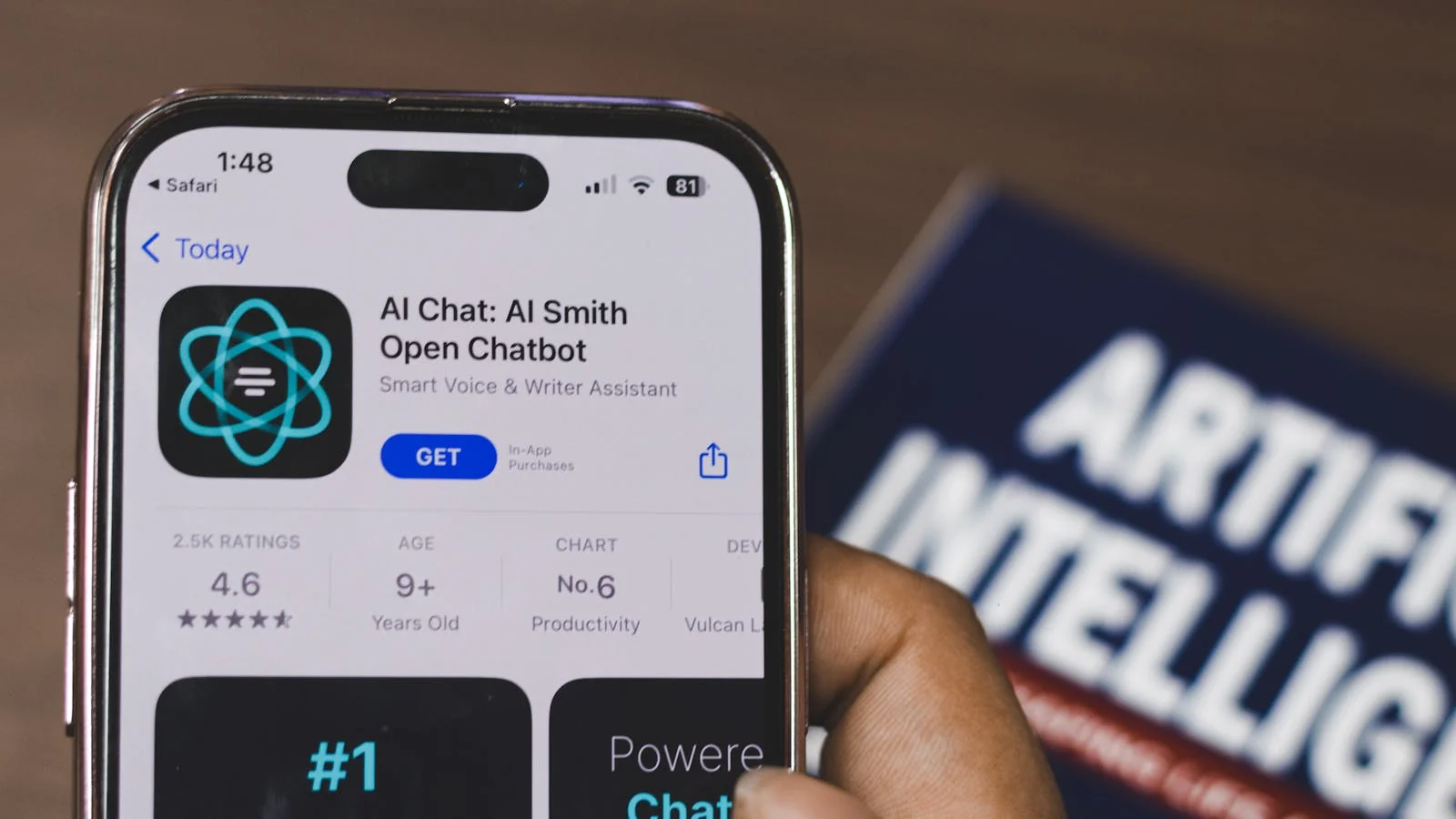
A SaaS founder named Pranav asked me a question in March that I had been waiting for someone to ask. He’d typed “compare ContractWise vs Ironclad for legal contract management” into ChatGPT. ChatGPT returned a 600-word comparison that named ContractWise as the better fit for mid-market companies, citing four reasons. Pranav owns ContractWise. He had not paid for placement. He had no SEO consultant. He had not even done formal AEO work. He just wanted to know: how did ChatGPT decide?
The answer is that AI search engines use three specific inputs to handle brand comparisons. These inputs are different from what drives traditional Google rank, different from what drives social discovery, and partially under your control if you know what they are. Most brands losing comparison queries to competitors are losing on inputs they don’t realize are being measured.
This is what’s actually happening inside the engine when a buyer asks “compare X vs Y.”
Input 1: Entity disambiguation

Before the engine can compare two brands, it has to know they exist as distinct entities. This sounds trivial. It is not.
A surprising fraction of brands have weak entity signals. The brand name is too generic. The brand shares a name with a more famous unrelated entity. The brand’s Wikipedia and Wikidata presence is absent or contradictory. The brand’s website does not use schema.org Organization markup or uses it incorrectly.
When entity signals are weak, the engine sometimes blends the brand with its competitors, with a similarly-named unrelated entity, or with the broader category. The output is incoherent comparison answers that mix attributes from multiple entities into one verdict.
Strong entity signals require: a unique brand name (avoid common dictionary words), a clean Wikipedia presence with sources, a Wikidata entry with linked properties (industry, founders, headquarters, key products), schema.org Organization markup on your homepage with all the identifier properties filled, and consistent name usage across your owned channels (website, social, press releases, podcast appearances).
The brands that win comparison queries almost always have these signals in place. The brands that lose, especially against larger competitors, often have a category-generic name and no Wikipedia presence. The fix is structural and takes weeks, not days.
Input 2: Third-party validation corpus
The second input is what other sources say about you relative to your competitor. The engine builds a comparison verdict by weighting third-party sources, not your own marketing claims.
Third-party validation breaks into four categories.
Category 1: editorial coverage in trade and general press. A WSJ feature on your company carries more comparison weight than a Substack newsletter, but a niche industry publication that specifically covers your category outweighs a general publication that covered you tangentially. Specificity beats authority for AI comparison purposes.
Category 2: review sites and software directories. G2, Capterra, TrustRadius, Software Advice, GetApp for B2B SaaS. Yelp, Google My Business, Trustpilot for consumer brands. The engine reads the aggregate rating, the count of reviews, and increasingly the substance of recent reviews (recency-weighted).
Category 3: Reddit, Stack Exchange, Hacker News, and topic-specific forums. The engine treats user-generated discussions as a high-trust signal because they are harder to fake than vendor content. A consistent positive sentiment on your brand across Reddit r/sysadmin (for B2B IT) or r/smallbusiness (for SMB tools) can shift a comparison verdict.
Category 4: AI search index sources like Perplexity’s own citations and Google AI Overview’s source list. These are circular signals. Brands that already get cited in AI search tend to get cited more, because their citation count feeds future training data.
The implication: comparison performance is dominated by the validation corpus, not by your owned content. A brand with 200 G2 reviews, 12 trade press features, and active Reddit presence beats a brand with a beautiful website and no third-party signal almost every time.
Input 3: Direct attribute comparability
Even with strong entity signals and a healthy validation corpus, the engine still has to compare two brands on specific attributes. Attribute comparability is the third input.
Buyers ask comparison questions with implicit attribute focus. “Which is better for mid-market,” “which is cheaper,” “which has better integrations,” “which has stronger security,” “which is easier to set up.” Each focus implies specific attributes the engine has to compare.
Brands that publish clear, structured information on these attributes get compared accurately. Brands that hide attributes (no pricing on the website, no integration list, no security certifications page) get compared poorly because the engine cannot extract the attribute and substitutes from secondhand sources.
Specifically:
Pricing. Brands with explicit numeric pricing pages get compared on real numbers. Brands with “contact us for pricing” get compared on rumored ranges from Reddit or G2 reviews, which are often wrong and skew the comparison.
Integrations. Brands with a public integrations directory with logos and brief descriptions get compared accurately. Brands with no integrations page get compared on competitor’s claims about integrations, which usually understates the brand’s actual capability.
Security and compliance. Brands with a public trust center listing SOC 2, ISO 27001, HIPAA, GDPR, and audit reports get treated as compliance-credible. Brands without this get compared as if they lack certifications they actually have, because the engine cannot verify the absence.
Customer logos and case studies. Brands with named customer logos and detailed case studies get compared with concrete proof points. Brands with anonymous testimonials get treated as having weak references.
The test I ran on 14 SaaS categories
In April 2026 I ran a structured test across 14 B2B SaaS categories: contract management, CRM, payroll, marketing automation, project management, customer support, video conferencing, password management, identity management, vulnerability scanning, error monitoring, analytics, e-signature, and email marketing.
For each category, I queried ChatGPT, Perplexity, and Claude with the same prompt: “compare top 3 brands in [category] for mid-market companies.” Then I asked: “which brand would you recommend for a 200-person SaaS company?”
The pattern: in 11 of the 14 categories, the same brand won across all three engines. In 3 categories, the engines disagreed. In all 11 consensus cases, the winning brand had: a strong Wikipedia presence, a public pricing page with numeric ranges, an active Reddit presence in the relevant subreddit, at least 4 trade press features in the past 12 months, and a public integrations directory.
The losing brands in the consensus cases (often larger and more funded) were missing 2 or more of those signals. Size of company did not predict comparison wins. Signal hygiene did.
What this means for what you do this week

Pull your top three direct competitors and run the comparison query yourself. Type “compare [your brand] vs [competitor 1] vs [competitor 2]” into ChatGPT, Perplexity, and Claude. Read the answers carefully.
If you are not winning, identify which input is weak. Entity signals (do they recognize you as a distinct entity)? Validation corpus (are they citing third-party sources for both you and the competitor, but the citations are richer for the competitor)? Attribute comparability (are they comparing on attributes where you look weak because your owned content does not surface the data)?
Each input has a different remediation path. Entity work is structural and takes 4 to 8 weeks. Validation corpus work is editorial outreach and takes 8 to 16 weeks. Attribute work is owned-content rewriting and takes 1 to 3 weeks.
Start with attribute work because it is fastest. If your pricing page is hidden, publish it. If your integrations list is buried, surface it. If your trust center is absent, build it. These changes feed AI comparison answers inside 2 to 3 weeks.
Move to entity work next. Update or create your Wikipedia entry. Get Wikidata cleaned up. Implement schema.org Organization markup properly. These take longer but compound across every future comparison query.
Validation corpus work runs continuously and is the highest-impact long-term play. Trade press placements, G2 review velocity, Reddit engagement, podcast appearances. The brands that show up in AI comparisons consistently are the brands building this corpus on a quarterly cadence.
Pranav at ContractWise won his comparison query because he had all three inputs right. Strong entity (clean Wikipedia, schema markup, unique name), strong validation (G2 reviews, two WSJ mentions, active in r/legaltech), clear attributes (public pricing, public integrations, public security). He had not optimized for AI search explicitly. He had built a credible mid-market SaaS company with public proof. AI search rewarded the same hygiene that earns trust with human buyers. That alignment is what makes AEO work in 2026.