
It is 9 p.m. and a mother in your town is on her phone. Her eight-year-old has started squinting at the whiteboard, and she is three searches deep into whether that means glasses, a vision therapy referral, or nothing at all. She reads a page from a practice two towns over, watches a ninety-second video from an optometrist who explains the exact thing she is worried about, and skims an AI answer that quotes that same optometrist by name. By the time she books an appointment the next morning, she has already decided who the expert is. It is not you. She never found you, because the expertise you would have given her in the exam room never made it out of the exam room.
This happens every night, in every town, for every optometrist who does great work and publishes none of it. The good news is that the fix does not require you to become a content creator or a personality. It requires you to capture what you already do and put it where the mother with the squinting kid can find it. Here is the system for that.
Your best content is already happening in the exam room
You explain things all day. You tell a teenager why their contacts dry out by mid-afternoon and what to change. You walk a nervous parent through what a lazy eye is and why early treatment matters. You reassure a fifty-year-old that needing readers is not the beginning of the end. Each of those explanations is a small piece of expert content that vanishes the moment the patient walks out. Thought leadership for optometrists starts by refusing to let it vanish.
The Exam-Room Expertise Loop is the system that catches it. It has four stages, and it is a loop rather than a checklist because the last stage feeds the first. Stage one is Capture: record the explanations and questions from your day, in a note, a voice memo between patients, or straight into a camera. Stage two is Publish: turn that raw material into public content under your own name. Stage three is Corroborate: get that expertise recognized across sources you do not control, so search engines and AI systems treat it as credible. Stage four is Convert: new patients arrive already trusting you, which produces the next round of exam-room questions, which restarts the loop. Video is the fastest on-ramp, because a short answer filmed on a tripod between patients captures your real explanation and your real manner at the same time.
Capture is the stage everyone underestimates, because it feels like it should be harder than it is. You do not need a studio or a schedule. You need a way to save the explanation while it is fresh. Keep a running note on your phone titled with the questions you answered today. Dictate a two-line voice memo between patients when an explanation lands well. Once a week, point a phone at your own face and answer one of those questions in the plain language you used in the room. The goal is not polish. The goal is to stop letting your best material evaporate. A rough capture you can refine beats a perfect plan you never start.

Why does the name on the byline decide who gets cited?
A practice blog with no author is a brochure. A named optometrist with credentials, a real bio, and a face is a source. That distinction decides who gets cited, both by journalists and by machines.
Search engines and AI answer engines both reward signals of expertise, experience, and identity. They want to know who said this, what qualifies them, and whether the wider web treats them as real. An anonymous “the team at Example Vision” satisfies none of that. Your name, your OD credential, your years in practice, your specialty, and a clear author page that connects every article back to you: that is what turns a page of text into a page a system is willing to trust and repeat. Publish everything under a real, credentialed human, mark up that authorship so machines can read it, and connect it to the same identity everywhere you appear. Thought leadership for optometrists lives or dies on whether a reader, or a model, can answer the question “who is this person and why should I believe them” in about two seconds.
Make the author page do real work. It should state your degree and licensure, where you trained, how long you have practiced, what you focus on, and which conditions you treat most. It should link to the outside places you have been published or quoted. It should carry a real photograph, not a clip-art headshot. Every article you publish should point back to that page, and that page should point back to the same professional identity you use on directories and review sites. None of this is vanity. It is the paper trail a skeptical reader follows in ten seconds and a language model follows in one, and it is the difference between being read and being believed.
Answer the questions patients actually ask you
The fastest way to run out of things to say is to write what you think you should write. The fastest way to never run out is to answer the exact questions patients ask you across the chair every week. You already have the list. You have answered it more times than you can count.
Parents want to know when a child’s first eye exam should happen and whether screen time is ruining their kid’s eyes. Adults want to know if they are a candidate for contacts, whether their headaches are their eyes, what all-day screen work is doing to them, and whether the pricier lenses are worth it. Contact wearers want to know why their eyes feel like sandpaper by late afternoon. Each of those is a piece of content guaranteed to match real demand, because you hear the question in person all the time. The consultation where you help someone choose between two pairs of glasses is not an interruption to your content plan. It is your content plan, delivered out loud, waiting to be captured.
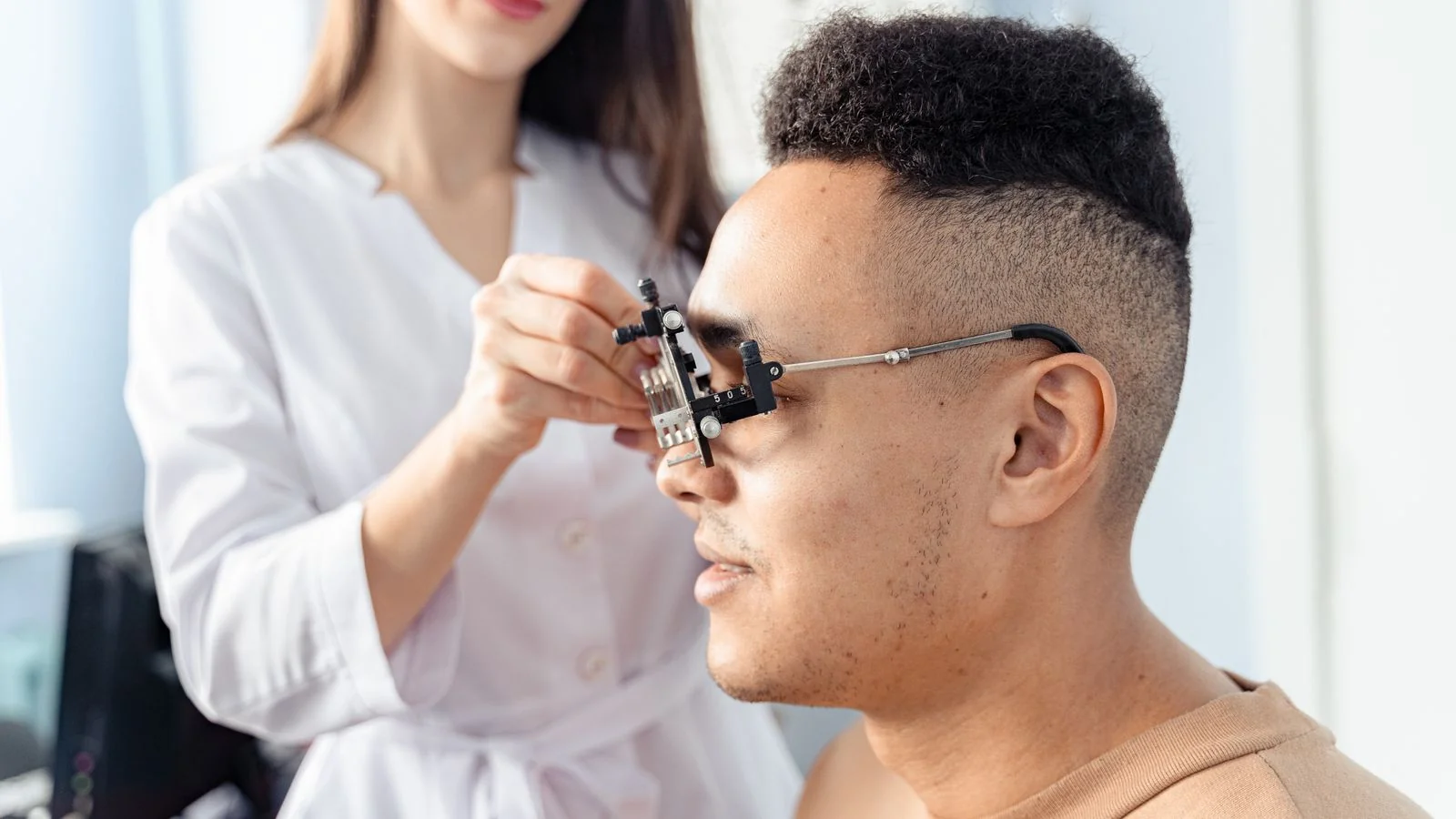
Structure each answer the way you structure it in the chair. Lead with the direct answer, because a worried parent does not want three paragraphs of preamble before you tell them whether their kid needs glasses. Then give the reasoning, the caveats, and the one thing you wish every patient knew about it. That shape, the plain answer first and the nuance second, is also the shape an answer engine prefers, because it can lift a clean response from the top and trust that the detail below supports it. Write the way you talk to a patient who is paying attention but is not a clinician, and you will reach both audiences at once.
Corroboration is what an AI answer engine trusts
Publishing under your own name is necessary, but it is not sufficient. A model looking at one optometrist making claims on their own website has no way to know if those claims are credible. What it trusts is agreement. When several independent, reputable sources point to the same expertise, the system treats it as settled enough to repeat.
This is the Corroborate stage, and it is where authority stops being something you assert and becomes something the web confirms. Answer engines like ChatGPT, Perplexity, and Google’s AI Overviews build responses by pulling from multiple sources and favoring what those sources agree on. Google’s knowledge panels and its treatment of reviews run on the same principle: consistent, independent signals across the web are what promote a claim into a fact. So the same expertise that lives on your site also needs to appear in places you do not own. A bylined column in a regional outlet. An interview in a trade publication. A quote in a story about children’s vision or screen fatigue. A consistent professional profile across directories. The old free shortcut for landing those mentions, HARO, shut down in 2024, so the path now is slower and more durable: build relationships and earn real mentions over time. Every corroborating source you gain makes you a safer answer for a machine to give and a stronger candidate for a reporter to call.
Think of every mention as a vote from a source you did not pay and cannot fake. One vote is noise. A dozen votes, spread across a local paper, a trade outlet, a directory, and a colleague’s referral page, start to look like consensus, and consensus is what a machine repeats when a patient asks who the good optometrist in the area is. You are not trying to go viral. You are trying to be the name that shows up in enough credible places that both people and models stop treating your expertise as a claim and start treating it as a given.
How the loop closes and compounds
Here is where the four stages become a flywheel instead of a to-do list. The Convert stage is the point of all of it. A patient who arrives having watched your explainer and read your column is not shopping the way a cold lead shops. They arrive already trusting you, which shortens the conversation, raises the odds they accept the care and the eyewear you recommend, and makes them likelier to send the next person your way. That trust was manufactured before they walked in, by the content you captured from the last round of patients.
And that is the part most optometrists miss. Every converted patient generates the next batch of questions, objections, and explanations, which becomes your next batch of content, which corroborates your authority further, which converts the next patient more easily than the last. Thought leadership for optometrists is not a campaign you run and finish. It is a loop you start and let compound, where each turn costs less effort and returns more trust than the one before it. Most optometrists never feel that compounding, because they treat content as a one-off chore instead of a cycle fed by the work they already do. The ones who feel it are the ones who wrote the first thing down instead of waiting for a slow week that never comes.
You can watch the loop tighten if you look for it. Early on, every piece of content takes real effort and returns little. A few months in, patients start mentioning that they saw your video before booking, referrers start forwarding your articles instead of describing you from memory, and the occasional AI answer starts naming you when someone asks. None of those moments is dramatic on its own. Together they are the sound of authority compounding, and that compounding is what thought leadership for optometrists returns to the practices patient enough to keep feeding the loop while the early payoff is thin.
The optometrist who starts the loop this quarter is the one patients and answer engines will both name as the expert a year from now.