You just landed the contract. The team is mobilizing, the permits are filed, and somebody in the office says you should put out a press release. So a draft gets written, and it reads like a contract summary. It names the general contractor, the square footage, the completion quarter, and the value of the deal, and then it sits in a reporter’s inbox untouched because it answered every question except the one that matters: why should anyone who is not getting paid on this job care?
That gap is where most construction announcements die. The industry runs on specifications, and the people who write the press releases default to specifications, because that is the language they speak all day. Reporters do not speak that language. They speak in impact, in change, in the thing that is different now that this project exists. A construction press release that lands translates the spec sheet into a story, and there are a handful of reliable angles that do exactly that.
Why construction announcements get ignored
Walk through a trade editor’s inbox for a single morning and the pattern is brutal. Dozens of releases, almost all of them structured the same way, almost all of them leading with the company rather than the news. “ABC Builders is pleased to announce” is the opening line on more construction releases than any other phrase, and it tells the editor nothing in the first six words except that you are pleased, which is not news.
The deeper problem is that construction is genuinely interesting and the releases make it boring. A building going up changes a skyline, brings jobs, displaces or revives a neighborhood, tests a new method, or beats a record. Every one of those is a story a local or trade reporter would run. But the release buries the story under the deal mechanics, and the reporter, scanning fast, never reaches it. The fix is not better writing in the abstract. It is choosing the right angle before you write a single line, so the news sits in the headline and the first sentence where a busy editor will actually see it.
Match the angle to the right kind of outlet
Before you pick an angle, know who you are pitching, because the same project plays differently to different editors. Local and regional outlets care about jobs, neighborhoods, and the visible change to a place their readers drive past every day. Trade publications care about method, technology, and the industry implications that help their professional readers do their own work better. A national business outlet cares about the trend, the scale, or the economic signal. One project can yield three different press releases, each leading with the angle that outlet’s audience actually wants.
The mistake most firms make is writing one generic release and blasting it to everyone, which guarantees it fits no one well. A few minutes of sorting pays off here. Decide which outlets you most want, learn what their readers come to them for, and shape the lead of each release to that audience. The local paper gets the jobs number in the first line. The trade outlet gets the method. The business desk gets the trend. The underlying project is identical, but the framing meets each editor where they already are, and an editor who sees their readers’ interest in your first sentence keeps reading instead of deleting.
Angle one: the economic impact story
The most reliable angle in construction is jobs and money flowing into a place. Local outlets in particular cannot resist a project that puts people to work and capital into the regional economy. The release should lead with the number of jobs created during construction, the permanent positions the finished project supports, and the investment figure, framed as what it means for the area rather than what it cost the developer.
The discipline here is specificity. “Significant economic impact” is filler. “180 construction jobs over eighteen months and 240 permanent positions when the facility opens” is a story a reporter can build a headline around. Editors run economic impact because their readers feel it directly, so give them the exact figures that make the impact concrete and let the scale of the number do the persuading.
Angle two: the transformation of a known place
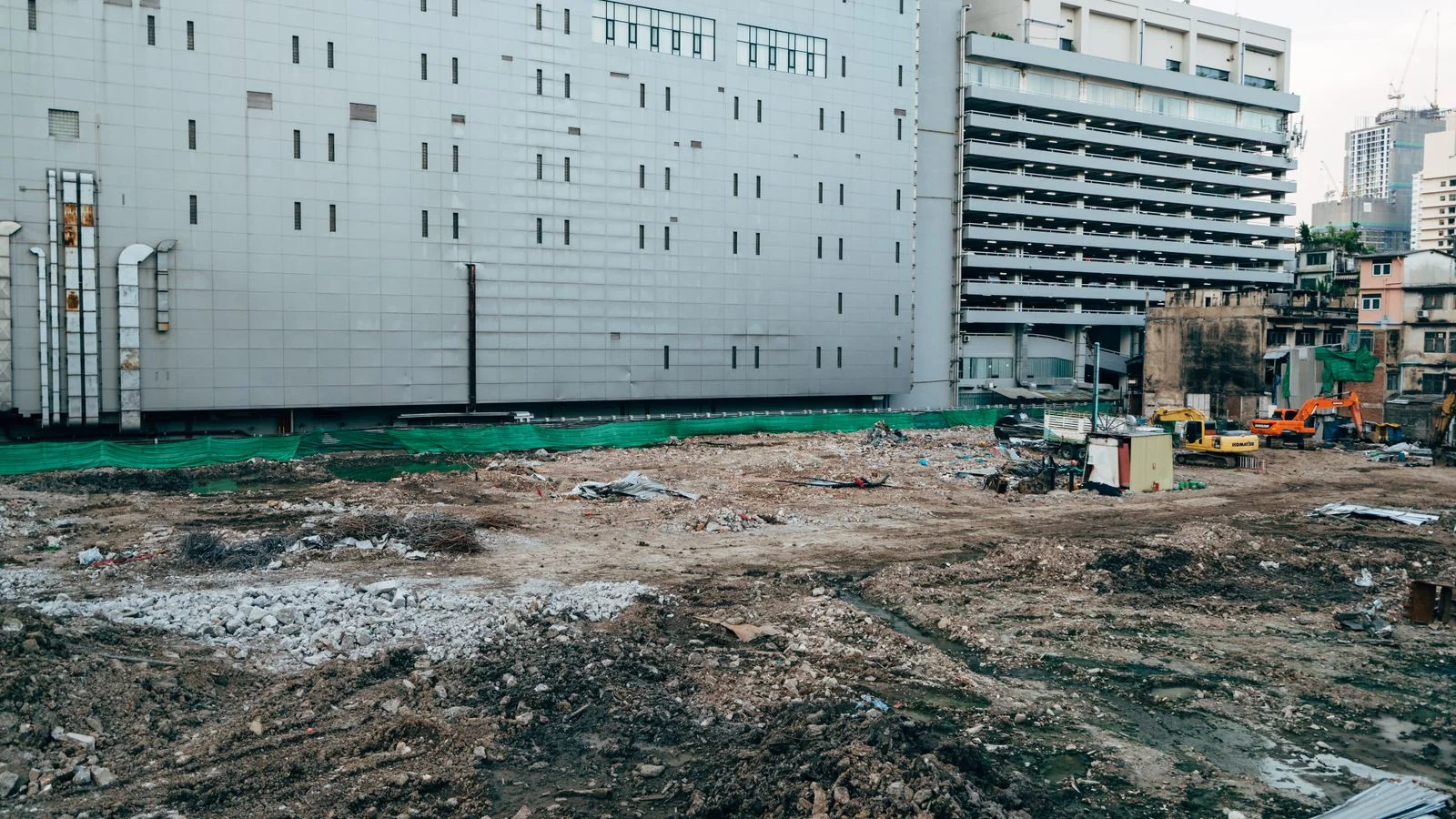
People care about places they recognize. If your project sits on a site locals know, the abandoned mill, the vacant lot everyone drives past, the tired strip nobody has touched in twenty years, the transformation is the story. The before-and-after of a familiar location carries built-in emotional weight that a greenfield project on an anonymous parcel never will.
Lead with the place, not the project. Name the site the way residents name it, describe what it has been, and then describe what it will become. A reporter reading that immediately sees the photo essay, the then-and-now, the human reaction. You have handed them a story with a setting their readers already have feelings about, which is most of a reporter’s job done before they even reply.
Angle three: the record or the first
Superlatives are catnip to editors when they are true and specific. Tallest in the city. First mass-timber building in the state. Largest of its kind in the region. Fastest delivery on a project of this scale. A genuine first or record gives a reporter a clean, defensible headline, and clean headlines get assigned.
The trap is overreach. Editors have seen every inflated claim, and a superlative that does not survive a fact check costs you the relationship. Qualify the claim precisely enough that it holds. “The first net-zero office building in the county” is checkable and strong. “One of the most innovative projects in the country” is unverifiable and gets deleted. A tight, true record beats a grand, vague boast every time, and it travels further because other outlets pick up a verifiable first.
Angle four: the method or the technology
When the interesting part is how you are building rather than what, the method is the angle. Modular construction that compresses the timeline, a material that cuts the carbon, a technique that solves a site problem everyone assumed was unsolvable, all of these appeal to trade press hungry for substance and to local press looking for a fresh hook. Construction press release writers underuse this angle because the method feels routine to them. It is not routine to a reader.
Explain the method in plain language and tie it to an outcome the reader values: faster, safer, cheaper, greener, quieter. The technology is not the story by itself. The technology in service of a result the reader cares about is the story. Frame it that way and a trade editor sees a piece their audience will actually finish reading.
Angle five: the safety or community milestone
A million work hours without a lost-time incident is a real achievement, and it photographs well with a crew that earned it. Community milestones work the same way: a local hiring commitment met, an apprenticeship program launched, a neighborhood benefit delivered. These angles humanize a firm that the public otherwise sees only as orange barrels and noise, and they give local reporters a positive story in a beat that often skews toward complaints and delays.
The key is to make the milestone about the people, not the policy. A safety record is the crew that built it. A hiring commitment is the specific people now employed. Put names and faces where you can, because that is what turns a corporate statistic into a story a reporter wants to tell and a community wants to read.
Angle six: tie it to a trend reporters are already covering
Reporters are always working a larger story, and a project that illustrates a trend they cover gives them a fresh, concrete example to anchor it. Housing supply, reshoring of manufacturing, data center expansion, infrastructure spending, the shift to sustainable building, all of these are live beats. A construction project that embodies one of them is not just your news, it is evidence for a story the reporter is already trying to tell.
Do the connecting work for them. Name the trend in the release, show how your project fits it, and offer the executive who can speak to the bigger picture, not just the job site. You become a useful source on an ongoing story rather than a one-off announcement, and useful sources get called again, which is worth far more than a single placement.
Angle six and a half: pair the release with real visuals
Construction is one of the most photogenic stories in business, and a release that arrives with strong visuals is far likelier to run. A dramatic site photo, a rendering of the finished project, a time-lapse of the build, a shot of the crew, these give an editor the art they need to publish without sourcing it themselves. A great construction story with no usable images often loses to a lesser story that came ready to print.
Treat the visuals as part of the pitch, not an afterthought. Offer high-resolution photography of the site and the finished rendering, mention that drone footage or progress time-lapse is available, and make sure anyone in the images has agreed to appear. For the place-transformation angle, a clean before-and-after pairing does half the editor’s storytelling for them. For the people angle, a real photo of the crew or the developer on site turns an abstract story into a human one at a glance. Construction firms sit on visual material most industries would envy, and the release that puts that material in front of an editor, ready to use, removes one more reason to pass and adds one more reason to run.
Angle seven: the people behind the build
The last angle is the most overlooked. Behind every project are people with stories: the developer who waited a decade for the site, the architect who solved an impossible constraint, the local crew that came home to build in their own town. A profile-style angle that centers a person gives a feature writer something the spec-sheet release never could, a narrative with a protagonist.
This angle will not fit every milestone, but when it does it produces the deepest coverage, because a reporter with a human story will spend real space on it. The construction press release that leads with a person, with the project as the backdrop, lands the feature instead of the brief. When you have a genuine character and a real arc, that is the angle to choose, and it is the one your competitors almost never reach for. Pick the angle before you write, and the building you are putting up becomes a story worth covering rather than a deal worth filing away.