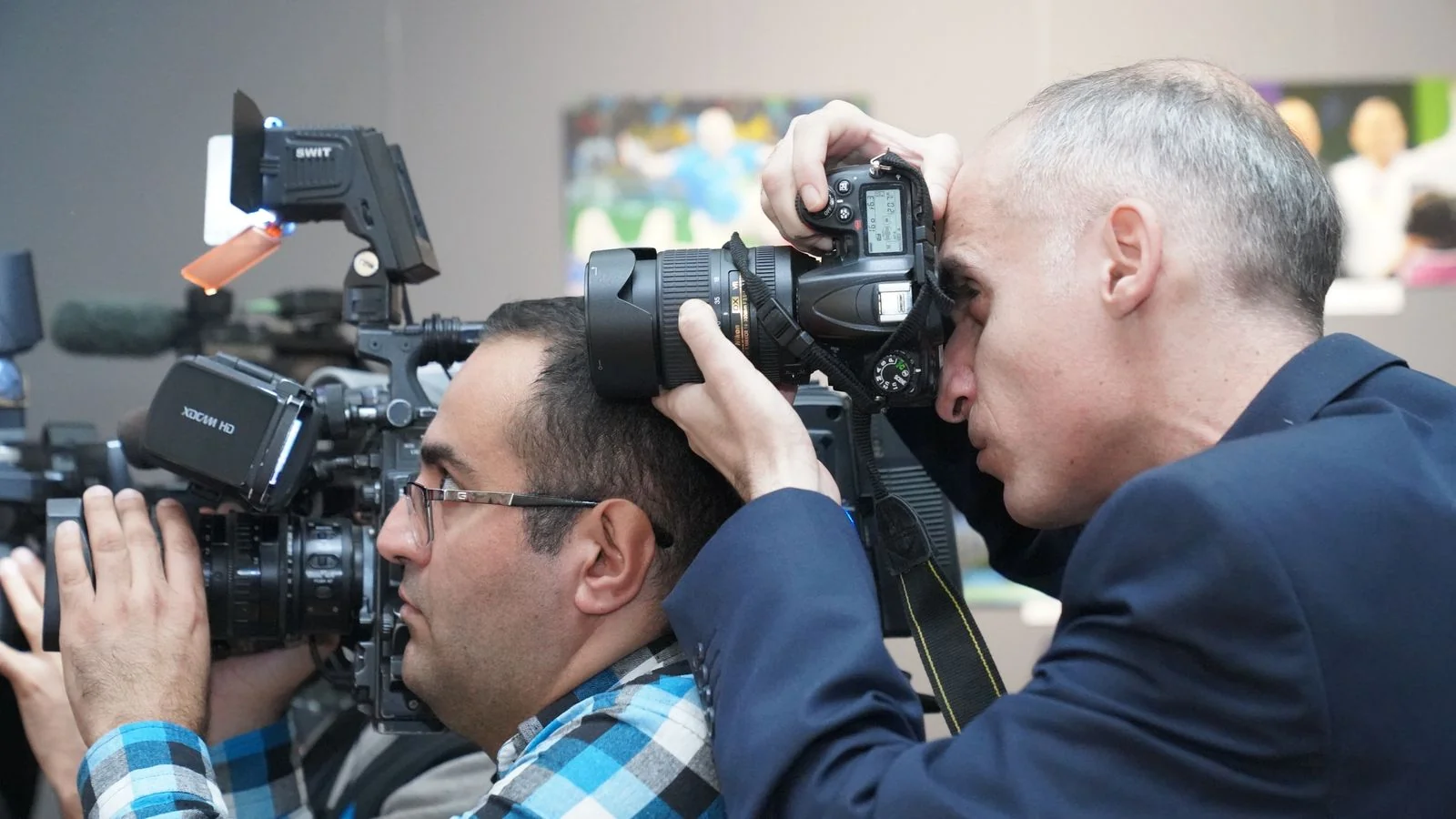
The most trusted marketing you can own is the marketing you cannot buy. Consumers trust a journalist’s write-up and a friend’s recommendation far more than any advertisement you pay to place, and that single gap is the entire reason earned media exists as a discipline. Most teams know this instinctively but have never seen the numbers that prove it. The media coverage statistics for 2026 make the case, and they also show you exactly how the coverage gets made.
Earned media is the most trusted media
Nielsen has measured global trust in different forms of marketing for years, and the same pattern holds across editions: recommendations from people and earned editorial coverage sit at the top of the trust rankings, cited by roughly 92% of consumers, while paid advertising formats trail far behind. The specific number moves a little year to year, and the study is old enough that you should present it as a durable finding rather than fresh 2026 data, but the direction has never reversed. People believe a third party who was not paid to say it.

That trust premium is why a single feature in a respected publication can move a market that a much larger ad spend cannot. You are not renting attention. You are borrowing the publication’s credibility, and the audience knows the difference. Every one of the media coverage statistics that follows is really about protecting and earning that borrowed trust.
How coverage actually gets made
Coverage is not luck, and it is not volume. It is a match. Muck Rack’s 2025 State of Journalism found that 84% of journalists say stories often start with a PR pitch, which means the pitch is genuinely the origin point of most earned coverage. The same body of research found that 86% of journalists immediately reject a pitch that does not fit their beat or audience.

Read those two numbers together and the mechanism is obvious. Pitches make coverage, but only pitches that fit. Cision’s 2025 data adds the delivery preference: 85% of journalists want a short, personalized email for a first approach. There is no secret channel and no growth hack. Coverage gets made when the right story reaches the right reporter in the format they prefer, and it dies when any one of those three is off.
The pitch survival funnel
Picture your outreach as a funnel where pitches die at each stage, and the media coverage statistics tell you the survival rate at every step. A hundred pitches go in the top. First, delivery and open: many never get read at all. Next, the beat match, where that 86% instant-rejection rate does most of its damage. Whatever clears the beat then faces the story test, where a reporter decides if there is genuine news worth their limited time. Only what survives all three becomes published coverage.
The funnel explains why bigger lists do not produce more coverage. Adding names at the top does nothing if they fail the beat match in the middle. The way to widen the bottom of the funnel is to raise the survival rate at each stage: better targeting to clear the beat match, a real story to clear the value test, and a clean, usable release to clear the effort test. Teams that obsess over list size are pouring more water into a funnel with the same holes. Teams that study the survival funnel plug the holes instead.
Why does AI make coverage worth more?
Because coverage stopped being a one-time event and became a permanent source. Muck Rack’s analysis of what large language models cite found that earned media supplies roughly 84% of the sources AI answer engines reference. Meanwhile, Edelman’s 2025 Trust Barometer special report on brands found that among the 55% of consumers using generative AI, 91% use it for shopping tasks like researching products and comparing brands.
Connect those two findings and the stakes become clear. More than half of consumers now research purchases through AI, those AI systems build their answers overwhelmingly from earned media, and consumers already trust earned media more than any other source. Coverage you earn in 2026 does not just reach the readers of that publication. It becomes the raw material AI uses to answer buying questions for months afterward. The trust premium and the citation value now compound on top of each other.
Why coverage beats advertising on the axes that matter
Set earned coverage next to paid advertising on the axes a marketer actually cares about, and the media coverage statistics favor coverage on nearly all of them. Trust is the obvious one: Nielsen’s long-running research puts trust in recommendations and earned editorial far above paid formats, a gap that has never closed. But trust is only the first axis.
Durability is the second, and it is underrated. A paid ad stops working the moment the budget stops. An earned article keeps ranking, keeps getting read, and keeps being cited long after it publishes. The third axis is credibility transfer: when a respected outlet covers you, its authority attaches to your brand in a way an ad you wrote about yourself never can. The fourth, newest axis is AI citation. Since earned media supplies the large majority of what AI answer engines reference, coverage now feeds the systems that answer buying questions, while advertising sits almost entirely outside that pipeline.
The one axis where advertising wins is control. You decide exactly what an ad says and when it runs, while coverage depends on a journalist’s judgment and cannot be dictated. That trade is the whole point. The lack of control is precisely what makes earned media credible, because audiences know you could not simply buy the words. The media coverage statistics reward teams that accept less control in exchange for more trust, more durability, and more citations, rather than teams that cling to control and wonder why their paid reach converts so poorly.
Control is also the axis buyers see through fastest. Audiences have grown fluent at spotting paid placement, and the moment something reads as bought, the trust premium evaporates. That is the quiet reason the media coverage statistics keep favoring earned coverage: the very thing you give up, the ability to dictate the message, is what makes the audience believe it. You cannot fake the credibility of a third party who chose to write about you, and buyers reward exactly that.
What earned coverage is worth over time
The hardest thing to value about media coverage is its tail, and it is also where most of the value hides. A single feature produces an immediate spike of referral traffic and awareness, which is the part everyone measures. Then it keeps working. It ranks in search, gets forwarded, gets quoted by other writers, and becomes a source AI systems pull from when someone asks about your category. The immediate spike is a fraction of the total return.
This is why measuring coverage only by day-one impressions undersells it badly. The media coverage statistics on AI citations reframe a placement as a durable asset rather than a moment. A mid-tier trade feature that keeps getting cited in AI answers to category questions can outperform a splashy national mention that AI never references, because the trade feature keeps compounding while the national hit fades. If you only measure the launch-day numbers, you will make the wrong call about what coverage to pursue more of, and you will chase reach when you should be chasing citability.
The pitch is the only real channel
People keep hunting for a clever route around the pitch, and the media coverage statistics keep saying there is not one. Muck Rack’s 2025 data put the origin of most coverage squarely on the PR pitch, with 84% of journalists saying stories often start there. Cision’s finding that 85% of journalists prefer a short, personalized email confirms both the channel and the form. The way coverage gets made is boring and specific: a relevant story, sent by email, to a reporter who covers that beat.
The reason this feels unsatisfying is that it cannot be scaled by brute force. Personalization does not survive a mail merge. A reporter can tell within a sentence whether you read their recent work or dropped their name into a template, and the 86% rejection rate is where that judgment lands. The teams that get coverage are not the ones with the biggest lists or the cleverest subject-line tricks. They are the ones who did the unglamorous work of matching a real story to the right reporter and writing to that person like a human. The media coverage statistics reward diligence, not hacks.
What earns coverage in an AI-first newsroom
The newsroom your pitch lands in now runs partly on AI, and that changes what earns coverage. Muck Rack’s 2025 State of Journalism found 77% of journalists use AI tools, and more than a third rank misinformation as the biggest threat to their profession. A reporter using AI to triage and summarize inbound pitches, while worrying about being fooled by a fabricated claim, rewards a specific kind of pitch: one built on verifiable facts, clear sourcing, and a named, reachable spokesperson.
This raises the value of substance over spin. A pitch full of unbacked superlatives reads as risk to a journalist scanning for misinformation, and an AI summarizer strips the adjectives away to find there was no news underneath. A pitch anchored to a real data point, a named source, and a checkable fact survives both the machine and the human. The media coverage statistics point toward a newsroom that is faster, warier, and more automated at the front door, which means the coverage goes to the stories that are easiest to trust and use, not the ones that shout loudest.
The takeaway, with a name on it
Consider a reputation client of ours in the pet-care category who had been measuring a media campaign purely by impressions. When they re-scored the same coverage by whether each placement was getting cited in AI answers to category questions, a handful of mid-tier trade features turned out to be worth more than a splashy national mention that AI never referenced. Same coverage, different scorecard, opposite conclusion about what to do more of.
That is the practical shape of the media coverage statistics for 2026. Trust still lives in earned media, coverage still gets made through a match between story and reporter, and the value of every placement now extends into the AI answers your buyers rely on. Build your outreach around the survival funnel, measure the coverage by whether AI cites it, and you will earn the one kind of visibility no ad budget can buy.