
It is 11:40 on a Tuesday night and you are looking at a Google Doc called TV_PITCH_v4. The subject line reads “Story Idea for Teen Vogue.” The recipient field has one of those catch-all editorial addresses you found on a listicle. Your client is a 24-year-old founder with a skincare line, 180,000 TikTok followers and a story about leaving college in her second year. Three blog posts told you the same thing: Teen Vogue loves young changemakers. So you send it. You wait. Nothing comes back, and three weeks later you tell the client the magazine “just wasn’t interested.”
Here is what none of those blog posts mentioned. The desk you aimed at was dissolved in November 2025. The section your pitch belonged in does not commission product stories. And one of the editors whose name you copied down stopped working at Condé Nast eleven months ago.
That gap, between the advice circulating about this title and the title as it exists in October 2026, is where most pitches go to die. Close it and the rest of the job gets much simpler.
Teen Vogue is now a pillar of Vogue.com, not a magazine of its own
On 3 November 2025, Condé Nast announced that Teen Vogue’s website would be folded into Vogue.com. NPR reported that week that six unionised Teen Vogue staffers were laid off in the process. Versha Sharma, editor in chief since May 2021, left the company. Chloe Malle, head of editorial content for American Vogue, took oversight of the brand. Condé Nast framed the change as Teen Vogue “joining Vogue.com, a transition that’s part of a broader push to expand the Vogue ecosystem,” and Vogue said “the title will remain a distinct editorial property, with its own identity and mission.” Cleveland.com reported that about half the Teen Vogue team was expected to stay.
The people losing jobs described it differently. Culture editor Kaitlyn McNab wrote that she was laid off “along with 70% of my incredible team.” The NewsGuild of New York and Condé United said most of the six were “BIPOC women or trans, including Teen Vogue’s Politics Editor,” and that the title “now has no writers or editors explicitly covering politics.” Fox Business quoted management’s plan for Teen Vogue as a “dedicated pillar” of Vogue focused on “career development, cultural leadership and other issues that matter most to young people.”
None of that killed the brand. Teen Vogue publishes every day. Its politics tag carried a first-person street report on Zohran Mamdani’s inauguration, by Alyssa Hardy and Amalie MacGowan, on 1 January 2026, and ran Kim Kelly’s op-ed on the commercial history of American teenagerhood on 18 August 2026. What changed is the chain of command. You are no longer pitching an independent masthead with its own editor in chief. You are pitching a vertical inside Vogue, and that single fact explains most of the confusion in the advice you will find elsewhere.
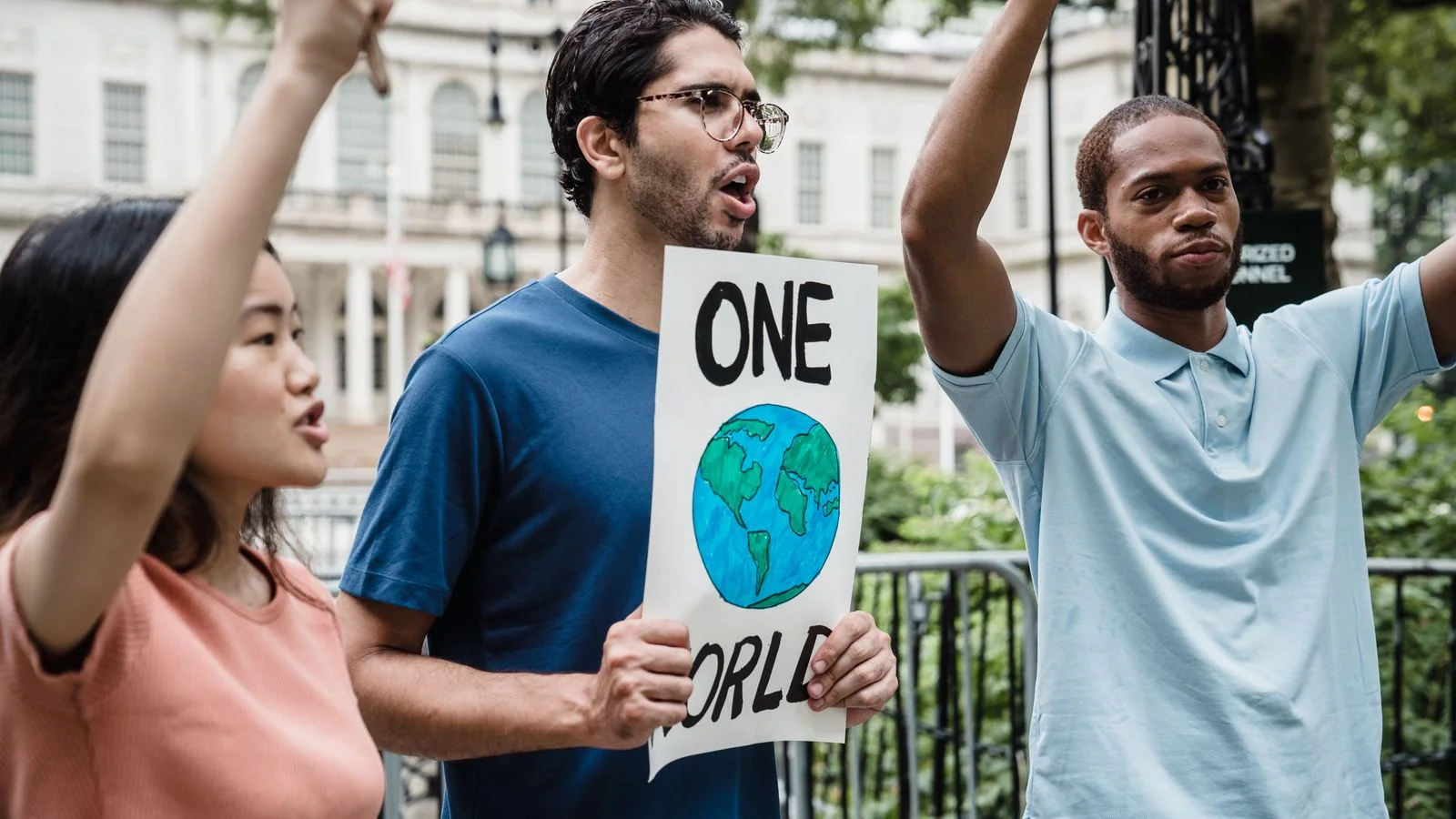
Who is actually on the other end of a Teen Vogue byline?
The name misleads people. Similarweb’s February 2026 profile of teenvogue.com records 2.9 million total visits, down 8.34% on the previous month, with 44.51% of traffic from the United States, Canada second at 4.71% and Australia third at 3.47%. The audience splits 58.38% female and 41.62% male, and the largest age group of visitors is 25 to 34. Organic search drives 61.92% of desktop visits. The average visit lasts 56 seconds across 1.49 pages, with a 65.66% bounce rate.
Read that again, because it rewrites the pitch. The biggest single cohort reading Teen Vogue is in its late twenties and early thirties, and six visits in ten arrive from Google rather than from a homepage or a feed. Wikipedia’s entry puts the title’s primary demographic at 17 to 29, and Teen Vogue’s own pitch page describes readers ranging from pre-teens through to the late twenties. Comscore figures cited in that same entry found that in May 2018 only 1.7% of the audience was 17 or younger.
So the practical reality is a search-led publication read mostly by adults, with a genuine minority of readers under 18. Both halves of that matter. The adult majority is why a Teen Vogue story can carry a policy argument at 1,800 words. The minors in the audience are why the title’s sourcing standards on health are stricter than most outlets you will pitch, and why any pitch whose real purpose is selling something to young people is dead on arrival.
The Vivian Wilson cover shows what the byline buys
On 20 March 2025, Teen Vogue published a special-issue cover story on Vivian Jenna Wilson, the 20-year-old estranged daughter of Elon Musk, written by Ella Yurman and photographed by Andy Jackson, with an accompanying editor’s letter from Versha Sharma. Condé Nast’s own newsroom post on 26 March 2025 reported that the piece had drawn 1.95 million minutes of engagement, that it was Teen Vogue’s best-performing online feature of the year, and that it was covered by The New York Times, The Cut, CNN and The Daily Beast.
The scale of that gets clearer from the editor who commissioned the surrounding coverage. Allegra Kirkland, who spent six years as Teen Vogue’s politics director, states on her own site that the Wilson cover was the best-performing cover in Teen Vogue history, that it was nominated for a GLAAD Award and an ASME award, and that the section’s work won a Roosevelt Institute Four Freedoms award for Freedom of Speech and Expression. Wilson went on to speak at Teen Vogue Summit on 20 September 2025, in conversation with Sharma and politics editor Lex McMenamin, and walked New York Fashion Week for Prabal Gurung and Alexis Bittar.
Now put that against the traffic. A title doing 2.9 million monthly visits is not a volume play. It is nowhere near the reach of a wire pickup or a mid-size news network. What the Wilson story produced instead was quotation: The New York Times, CNN and The Cut treating a Teen Vogue feature as the primary source, an awards shortlist, a keynote booking and a modelling career. That is the honest answer to how to get featured in Teen Vogue being worth the effort. You are not buying eyeballs. You are buying a credential that larger newsrooms will cite, and a story other editors will chase.
The same case carries the warning. By 3 November 2025 McMenamin had been laid off and was telling reporters there would be no politics staffers left; Kirkland was giving interviews about the dismantling of the section that won the award. The byline held its value. The desk did not hold its staff.
Read the published pitch page before you write a word
Teen Vogue runs its own guide, “How to Pitch Editors At Teen Vogue,” last updated 15 July 2025. It is more specific than almost anything in the trade press, and it is free. The page states that the title accepts reported and op-ed pitches across four sections, Culture, Identity, Style and Politics, with a separate route for longform features.
The formatting rules are blunt. Write your subject line as a headline, and the page gives its own example: “Pitch: Young People are Uniting to Fight Atlanta’s ‘Cop City’.” If the story is time-pegged, put the word “Timely” at the front of the subject line. The body wants a few clear sentences on the story, a general idea of your sources and the access you have to them, and a line on why your angle differs from what already exists. The page suggests drafting your nut graph inside the pitch to test whether the idea holds. Then a one-to-two-sentence bio explaining why you are the person to write it, with links to comparable work. The page says outright that the volume of pitches makes replying to all of them impossible.
Section by section, the asks diverge. Politics covers social justice, US politics and history, and education, running 750 words for quicker op-eds up to 1,800 for reported or research-based pieces, with a youth angle preferred and a national frame on a local story. Culture wants interview pitches about a month out from a release date, and timely takes within a week or two. Identity covers mental and sexual health, reproductive rights, body image and LGBTQ and racial identity, and requires board-certified doctors, licensed mental health providers or other credentialed specialists on anything carrying health information. Style and Beauty, described on the page as the flagship vertical, covers trends, entrepreneurs, celebrity style, industry news, product reviews and investigative reporting of popular brands, and wants expert sources and credible data behind any trend claim. Longform asks for pre-reporting before an investigation pitch and warns that thorough fact-checking makes publication slow.
Speaking at the American Society of Journalists and Authors conference in 2025, Sharma added the operational detail: keep pitches to one or two paragraphs, follow up after about a week, and expect that some replies take a few weeks. She also noted that the team is young, that freelancers are welcome to follow editors on social and message them with questions, and that Teen Vogue hired seven student journalists across seven swing states to cover the 2024 presidential election.
Why half the names on that page will not write back
Here is the part nobody updates. The pitch page was last revised in July 2025, four months before the restructuring. It directs Culture pitches to Claire Dodson and Kaitlyn McNab, Identity and longform to Brittney McNamara, Style and Beauty to Alyssa Hardy, Donya Momenian and Aiyana Ishmael, and Politics to Lex McMenamin.
McNab announced her layoff in November 2025. McMenamin announced theirs the same day, on Bluesky, and said that to their knowledge there would be no politics staffers left after that date. Two of the inboxes on a live, official pitch page have belonged to former employees for close to a year. Anyone following the instructions to the letter is sending a quarter of their pitches into the void, then concluding the title is unreachable.
The fix costs ten minutes. Before you send anything, open the section you are pitching and check the bylines from the last 60 days. Dodson was still filing culture pieces in September 2026. Momenian carried Vogue World 2026 Milano coverage on 22 September 2026. Hardy co-wrote the Mamdani inauguration piece on 1 January 2026. Treat the published list as the starting point and a recent byline as the proof. If you cannot find a staff byline on the section in two months, the section is probably being covered by contributors, and your route in is a freelancer with a relationship rather than a cold inbox.
Most commercial pitches do not belong at this title
I will be direct, because the alternative wastes your money. Teen Vogue commissions reported journalism and opinion. It does not run brand features. Its own guide describes the beauty coverage as including “investigative reporting of popular brands,” which means a company can arrive on that desk as a subject of scrutiny rather than a client. A pitch that reads “profile my founder’s launch” is not a near miss here. It is the wrong building.
The audience point tightens this further. Because a real slice of the readership is under 18, the title’s sourcing bar on anything touching health or wellbeing is higher than most outlets you will deal with, and the duty of care runs past the editor. Mallary Tenore Tarpley, writing in May 2025 about reporting her own Teen Vogue story, described interviewing 13 sources, cutting most of them, and being careful to tell her teenage interviewees that not every source makes the final piece. If your client’s story cannot survive that treatment, or if its real purpose is marketing to young people, pitch something else.
That is where honest sequencing beats ambition. Instant Press’s own catalog runs 1,016 publications plus roughly 228 Fast Press outlets, mean Domain Authority 62.3, 174 titles above DA 80, and 96% of them Google-indexed, with a median selling price of $1,500. The genre spread is News 713, Lifestyle 73, Business 43, Entertainment 29, Music 28 and Fashion 22, and turnaround runs same day on Fast Press, one to three days on standard placements and one to four weeks at the top tier. Those are the right tools for a launch, a funding round or a search-result problem. Teen Vogue is the right tool for a story about young people that happens to involve your client. Mixing the two up is the single most common error I see.
Build the evidence an editor can use, then knock
Everyone asking how to get featured in Teen Vogue starts with the pitch email. Start one step earlier, with the asset. Teen Vogue’s guide tells you what it values: sources, access, a reason your angle is new. So build one of those before you write. A dataset nobody has published. A named primary source who does not talk to press. A local fight with a national pattern behind it. Firsthand standing on a subject the section covers. Instant Press keeps 1,200-plus journalist relationships and has placed more than 2,000 articles for 80-plus clients, and the pattern across all of it is the same: the pitch rarely wins on wording. It wins on whether the reporter can see the story being finished.
Then use the doors the brand leaves open. Teen Vogue Summit drew 1,000 attendees to NYA West in Los Angeles on 20 September 2025, with Condé Nast noting it moved the event from November to September to sit closer to back-to-school. In 2026 it ran as Teen Vogue Fest, recapped on the site on 27 July 2026, with its own speaker roster. The title’s Generation Next programme selected six young designers from more than 100 submissions in 2023, giving each $1,000 and a professional consultation. It works with student journalists and publishes their reporting. Those routes carry less gatekeeping than a cold inbox and far more context when you do eventually write to an editor.
And accept the trade. Knowing how to get featured in Teen Vogue in 2026 means accepting that the win is a credential rather than a traffic spike, that the desk you want may have one editor where it had four, and that the story has to be good enough for The New York Times to quote it. The Wilson cover cleared that bar and got cited by four major outlets inside a week.
So before you open another pitch document: what do you have that an editor could not get from anyone else?