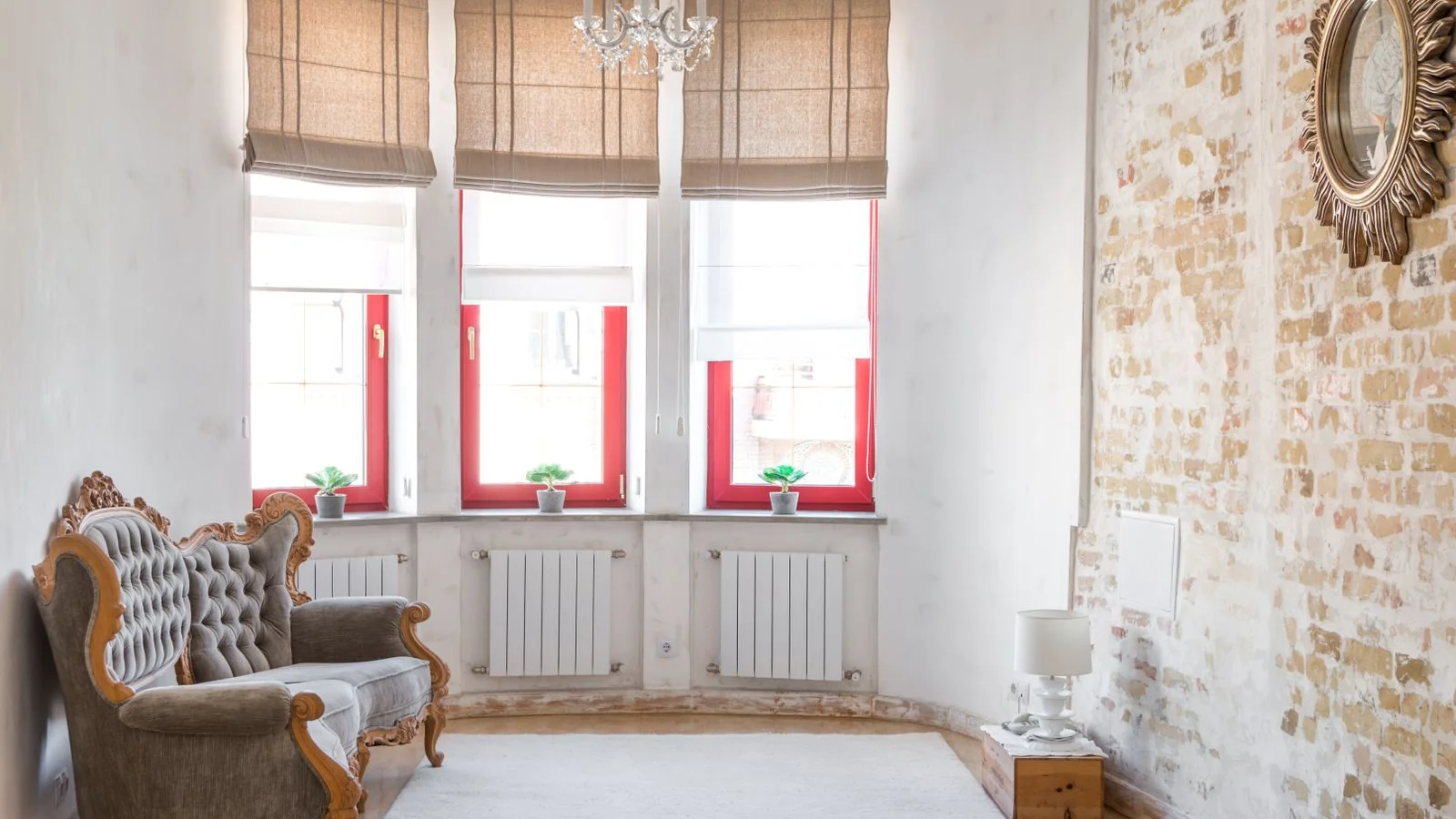
Your photographer’s gallery lands on a Tuesday. Forty-two frames of a renovation you spent fourteen months inside: the kitchen that took three cabinet revisions, the stair runner the client fought you on and now shows off, the back porch that made the whole floor plan work. You scroll it twice and think the thing every designer thinks at that moment. This belongs in House Beautiful.
Then you go looking for the door and find a wall. No editor’s inbox on the team page. No submissions address in the magazine. An advertising contact, a newsletter signup, and several thousand shopping posts. So you do what most people do, which is send a note to whichever name you can find on Instagram, and wait.
That wait is the whole problem, and it is avoidable. How to get featured in House Beautiful is a narrower question than it looks, because there is a route in. It is more literal than most people assume, and the famous programmes everyone wants a slot in get decided somewhere other than your inbox.
A 130-year-old title with a very short bench
House Beautiful was founded in 1896, which makes it older than the profession of interior design as we practice it. Hearst began publishing it in 1934 and still owns it, per Wikipedia’s publication history, and Hearst’s own brand page says the title has been offering inspiration “since 1896” under the line “Where great design begins.” That page also describes the brand as the place where emerging designers get introduced. Read that as a statement of appetite rather than marketing, because it tells you what editors are shopping for.
The longevity matters for one practical reason. A 130-year-old monthly has a visual register, and that register is not a mood board you can guess at. Wikipedia lists the US edition at ten issues a year, and the print cycle bears that out: the Whole Home story has landed in a combined November/December issue for several years running. Ten slots, not twelve. Every one of them already half-committed to a programme, a seasonal package or a returning name.
The bench is short too. In October 2018, Business of Home reported that Hearst disbanded its Hearst Design Group and cut fifteen staff across House Beautiful and Veranda, with editor in chief Sophie Donelson, editorial director Newell Turner, market director Sabine Rothman and interiors editors Carolyn Englefield and Doretta Sperduto all out. Joanna Saltz, who had relaunched the website that June, was installed as editorial director over print and digital, reporting to Hearst chief content officer Kate Lewis. The digital side took the wheel and print followed. MediaPost reported on 10 January 2024 that Jess Teves joined as executive editor under Saltz, with a brief covering “content and commerce strategy” across magazine, video and social. Hearst Magazines International’s current brand page lists Allie Holloway as editor-in-chief for the US edition and Torri Mundell for the UK.
So the title you are pitching is a commerce-literate, digital-first operation with a small core team covering whole-home projects, kitchens, renovations, shopping, decorating ideas and real estate. The work that gets in has to earn a page across more than one of those.
What actually happens after you hit submit?
House Beautiful publishes its own instructions, and they are blunt. The magazine’s guide to pitching a home for editorial coverage, published 17 April 2023, routes every project through a single online form and states: “No projects will be considered unless submitted through the form!” That sentence is the most useful thing in this post. The named editors you were about to email are not the route. The form is the route.
The mechanics are specific. Images go in as a PDF with no more than four per page, and the file cannot exceed 10MB. You do not choose the platform; the magazine says editors decide where a project runs, if anywhere. You get a confirmation email, the editorial team is notified, and that team meets on a schedule to review what has come in. Then comes the line nobody quotes but everybody needs: if you have heard nothing in three months, assume it was passed on and pitch it elsewhere.
Run the arithmetic on that 10MB ceiling, because it sets your edit. Four images per page at print-usable resolution means a sensible submission is sixteen to twenty frames, not the full forty-two. Somebody has to choose which ones, and if you do not, compression will.
Lead times follow the print calendar, not your project completion date. House Beautiful announced its 2025 Whole Home on 11 August 2025, and the accompanying print story reached newsstands in the November/December issue on 18 November. The 2024 edition followed the same shape, with the November/December Renovation Issue hitting stands on 26 November. Work backwards and the real deadline for a late-autumn print feature sits in spring. A holiday tablescape pitched in October is a pitch for next October. Digital moves faster and is where most first features actually happen, which is why the brand’s commerce and shopping desks are a better first ask than the print well.
Earn the programme slots before you ask for one
Whole Home is the prize, and it is the least pitchable thing the magazine does. The 2025 edition, announced that August, put eight designers into a 3,800 square foot treehouse-style build in the Deep Eddy neighbourhood of Austin, Texas: Sara Malek Barney, Rydhima Brar, Caitlin Creer, Amber Guyton, Kathy Kuo, Amber Lewis, Kim Lewis and Leah O’Connell, with Katie Hastings Architecture on the drawings. It ran online and in the November/December 2025 print issue. That is the outcome every designer reading this wants. Look at how the roster got built and you can see why a cold submission will not get you there.
Back in May 2019, for the second Whole Home in Nashville, then senior editor and market director Carisha Swanson told Business of Home the team had asked designers for their own idea of a whole home rather than hiring one builder and one decorator, and had looked for people who could “speak to Whole Home” and who understood the magazine’s “love for color, texture and pattern.” She also said the team “brought a diversity of designers to the table.” That is a curator describing a casting process, not an open call.
Sponsors sit in that room as well. Visual Comfort & Co. was exclusive lighting partner on the fifth annual Whole Home in 2022, a twelve-designer reinvention of an 11,000 square foot house in Buckhead, Atlanta. The 2024 seventh annual edition was built in Asheville, North Carolina with builder Living Stone and ten design teams. The 2023 house in Hinsdale, Illinois sold more than 2,000 tour tickets and raised over $100,000 for Humble Design, a Chicago-area nonprofit, according to The Hinsdalean’s 15 November 2023 report. These are commercial productions with partners, builders, ticketing and a charity beneficiary attached. Slots go to designers whose work editors have already seen in person and whose portfolios already photograph in the magazine’s register.
Kitchen of the Year works the same way and has for a long time. In March 2011 Business of Home reported that Food Network host and House Beautiful contributing editor Tyler Florence had been picked to design a 1,000 square foot kitchen at Rockefeller Center, open to the public from 18 to 22 July, with then editor in chief Newell Turner saying only that the team was “excited to have Tyler designing our Kitchen of the Year.” Contributing editor first. Programme second.
Notice what the two programmes have in common. In each case the selection happened in a room: at a breakfast, on a tour, at a trade event, somewhere an editor stood in front of either the designer or the work. That is not a closed door, it is a different door. Showhouses, market weeks and the kitchen and bath trade circuit are where shelter editors do their scouting, and a designer who turns up in those rooms for two seasons running stops being a cold name. The submission form still matters, because it is how a project enters the system with its images attached and its sourcing listed. The room is how your name arrives before the file does.
Which leaves the one programme with a published front door. Next Wave, the magazine’s annual emerging-designer class, took nominations for its 2026 cohort through 4 February 2026 at nextwavenominations@hearst.com, asking for a name, email, Instagram handle, location, a reason and three to four projects shared by Google Drive or Dropbox. Designers are allowed to nominate themselves. Alumni include Nate Berkus, Mikel Welch and Pierce & Ward. NKBA’s 17 June 2025 recap of the 2025 class describes a breakfast at Hearst Tower honouring thirteen studios and seventeen individuals, with executive content editor Jess Teves moderating. If you want to know how to get featured in House Beautiful without a relationship to trade on, that email address is the answer.
The Shoot-Ready Dossier beats the clever email
Here is the packaging method we use for shelter titles, and it exists because the form gives you one shot and no conversation. Call it the Shoot-Ready Dossier. It has five parts and all five go in the PDF.
Start with one room that carries the argument. Not the house. An editor assigns a story, and a story needs a subject: the kitchen where you moved the range to the window wall, the bathroom that reused the original terrazzo. Lead with that room, then show the house as support.
Second, cut to the container. Sixteen frames, four to a page, under 10MB, hero shot first, one wide and one detail per room after that. Third, name everything. Every paint, fabric, fixture, tile and maker, with the trade source. House Beautiful is a commerce brand now, and a project with no sourcing list cannot be turned into a shopping module, which kills half its editorial value. Fourth, state exclusivity in one sentence: where this project has appeared, including your own feed and the builder’s. Editors ask, and finding out later is worse than hearing no. Fifth, give them the human line. Who lives there, what they could not do before, what changed. That sentence is what survives into a headline.
Then build a floor under it, because the answer to how to get featured in House Beautiful cannot be a single monthly with ten issues in it. Instant Press’s own catalog runs 1,016 publications plus roughly 228 Fast Press outlets, 73 of them lifestyle titles and 13 real estate, with a median selling price of $1,500, a mean Domain Authority of 62.3 and 96% Google-indexed. Standard placements land in one to three days against the spring deadline a November print feature requires. Our own data across 1,200-plus journalist relationships and 2,000-plus placed articles says the same thing every time: the designers who get the Whole Home call already have a search result an editor can check, a body of coverage that proves the work travels, and a name that shows up before the pitch does.
Build that record this season and the programme invitation stops being something you chase.