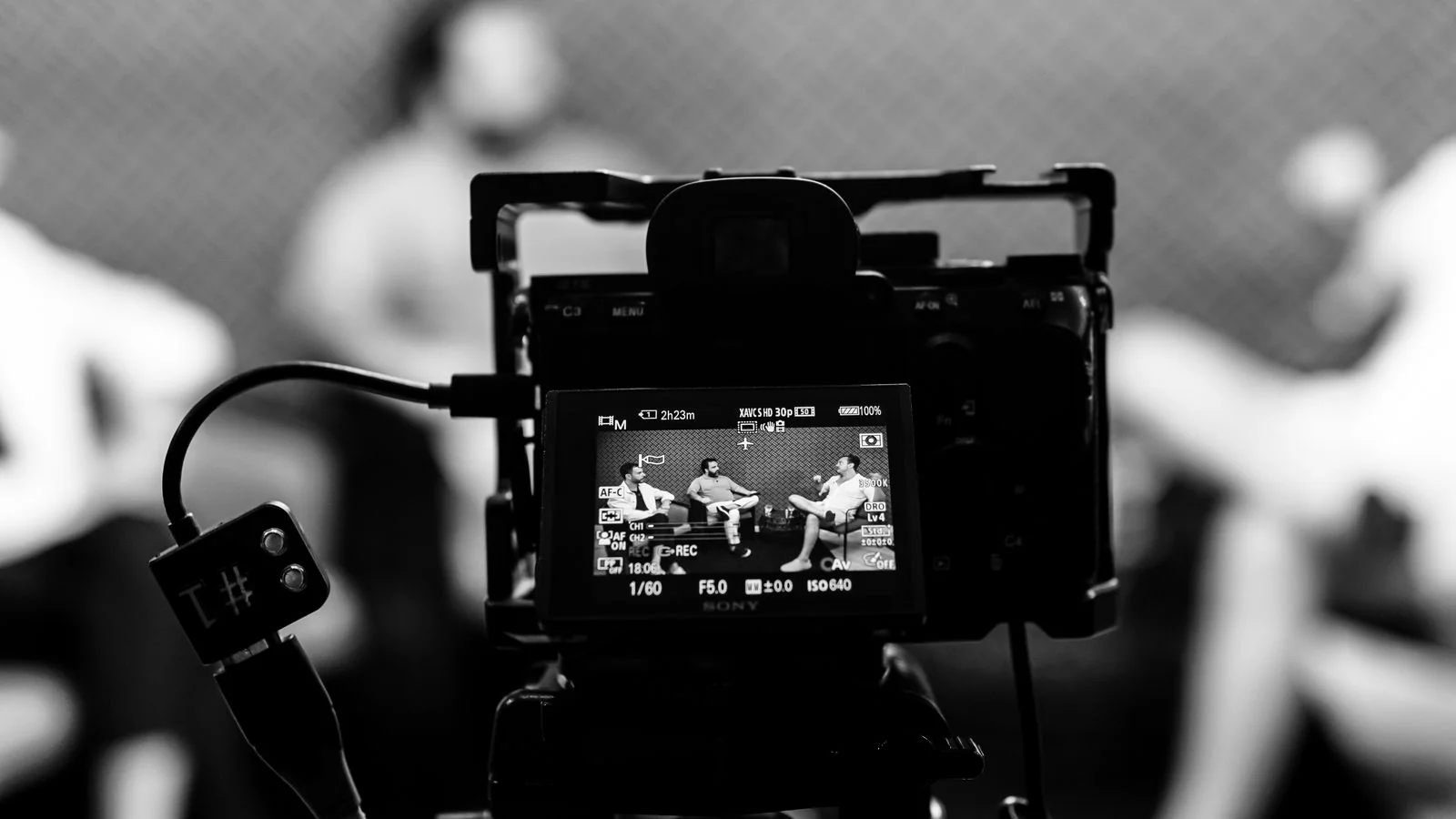
The email arrived at 4:12 on a Tuesday. A reporter from the biggest trade publication in your industry wants twenty minutes with your CEO on Thursday, on the record, about the layoffs everyone already knows about. Your CEO is brilliant in a board meeting and terrible at short answers. Your head of comms is asking whether you can get someone to run a practice session tomorrow, and you have about four hours to pick who.
That is the moment most people start searching for media training companies, and it is the worst moment to choose one. The good firms book up, the cheap ones all sound the same, and every website promises that your spokesperson will “stay on message.” This guide sorts eight real firms by what they verifiably offer, notes which ones publish prices (most do not), and gives you a test for choosing a trainer that works whether you have two days or two months.
What does a media training company actually sell you?
Strip away the branding and a media training engagement sells three things: reps, playback and judgment.
Reps means your spokesperson answers realistic questions, out loud, on camera, many times. Playback means watching the recording right away with someone who can explain why the second answer worked and the first one did not. Judgment means a trainer who knows what an editor will cut, which quote will become the headline, and which question is a trap. The first two are easy to buy. The third is why the price ranges in this category are so wide.
Most sessions follow a similar shape. The trainer helps you settle on two or three core messages, then runs mock interviews that get harder as the day goes on: friendly trade reporter, skeptical business reporter, hostile broadcast segment, the “just one more thing” after the notebook closes. Firms differ in who plays the reporter, how much customization they do in advance, whether they cover crisis scenarios, and whether anyone checks in after the session ends.
What you should not expect is a script. The best media training companies teach a spokesperson to answer the question asked, briefly, and then bridge to a message, not to recite talking points regardless of the question. Reporters spot the recital in seconds and write about it. If a firm’s sample materials read like a list of approved sentences, keep looking.
Formats vary too. Half-day and full-day sessions remain standard. One-to-one intensives suit a single executive with a big interview coming. Group workshops suit a leadership team or a bench of subject experts. Remote training has become normal, and some firms have rebuilt their programs for it rather than streaming an in-person day over video.
Use the Four-Chair Test to choose a trainer
I judge any media trainer with a frame I call the Four-Chair Test. A useful trainer has to sit convincingly in four chairs during your engagement, and most firms are strong in two.
The first chair is the Reporter’s chair. Can the trainer ask questions the way a working journalist would, with the follow-ups, the false premises and the repeated question that wears a spokesperson down? Trainers who spent years in newsrooms tend to be better here, which is why so many firms advertise former producers and reporters.
The second is the Editor’s chair. After the mock interview, can the trainer tell you which eight seconds would make the broadcast and which sentence would become the pull quote? Spokespeople fail less often in the interview than in the edit, and an editor’s eye catches the throwaway line that becomes the story.
The third is the Coach’s chair. Can the trainer give feedback your executive will accept and use? This is part technique (posture, pace, answer structure) and part psychology. A CEO who feels lectured stops listening.
The fourth is the Follow-up chair. Does the relationship end when the session does? Media skills decay. A trainer who offers refreshers, prep before specific interviews, or crisis support months later is worth more than one who delivers a strong day and disappears.
On a scoping call, ask each firm who will sit in each chair. If the answer to the Reporter’s chair is “our facilitator,” and the answer to the Follow-up chair is a pause, you have learned what you need.
Throughline Group stays on after the workshop
Throughline Group, with offices in New York and Washington, DC, is led by Brad Phillips, its Chief Executive Throughliner, who has worked in the field since 2004. Phillips wrote The Media Training Bible, released in 2012, and previously worked at ABC’s Nightline and on CNN programs. His partner Christina Mozaffari produced stories for NBC News programs and shared an Emmy for NBC’s 2008 election night coverage. The firm grew out of Phillips Media Relations, his earlier company, whose blog was for years one of the most visited media training sites.
The firm offers customized media training workshops, one-to-one coaching, and executive media training, alongside public speaking work. Its topics include interview technique, nonverbal communication, hostile questions and the tactics reporters use to pull a spokesperson off message. Training runs in person in New York, at client sites, or remotely in a live online format that the firm says it designed for remote learning, with shorter and more frequent sessions.
On the Four-Chair Test, Throughline is strong on the Reporter’s chair because of its leadership’s newsroom backgrounds, and it was founded around the Follow-up chair: the firm says it started Throughline to give clients ongoing support instead of one-off workshops. Pricing is not published.
Success In Media publishes its price range
Success In Media, based at 295 Madison Avenue in New York, is run by Jess Todtfeld, a former producer for NBC, ABC and Fox who spent 13 years in the role and produced more than 5,000 segments. He also holds a Guinness World Record for media interviews in 24 hours. The firm also trains in person in Washington, DC, Los Angeles and Chicago, and runs virtual sessions.
Its program description is specific. Sessions start with three core messages built before filming. Participants answer interview questions on camera, watch the playback right away, and get coached on posture, pacing, eye contact and answer structure. Trainers run the usual journalist tactics (gotcha pivots, repeated questions, false premises) and teach the spokesperson to steer back. Participants keep the video library. Engagements run a half day of about three to four hours or a full day, as one-to-one intensives or capped group workshops.
Success In Media is also one of the few firms in this list that puts numbers on its site: a typical range of $1,000 to $15,000 per engagement, depending on participants, customization and format. That range will not tell you your exact quote, but it lets you budget before the call. A former producer’s view of what gets used on air puts the firm firmly in the Editor’s chair.
Media Training Worldwide suits teams that want self-serve options
Media Training Worldwide was founded by TJ Walker, who has more than 30 years in public speaking and media training and whose book Secret to Foolproof Presentations was a USA Today bestseller. The company stands apart for scale. It offers more than 200 online, in-person and blended courses and says it has 2.1 million students in 172 countries.
That online catalog is the reason to look here. Its course school includes a seven-part media training course covering how to look your best on video, how to build media messages, how to answer reporters’ questions on your terms, how to package a message into sound bites, and how to practice interviews on video. Walker also publishes daily public speaking content. For a company that needs to give dozens of regional managers or subject experts a baseline before a smaller group gets live coaching, a course library is cheaper per head than flying a trainer in.
The trade-off is the Coach’s chair. A recorded course cannot watch your playback and tell you what went wrong. Use it for the baseline and pay for live sessions for the people who will face the hardest interviews.
The Newman Group fits presentation-heavy executives
The Newman Group, in New York, was founded by presentation expert Joyce Newman and is led by Richard Newman as president. O’Dwyer’s PR services directory describes it as a provider of virtual executive media training, business presentation coaching and crisis communication facilitation, with coaches who train clients around the world. Another firm profile credits it with a team of 20 trainers and more than 30 years in business.
The Newman Group’s mix makes it a sensible choice when your spokesperson’s real weakness is not the reporter but the stage: earnings calls, keynote slots, investor days, internal town halls that leak. Media training and presentation coaching overlap more than most firms admit, and a trainer who does both can fix the habits that show up in every setting. Formats include one-to-one coaching and small group sessions. Pricing is not published, so ask how virtual and in-person sessions compare.
The case for a firm like this is strongest when the same executive will appear in many formats over a year. Say your CFO will do a quarterly earnings call, two conference panels, a podcast and a handful of trade interviews. Training each appearance separately produces five sets of advice. A coach who sees all five can fix the single habit (rushing the first sentence, burying the number, apologizing before answering) that shows up in every one.
Before you book anyone, line up the published facts side by side.
| Firm | Base | Formats | Published pricing |
|---|---|---|---|
| Throughline Group | New York, Washington DC | In person, client site, live online | Not published |
| Success In Media | New York | In person, virtual, half or full day | $1,000 to $15,000 per engagement |
| Media Training Worldwide | Online, in person | Courses, live coaching | Varies by course |
| The Newman Group | New York | Virtual, one-to-one, small group | Not published |
| Media First | Wokingham, UK | Face to face, studios, online | Not published |
| PA Media | UK | Studio, client site | Not published |
| Benjamin Ball Associates | London, Oxford | One-to-one, group, online | Not published |
| Yoodli | Software | AI roleplay | Free start, $8 or $20 a month (annual) |
Which UK firms put working journalists in the room?
If your spokespeople face British broadcasters, national papers or parliamentary scrutiny, a UK firm will know the formats and the reporters. The broadcast rhythms differ, the regional press works differently, and a select committee hearing has conventions of its own. Among UK media training companies, three stand out for what they verifiably offer.
Media First
Media First, based in Winnersh near Wokingham, says its trainers are a team of current working journalists, which is a direct answer to the Reporter’s chair question. It runs media skills courses in person and online, plus crisis communication training, presentation skills, writing skills, and podcast production and presentation. Courses are designed by account managers after a briefing, and the firm trains at client offices or in studios. On the course review site Coursecheck, its in-person media skills course shows a 4.9 rating across more than 1,600 reviews. Prices are not listed.
PA Media
The Press Association’s media training team offers bespoke media training (full, refresher and crisis versions), crisis media training for spokespeople and press offices, select committee training for anyone called to give evidence in Parliament, panel training, public speaking, and shorter Media Interview Essentials and Crisis Interview Essentials courses. Bespoke work is led by journalist media trainers, in a professional studio or at the client’s site. The select committee option is rare and useful for regulated sectors. Pricing is not published.
Benjamin Ball Associates
Benjamin Ball Associates, with offices in London and Oxford, covers press, TV and radio interview preparation, question handling and crisis media preparation. Its formats include one-to-one coaching, group sessions, online video presentation coaching, in-house training and conference panel preparation, delivered as fast, intensive role-play courses. A May 2026 release said the firm had strengthened its executive media training in response to rising demand. Pricing comes by quote after a free consultation.
Can an AI coach replace a human media trainer?
Not yet, but it can make human training go further. Yoodli is the most visible AI speech coach, and its pricing is public: individuals can start free with five lifetime sessions, the Pro plan is $8 a month billed annually for up to ten roleplays a week, and Advanced is $20 a month billed annually for unlimited roleplays. Business and Enterprise plans are priced per seat through sales.
Yoodli’s own pricing page lists interview prep, public speaking and pitch practice, but does not mention media or press interview scenarios by name, so do not expect a simulated hostile reporter out of the box. What a tool like this does well is volume. A spokesperson can rehearse a core message twenty times in a week, at night, without booking anyone, and arrive at a human session already past the basics.
On the Four-Chair Test, software covers part of the Coach’s chair (pace, filler words, structure) and none of the Editor’s chair. It cannot tell you that your fine answer contains a sentence a reporter at a national daily would lead with. Treat it as practice between sessions, not a substitute for them.
A practical setup for a mid-sized company looks like this. A human trainer runs the baseline session and leaves each spokesperson with three core messages and a short list of habits to fix. Each spokesperson then rehearses those messages in an AI tool for a few minutes a week, recording answers to the questions the trainer flagged. Before a big interview, the human trainer comes back for a focused prep call. The software handles repetition, which is cheap, and the person handles judgment, which is not. That split also keeps the Follow-up chair occupied between paid sessions, which is where most training programs quietly fall apart.
Book the session before the interview request lands
Go back to the Tuesday email. The reason it felt like a crisis is that the training came after the request. Firms that already know your executives, your messages and your weak spots can run a useful prep call in an afternoon. Firms meeting you for the first time spend half the session learning who you are.
There is a budget argument as well. A rushed booking usually means paying for a premium slot with a trainer who has no time to prepare, and the session drifts toward generic tips. A planned engagement lets the trainer read your recent coverage, pull the questions reporters have already asked your competitors, and build exercises around your actual weak points. You get more from the same fee when the trainer has time to prepare, and a baseline session booked weeks out gives them that time.
So pick a trainer now, while nothing is on fire. Run the Four-Chair Test on two or three of the firms above, book a baseline session for every executive who might ever be quoted, and agree on how fast the firm can turn around prep for a specific interview. Keep the video from that first session. It becomes your before picture, and it shows you which habits came back six months later.
Training is also only half of being ready. The other half is knowing which reporters cover your space and what they have written lately, so your spokesperson walks in knowing the angle. That research is part of what we do at Instant Press, and it pairs well with any of the trainers here.
The executives who will handle the next hard interview well are the ones whose trainer already has their number saved.