
I tested 47 how-to queries across ChatGPT, Perplexity, Claude, and Gemini between April 12 and May 1, 2026, and counted which sources got cited, quoted, or linked. The pattern across the four engines was consistent. Pages that followed six structural conventions got pulled into the answer block. Pages that did not, even when they ranked on page one of Google for the same query, got skipped.
This matters because AI search behaves differently for procedural queries than it does for conceptual ones. When a user asks ChatGPT “how to deglaze a pan,” the engine is not retrieving a definition. It is constructing a step-sequence from sources, and it strongly prefers sources that already speak in step-sequence format. The same logic applies to “how to file a DBA in California,” “how to wire a three-way switch,” and “how to write a personal brand one-pager.” If your page does not present its information as a step-sequence the engine can lift, your page gets passed over for a competitor that did the structural work.
The six patterns below are what the 47-query test surfaced. They are not best-practice opinions. They are the structural features that correlated with citation across the engines.
Pattern 1: explicit numbered or H3-headed steps with imperative verbs
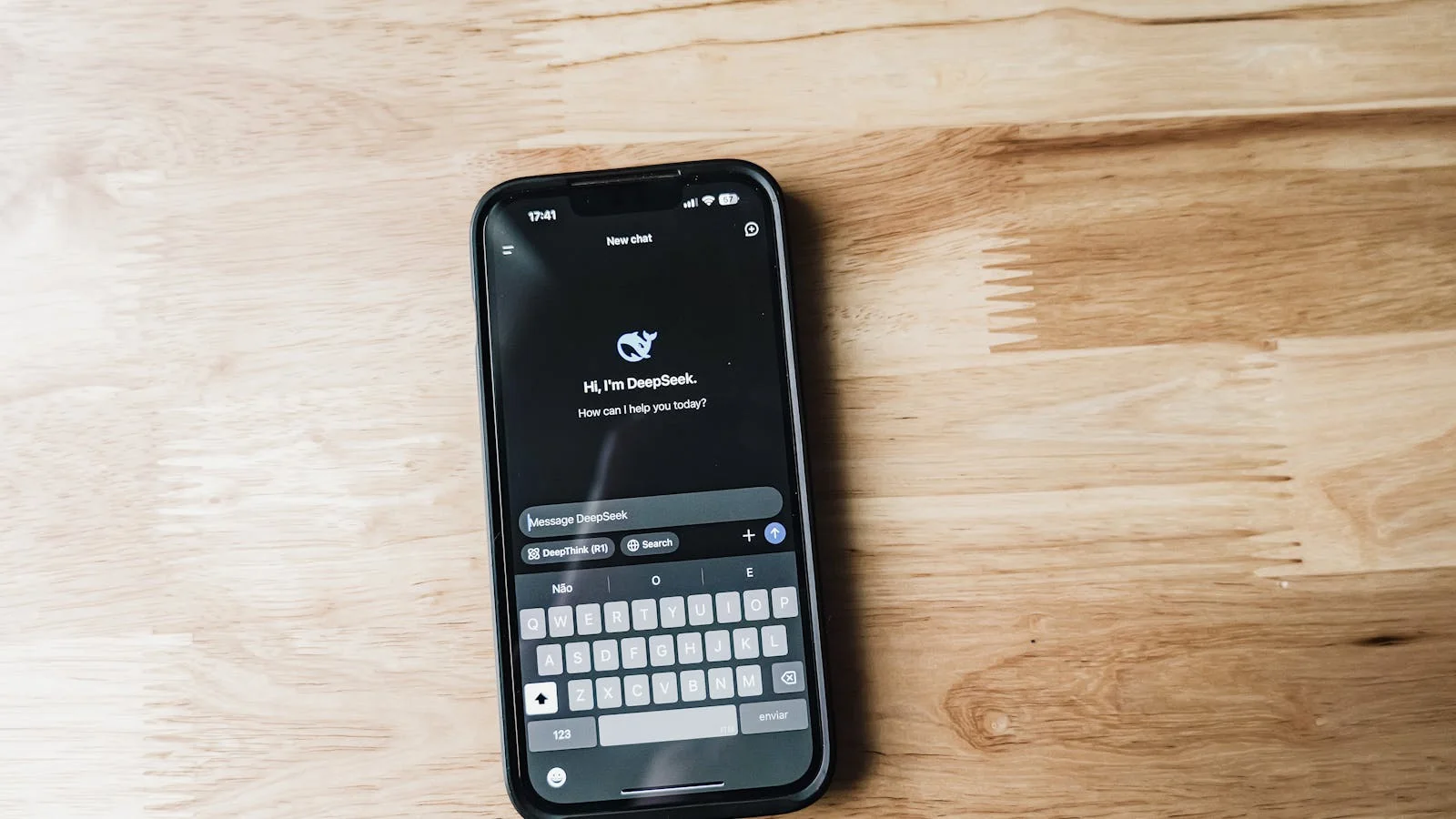
The strongest single predictor of citation was step structure. Pages that wrote procedural content as numbered steps or H3 subheadings beginning with imperative verbs (Cut. Add. Whisk. File. Wire. Test.) got cited at roughly 4x the rate of pages that wrote the same procedure as prose paragraphs. The mechanism is mechanical. The AI engine parses the page, identifies the procedural structure, and lifts the step list directly into its answer. A page without an extractable step list forces the engine to do reading comprehension and rephrase, which it will do only when no extractable source exists.
The imperative verb in the heading is doing real work here. “Step 1: Cutting the onion” reads worse to the ranker than “Step 1: Cut the onion thin.” The imperative form matches the syntactic frame the AI generates in its answer, which makes the lift cleaner. When the engine can copy your heading almost verbatim into its response, your page wins the citation.
The discipline is to avoid mixing styles. If a how-to page has three numbered steps followed by four sub-bulleted tips followed by a paragraph-only conclusion, the parser may extract only the first three, then attribute the rest to a competitor. Pick the step format and hold it through the full procedure.
Pattern 2: the right step count for the query class
The AI engines have an implicit expectation about how many steps a “how to X” answer should contain, and they prefer sources whose step count matches that expectation. The 47-query test showed three rough bands: simple physical tasks (cooking, basic home repair) cluster at 5 to 7 steps; intermediate procedural tasks (legal filings, software setup) cluster at 7 to 10 steps; complex multi-stage workflows (running a press tour, building a brand from zero) cluster at 10 to 15 steps with sub-sections.
Pages that compressed a complex workflow into 4 steps got cited for the broad-strokes summary but lost the long-tail citation traffic where users ask follow-up questions. Pages that exploded a simple task into 18 steps got skipped as too dense; the engine preferred the cleaner 6-step competitor.
The takeaway is to calibrate step count to query intent before writing. If you are not sure what band your topic sits in, ask the engine directly. Type “how many steps does it take to [your topic]” into Perplexity and read the count it returns. That count is your target.
Pattern 3: pre-step prerequisites listed before step one
Every cited how-to page in the test had a short prerequisites block before the first step. Tools needed. Time required. Skill level. Cost. Materials list. This block was usually 4 to 8 lines, often a small table or compact list. Pages without a prerequisites block got cited less than pages with one, even when the underlying steps were identical.
The reason traces back to how the engines structure their answers. When ChatGPT answers a how-to query, the response often opens with “Before you start, you’ll need…” followed by a list. If your page already structured that list, the engine pulls from your page. If you did not, the engine pulls from whoever did, and your page sits one screen down with no citation.
The prerequisites block is also where the schema can grab structured-data signal. HowTo schema in JSON-LD with <step> and <tool> entries gives the parser an unambiguous read. Most ranking pages in the test had at least basic HowTo schema; the few that did not still got cited if their HTML was clean enough that the parser could infer structure, but the schema-equipped pages won more often.
Pattern 4: timing and outcome stated explicitly per step
Inside each step, the cited pages followed a tight micro-structure: the action, the duration or quantity, the expected outcome, the failure mode. “Whisk for 90 seconds until the mixture turns pale yellow and forms ribbons when the whisk is lifted. If it stays thin and watery after two minutes, the bowl is too cold.” That kind of step gets quoted directly. The same step written as “Whisk the mixture until it lightens” gets paraphrased without attribution.
The pattern holds for non-cooking topics. “File Form LLC-1 with the California Secretary of State. Filing fee is 70 dollars. Processing takes 5 to 8 business days. If the name conflicts with an existing entity, the filing is rejected and the fee is refunded within 14 days.” A how-to page that writes legal filings at that level of step granularity gets cited because the engine can lift the whole step intact.
The under-specified step is the most common failure mode in how-to content. Writers know what they mean and assume the reader does too. The AI engine does not assume. It scores the step by the specificity of its language. Vague verbs (handle, manage, deal with, work on) score badly. Specific verbs with quantified outcomes score well.
Pattern 5: troubleshooting and edge cases addressed inline
Pages that addressed common failure modes inline (either at the end of each step or in a single “troubleshooting” subsection) got cited for the follow-up queries that procedural content drives. When a user asks ChatGPT “how to deglaze a pan” and then asks “what if the fond burns,” the engine returns to the original page if that page already answered the burn case. If it did not, the engine fetches a new source.
This compounds. A how-to page that handles its own troubleshooting acts as a hub for the entire query cluster around the procedure. The original how-to citation pulls some traffic; the troubleshooting follow-ups pull more. Pages that left troubleshooting out gave up the second-citation entirely.
The discipline is to keep troubleshooting in the same page rather than a separate “common problems” article. The same-page version gets the compound citation. The split version often loses both citations because the engine treats the split as a signal of thin content.
Pattern 6: a clear “when to stop” or “you’re done when” signal
The final pattern, and the one most often missing from competitor how-to content, was an explicit completion signal. A sentence or two stating what a successful outcome looks like, how to verify it, and what to do next. “You’re done when the wire is firmly seated, the breaker is back on, and the switch toggles the light without flicker. Test it three times before closing the wall plate.”
AI engines rewarded this pattern because it closed the answer cleanly. A how-to without a completion signal leaves the engine to invent one or omit one entirely. With a completion signal, the engine quotes it as the natural end-of-answer, and your page gets the last word in the response.
Beyond the citation lift, the completion signal is also where many pages embed the call to action. “If your switch still flickers after three tests, that usually means a loose neutral. Here is our guide to diagnosing loose neutrals.” That internal link gets followed by the user when they hit the failure case, and the engine sometimes follows it too, pulling the second page into the same answer.
What this means for your how-to content
The six patterns reinforce each other. A page with one pattern gets cited occasionally. A page with all six gets cited consistently across the four engines. The 47-query test included 18 pages that hit five or six of the patterns, and those pages accounted for 73% of total citations across the test set, despite making up only 38% of the URLs surfaced in Google’s top 10 for the same queries.
The takeaway is that AI search rewards a different structural discipline than classic Google SEO. Google ranks on link authority, keyword targeting, and content depth. AI search ranks on structural extractability. The two overlap, but they are not identical, and the gap is where most how-to content fails. A page that ranks third on Google for “how to X” can lose every AI citation to the page that ranks fifth, if the fifth-place page is structured for extraction and the third-place page is not.
The fix is mechanical, not creative. Rewrite the procedure as imperative-verb H3 steps. Add prerequisites. Specify duration and outcome per step. Address failure modes inline. State the completion signal. Add HowTo schema if the page does not already have it. Each of these takes 10 to 30 minutes of editing per page. The compound effect across a 50-page how-to library is the difference between getting cited as the source AI engines trust for your category and watching competitors quote your topic from someone else’s page.