
Picture a fabricator, call him Ray, who ran a solid shop that nobody outside his handful of repeat customers had ever heard of. He was quietly excellent at structural work, certified to the American Welding Society’s D1.1 code, the kind of welder whose joints hold up buildings and bridges. Then he did something simple. He started writing plainly, online, about what that code actually requires, why so many structural welds fail inspection, and how a buyer can tell a shop that meets spec from one that fakes it. Within a year, engineers he had never met were calling to specify his shop by name.
Ray did not get louder. He got clearer, in public, about the expertise he already had. That is the whole idea behind thought leadership for welding shops, and it is a wide-open lane because almost no shop does it. Welding is invisible expertise, buried in codes and metallurgy that customers cannot evaluate, which means the shop that explains it becomes the trusted authority almost by default. Here are the five angles that get you there.
Welding is invisible expertise, and that’s your opening
A finished weld tells a buyer almost nothing. They cannot see whether the penetration is right, whether the process suited the material, whether it will hold under load or crack in a year. The expertise that separates a great shop from a dangerous one is completely invisible to the person paying for it. That invisibility is usually treated as a marketing problem. It is actually the opportunity.
Because buyers cannot judge the weld, they judge everything around it, and the shop that helps them understand what quality even means earns their trust instantly. When you explain the difference between a code-compliant weld and a pretty-looking one that fails inspection, you are not giving away secrets. You are teaching the buyer to value exactly what you do well, which moves the conversation off price and onto competence. In a trade where everyone else stays silent about the technical reality, the shop that speaks becomes the expert.
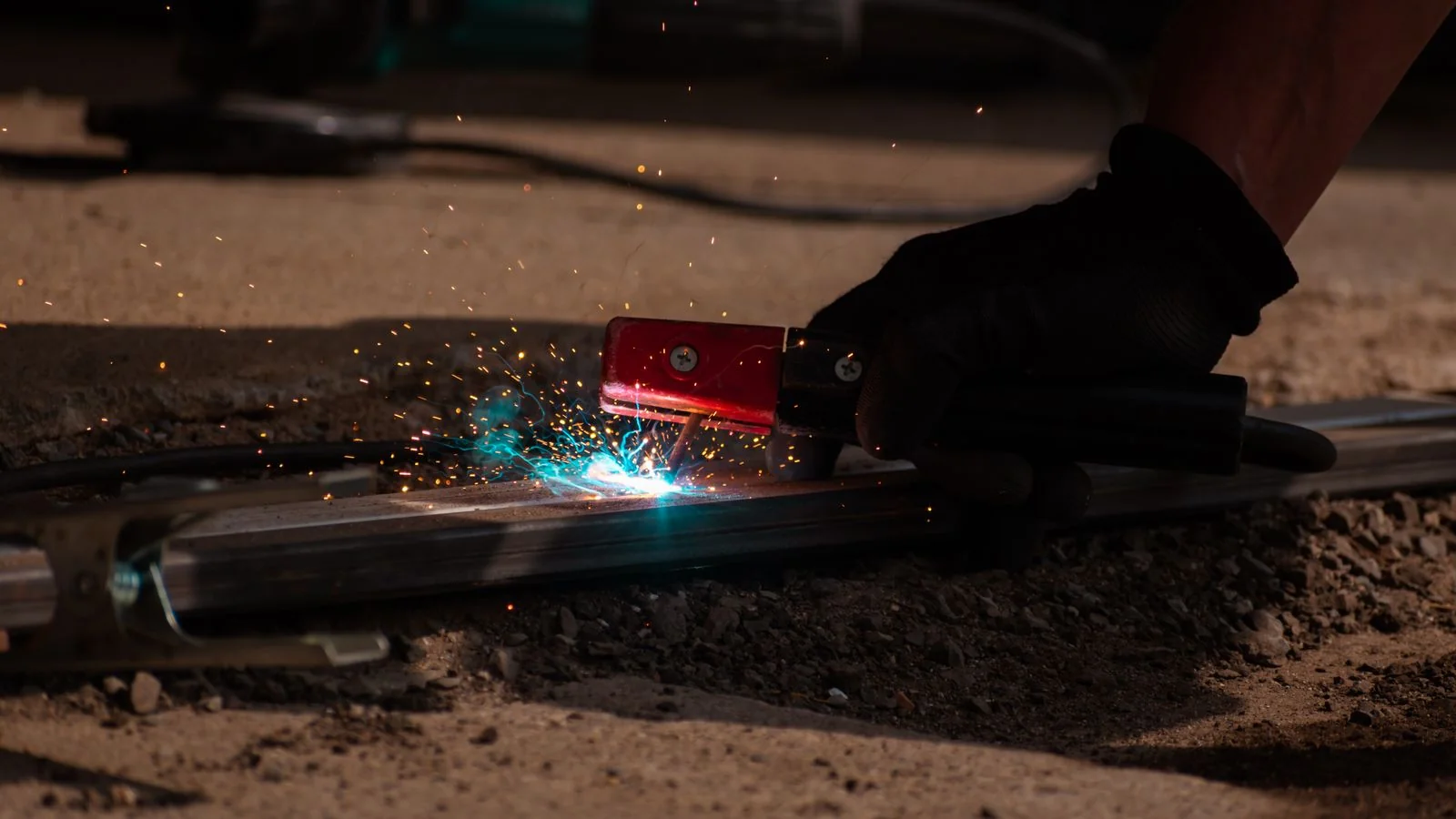
The Weld-Spec Platform
Here is the model to build on. Your authority does not come from saying your welds are good. It comes from owning the technical ground buyers cannot walk themselves: the codes, the specifications, the certifications, the failure analysis, the process and material decisions that determine whether a weld is safe. I call that the Weld-Spec Platform, the body of hard, checkable expertise you make public so that buyers, inspectors, and engineers come to see you as the authority on the things that actually matter.
The Weld-Spec Platform works because it is impossible to fake and easy to verify. A competitor can claim quality. They cannot casually explain the requirements of a structural code, walk through why a specific joint failed, or teach a buyer how to read a weld inspection report unless they truly know the trade. When you publish that knowledge consistently, you build a platform of proof that stands far above the shop posting stock photos and calling itself the best. Thought leadership for welding shops is really the discipline of turning your certifications and code knowledge into public authority instead of a line on a capabilities sheet nobody reads.
Teach the buyers who can’t read a weld
Most of your buyers, and even some of the people specifying you, cannot evaluate a weld on their own. That is not a knock on them. It is the reality of a specialized trade, and it means your single most valuable content is teaching them how to think about quality. Explain what makes a weld sound, why the right process matters for a given material, what a certification actually guarantees, and how to spot a shop cutting corners that will surface as a failure later.
Teach plainly, without condescension and without jargon for its own sake. A buyer who learns from you how to judge welding will judge every other shop by the standard you taught them, and that standard will point back to you. This is how expertise becomes an advantage rather than a hidden asset: you educate the market to value the very things you do best, so being the best finally translates into being chosen.
The stakes make this teaching more welcome than it might seem. Welding is one of the few trades where getting it wrong can be genuinely dangerous, and buyers sense that even when they cannot articulate it. A structural weld that fails does not just cost money, it can bring down a mezzanine or a stair. When you explain, calmly and without scare tactics, what separates a sound weld from a risky one, you are addressing a fear the buyer already carries, and relieving a fear is one of the fastest ways to earn trust. The shop that treats buyers as capable of understanding the stakes, and takes the time to walk them through it, becomes the one they feel safe hiring. Condescension loses. Clear, respectful teaching about work that actually matters wins.

What should a welding shop publish?
Start with the questions and failures you already deal with. Why do welds crack? What does a given code require and why? How do you choose between processes for a job? What separates a certified structural weld from a decorative one? Each is a piece of content, and each is a chance to prove depth. Write the explanations you already give customers by hand, and record short videos that let people watch the work and hear you reason through a decision.
Failure analysis is especially powerful. A clear breakdown of why a weld failed, what went wrong, how it should have been done, teaches vividly and positions you as the shop that understands the stakes. Buyers remember the shop that showed them exactly how things go wrong, because it proves you know how to make them go right. That library of practical, technical content becomes the backbone of your Weld-Spec Platform.
Certification is another vein worth mining, because most buyers do not actually understand what your credentials mean. A shop certified to a structural code carries proof of competence that a homeowner or even a junior project manager cannot interpret on their own. Content that explains what a given certification requires, how the testing works, and why it matters for a load-bearing weld turns an abstract line on your capabilities sheet into a reason to trust you. It also quietly exposes the gap between you and the uncertified competitor bidding against you, without you ever having to name them. Teaching buyers to ask “are you certified to the right code for this?” is teaching them to disqualify everyone who is not, which is a powerful thing to have the market doing on your behalf.
Reach the engineers and GCs who specify you
The biggest welding jobs are not won at the retail level. They are specified by engineers, architects, and general contractors, and those people gather on LinkedIn and in industry forums. Show up there with genuine technical value, answering real questions about code, process, and material, and you put your expertise directly in front of the people who control the largest budgets and the repeat work.
Trade associations, supplier events, and local contractor groups add a face to the authority your content builds. A shop owner who speaks at these gatherings, always teaching rather than selling, becomes the name that engineers reach for when a job demands someone they can trust. These relationships, built on demonstrated expertise, feed a fabrication business for years and rarely come down to a low bid.
Show up in AI answers about welding
The buyers and engineers researching welding are increasingly asking AI tools, ChatGPT, Perplexity, Google’s AI results, instead of scrolling through search links. When someone asks which shop can handle a structural job, or what a given code requires, those systems build an answer from the clearest, most authoritative technical content they can find. A shop that has published direct, specific explanations of codes, processes, and failure modes gives a model exactly the material it reaches for, which means your expertise can end up quoted in an answer your competitor never even appears in.
Earning that visibility is the same work as everything else on your Weld-Spec Platform, aimed with a little intention. Write content as plain answers to real questions, lead with the direct answer before the detail, and use headings that match how buyers actually phrase things. Keep your shop’s name, certifications, and details consistent everywhere they appear, so a model recognizes you as one coherent, credible entity rather than a scatter of half-matched listings. Do that and the technical authority you build pays off twice, once with the human reading your work and once with the machine that now answers on your behalf when you are not in the room.
Be patient; authority compounds
None of this pays off in a week. Thought leadership for welding shops is a compounding asset, not a campaign. The first article, the first video, the first forum answer will feel like shouting into a void. But each one adds to a body of proof that builds slowly and then, past a certain point, starts working on its own, as people cite you, refer you, and specify you without prompting.
The patience is the barrier that keeps competitors out. Most shops try marketing for a month, see no instant return, and quit, which leaves the authority position open for the one shop willing to keep teaching. Stay consistent on your Weld-Spec Platform for a year and you will not be chasing work the way you did before. The work will increasingly come to you, pre-sold by your reputation.
It also compounds in a way advertising never does. An ad stops the day you stop paying. A body of technical authority keeps working, because the article you wrote last year is still answering a buyer’s question today, still being cited by an engineer, still surfacing in an AI answer. Each piece you publish is a permanent deposit into a reputation that pays interest, which is why the shop that starts now and simply refuses to quit ends up with an asset competitors cannot catch, no matter how much they eventually spend trying.
Which brings us back to Ray. He was not a marketer and never became one. He simply decided to explain, in public and on a schedule, the code knowledge he already carried, and he kept at it long after the early silence would have stopped most owners. A year in, his shop was the one engineers named in their specs and contractors called first for the hard jobs, not because he was louder than his competitors, but because he was the only one who bothered to teach. That position is open in almost every market, and it belongs to whoever claims it first.