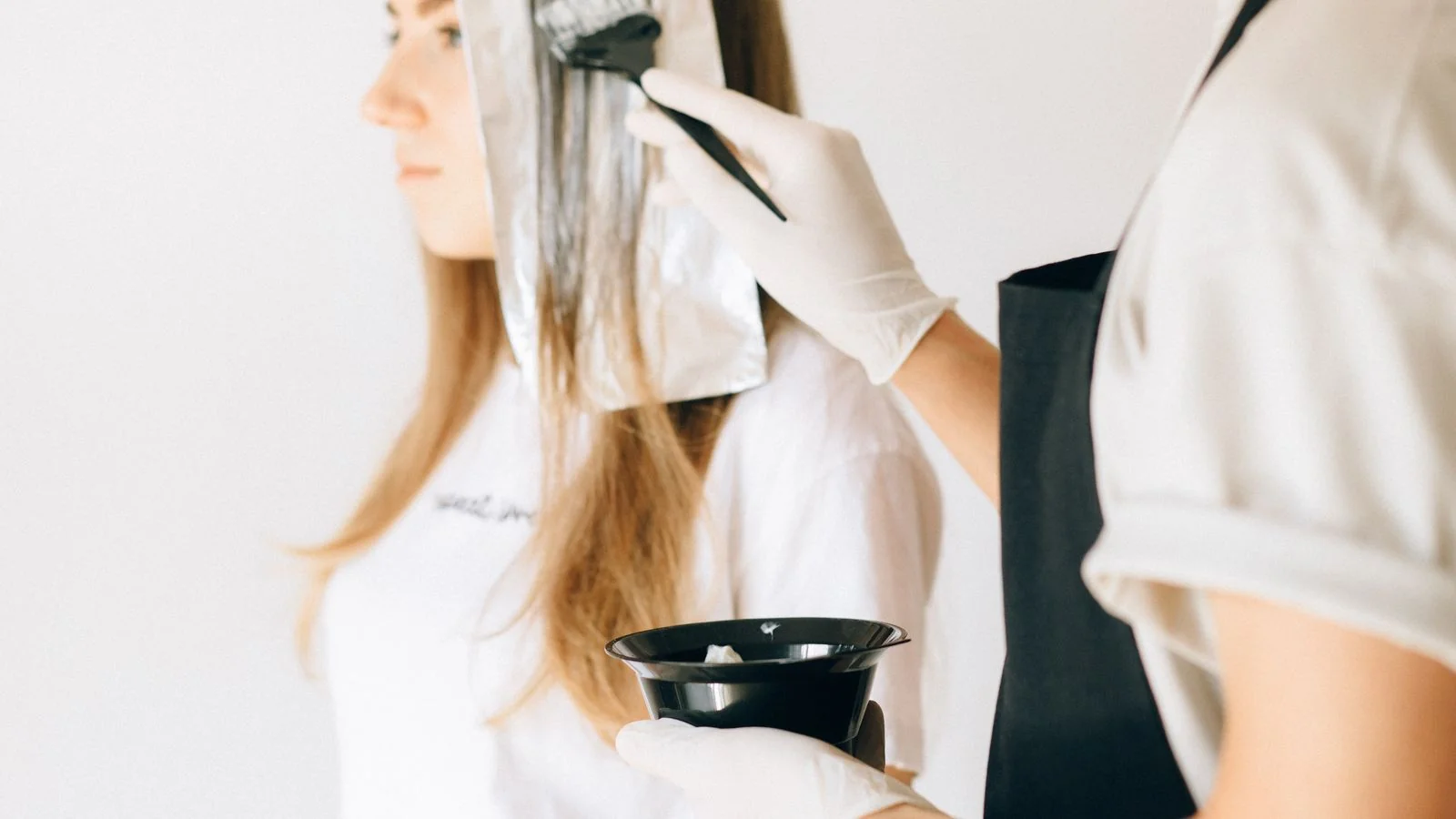
Hair salons are among the most scientifically literate small businesses in any commercial district, and they present themselves as if they sell haircuts.
That mismatch is worth sitting with. A senior colourist is running controlled oxidation reactions on a living substrate several times a day, adjusting for porosity, previous chemical history, water hardness, and the client’s own biology, with no ability to undo a mistake. She knows more practical chemistry than most people with a chemistry minor. And her salon’s website says “we offer cut, colour and styling in a relaxing environment.”
Thought leadership for hair salons starts by recognising that the expertise is already there and the only missing piece is the decision to say it out loud.
The salon owner already has the hardest part
Most professionals who want to be seen as authorities have the opposite problem. They have opinions and no evidence. They want to be quoted and have nothing that would make quoting them useful.
A salon owner has the reverse. Genuine technical knowledge, daily proof, and a public presence that says nothing.
Consider what sits inside an ordinary colour service. Permanent colour works by using an alkaline agent to swell the cuticle and a peroxide developer to oxidise dye precursors into larger molecules trapped inside the cortex. Lightener uses persulfate salts with peroxide to dismantle existing pigment. Every one of those steps has a failure mode that depends on the hair’s previous chemical history, which the client has usually misreported.
None of that is obscure inside the trade. All of it is genuinely interesting outside the trade, and more to the point, all of it is relevant to questions the public is currently asking about cosmetic safety, product regulation, and what is actually in the things people put on their bodies.
The reason salons are absent from those conversations is not lack of standing. It is that nobody in the salon has ever written any of it down in a place a reporter could find.
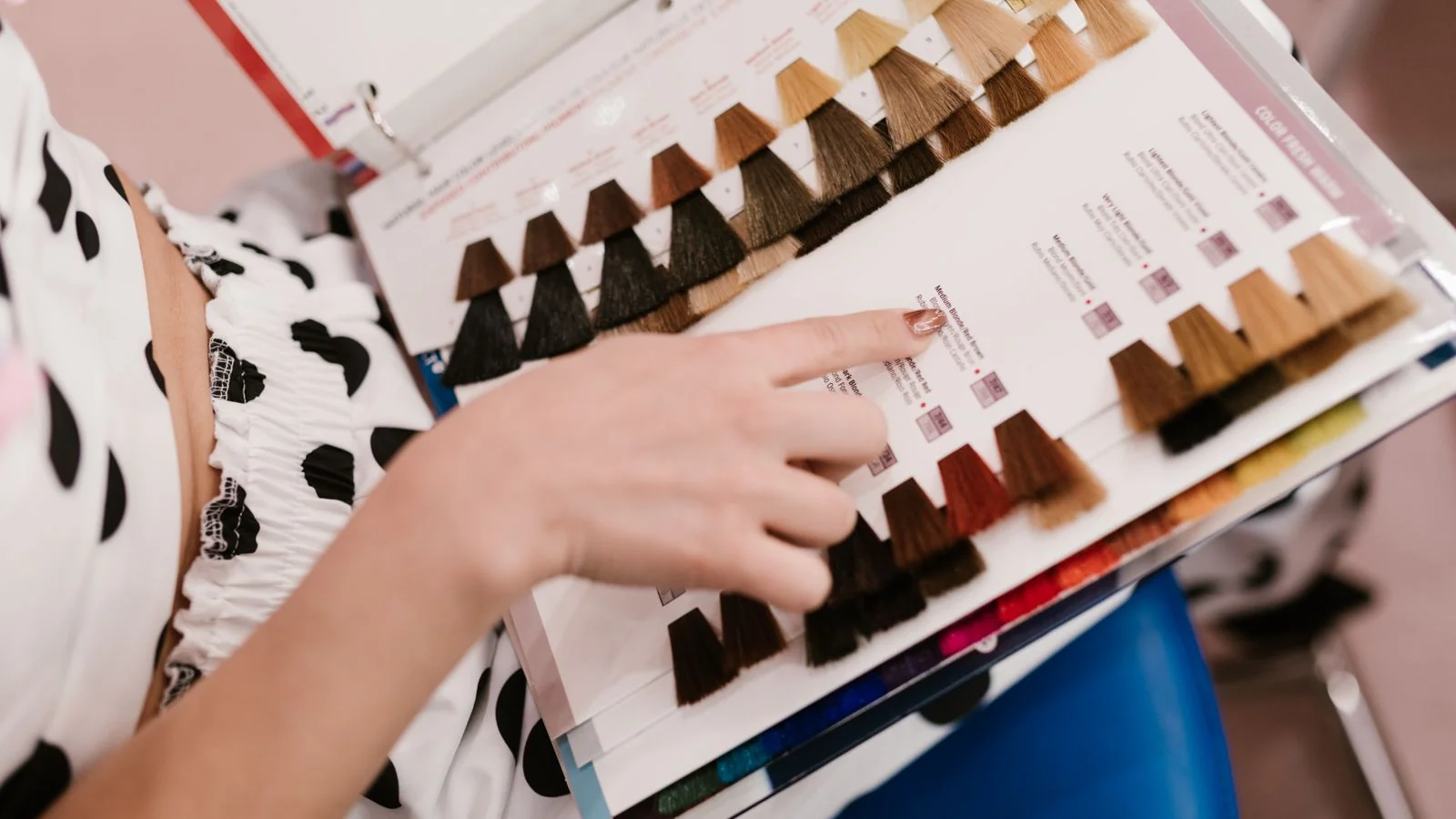
The Chemical Credibility Stack
Here is the framework. Call it the Chemical Credibility Stack, and it works because it moves you up through four levels of authority, each of which makes the next one reachable.
Level one is technique. You can do the thing. Every salon is here. It confers no public authority whatsoever, because the client cannot evaluate it and every competitor claims it.
Level two is explanation. You can say why the thing works and why it sometimes does not, in language a non-professional understands. Very few salons reach this level publicly, and it is where trust with clients is actually built.
Level three is judgment. You can say what you refuse to do and why, and you have a defensible reason that is not commercial. You will not put lightener over a compromised integrity strand. You will not do a smoothing service on a client who is pregnant. You patch test for permanent colour and you do not waive it because someone is in a hurry. Judgment is what separates a technician from a professional in the public mind.
Level four is position. You have a view on something bigger than your salon: regulation, product safety, training standards, disclosure. This is the level at which reporters call you, associations invite you, and AI assistants have something to cite.
Most salons try to jump from level one to level four by having opinions without doing the explanation work underneath. It reads as noise. The stack has to be climbed in order, and each level is published, not just held.
Why does chemistry beat styling as a public position?
Because styling is taste and chemistry is consequence, and only one of those is news.
There is real, ongoing public and regulatory attention on what goes into hair products. Para-phenylenediamine, a common ingredient in permanent dye, is a recognised contact allergen, which is the reason patch testing exists and the reason the European Union restricts its concentration. OSHA issued a hazard alert on formaldehyde in hair smoothing products after testing found the chemical present in products marketed as formaldehyde-free. The Modernization of Cosmetics Regulation Act, enacted at the end of 2022, expanded the FDA’s authority over cosmetics in the United States for the first time in decades.
And in 2022, researchers working with the NIH Sister Study cohort published findings in the Journal of the National Cancer Institute reporting an association between frequent use of chemical hair straightening products and uterine cancer risk. That finding drew substantial coverage, prompted litigation, and left a large number of people with questions their stylist was the closest person in their life qualified to discuss.
Very few stylists were quoted in any of it.
That is the whole argument for chemistry over styling as a public position. When these stories run, and they run regularly, editors need somebody who handles these products professionally and can speak carefully about what the research does and does not say. Careful is the operative word. A salon owner who overstates the science is worse than useless. One who can say what an association study establishes, what it does not, and what she tells her own clients, is exactly the source that is missing.
Six positions worth taking
Disclosure. Argue that salons should publish what is in the products they use and what the known sensitisers are, rather than relying on brand marketing. You can do this unilaterally, today, and be the only salon in your market that has.
Patch testing. Argue that patch testing before permanent colour should be standard and non-waivable, and explain why clients push back and why you hold the line anyway. This is a genuine judgment position with a cost attached, which is what makes it credible.
Training standards. Argue about what cosmetology programmes do and do not cover on chemical safety, from direct experience of hiring recent graduates. Workforce training is a live subject and practitioner voices are scarce.
Texture competence. Argue that a stylist who cannot work with coily and textured hair is not fully trained, and that licensing programmes have historically under-taught it. This is a real, documented gap, it matters to a lot of people, and salons that take the position publicly attract both clients and staff.
The integrity conversation. Argue that salons should be honest when a client’s hair cannot take what she is asking for, even at the cost of the appointment. Publish what you decline. Nothing builds public trust in this category faster.
Regulation. Take a position on cosmetic ingredient regulation, in whichever direction you actually believe. You handle these products at volume. Your view is informed in a way that a legislator’s is not.
Pick one or two. Not six. A salon known for one clear position is far more citable than one with opinions about everything.
A word on how to hold a position responsibly, because this category punishes overreach. When you discuss research, describe what it found rather than what it proves. An observational study reporting an association between frequent use of a product category and a higher risk is not the same as a finding that the product causes the outcome, and saying so accurately makes you more credible rather than less. Reporters notice which sources overstate, and they stop calling them.
The same discipline applies to your own products. You can say what an ingredient is, what it is known to do, and what your policy is. You cannot say a product is safe, because that is a regulatory judgment and not yours to make. “Here is what is in it, here is why we patch test, and here is who I would not use it on” is a stronger public position than any reassurance, and it is one you can defend for years.
Who will actually quote a salon owner?
More outlets than you would guess, and the list is worth knowing because it tells you where to aim.
Local and regional news, whenever a product safety story breaks and they need a nearby professional voice. Consumer and health desks, which cover cosmetic ingredient stories on a recurring cycle. Trade press, which is easier to enter than most owners believe and which reporters at larger outlets read to find sources. Legal and business coverage during litigation cycles, where a practitioner who can explain what a product actually does is valuable and rare.
And the systems that increasingly sit between your future client and her decision. When somebody asks an assistant whether a smoothing treatment is safe, or what to ask a colourist about allergies, the answer gets assembled from sources those systems can identify, name, and describe consistently. A salon owner cited by name in three credible places becomes part of that answer. A salon with a beautiful site and no outside citations is invisible to that process, however good the work is.
Write the one page that makes you citable
Everything above collapses into a single concrete task, and it is the one nobody does.
Write one long, careful page on your own website taking your position properly. Not a blog post about summer colour trends. A real argument, with the specifics in it: what you use, what you refuse, what the research says and does not say, what you tell clients who ask, and why you hold the position even when it costs you a booking.
That page does three jobs at once. It is what a reporter reads before deciding whether to call, and it is the difference between being a random salon and being a credible source. It is what clients find when they search the question at eleven at night, and it converts at a rate no service page ever will. And it is the crawlable, consistently worded artefact that answer engines need in order to have anything to say about you at all.
Then add a short page listing where you have appeared, and update it every time, however small the appearance. It costs nothing and it is the first thing anybody checks.
Stop waiting to be asked
The passive version of this does not work. Publishing the page and waiting produces silence.
Set alerts for cosmetic regulation and hair product safety news. When a story breaks, email the reporter who covered it within a day, three sentences, offering to explain the practical side for readers. Do not pitch the salon. Offer the explanation. Do this four times a year and you will be someone’s saved contact by the end of it.
Say yes to the small things. The community radio segment, the trade panel, the podcast with a modest audience, the local paper’s three-sentence quote. The first citation is the hard one. Everything after it is easier, because reporters checking credibility on deadline look for people who have been quoted before.
So here is the question worth sitting with. Somewhere in your market, in the next twelve months, a reporter is going to write about a chemical service, a product recall, a study, or a piece of regulation, and she is going to quote a hair professional. Given everything you already know and have never written down, what is the actual reason that person will not be you?