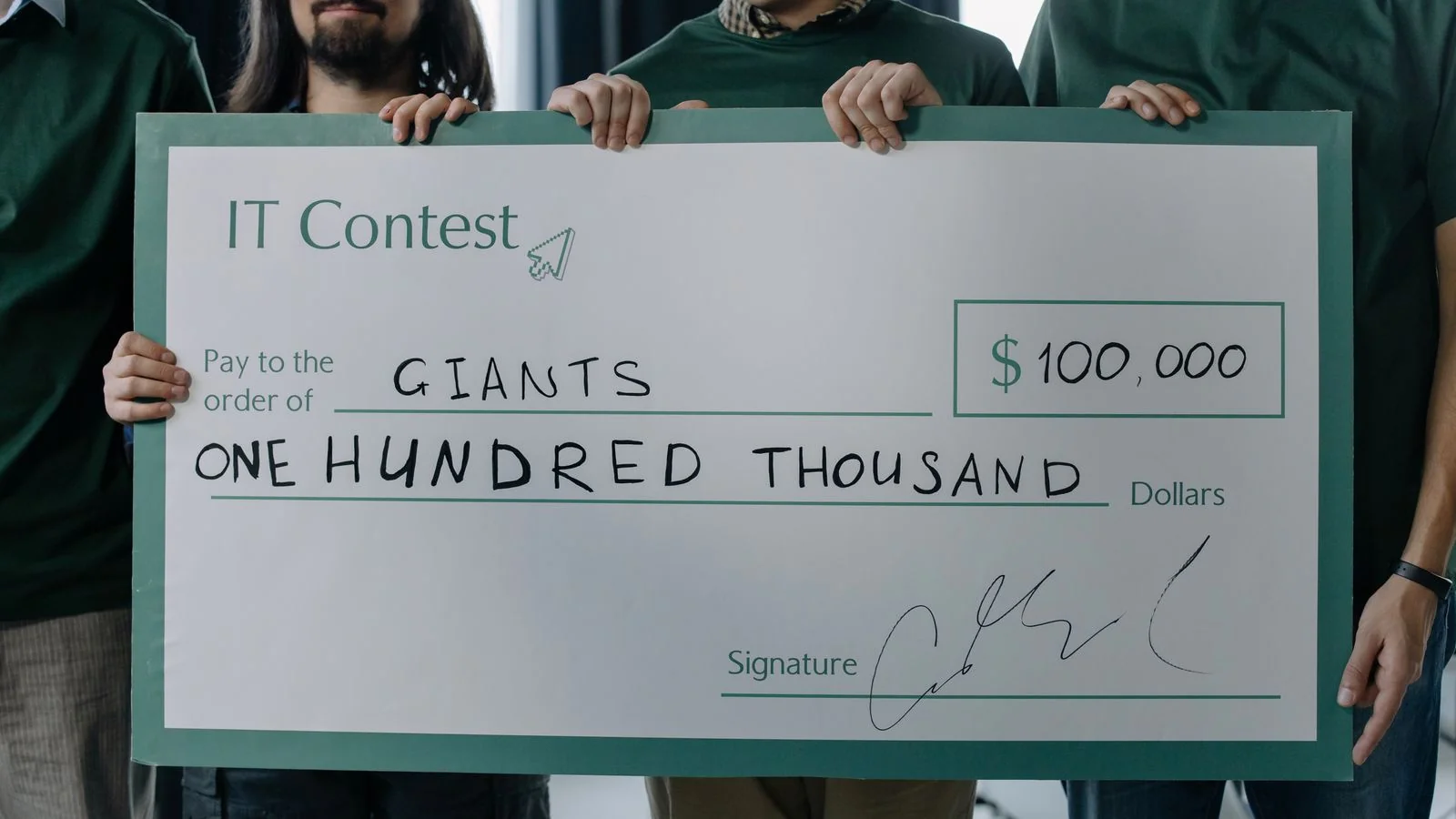
The award letter arrives on a Tuesday. By Thursday someone has posted a photo of the team holding a certificate, written two paragraphs thanking the foundation, and tagged everyone involved. The grant is real, the work it funds is real, and the announcement reaches four hundred people who already knew about it.
That is the default outcome for most grant awards, and it is a waste of the single most pitchable thing a small organization gets all year. A grant is a third party with money deciding your work is worth funding. That is external validation, with a number attached, from a named institution. Reporters take that call. They do not take the call about your new logo.
The problem is that almost every grant award press release is written for the funder rather than for the reporter, and the two want opposite things.
The Grant Release Triangle
Every grant announcement has three parties in it, and the one you lead with determines whether the release gets picked up.
The funder wants to be the subject. They gave the money, their communications team wants the credit, and their grant agreement may even specify how they are named. The organization wants to be the subject, because the award is a win and winning feels like the news. Neither of those is what a reporter wants.
The reporter wants the third party: whoever is better off because the money arrived. The students who get the program, the patients who get the clinic hours, the town that gets the trail. That is the story. The funder and the recipient are mechanism.
We call this the Grant Release Triangle, and the rule is simple enough to apply in one pass. Name all three parties, lead with the beneficiary, and let the funder and the recipient appear in the second and third sentences. A release that opens with the beneficiary gets read. A release that opens with a foundation name and a dollar figure gets filed.

This reordering costs nothing and breaks no grant agreement. The funder still gets named, prominently, in the sentence where the money appears. You are changing which fact arrives first, not which facts appear.
If a grant agreement does specify naming requirements, read them carefully rather than assuming the worst. Most require that the funder be credited and named correctly somewhere in the announcement, and a handful require approval of the text before release. Very few require the funder to appear first. Asking the programme officer directly takes one email and usually removes the constraint you were writing around.
The Template
Write it in this order and resist the urge to decorate.
Headline. The beneficiary change, the number, the place. Not the word grant if you can help it. “Riverside Clinic adds 40 weekly dental hours for uninsured patients with $250,000 award” works. “Riverside Clinic receives Hartwell Foundation grant” does not.
Dateline and first paragraph. City, date, then one sentence that says what will now happen that was not happening before, who it happens to, how much money makes it possible, and who gave it. All five facts, one sentence, under 40 words if you can manage it.
Second paragraph. The scale of the problem the money addresses, with a number from a source outside your organization. A county health statistic, a school district figure, a state agency count. This is the paragraph that turns your announcement into part of a larger story a reporter may already be covering.
Third paragraph. A quote from your side. Not gratitude. Specifics about what changes operationally, said by the person who will run it. “We go from one hygienist two days a week to three hygienists five days a week” beats any sentence containing the word honoured.
Fourth paragraph. A quote from the funder, which they will usually supply on request and which you should ask for the day the award is confirmed.
Fifth paragraph. A quote or short account from a beneficiary, by name, with permission. This is the paragraph most releases skip and the one most likely to get quoted verbatim.
Sixth paragraph. Timeline and mechanics. When the program starts, how people access it, what the money does not cover.
Boilerplate and contact. Two sentences on the organization, a named human with a mobile number, and a line offering photos and interviews.
Then stop. A grant release that runs past 500 words is doing the reporter’s cutting for them, badly.
Two details inside that structure do more work than the rest combined. The outside number in the second paragraph is the first one, because it is what lets a reporter place your story in a context their editor already cares about. Without it you are announcing an organizational event. With it you are contributing a data point to a running local story about dental access, or housing, or school meals. The second is the named beneficiary in the fifth paragraph. A real person, quoted, with permission, is the difference between a release that gets rewritten into three sentences and one that gets turned into an article with a photo.
On the quote from your side, one rule saves most drafts. Delete any sentence containing the words thrilled, honoured, grateful or proud, then write what is left. Gratitude belongs in the letter you send the funder. It is not information, and a reporter reading forty releases will skip the paragraph the moment they see it.
Three Openers That Work
The first sentence does nearly all the work, so here are three shapes to copy, each suited to a different kind of grant.
The capacity opener, for grants that let you do more of what you already do. Lead with the before and after number. “Starting in January, the Fairview Food Bank will distribute meals six days a week instead of three, after a $400,000 award from the Dunleavy Trust.” The structure is honest, concrete, and gives a reporter the headline without rewriting.
The first opener, for grants funding something that did not exist locally. Lead with the absence. “Clark County has had no overnight shelter for families since 2019. A $1.2 million grant from the state housing authority will change that in March.” This one works because the first sentence is a news fact about the community, not about you, and because the absence is checkable.

The counterweight opener, for grants arriving during bad news in your sector. Lead with the context. “As three area clinics have closed since 2024, the Westside Health Collective will add primary care hours with a $600,000 federal award.” Reporters covering closures want a counterweight story, and you are handing them one with a number in it.
Pick the opener that matches the grant rather than the one that sounds most impressive. A capacity grant dressed up as a first is the kind of overreach a local reporter catches in one phone call.
There is a fourth shape worth avoiding. Call it the renewal opener, where the news is that a funder continued existing support. That is genuinely good for the organization and almost never a story, because nothing changes for anyone outside. If a renewal is all you have, the honest move is to skip the release and fold the fact into the next announcement that does change something. Sending a release about money that keeps things the same spends credibility you will want later.
Timing, Embargo and Who You Send It To
The window is narrower than people expect. A grant award is news for about a week from the announcement date, and the announcement date is usually the funder’s, not yours.
Ask the funder two questions the day the award is confirmed: when may this be announced, and are you issuing your own release. If they are, ask to coordinate so both go out the same morning and each quotes the other. Two organizations announcing the same money on the same day reads as a bigger story than one, and the funder’s communications team almost always says yes because it serves them too.
Send to the local daily and weekly, the relevant trade publication for your sector, and the beat reporter who covers your issue area at any regional outlet. That is usually four to eight named people, found by reading the last month of their work, not a list of two hundred addresses. Our own network runs to more than 1,200 journalist relationships and the pattern holds at every scale: the response rate on eight researched sends beats the response rate on two hundred blind ones, by a wide margin.
Attach nothing. Offer photos, a site visit and interview availability in one line, and send the files when asked.
Have the photos ready before you send, though. Not the certificate handover. A photograph of the work itself, shot horizontally, high resolution, with a caption naming everyone in frame and no logo overlays. Local outlets run short on images constantly and a usable photo raises pickup rates on its own. The cheque presentation picture, by contrast, has appeared in every community paper for sixty years and signals that the organization has nothing more interesting to show.
One more thing to prepare in advance: who speaks. Pick one person, brief them on the two numbers in the release, and make sure they can be reached on a mobile the morning it goes out. A reporter on a deadline who cannot reach anyone writes the story from the release alone, which means no quotes beyond the ones you wrote, and a much shorter piece.
After the Release
The grant announcement is the first of three stories, and most organizations only ever tell the first.
Six weeks in, there is a progress story: the program is running, here is what the first cohort looks like. At the end of the funding period there is an outcome story with real numbers, which is the one that helps you win the next grant and which almost nobody pitches. Put both dates in a calendar the week the award lands, while someone still cares.
The progress story is easier to place than the announcement, which surprises people. By week six you have something the first release could not offer: specifics about real people using a real programme, and a photograph of it happening. Reporters who passed on the announcement because it was one of four grant notices that week will often take the follow up, because by then it is the only story of its kind on their desk.
The outcome story is the one with compounding value. Numbers at the end of a funding period are evidence, and evidence is what the next funder’s due diligence turns up when they search your organization’s name. A programme officer who finds three articles documenting that your last grant did what it said is reading something no proposal narrative can replicate. This is also where a Knowledge Panel and a clean first page of search results start to matter, because the due diligence search is the moment all of that work gets cashed in.
One practical note on archiving. Save a PDF of every article the day it publishes, with the URL and date in the filename. Local outlets restructure their sites, paywall their archives and occasionally disappear, and a grant report due in eighteen months is a bad time to discover that the coverage you were counting on is a dead link.
A grant is money that arrives once. Handled properly, the coverage it generates keeps working on the next application, the next donor conversation and the next funder’s due diligence search. Write the release for the beneficiary, send it to eight people who cover the beat, and put the follow ups in the calendar before the certificate goes on the wall.