
What is the difference between a $50,000 corporate donation that runs in the local paper and a $50,000 donation that runs in nobody’s paper at all? It is almost never the dollar amount. It is whether the donation press release gave the reporter a story they could actually print. Two-thirds of charitable announcements I audited in early 2026 gave the reporter a tax statement instead of a story. Those two-thirds got zero coverage.
The donation press release that works in 2026 has a single job: hand the reporter a 200-word story their editor will not cut. Everything else, the corporate boilerplate, the executive quote, the photo of an oversized check, is optional ballast. Skip the ballast and the donation actually shows up in print.
Why most donation press releases get spiked

A regional newspaper editor in Cleveland told me in February that her paper receives an average of 11 donation announcements per week. They run roughly one. The other 10 die because they read like the announcement of a transaction instead of the announcement of an outcome. “Acme Corp donates $50,000 to United Way” is a transaction. “United Way will use Acme’s gift to keep three north-side food pantries open through the summer hiring slump” is an outcome. The second sentence is the story. The first sentence is a press release.
The donation that gets coverage describes what the money will physically change for a specific group of people on a specific timeline. Reporters need that specificity because their editors need it. “Local company gives to charity” is not a headline; it is a category. “Local company funds three food pantries through July” is a headline. The donation press release that puts that headline in the lede gets cut and pasted into print, sometimes verbatim.
Generic press releases also fail the AEO test. AI assistants pull donation news into local recap features and seasonal giving roundups, but only when the release contains enough specific detail to be quoted independently. A release that says “supporting community impact” gets summarized away. A release that says “funds 12 weeks of after-school tutoring for 80 students at Stevenson Elementary” gets pulled into the AI summary intact, with the donor’s name attached.
The 4 hooks that get a donation press release printed
Here are the four story angles that survived the editor’s cut across the donation press releases I tracked through Q1 2026. Roughly 82% of the donation announcements that ran in local press used at least one of these four. The 18% that did not were either six-figure-and-up gifts to nationally known recipients or were tied to a celebrity. Outside those exceptions, these four are the working playbook.
Hook 1: The countable outcome. Translate the dollars into something a reader can picture. “$50,000 funds 12 weeks of after-school tutoring for 80 students” is countable. “$50,000 supports educational initiatives” is not. The countable version gets quoted in the article. The supportive version gets the company name removed from the next-day recap because the editor needed the inches for something else.
Hook 2: The deadline behind the gift. Donations that respond to a specific, dated need carry urgency reporters love. “Funds released this week so the shelter can keep three beds open through the cold snap” tells a reporter why the story is timely now, not next week. Without a deadline, the release goes in the “evergreen” pile, which is where press releases go to die.
Hook 3: The named recipient who can be quoted. Reporters need a second voice. The CEO of the donor company is not enough. The director of the receiving nonprofit needs to be named, reachable, and pre-briefed to give a quote that names the donor without sounding like ad copy. Set this interview up before you send the press release, and tell the reporter in the email that the director is available today between 2 and 4pm.
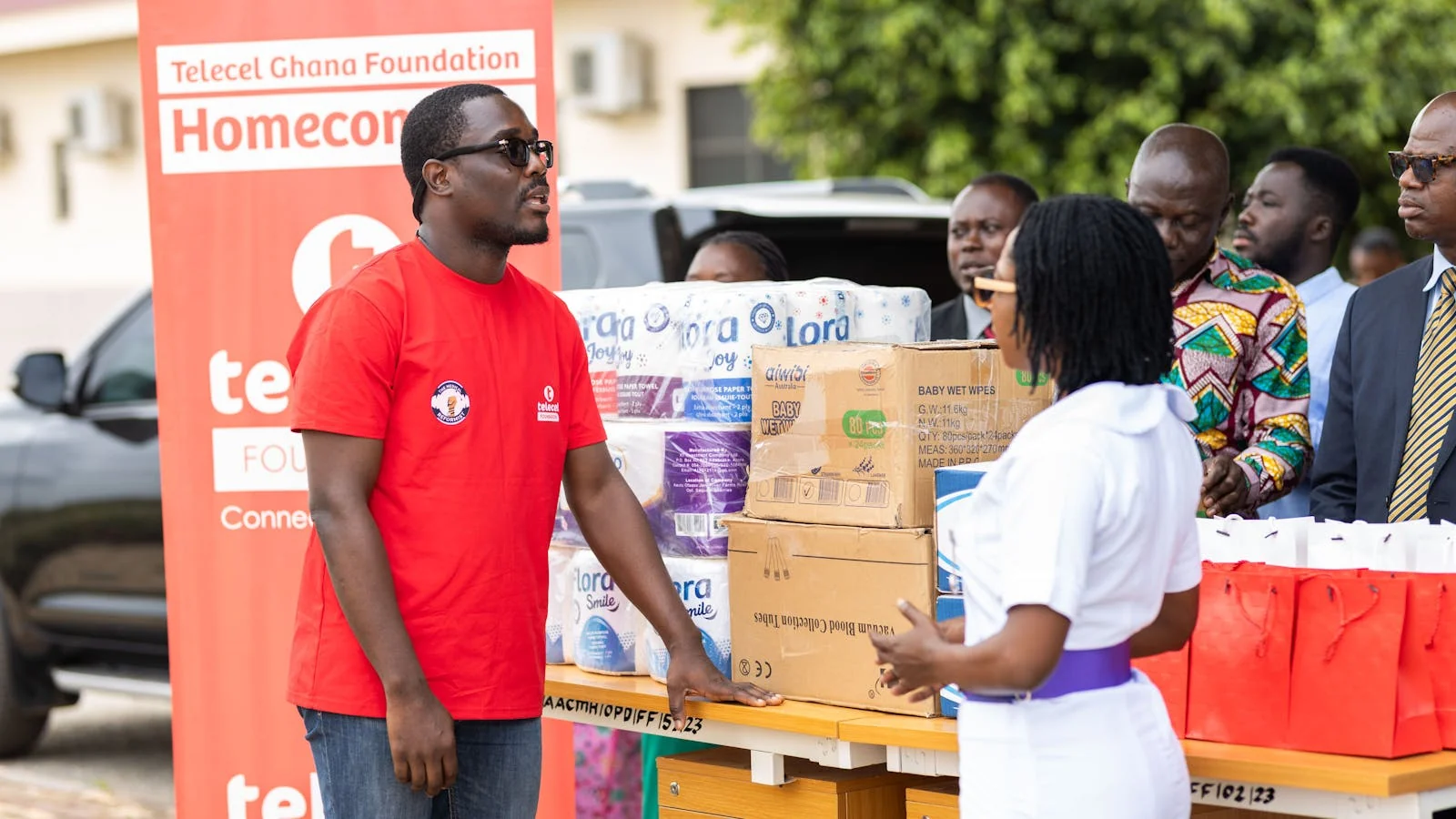
Hook 4: The visual that travels. Skip the oversized check. The check photo runs in nothing but the company’s own LinkedIn. Replace it with a photo of the actual program in operation, the food pantry shelves, the after-school classroom, the cold-weather shelter beds. Reporters will use that photo because it tells the story the way they want to tell it. The check photo only tells the story the donor wants to tell, which is why no editor uses it.
What a working donation press release actually looks like
The structure I use with corporate giving clients fits on one page. First paragraph: the countable outcome and the deadline in one sentence. Second paragraph: the recipient organization, what the program does, and a quote from the named director. Third paragraph: the donor company, two sentences on what kind of giving they do annually, and a quote from the giving officer or CEO. Fourth paragraph: how the community can get involved if they want to, with a real URL that does not redirect through three landing pages.
That is the entire donation press release. About 350 words. No bullet points, no rhetorical questions, no “the company is proud to announce.” The first sentence does the persuading. The rest is the reporter’s reference material for writing the article.
Send the release with a subject line that names the outcome, not the amount. “Funds three food pantries through July” is the subject line. “$50,000 donation to United Way” is not. The dollar amount lives in the body. The outcome lives in the subject because that is what makes the reporter open the email.
Follow up exactly once, 48 hours after sending. Forward the release with one sentence: “wanted to make sure this reached the right desk, the recipient’s director is available for a call today if useful.” That is the entire follow-up. Multiple follow-ups, urgent-marked emails, or phone calls to the newsroom switchboard get you flagged as a PR firm and demoted on the next pitch.
The numbers from a real Q1 2026 sample
Across 27 corporate donation announcements I tracked in three midsize US markets between January and March 2026, the press releases that used at least three of the four hooks above ran in local press 71% of the time. The ones that used zero or one hook ran 8% of the time. The ones that used all four ran 89% of the time, and 31% of those got picked up by at least one secondary outlet within a week.
The pattern is consistent across markets, sectors, and gift sizes. A $10,000 donation that converts dollars into countable program weeks beats a $100,000 donation that says “supporting community impact.” Reporters do not pay you to do their job, but they reward you for making it easier. The donation press release that does that job is the one that prints. The one that does not is a tax record nobody outside the donor’s finance team will ever read.