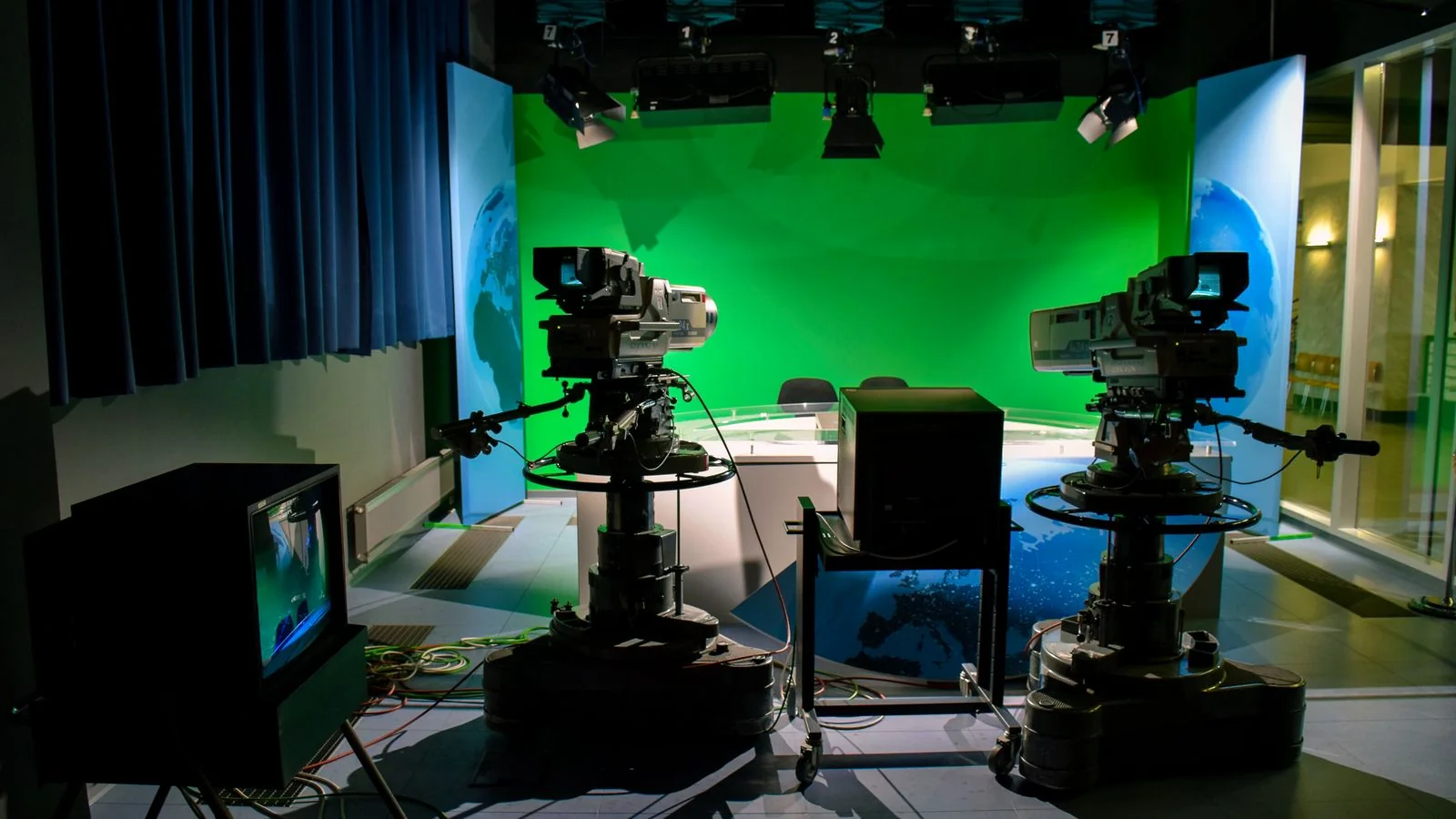
You get on the news by handing a producer a story that is local, visual, timely, and finished enough that they can picture the segment before they reach the end of your email. That is the whole answer. Everything else is detail on those four words. The businesses and experts who show up on the morning show did not get lucky and they did not have a famous publicist. They understood what a producer needs and they delivered it in a form the producer could say yes to fast.
Most pitches fail because they are written for the sender, not the show. They lead with a company announcement, they bury the local angle, they offer no visual, and they land in a general inbox that nobody reads under deadline. Learning how to get on the news is mostly learning to think like the person on the other side of the desk, whose entire job is filling a broadcast with segments that keep local viewers watching. Here are seven ways to give that person a reason to book you.
Give the assignment desk a local reason, not a company reason

Local news exists to serve local viewers, and the assignment desk filters every pitch through one question: why does someone in this city care today? At Instant Press, reviewing the booked segments from our local-media outreach over the past year, the pattern was blunt. Pitches that led with a local stake got booked at several times the rate of pitches that led with a company. Same experts, same topics, different opening sentence.
A national trend becomes a local story when you localize it. “Inflation is up” is not a pitch. “Three local restaurants on this street just changed their menus because of food costs, and I can put you in touch with the owners” is a pitch, because it gives the producer a segment set in the viewer’s own neighborhood. Your expertise is the same either way. What changes is whether you framed it as national noise or local news.
The move to internalize is that the assignment desk is not looking for you. It is looking for a story its viewers will recognize as theirs. When you get on the news, it is because you made the connection between your topic and the local audience so obvious that the producer did not have to do that work. Do it for them and you clear the first and highest filter every pitch has to pass.
Lead with the visual, because television is pictures
Print reporters need information. Television producers need pictures. A segment that cannot be filmed does not get booked, no matter how interesting the underlying idea, and this is the single most common thing experts forget when they try to get on the news.
Before you pitch, answer one question: what does the camera see? If your story is about a financial concept, the camera sees a person at a kitchen table with bills, or a whiteboard, or a location. If it is about a local business, the camera sees the shop, the product being made, the people using it. If your honest answer is “the camera sees me talking in a studio,” you have a weak TV pitch and a better fit for radio or print. Producers think in shots, and a pitch that hands them the shots is a pitch that makes their job easier.
Name the visual in your email. “We can film this at our workshop where you’ll see the product being built by hand” tells the producer they have footage. That single line moves a pitch from abstract to bookable, because now the producer can picture the segment cut together. When you understand that television is a visual medium first and an informational one second, you stop pitching ideas and start pitching scenes, and scenes are what get on the news.
Match your lead time to the type of story

Timing separates the pitches that get booked from the ones that arrive at the wrong moment. Hard news moves same-day. Feature and lifestyle segments get planned days or weeks ahead. Pitch a breaking angle a week early and it is stale by air. Pitch an evergreen feature the morning you want it aired and there is no room left in the rundown.
If your story is tied to a specific event, a holiday, an awareness month, a local happening, pitch it with enough runway for the producer to slot it into planning, usually one to two weeks out for features. If your story is a reaction to something happening now, move immediately, because the window is hours. Knowing which kind of story you have, and pacing your outreach to match, is a quiet skill that most people never develop, and it is why some experts get on the news repeatedly while others send perfectly good pitches at consistently wrong times.
There is a rhythm to a newsroom day, too. The morning editorial meeting sets much of the day’s coverage, so a pitch that lands mid-morning, after the meeting and before the afternoon crunch, catches producers when they still have decisions to make. A pitch sent at 4 p.m. as the evening show locks is a pitch nobody has time to read.
Make yourself the easy, reliable guest
Producers book people who will not blow up their segment. A guest who is articulate, punctual, and calm on camera is worth more to a producer than a guest with a slightly better story who might freeze, ramble, or fail to show. Reliability is a booking criterion, even though nobody writes it down.
You signal reliability before you are ever on air. A pitch that is clear, well-organized, and free of hype tells a producer you will probably be clear and well-organized on camera too. If you have any existing footage of yourself speaking, a clip from another segment, a clean webinar recording, a short video, offer it, because it lets the producer confirm you can hold a conversation under lights. The first booking is the hard one. Once a producer has seen you deliver a tight, usable segment, you move onto the mental list of dependable local guests, and that list is who gets called first the next time the topic comes up.
This is how a single appearance turns into a recurring one. Show up prepared, hit your points in plain language, respect the producer’s time, and you stop being a cold pitch and become a resource. The experts who seem to be on local news constantly are rarely pitching constantly. They booked once, delivered, and got invited back, which is the most efficient way to get on the news there is.
Pitch the show, and the producer, by name
The general station email address is where pitches go to be ignored. Every segment has a producer, and that producer has a name you can usually find in the show credits or on the station’s website. A pitch addressed to the actual person responsible for the actual show you want to be on outperforms a blast to the newsroom by a wide margin.
Watch the show first. Know its segments, its tone, its recurring features. A pitch that references the specific segment your story fits, “this would work for your Wednesday small-business feature,” proves you did the homework and makes the producer’s mental placement instant. Generic pitches that could go to any show on any station read as spray-and-pray, and producers delete them accordingly. The effort of targeting one show and one producer, with a story shaped to fit that exact slot, is what separates the people who get on the news from the people who wonder why the newsroom never wrote back.
Getting on the news is not a mystery and it is not gatekept by publicists. It is a craft built on empathy for the person booking the segment. Give the assignment desk a local reason, hand the producer a visual, time your pitch to the story type, prove you are a reliable guest, and target one show by name. Do those five things and you will not be asking how to get on the news. You will be deciding which invitation to accept.