
Roughly 40,000 entrepreneurs applied to Shark Tank for the 2018 season, and 88 of them made it onto television. That is an air rate of about 0.22%, according to casting figures compiled on the show’s Wikipedia entry, which also notes that around 1,000 applicants advanced past the first cut and about 150 pitched to the Sharks. The show has grown since then, but the shape of the funnel has not changed much. Most people who apply never hear back, and a meaningful share of the people who do pitch in the Tank never see their segment air.
So the question is not only how to get on Shark Tank. It is how to get through each narrowing gate without burning the one shot you have this season. That is what this piece covers: the current casting setup for seasons 18 and 19, the two routes in, what the casting team says it wants, a scoring drill for knowing whether you are ready, and how to plan for the episode whether or not a Shark writes a check.
What Does Shark Tank Casting Look Like in 2026?
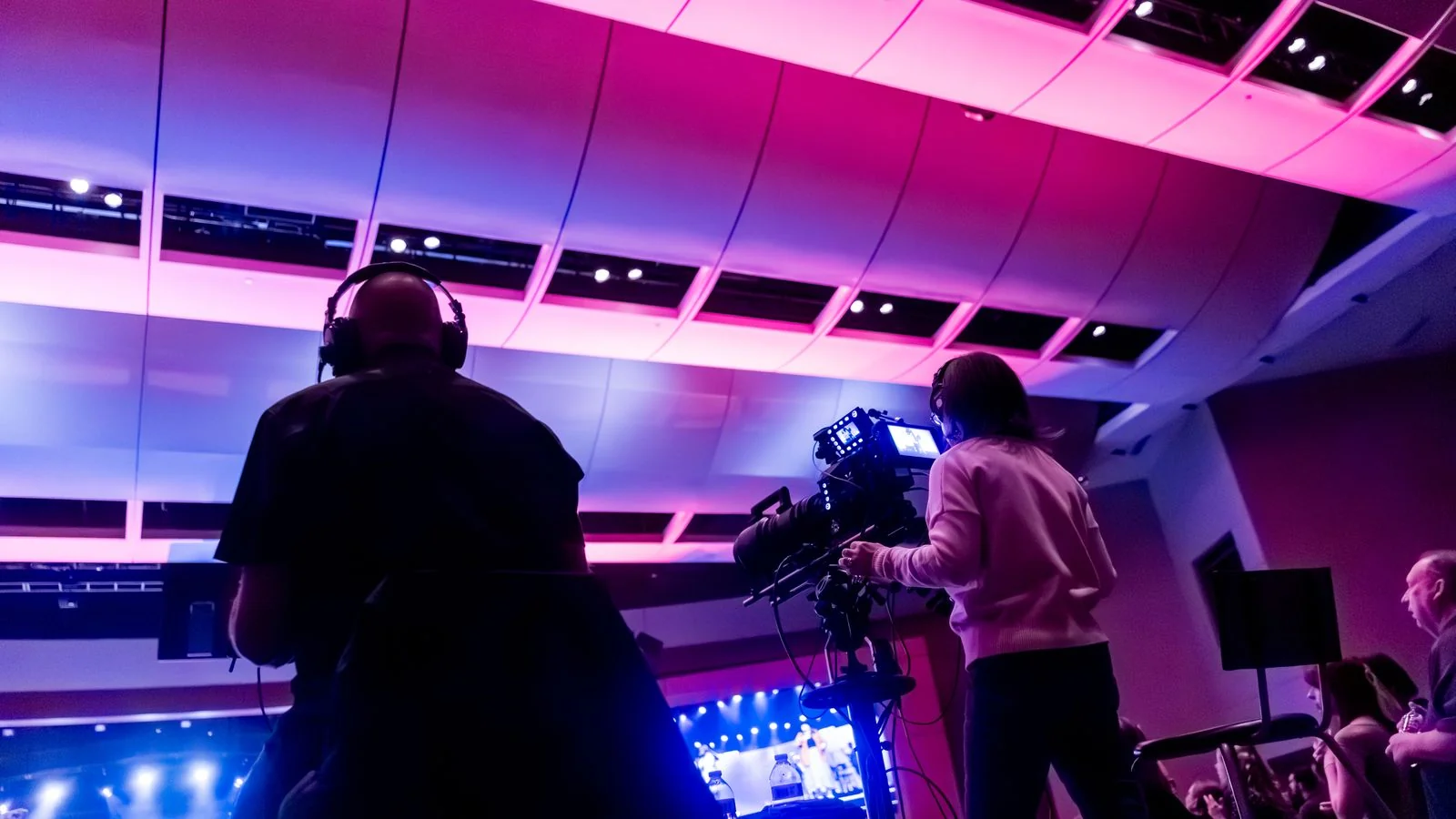
Start with the facts, because a lot of the advice online is three seasons stale. Shark Tank is ABC’s American version of the British format Dragons’ Den, which itself traces back to the Japanese series Tigers of Money. Clay Newbill is among its executive producers, and Mark Burnett held that title through season 15. The show has won the Primetime Emmy for Outstanding Structured Reality Program five times, most recently in 2024.
Season 18 premiered on ABC on Wednesday, September 30, 2026, and streams the next day on Hulu and Disney+, according to The Atlanta Journal-Constitution. The bigger change is behind the camera. ABC renewed the show on May 12, 2026, and production moved from Los Angeles to Tyler Perry Studios in metro Atlanta, with taping starting in June. The panel changed too. ABC announced that Kendra Scott and Atlanta venture capitalist Rashaun Williams join Barbara Corcoran, Robert Herjavec, Lori Greiner, Daymond John, Daniel Lubetzky and Kevin O’Leary as permanent Sharks, for eight in total. Guest Sharks this season include Jimmy Donaldson (MrBeast), Mindy Kaling, J.J. Watt, Erin and Sara Foster, and Steven Bartlett.
Here is the part most founders miss. While season 18 is airing, casting is already working on the next one. ABC’s official apply page now links to a Season 19 casting site. The 2026 open-call tour ran in March, with a stop at Morongo Resort and Spa in Southern California on March 12 and the final call of the year at Rivers Philadelphia on March 18, and local ABC stations reported that applications stayed open through the end of April. If that rhythm holds, a founder who wants a shot at the next taping block should be building the application this winter, not the week a call is announced.
Mindy Zemrak, the show’s supervising casting producer, leads that team. Her public comments are consistent: no single profile wins. “What matters most is that you believe in your product, you know why it exists,” she told ABC’s local stations this year.
Pick Your Route In: Online Application or Open Call
There are two front doors, and both lead to the same casting team.
The online application is the default. You fill out the form through the link on ABC’s apply page and describe the business, the founder and the ask. Write it the way you would talk, because the person reading it is screening for a television segment. The casting team has posted a warning worth taking seriously: official messages only come from email addresses ending in @sharktanktv.com. Scammers know how badly founders want this, and fake “casting agents” asking for fees show up every season. Applying is free. Nobody needs to be paid to put you forward.
The open call is the in-person version, and it moves faster. At the March 18, 2026 Philadelphia call, the line formed at 8 a.m., numbered wristbands went out between 9 and 11 a.m., and pitches started around 10 a.m. Only people auditioning could attend, and the Sharks were not there. You pitch one member of the casting team for about one minute. The 2026 announcement also stated that past contestants could audition again, which matters if you were turned down before.
Open calls are worth the trip when your product is physical and demonstrates well, or when your personality does more work than your numbers. A casting producer sees you react, laugh and recover from a stumble in a way a form never shows. The online route is better when your story depends on data that takes time to absorb, or when travel would eat a week of revenue. Plenty of founders do both. The calls are not a separate lottery. They feed the same pipeline.
The One-Minute Pitch Is a Casting Tape, Not an Investor Meeting
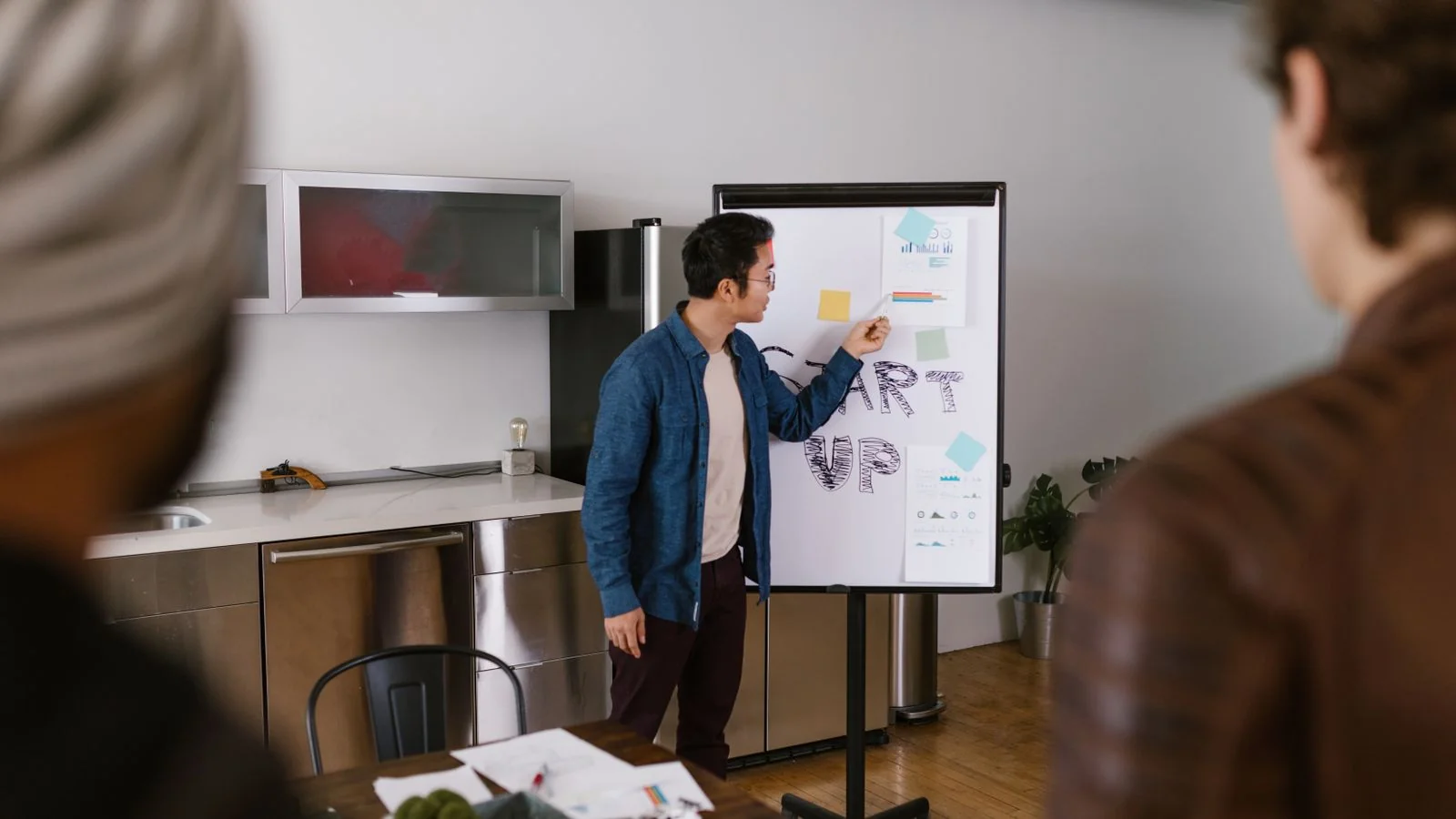
This is where most applications die. Founders prepare for Shark Tank as if they were pitching a venture fund. They lead with total addressable market, a three-year projection and the competitive grid. None of that is what the first gate is testing.
The first gate is a television audition. The casting producer is asking three questions, and only one of them is about the business. Can I understand this product in ten seconds? Will viewers care about this person? Is there tension in this pitch that will make good TV? Scott Salyers, a former Shark Tank casting director, described the early screen to reporter Jessica Pressler as partly a test of personality and “TV readiness,” with idea vetting layered on top. That framing still holds.
So write your 60 seconds in that order. Open with what the thing does, said in plain words a twelve-year-old would repeat. Then the human reason it exists, which is usually the moment you decided to build it. Then one number that proves real people pay for it. Then what you would ask the Sharks for. If you demo, demo in the first twenty seconds. Rehearse it out loud until you can deliver it to a stranger in a loud room without notes, because that is the room you will be in.
One more thing. The casting team is not the enemy and is not trying to catch you out. Zemrak called the open call “a really incredible day” for meeting other founders. Treat the producer like the first viewer, not the first skeptic.
The Five-Gate Readiness Score
The 0.22% figure hides the fact that the funnel has five distinct gates, and each one filters for something different. Founders who fail usually fail at a gate they did not know existed. The Five-Gate Readiness Score is a drill for finding yours before casting does.
Score yourself from 0 to 4 on each gate. A 0 means you have nothing, a 2 means you have something but it would not survive a hard question, and a 4 means you could defend it on camera tomorrow.
Gate one is the Hook. Can a stranger repeat what your product does after hearing it once? Test it on five people outside your industry. If fewer than four can say it back, score yourself 2 or lower.
Gate two is the Person. Is there a reason viewers will remember you specifically? This is not about being loud. It is about a real origin, a clear motive and a willingness to show emotion on camera. Founders who are reserved can score a 4 here if the story is true and specific.
Gate three is the Proof. What sales, customers or traction can you show, and could you back up every number with documents? Treat every figure you say aloud as one a producer may ask you to verify later. Pre-revenue concepts are not barred, but they need an exceptional hook or person score to compensate.
Gate four is the Ask. Is your valuation defensible against people whose job on the show is to attack it? Write down your ask, then write down the three hardest objections Kevin O’Leary would raise and your answer to each. If you cannot answer one of them, your Ask score is 2 at best.
Gate five is the Aftermath. If the episode aired tomorrow, could your site, inventory and customer service absorb the traffic? Zemrak describes getting on the show as “going from cruising speed to light speed overnight.” A business that crashes on air night wastes the exposure.
Add the five scores. At 16 to 20, apply this cycle. At 11 to 15, apply but fix your two lowest gates before any callback. At 10 or under, spend the next six months raising your weakest scores, because a rejection now does not help you and a stronger application next season might. The score is not a prediction of what casting will decide. It is a way to make sure you lose, if you lose, on taste rather than on preparation.
Which Businesses Do Producers Actually Want?
Nobody outside the production can give you a formula, and anyone who claims one is guessing. What the casting team does say publicly points in a consistent direction.
They want founders ready to grow with an investment. Zemrak’s language this year was about passion, drive and readiness to scale. They want variety in each episode, which is why a season mixes consumer products, food, services and the occasional tech play. And they want proof that a pitch can become a story. The show advertises that it has helped launch six businesses now worth more than a billion dollars, naming Scrub Daddy, Poppi and Bombas, and those three are consumer brands with products you can hold up on camera.
That does not shut out software or services. It means you need a visual way into the pitch. A SaaS founder who opens with a screen recording of a confused customer and then the fixed version gives the edit something to cut to. A service business that brings a before and after does the same.
Regional casting results back this up. At the 2025 Philadelphia open call, more than 900 people showed up and producers heard more than 460 pitches. Several of those businesses went on to land deals on season 17, according to the Rivers Philadelphia announcement, including Forte3D with Lori Greiner, Warrior Kid Medic with Daymond John, Bon AppéSweet with a multi-Shark deal, and QB54. None of those are billion-dollar businesses yet. They were businesses with a clear hook and a founder who could carry a segment.
Get Your Paperwork and Numbers Airtight Before Callbacks
If casting likes your application, the work changes. The fun part of the process is over and the diligence part begins. Expect producers to ask for more detail about your business, your sales and your legal standing, and expect the requests to come fast.
Prepare now so you are not scrambling then. Put your trailing twelve months of revenue in one clean document. Know your gross margin, customer acquisition cost and inventory position without looking them up. Gather your incorporation documents, any patents or applications, and any agreements with partners or existing investors. If a co-founder left on bad terms, know what you will say about it. If you have a cap table, make sure the numbers in your pitch match it.
The history here is useful context. In the show’s early seasons, contestants had to agree to give the production company either a 2% royalty or a 5% equity stake in their business, deal or no deal. In October 2013, the network repealed that requirement retroactively after Mark Cuban argued it would scare off savvy entrepreneurs. The terms you sign today are different, and you should still read every page of them with a lawyer before you sign anything.
Founders lose deals in the Tank more often over a number they could not defend than over a weak product. A Shark asking “what were sales last year?” is not a trick question, but a pause before you answer reads on camera as a problem. Your goal for this stage is to have no number in your pitch that you have not seen in writing.
Filming a Pitch Does Not Guarantee It Airs
Even after you walk down that hallway and pitch, you are not on television yet. The 2018 figures put the number of filmed pitches near 150, with fewer than 100 airing. That gap is the edit, and it is the last gate.
Producers build each episode for pace and variety. A pitch might not air because it was too similar to another segment that season, because the negotiation dragged without a turn, or because the business changed between taping and air date. Taping in Atlanta started in June 2026 for a season that premiered at the end of September, so several months can pass between your pitch and your air date, if one comes.
That lag is your planning window. Use it to build inventory, fix the checkout page and line up the press you want around the broadcast. Anyone serious about how to get on Shark Tank should plan this part first, because a founder who gets the air date call and has nothing ready loses the most valuable 48 hours the show creates. This is also where a PR team earns its keep. Local reporters, trade publications and podcast hosts cover “hometown founder on Shark Tank” stories, but they need the pitch in hand before the episode, not after. If you are building that list yourself, the Instant Press journalist list is one place to start.
Wait for the show’s guidance before you announce anything publicly. Your air date is the production’s news to release first, and getting ahead of it is an easy way to sour the relationship.
Plan for the Episode, Deal or No Deal
A deal is not the only way to win, and a handshake on camera still has to survive due diligence once the cameras are off. Plan for the exposure as the asset, and treat the money as upside.
The best-known proof of that runs both ways. In October 2012, Aaron Krause pitched Scrub Daddy and closed a deal with Lori Greiner for $200,000 in exchange for 20% of the company. The day after the episode aired, the two sold 42,000 sponges on QVC in under seven minutes. By January 2017 the company’s revenue had passed $100 million, and by 2023 its retail sales had passed $926 million, among the highest totals in the show’s history. That is what happens when the Hook, the Proof and the Aftermath are all ready on air night.
Now the other side. In November 2013, Jamie Siminoff walked into the Tank with a video doorbell called Doorbot, asking for $700,000 for 10% of the company at a $7 million valuation, according to Fortune. Mark Cuban passed first and the others followed. Kevin O’Leary offered the full $700,000 as a royalty deal, 10% dropping to 7% after he recouped, plus 5% equity, and Siminoff turned it down. He left with nothing but airtime. That airtime helped bring in investors including Shaquille O’Neal and Richard Branson, and Siminoff sold the product on QVC in 2016 without a Shark. In 2018, about five years after that pitch, Amazon bought the company, by then renamed Ring, for a reported $1 billion. O’Leary later called it “probably the biggest miss” in Shark Tank history. He never got the deal. He got the airtime, used every minute of it, and built the company anyway. That is the real lesson in how to get on Shark Tank: the pitch is the opening move, not the outcome.