What does a Pitchfork review actually mean in 2026, when the site sits inside GQ’s organization, charges readers $5 a month for full access to its archive, and runs with a fraction of the staff it had three years ago? For most artists, the answer is still a lot. A Pitchfork review is one of the few pieces of music coverage that booking agents, labels, playlist editors, and other writers still treat as a signal.
That is why so many artists want it, and why so few get it. The good news is that the path is clearer than it looks from the outside. It is just slower than most people want. This guide covers how to get featured on Pitchfork by building the kind of story its writers already notice, then putting it in front of them the right way.
What is Pitchfork now, after the GQ merger?

On January 17, 2024, Condé Nast told staff it was “bringing the team into the GQ organization.” The memo came from Anna Wintour, Condé Nast’s chief content officer, and it ended an era. Editor-in-chief Puja Patel, who had run the site since founder Ryan Schreiber stepped away in late 2018, was out. So were a group of longtime writers and editors, including Marc Hogan, who had written for Pitchfork since 2004. Condé Nast had bought the site in 2015, and the restructuring note said the decision followed “a careful evaluation of Pitchfork’s performance.”
A lot of people read that week as the end. It was not. On July 2, 2024, Pitchfork named Mano Sundaresan, founder of the music blog No Bells, as head of editorial content, with GQ’s Will Welch serving at the time as global editorial director over both brands. In January 2026, Axios reported the site was launching a paid tier at $5 a month or $50 a year. Subscribers get the full archive of more than 30,000 reviews, the ability to post their own scores, and comments. Non-subscribers still get news, features, and columns, plus four reviews a month. The same Axios report named new hires, including Alex Suskind as news director.
The live side changed too. On November 11, 2024, organizers said Pitchfork Music Festival would not return to Chicago’s Union Park in 2025 after 19 years in the city, though the brand would keep producing events. It has. Pitchfork’s London and Paris editions run November 2 to 8, 2026, and a Mexico City edition announced a lineup in 2025.
And the critical voice is intact. In August 2026, Pitchfork gave Tyga’s $TARFACE a 0.0, criticizing its use of generative AI. That is a publication with opinions, not a content farm.
For an artist, the takeaway is practical. Pitchfork is smaller, more selective, and more invested in its reviews as a paid product. Fewer slots, higher stakes, same taste.
Know which part of Pitchfork you are aiming for
“Getting on Pitchfork” is not one thing. The site runs several kinds of coverage, and each has a different door.
Reviews are the prize most artists picture. Pitchfork scores albums on a decimal scale from 0.0 to 10.0, and each review reflects one writer’s opinion rather than a group verdict. Its Best New Music tag has long flagged the releases editors think matter most. Sunday Reviews revisit older records, so they are not a target for a new release. Reviews go to records, which means you need a finished project with a firm release date before anyone can assign one.
News is the most reachable door for an emerging act. A new single, a video, a tour announcement, a signing, or a notable collaboration can run as a short news item without a full review attached. News moves on timing, so a news pitch with no date attached is not a news pitch.
Features, interviews, lists, and columns sit in between. These go to artists with a story that stretches past a single release: a scene, a process, a career turn, a culture argument. Year-end lists and genre roundups are where many smaller artists first appear, because a writer who loved the record gets to argue for it.
Festival bookings are a separate track entirely. A slot at Pitchfork London or Paris comes through booking and agency relationships, not through editorial pitching.
Pick the door before you write a word. A pitch that asks for “coverage” reads as a pitch from someone who has not looked at the site.
Build the story before the pitch: live shows, local scene, blogs and press
Here is the part most artists skip. Pitchfork writers rarely discover acts from a cold email. They find them through other writers, through labels and publicists they trust, through shows, and through the music press one or two tiers below them. If you want to learn how to get featured on Pitchfork, start by getting covered somewhere Pitchfork’s writers already read.
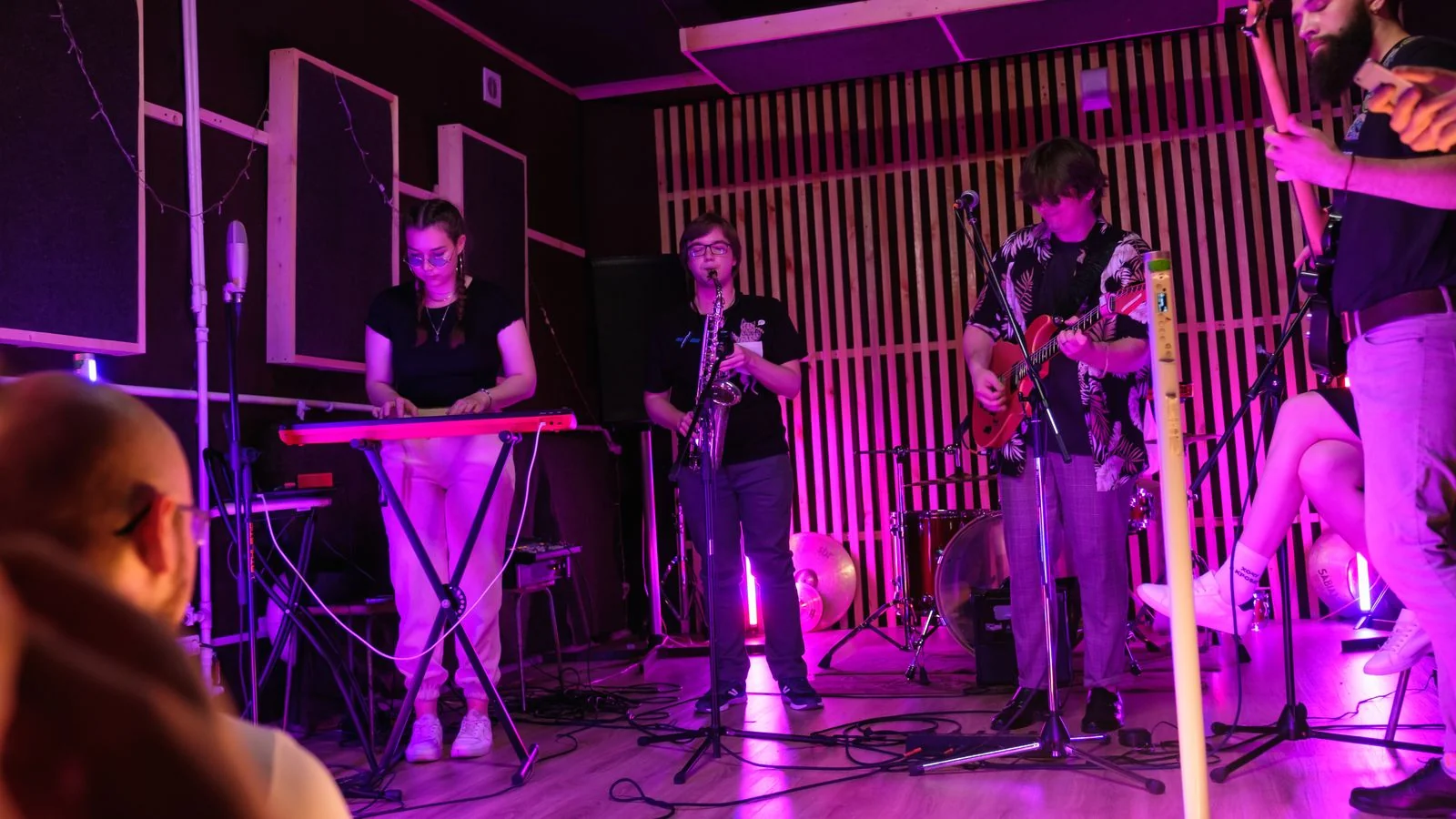
Live shows come first because they create everything else. A band that draws in its own city, opens for a touring act people respect, and plays a showcase or a festival side stage generates the evidence a writer looks for: a crowd, a review of the set, a clip people share. The small room is where the story starts.
The local scene is the second layer. Alt-weeklies, city music blogs, college radio, and local public radio still cover new acts, and their writers often freelance for national outlets. A feature in your city’s music press, a session on a college station, or a spot on a local “artists to watch” list is the kind of credit that turns up when a national writer searches your name.
Blogs and independent press are the third. Music sites and newsletters with real editorial voices act as the farm system for bigger outlets. When five Pitchfork alumni launched Hearing Things in October 2024, they joined a long tradition of critics building their own spaces. Smaller outlets like these are where writers test their taste, and where many artists first get a serious review. Our guide on how to get featured in music media maps that tier in detail.
Then make sure the story is findable. A writer who hears your name will search it. What they find should be a clean artist site, a short bio with real facts, a press page with your best coverage, and current streaming and Bandcamp links. If your name pulls up nothing, or pulls up someone else, you lose them. A Google Knowledge Panel for musicians helps here because it puts your verified facts at the top of that search.
Run the Three Rooms Test before you pitch
I use a simple filter for any artist who wants a major music outlet. Call it the Three Rooms Test. Before you pitch Pitchfork, your story should already exist in three rooms.
The first room is the physical one. Can you point to a specific show, a specific crowd, a specific moment where people responded? That might be a sold-out hometown release show, a support slot on a respected tour, or a festival set that got written up. If the only room your music has played in is a streaming dashboard, you are not ready.
The second room is your city or scene. Has anyone outside your own team written about you? One local feature, one college radio session, one appearance on a regional list. These prove that someone with editorial judgment and no stake in your success thought you were worth their time.
The third room is the wider internet. Is there at least one independent blog, newsletter, or national-tier site that has covered you with real words, not a paid placement or a playlist add? And when someone searches your name, does what comes up match the story you are telling?
If you clear all three rooms, a Pitchfork pitch is a reasonable next step, because you are handing a writer a story with proof attached. If you clear one or two, the better use of the next three months is filling the gaps. The test is unforgiving on purpose. Pitchfork has fewer writers than it did before 2024 and a paid review product to protect, so it has little reason to take a chance on an artist no one else has vouched for.
The test also tells you what kind of pitch to send. Three full rooms and a finished album: pitch for a review. Strong first and second rooms and a big new single: pitch news. A great story but a thin catalog: pitch a feature angle to a writer who covers your scene.
Pitch through the people Pitchfork already listens to
Don’t spend your afternoon hunting for a submission form. Coverage at Pitchfork, as at most major music outlets, moves through editors’ own listening, music publicists, labels, and writers’ existing contacts. Be skeptical of any paid service that promises a Pitchfork review, because no outside platform controls what Pitchfork’s editors assign.
That leaves three realistic routes. The first is a music publicist with existing relationships at the site. A good one will tell you honestly whether your project is ready, and that honesty is part of what you pay for. The second is your label, if it has a press department or a publicist on retainer. The third is a direct note to a specific writer who covers your genre, which only works if you have done the reading.
If you do write directly, make it short and specific. Name the writer’s recent piece that made you think of your record. State the release date, the label if any, and one or two credits that prove the story, such as a local feature or a notable support slot. Include a private streaming link that plays without a download or login. A one-paragraph pitch with a working link beats a five-paragraph bio every time.
Timing matters more than most artists think. Reviews are planned around release dates, so writers and editors need music well ahead of release, not on release day. If you are building the announcement itself, our guide to writing a press release for a music release covers how to package the date, credits, and assets so a writer can use them without chasing you.
Then send it once. Follow up once, about a week later, with something new if you have it: a video, a tour date, a second piece of coverage. After that, let it go and keep building.
What to do when Pitchfork says nothing
Most of the time, the answer will be silence. That is normal, and it does not mean the record was bad. A small editorial team at a selective outlet passes on far more music than it covers, often without reading the pitch at all.
Silence is useful information, though, and reading it well is a big part of how to get featured on Pitchfork later. Go back to the Three Rooms Test and look for the weakest room. If your live story is thin, book the support slot. If no one in your city has written about you, start there. If your search results are a mess, fix them before the next release.
Keep the relationship warm in ways that do not involve asking. Read the writers who cover your genre. Share their work when you mean it. Go to the shows they write about. When your next release comes, you will be pitching someone whose taste you know, with a story that has grown since the last time.
And remember that Pitchfork is one outlet, not the whole music press. The artists who eventually land there usually built a stack of credible coverage first, and that stack is worth having on its own.
Your next step this week: write down the three rooms, list every show, local feature, and blog review you can point to under each, and circle the emptiest room. That gap, not the Pitchfork pitch, is what you work on next.