
It is Tuesday morning and a friend texts you a screenshot. A competitor’s founder is sitting in Apple News, right under the morning’s lead story, with a headshot and a quote that sounds a lot like the one you gave a trade reporter last month. You open the app on your own phone, search your company name, and get nothing. Now you want to know how to get featured on Apple News, and you want to know whether that competitor paid for it, pitched Apple, or got lucky.
The short answer is that none of those is quite right. Apple News is not one door. It is three, and each has a different keyholder. Most founders bang on the one door that does not open for them, then decide the whole building is locked.
This piece maps all three, with what Apple has said publicly, what reporters have documented, and where the evidence runs out.
How Apple News Decides What You See
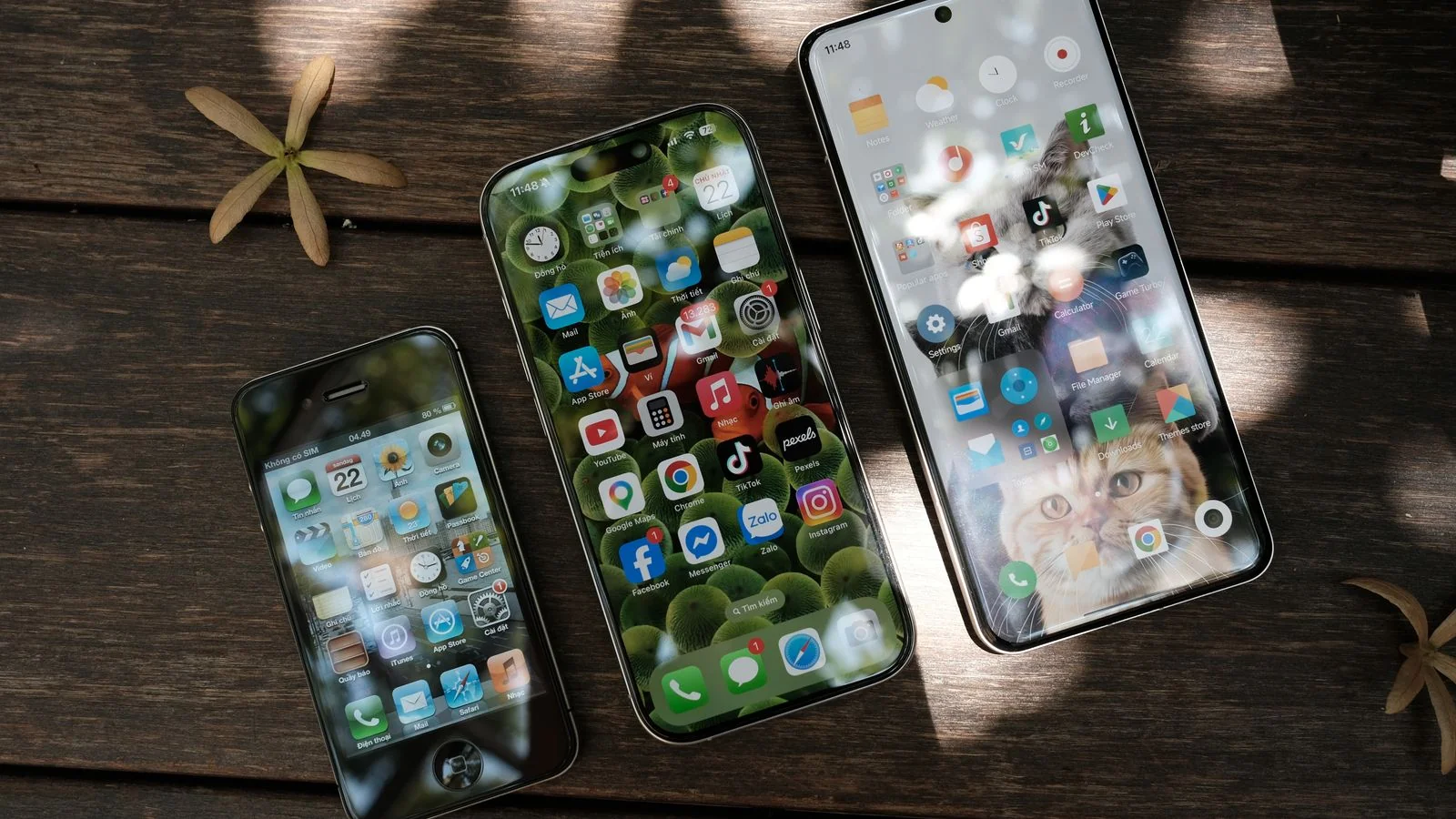
Apple News ships on every iPhone, iPad, and Mac in the markets where it runs. Apple’s own developer page lists the United States, the United Kingdom, Australia, and Canada as its launch markets. When Tim Cook last gave a usage figure on an earnings call, on April 30, 2020, he said the app had 125 million monthly active users. Apple has not published a newer number that we could verify, so treat that as a dated ceiling, not a current count.
The free app is built from a few distinct surfaces. Top Stories sits at the top. Apple’s current product page says “experienced Apple News editors curate the day’s top stories from trusted sources,” and its comparison table lists “Top stories chosen by editors, personalized for you” as part of both the free tier and the paid one. Below that come Trending Stories and the personalized For You feed, which lean on algorithms and on which channels a reader follows.
Then there is Apple News+, the paid layer. Apple launched it on March 25, 2019, at $9.99 a month in the US, with more than 300 magazines, newspapers, and digital publishers. Apple’s product page now lists it at $12.99 a month with access to more than 500 publications. News+ matters to you only indirectly. Its catalog is made up of licensed publishers, not individual brands, so you get into News+ the same way you get into a magazine: by being in the magazine.
Two researchers, Jack Bandy and Nicholas Diakopoulos, measured the gap between those surfaces in a paper presented at ICWSM in 2020. Over two months of collection they found that the human-curated Top Stories drew from a more diverse and less concentrated set of sources than the algorithmic Trending section, and that Trending skewed toward soft news about celebrities and entertainment. That finding shapes everything below. The editor-run surface rewards substance. The algorithm-run surface rewards whatever readers tap.
The Three Doors Model: Every Route Into Apple News
We call the framework the Three Doors Model. Every story you have ever seen in Apple News came through one of these.
Door One is the Owned Channel. You become a publisher yourself through Apple’s News Publisher tool, format your articles in Apple News Format, and appear in the app under your own name. The keyholder is Apple’s publisher review process, and once you are in, the keyholder is your own readership.
Door Two is the Borrowed Byline. A publication that already distributes through Apple News writes about you, quotes you, or runs your contributed piece. The story enters the app because that outlet’s channel pushes it there. The keyholder is the journalist or editor at that outlet.
Door Three is the Editor’s Pick. A story already inside Apple News, through Door One or Door Two, gets selected by Apple’s own editorial team for Top Stories or a curated spotlight. The keyholder is a small team of former journalists inside Apple.
The model’s main lesson is about sequence. Door Three never opens on its own. Apple’s editors choose among stories that publishers have already placed in the app. So the question is never “how do I pitch Apple News.” It is “which door can I open this quarter, and does it put me in front of the people who pick for Door Three.”
| Door | Who holds the key | What you control | Realistic for a founder? |
|---|---|---|---|
| Owned Channel | Apple publisher review, then your readers | Content, format, frequency | Yes, but traffic is slow |
| Borrowed Byline | Reporters at outlets already in Apple News | Your pitch and your story | Yes, the main route |
| Editor’s Pick | Apple News editors | Almost nothing directly | Only through the first two |
Who Picks Top Stories?

People do. The best public look at that team came from The New York Times in October 2018, summarized the same week by AppleInsider. The Times reported a staff of about 30 editors, most of them former journalists, spread across Sydney, London, New York, and Silicon Valley. The team was led at the time by Lauren Kern, a former executive editor at New York magazine.
The workflow described in that reporting is worth reading closely if you sell stories for a living. The team received somewhere between 100 and 200 pitches a day from publishers. Regional groups narrowed the candidates, and senior editors set the final order of the top five stories plus a feature section. The lineup changed five or more times a day. The goal was a mix of major news, lighter features, and longer investigations.
Notice who was pitching. Publishers. Apple’s editors were hearing from newsrooms that already had channels in the app, not from companies hoping to be written about. That detail is the whole reason Door Three only opens through the other two.
That reporting is eight years old. Apple still says in 2026 that editors curate Top Stories, but we could not find a newer public account of the team’s size, leadership, or pitch volume. If someone tells you they have a direct line to the Apple News desk for your brand story, ask them to show you a placement they got that way.
What the 2018 account does tell you is the taste profile. Editors were choosing among stories that dozens of outlets were also running, and they wanted the version with the most context. A reporter with a fresh angle, a regional paper with access no national outlet had, a feature that explained rather than shouted. That is the kind of story you want your name inside.
Door One: Should You Open Your Own Channel?
Sometimes. Apple’s News Publisher tool lets you create a channel, add sections, set a logo and cover image, and publish articles. Apple’s documentation gives you three ways in: convert articles from your content management system into Apple News Format and deliver them through the Apple News API, hand-code Apple News Format files and upload them, or write directly in News Publisher’s web editor. You also get analytics, and you can run ads. Apple says publishers keep 100 percent of revenue from ads they sell and 70 percent from ads Apple sells for them.
RSS used to be the easy path. In December 2019, Input reported that Apple News had quietly stopped accepting new RSS and Atom feeds, and the current News Publisher guide documents only Apple News Format routes. If you read an older tutorial telling you to paste in a feed URL, it is out of date.
Two rules in Apple’s current guide matter for brands. First, most of a channel’s articles must be original work from its own newsroom. You can run syndicated pieces, but they must be marked as syndicated and the byline has to show the wire service or source. Second, anything produced with AI tools needs its own label. A channel that recycles press releases or reposts other people’s coverage is the wrong shape for both rules.
Then there is the activity problem. In February 2020, developer Daniel Jalkut posted an email from the Apple News team warning that his channel would be removed because he had not published in three months or more. We could not find that rule written in Apple’s public documentation, but the email is real and it tells you how Apple thinks about dormant channels.
Here is the honest math. An owned channel puts your work inside the app, which is useful for search inside Apple News and for readers who already know you. It rarely builds an audience from zero. For most founders, Door One is a supporting asset, worth setting up if you already publish original reporting or analysis on a steady schedule. If you publish twice a year, skip it.
Door Two Is Where Most Founders Get In
The fastest way to appear in Apple News is to be in a story from a publication that already distributes there. Apple’s 2019 launch release named partners ranging from The Wall Street Journal and the Los Angeles Times to Vogue, The New Yorker, and Wired. Hundreds of regional papers, trade titles, and digital publishers run channels too.
Start with a simple audit. Open Apple News on your phone, search each outlet on your target list, and check whether it has a channel and whether its recent articles render inside the app. Some outlets only appear as links that kick you out to Safari. Prioritize the ones that publish natively, because those stories carry the outlet’s branding inside the app and are the ones Apple’s editors can lift into Top Stories.
Then pitch the reporter, not Apple. A strong pitch for Door Two looks the same as a strong pitch anywhere: a specific angle, a source the reporter cannot get elsewhere, and data or access that makes the story better than the version a competitor will file. If you want the mechanics of getting a release in front of the right desks, our guide on how to distribute a press release covers the wire side, and how long a press release should be covers the part most founders overwrite.
Contributed articles count too. If you write a column for a trade outlet that runs an Apple News channel, that column can show up in the app under the outlet’s name with your byline. It will not carry the weight of independent coverage, but it is real distribution to an audience that has already chosen to follow that publication.
Here is the part most guides skip. Door Two is also your only realistic path to Door Three. When you land in a well-reported story from an outlet Apple’s editors trust, you are now inside the pool those editors pick from. You cannot control whether they pick it. You can control whether you are in the pool. That is the practical answer to how to get featured on Apple News for anyone who is not a newsroom.
What the Miami Herald Pick Teaches About Getting Chosen
The 2018 Times reporting included one morning that shows the Editor’s Pick logic in action. In late August that year, most outlets led with the Harvard affirmative action lawsuit. Apple’s editors ran it too. But for a featured slot they chose a Miami Herald piece on racial tensions in the Florida governor’s race, picking it for its nuance over louder national takes on the same subject.
Read that through the Three Doors Model. The Herald came in through Door One, its own channel. The candidates and voters quoted in that story came in through Door Two, because a reporter decided they belonged in it. And the story went through Door Three because an editor at Apple judged it the most thoughtful version available that morning.
None of the people in that story pitched Apple. They were in the right reporter’s notebook at the right time, at an outlet Apple’s team already read. That is the play for you as well. If you are working out how to get featured on Apple News in 2026, build your list from outlets with native channels, bring each reporter something the competing version will not have, and let the editors at Apple find it where they already look.
Your next step is the audit. Search your ten target outlets inside the app this week and cross off the ones that do not publish natively. The list that survives is your Door Two pitch list.