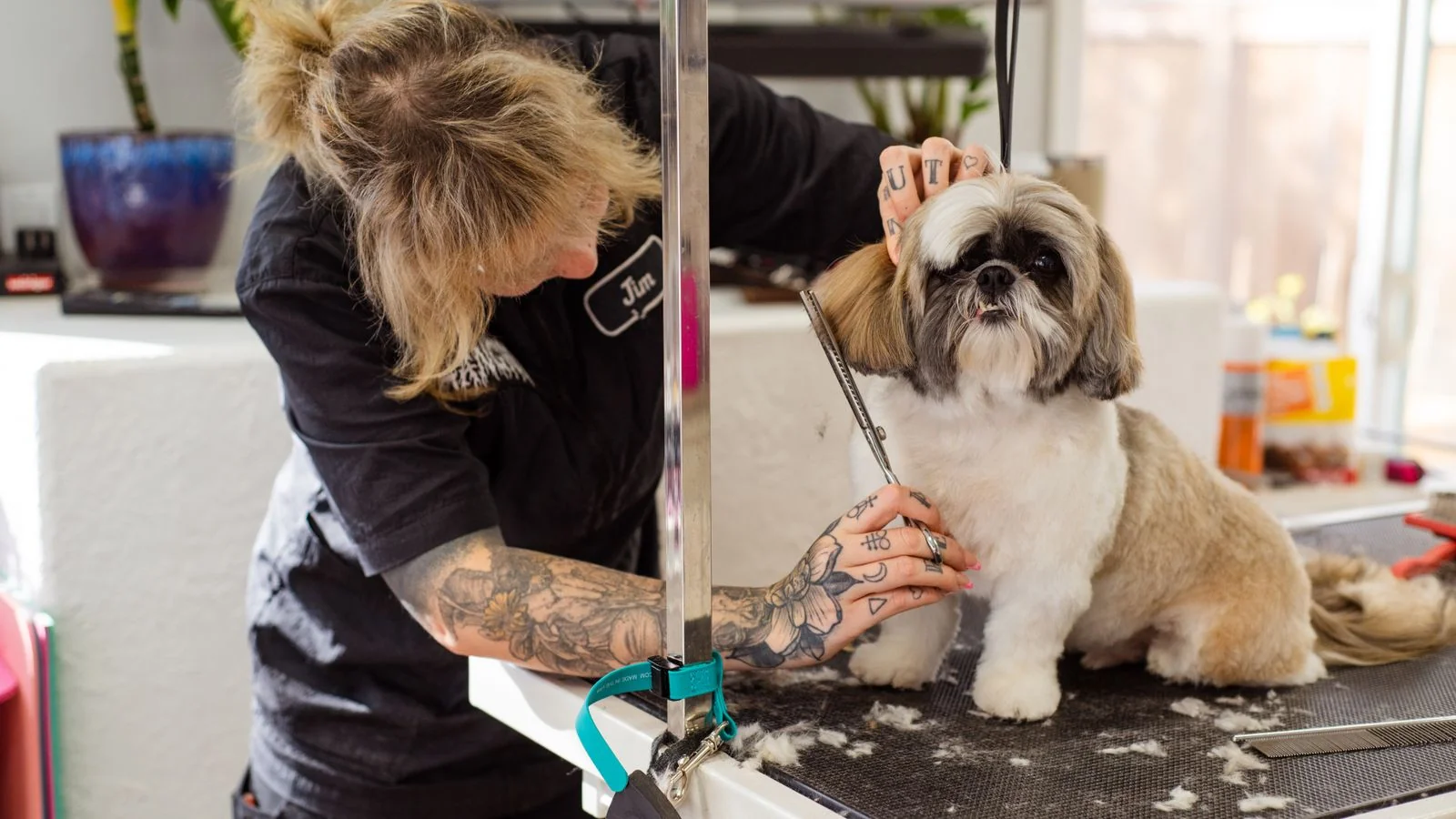
The American Pet Products Association puts annual US pet spending north of $100 billion, and grooming is one of the fastest-moving slices of it. Yet the average groomer’s name appears nowhere in that economy. The salon has a sign, a profile and a phone number. The person holding the clippers, whom every client actually asks for by first name, is invisible the moment they step outside the building.
That asymmetry is the whole opportunity.
Measure your Portable Book
Start with a number, because it converts a vague ambition into something you can track.
Your Portable Book is the share of your current clients who would follow you if you moved to a different salon across town tomorrow. Not who like you. Who would rebook with you at a new address, at the same price, with the inconvenience of a new drive.
Most employed groomers, asked to guess, say seventy percent. The honest number is usually somewhere between ten and thirty. The gap exists because clients experience loyalty to a slot in their calendar and a building they know, and they interpret that feeling as loyalty to a person. It only gets tested when the person leaves, and by then it is too late to build anything.
Everything that follows is aimed at moving that percentage, because the Portable Book is the only asset in grooming that is genuinely yours. Not the chair, not the client list the salon owns, not the reviews attached to a business profile you do not control. The share of people who would come with you.
Two things raise it. Clients have to know your name, and they have to have a reason to prefer your hands specifically. Most groomers have neither, which is why the number is so low and why moving it is so achievable.
Pick the thing you are known for
A groomer who is good at everything is memorable for nothing.
The specialism does not have to be exotic and it does not have to be all you do. It has to be the thing a client can repeat to a friend in one sentence. Doodles and the coats that mat. Senior and mobility-limited dogs. Anxious dogs and fear-free handling. Hand-stripping terriers. Cats, which almost nobody takes and which command a premium precisely because of that. Double-coated northern breeds during shedding season. Show-standard trims for a specific group.
Pick one, say it out loud, and put it everywhere your name appears.
The reason this works is mechanical rather than aesthetic. Referrals travel as sentences. “She’s great” does not survive a conversation. “She’s the one who’s brilliant with nervous rescues” survives, gets repeated, and finds the exact person who needs it. A specialism turns your clients into a distribution network without asking them to do anything extra.
It also changes who walks in. General grooming competes on price and availability, both of which run against you. A specialism competes on fit, which does not.
Put your face where your work is
Grooming is visual and emotional, which makes it one of the few trades where social platforms work without a strategy deck.
Photograph the work properly. Same spot, same light, before and after, every single day. Consistency matters more than production quality, and a phone is fine. What ruins groomer accounts is not bad cameras, it is sporadic posting and inconsistent framing that makes a feed look like a junk drawer rather than a portfolio.
Then break the rule that most groomers follow without noticing: appear in the photos. An account of nothing but finished dogs is a catalogue, and catalogues do not build a Portable Book. Clients need to attach the work to a face and a voice. Your hands in frame, you talking to camera for thirty seconds about why a particular coat needed a shorter cut, you on the floor with a dog that arrived terrified and left calm.
Video does the heaviest lifting here. A silent before-and-after gets a scroll. Thirty seconds of you explaining what you found under the matting, in plain language, gets a save and a share, because it teaches the viewer something about their own dog.
Teach, and the referrals follow

The single most underused asset a groomer has is knowing things that owners desperately want to know and cannot find clearly explained anywhere.
Why a doodle needs brushing to the skin and not just over the top. What matting actually does to circulation, and why the humane answer is sometimes the short one. How often a specific coat type genuinely needs a groom, including when the answer is less often than you are currently selling. Which brushes are worth buying and which are marketing. What to do about a dog that panics at the dryer. How to trim nails at home without hitting the quick.
Give that away, in public, constantly.
Two things happen. Owners who follow your advice get better results and attribute them to you, which is a loyalty mechanism no discount can match. And you become the local answer to grooming questions, which is exactly the position that generates unprompted referrals in group threads you are not even reading.
Groomers resist this because it feels like teaching people to need you less. In practice it does the opposite. An owner who understands coat maintenance books more regularly, not less, because they now understand what they are paying for.
Price yourself like a name, not a rate
A groomer with a brand and a groomer without one do the same work and charge differently, and the difference is not confidence. It is comparability.
An unbranded groomer is priced against every other groomer within driving distance, because from the outside there is nothing to distinguish them. The owner sees a service, a postcode and a number, and picks on the number and the availability. That is a commodity market and the only lever in it is being cheaper, which is the worst possible position in a trade where your costs are your hands and your time.
A groomer known for anxious rescues is not in that market. There is no comparison set, because the owner of a dog that has been refused by two salons is not shopping on price. They are shopping for someone who will not refuse them.
This is the real commercial argument for everything above, and it is worth being blunt about the mechanism. Personal branding does not make people pay more for the same thing out of goodwill. It removes the comparison that was forcing the price down.
Two practical consequences follow. First, publish your prices, because hiding them signals that you expect to be haggled with and attracts exactly the clients who will. Second, when you raise them, raise them alongside a visible reason: a new qualification, a specialism, a piece of coverage, a change in what you offer. Groomers who raise prices silently lose clients. Groomers who raise prices with a story attached lose the ones they wanted to lose.
There is a third effect that takes longer and matters more. Once you are known for something, work starts arriving pre-qualified. The enquiries change from “how much for a cockapoo” to “my dog is terrified of the dryer and someone said you are good with that.” The second conversation closes at a higher rate, at a higher price, with a client who stays longer.
Get your name outside your own channels
Everything above lives on platforms you rent. The next move puts your name somewhere you do not control, which is the part that compounds.
Local press covers pet stories readily, and grooming sits in a category editors actively want: it is visual, it is seasonal, it affects a large share of households, and it is free of controversy. The angles that get picked up are predictable enough to plan around. Heat waves and why shaving a double-coated dog is the wrong instinct. Shedding season. Holiday hazards. A rescue transformation with before and after photographs. The economics of running a small salon when supply costs move.
Pitch as the person, not the salon. “Local groomer explains why shaving your husky in July makes it hotter” is a story. “Salon offers summer grooming packages” is an advertisement, and editors can tell the difference in the subject line.
Podcasts and regional publications in the pet category are the second tier, and they are far easier to reach than most groomers assume, because almost nobody in the trade is pitching them.
The reason this matters beyond vanity: a named quote in a real publication is a third-party source attached to you rather than to your employer. It follows you between salons. It appears when someone searches your name. And it feeds the surface described next.
Check what AI says when someone asks
Ask ChatGPT, Perplexity and Google’s AI results to recommend a dog groomer in your town, and then ask each what it knows about you by name.
Most groomers have never done this and are startled by the result, which is usually either silence or a generic list of salon names with no individual attached. That silence is not a verdict on your skill. It reflects the fact that assistants build answers from written sources, and almost nothing written about grooming names a specific groomer.
Which makes this the least contested visibility surface in the trade. A groomer with a specialism, a consistent public body of work, one or two pieces of local coverage and a clear bio becomes nameable. Almost nobody has assembled that, so the bar is low and the position, once taken, is difficult to dislodge.
Own the asset, not the chair
The last move is structural, and it is the one that determines whether any of this matters in five years.
Whatever your employment arrangement, build the pieces that travel. A simple page with your name as the domain, your specialism, your photographs and a way to contact you. A following on at least one platform where the account is in your name rather than the salon’s. An email or message list of clients who have agreed to hear from you directly. A handful of press mentions that name you.
None of that is disloyal, and framing it that way is how groomers end up with nothing after a decade. Salons close, change hands, relocate and restructure. The groomers who survive those events without losing their income are the ones whose clients could find them afterward.
So go back to the number. Ask yourself honestly what share of your book would follow you across town next month. Then pick the specialism this week and say it in your bio, because that single sentence moves the percentage more than anything else on this list.