
Twenty-seven percent. That is the share of U.S. adults with a side hustle in Bankrate’s most recent survey, conducted by YouGov from June 2 to 4, 2025, across 2,616 adults. A year earlier it was 36%. The 2025 figure is the lowest Bankrate has recorded since 2017.
If you came here expecting a story about the side hustle boom, the data tells a different one. Fewer people are side hustling, the typical side hustle earns very little, and the people who do earn real money from side work tend to have something the rest don’t: a recognizable professional identity attached to the work.
Below are the side hustle statistics worth citing in 2026, grouped by what they tell you, followed by a framework for turning a side project into income that compounds. All figures come from the original surveys, with methodology noted so you can judge them yourself.
How many people side hustle now
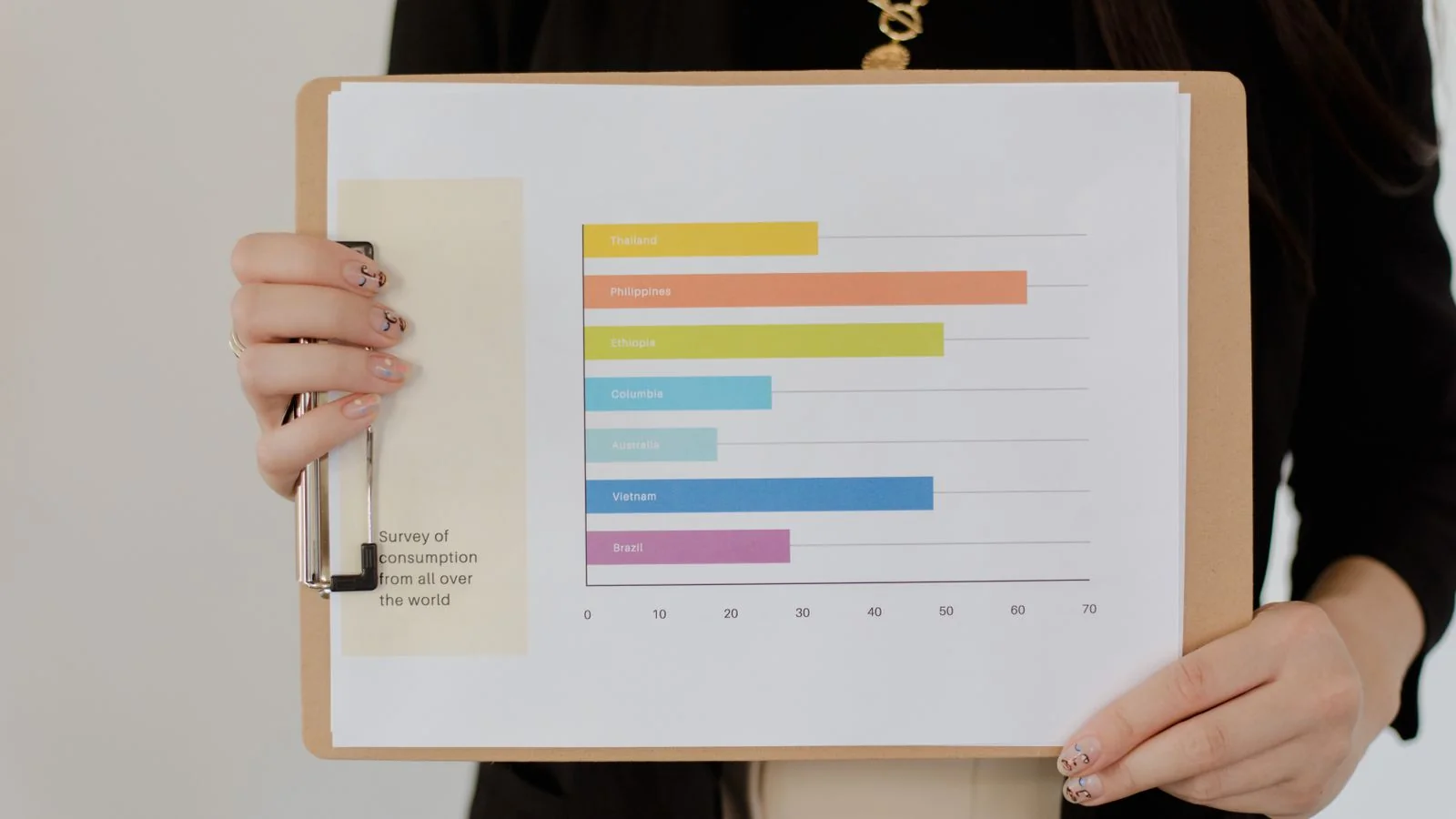
The headline number is the drop. Bankrate’s survey found 27% of U.S. adults had a side hustle in mid-2025, down nine points from 36% in 2024. The survey is a non-probability online sample weighted to demographic quotas, which is standard for this type of consumer research, and Bankrate has run it on a consistent basis long enough that the year-over-year comparison holds up.
A broader measure points the other way, and the difference is worth understanding. Upwork’s Freelance Forward study, run with Edelman Data and Intelligence across 3,000 U.S. working adults in late 2023, found 64 million Americans did freelance work that year, equal to 38% of the workforce. MBO Partners’ 2025 State of Independence study put the number of Americans working independently above 72 million.
Those numbers don’t contradict Bankrate. They count different things. Freelance and independent work includes people for whom it is their only job. A side hustle, by definition, sits on top of a primary income. The decline in side hustling alongside a large independent workforce suggests people are sorting into two camps: those who commit to independent work and those who drop the side gig entirely.
Who side hustles, by age and life stage
Generation still predicts side hustling more than anything else in the data. In Bankrate’s 2025 survey, 34% of Gen Z adults (ages 18 to 28) had a side hustle, compared with 31% of millennials, 23% of Gen X, and 22% of baby boomers.
Parents of children under 18 side hustle at 34%, well above parents of adult children at 23% and non-parents at 28%. That tracks with the cost pressure of raising kids.
Education runs in a direction some people find surprising. Post-graduate degree holders side hustle at 32%, four-year degree holders at 30%, and people with a high school diploma or less at 23%. The more credentialed you are, the more likely you are to have a second income stream, which says a lot about which side hustles pay. Professional services, consulting, and skilled freelance work reward credentials and reputation in a way that gig delivery does not.
How much side hustles pay

Here is the number that matters most for anyone weighing a side hustle: the median Bankrate respondent earned $200 a month from side work in 2025, down from $250 in 2024. The average was $885 a month, nearly flat from $891 the year before and up from $810 in 2023.
When the average is more than four times the median, a small group of earners is pulling the number up. Bankrate’s own breakdown confirms it: 28% of side hustlers earned between $1 and $50 a month. Among Gen Z side hustlers, 40% fell in that bottom bracket.
Averages by generation were $968 for Gen Z, $1,029 for millennials, $512 for Gen X, and $918 for baby boomers. The boomer figure is worth a second look. Older side hustlers are less likely to have one, but when they do, they earn close to what younger people earn, likely because their side work draws on decades of professional expertise.
The gender gap is wide. Men averaged $1,195 a month from side work with a $247 median. Women averaged $611 with a $148 median.
As for what people do, online sales led Bankrate’s 2025 category list at 15% of side hustlers, followed by professional services at 14%. Food delivery and crafts tied at 9%, pet care came in at 7%, and teaching or tutoring at 6%. Healthcare and landscaping or home repair each claimed 4%, fitness and ridesharing 3% each, and home rentals 2%. A large share, 43%, picked a category that wasn’t on the list, which tells you how fragmented side work has become.
Upwork’s freelance data offers a sharper picture of the skilled end. In its 2023 study, 47% of freelancers, close to 30 million people, did knowledge work such as programming, marketing, IT, and business consulting. Another 23%, or 14.7 million people, produced influencer-style content such as livestreams, social video, images, or blogs.
Why people side hustle
The reasons shifted in 2025. The share of side hustlers using the money for discretionary purchases rose to 41%, up from 37% in 2024 and 27% in 2023. Regular living expenses came second at 35%, saving at 28%, and paying down debt at 20%.
At the same time, 29% said they feel they will always need a side hustle to make ends meet. Among Black side hustlers, 42% used side income for regular expenses and 39% said they needed it to make ends meet.
Only 16% of side hustlers want the side work to become their main income. That rises to 21% for Gen Z and 17% for millennials, and falls to 12% for Gen X and 11% for boomers.
Is AI changing side work?
The data here is early but consistent. Upwork found 20% of freelancers used generative AI multiple times per week in 2023, compared with 9% of non-freelancers. MBO Partners’ 2025 study reported that 74% of independents use generative AI to improve productivity and output, and that 5.6 million independent professionals now earn more than $100,000 a year, up 19% from 2024 and 86% from 2020.
Put those together and you get a reasonable working theory. AI is making it cheaper to produce the deliverable, which pushes down the value of commodity side work. It is also raising the ceiling for people whose clients hire them for judgment, taste, and trust rather than raw output.
Why did side hustling drop?
Bankrate’s survey doesn’t ask people why they stopped, so any explanation is an interpretation. Still, the rest of the data offers some useful clues, and they are worth thinking through if you plan to cite the decline.
The first clue is the income. A $200 median monthly payout is not much for the hours many side hustles demand, especially gig work with vehicle, fuel, and time costs. When the median falls from $250 to $200 in a single year, as it did between the 2024 and 2025 surveys, the math gets harder to justify for people at the margin.
The second clue is the motivation shift. More side hustlers in 2025 said they used the money for discretionary purchases, at 41%, compared with 27% just two years earlier. When a side hustle funds extras rather than essentials, it is easier to drop when time gets tight or a primary job gets more demanding.
The third clue sits outside the survey. Bankrate’s own analyst, Ted Rossman, suggested side hustling could rise again if the job market weakens and price growth picks up. In other words, the decline may be cyclical. A strong labor market gives people more hours, raises, and overtime at their main job, which reduces the need for side income. If conditions turn, the share could climb back.
The fourth clue is the split in the broader independent workforce. MBO Partners’ finding that six-figure independents grew 86% from 2020 to 2025 suggests some people who once side hustled have gone fully independent. They no longer count as side hustlers because the side work became the main work.
None of these clues proves a cause on its own. Together they suggest the drop is less about people losing interest in extra income and more about a sorting process: casual, low-paying side gigs are being dropped, while serious independent work keeps growing.
How to use these statistics responsibly
If you are a journalist, marketer, or founder citing side hustle data, a few habits will keep you accurate.
Name the source and the date. “27% of U.S. adults had a side hustle in June 2025, according to Bankrate” is precise. “A quarter of Americans side hustle” drifts from the source and will get corrected.
Use the median when you talk about typical earnings. The $885 average is real, but it describes a distribution skewed by high earners. The $200 median describes what a typical side hustler makes.
Don’t mix side hustle and freelance data without saying so. A side hustle count and a freelance count measure different groups, as explained above. If you put them in the same paragraph, label each one.
And be careful with the word “2026.” As of this writing, Bankrate’s most recent published side hustle survey was conducted in June 2025. Pages that label the same numbers as 2026 data are recycling them. If a newer survey is published, use it, and note the change.
The Visibility Ladder: why some side hustles pay and most don’t
The gap between a $200 median and a $885 average is not random. When I look at side earners who break out of the bottom bracket, they almost always climb what I call the Visibility Ladder, four rungs that turn anonymous labor into named expertise.
The first rung is the anonymous task. You deliver food, complete a gig, or sell a product where the buyer never learns your name. Pay is set by the platform and competition is unlimited.
The second rung is the attributed deliverable. Your name sits on the work: a design portfolio, a byline, a client testimonial, a review profile. Buyers can choose you specifically, which gives you some pricing power.
The third rung is the searchable reputation. When someone types your name into Google or asks ChatGPT about you, they find a consistent story: what you do, who you have done it for, and proof. This is the rung where referrals start converting without a sales call.
The fourth rung is the cited authority. Third parties mention you without being asked. A trade publication quotes you, a podcast books you, an AI assistant recommends you when someone asks for help in your niche. At this rung the side hustle stops being a side hustle, and clients come to you.
Most side hustlers stall between rungs one and two. The move up is less about working harder and more about making the work visible under your own name. Our guide on how to build a personal brand covers the mechanics of rungs two and three.
What these numbers mean for you
Read the side hustle statistics together and a pattern emerges. Fewer people are doing side work, most of it pays very little, and the people who earn well tend to be credentialed, experienced, and identifiable. The growth is happening at the skilled, reputation-driven end, while the anonymous end is shrinking.
If you are one of the 27%, or thinking about joining them, the useful question is not whether to side hustle. It is which rung of the Visibility Ladder your side work sits on today, and what it would take to climb one rung higher by this time next year. Where does yours sit?