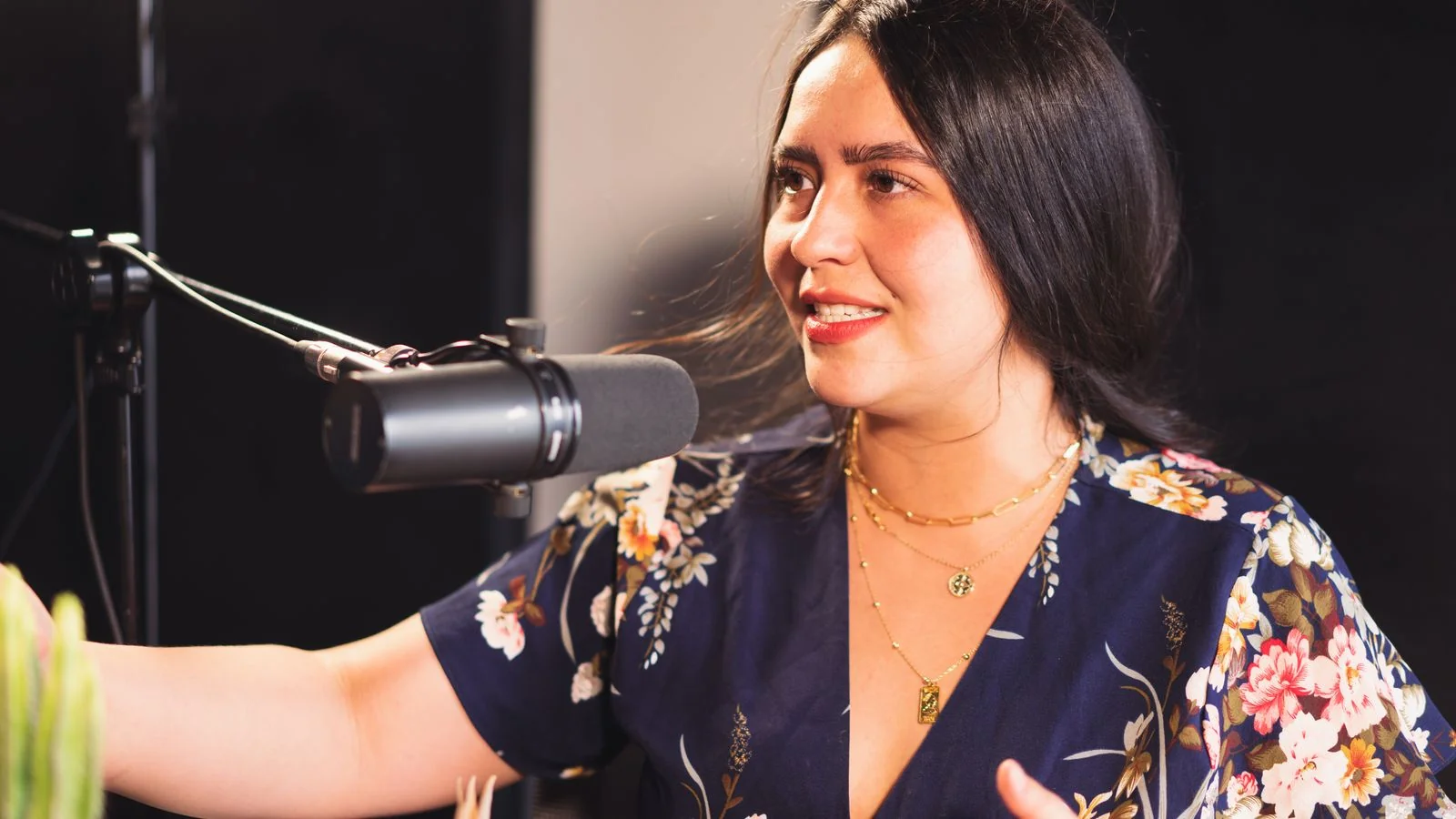
On September 22, 2012, John Lee Dumas published the first episode of Entrepreneurs on Fire. He had spent eight years in the Army, tried law school, and worked in finance and real estate before deciding to interview a successful entrepreneur every single day. Providence College News, profiling its alumnus in 2019, called EOFire the first daily podcast built on that idea. The show turned a profit after 13 months, logged 70 million downloads by 2018, and booked guests like Seth Godin, Barbara Corcoran, and Tony Robbins.
That history matters if you are working out how to get on Entrepreneurs on Fire, because the show you are pitching is not a scrappy start-up anymore. It is a 14-year-old production with a defined format, a public application, and a price tag. Most founders who search for this skip the part where they decide whether they should apply at all. This piece covers both.
What Entrepreneurs on Fire Looks Like in 2026

The core rhythm has not changed. EOFire’s podcast listing still describes the show as publishing seven days a week, and it now counts more than 5,000 episodes. Some of those releases are replays tagged as “EOFire Classic” episodes, which tells you something about the math: a daily show needs a deep bench, and it fills gaps with proven conversations.
The interview itself follows a familiar arc. Dumas walks a guest through the origin of the business, the worst moment, the turning point, and what a listener can do next. If you have heard ten episodes, you can predict the questions. That predictability is a gift for preparation.
The guest page spells out what a featured guest gets. There is the interview about your journey and expertise, a dedicated call to action pointing listeners to your product or offer, a show notes page on EOFire.com with takeaways and links, a mention in the weekly email newsletter, and promotion on Facebook and Instagram, which the page says reach over 300,000 followers combined.
Read that list again with a buyer’s eye. Two of the five items are about routing attention to your offer. The show is built for guests who have something specific to sell or give away, and it is honest about that.
Is the $3,500 Appearance Fee Worth It?
Here is the part many guides leave out. The application form at EOFire.com/apply opens with a checkbox. You acknowledge that if you or your client is selected, a $3,500 appearance fee is required before recording. The form says the fee supports production, distribution, and promotion of the episode.
Selection is still competitive. The guest page says the show receives over 400 inquiries a month for 20 interview spots, and the form repeats the 400-plus figure. Paying does not jump the line. You have to be chosen first, then pay.
So the real question is not “can I get on?” It is “what does one EOFire episode need to produce for $3,500 to make sense?” Run the numbers before you write a word. If your call to action sells a $49 course, you need about 72 sales to cover the fee. If it books calls for a $15,000 consulting engagement, one client covers it four times over. If you have no offer at all, the episode is a branding expense, and you should price it against other branding spend.
There is a second return that most guests undercount. A transcribed, indexed interview on a long-running show becomes a source that search engines and AI assistants can cite when someone asks about you. That value compounds if you have a clean entity footprint elsewhere, which is why podcast guests often pair appearances with work on their Google Knowledge Panel for podcasters. An episode that names you, your company, and your expertise in plain language is a durable citation, not just a download count.
Compare it with the alternatives, too. A sponsored newsletter placement or a short paid social campaign can cost a similar amount and disappear within a week. An interview keeps its show notes page, its place in a 5,000-episode archive, and its transcript. That shelf life is the argument for the fee, but it only pays if listeners hear something worth acting on.
Our view: the fee is reasonable for founders with a clear offer and an audience match. It is a poor buy for someone who wants “exposure” with nothing to point it at.
Write the Application Like a Show Notes Page

The form is short. It asks for your full name, your email, a 30-word bio, and a proposed title for the interview. That is the whole pitch. With 400 people a month filling in the same four fields, your bio and title carry all the weight.
Treat the 30-word bio as the first paragraph of your show notes page, because that is close to what it will become. Lead with the result, not the résumé. “Founder of a 40-person agency” says less than “Grew a design studio from a laptop to $6M in revenue without outside funding.” A producer scanning dozens of entries wants to see the story arc in one line: where you started, what you built, and the number that proves it.
Then write the title the way EOFire titles its own episodes. Browse the feed and you will see short, concrete promises built around one idea. Your proposed title should name a lesson a listener can use, not your company name. “How I Replaced Cold Outreach with a Free Weekly Teardown” gives the producer an episode they can picture. “My Entrepreneurial Journey” gives them nothing.
A few things sink applications fast. Bios stuffed with adjectives read as filler. Titles that pitch your product read as ads. Vague claims (“helped thousands of businesses”) read as unverifiable. If a stranger could not check your proof point with a quick search, swap it for one they could.
If you are applying on behalf of a client, the form allows for that, and the fee language covers “you or your client.” Write the bio in the client’s voice and keep the title tight to the client’s single best story.
The Fire-Ready Score: Grade Yourself Before You Apply
Because the fee turns a guest slot into a purchase, you should score yourself before you apply. We use a simple model we call the Fire-Ready Score. It grades four factors from 0 to 5, for a total out of 20.
Story arc (0 to 5). Do you have a clear before, a low point, and a turning point you can tell in under three minutes? A 5 means you have told it on stage or on other podcasts and know where the laugh lands. A 1 means you have never said it out loud.
Teachable lesson (0 to 5). Can a listener act on what you say the same day? A 5 is a named method with steps a listener can repeat. A 1 is general encouragement.
Offer fit (0 to 5). Is there a free resource or product that a typical EOFire listener, an early-stage founder or side-hustler, would want? A 5 is a free download that flows into a paid offer you have already sold. A 1 is “check out my website.”
Proof and footprint (0 to 5). Can a producer verify you in two minutes? A 5 means press coverage, a consistent bio across platforms, and prior podcast appearances. A 1 means a thin LinkedIn and nothing else.
Add the four. At 16 or above, apply this week. Between 11 and 15, fix your weakest factor first; it is usually offer fit. At 10 or below, you are not ready to spend $3,500, and you would get more from guesting on smaller shows to build your story and your proof.
The Fire-Ready Score does two jobs. It forces you to see the episode from the producer’s chair, where the question is “will this guest deliver a good 25 minutes?” And it forces you to see it from your own finance chair, where the question is “will this guest slot pay back?” A founder who scores 18 tends to write a better application without trying, because the bio and title fall out of a clear story and a clear offer.
What Happens After You Hit Submit?
The application page does not publish a review timeline, so plan as if you will hear nothing for weeks. Do not chase the team with follow-up emails asking for a decision. With 400 applications a month, a polite nudge is still one more message in a full inbox.
Use the wait to prepare as if you have been accepted. Listen to at least five recent episodes, ideally ones with guests in your category. Note how Dumas moves from the origin story into the lesson, how long guests talk before he redirects, and how the call to action lands at the end. Then rehearse your own version with a timer.
Build the landing page your call to action will point to before you know you need it. If you get the slot, you want the page live, tracked, and tested, not something you build the night before recording. Give it a short, memorable URL you can say out loud without spelling it.
If you are selected, you will pay the fee and schedule the recording. Treat the session like a sales call with a very large audience. Bring a quiet room, a decent USB microphone, wired headphones, and a single sentence you want listeners to remember.
If you are not selected, that is not a verdict on your business. It is a verdict on one bio and one title against 399 others. Rework both, raise your weakest Fire-Ready Score factor, and decide whether to apply again in a few months. Knowing how to get on Entrepreneurs on Fire is partly knowing when to wait.
Turn One Episode Into Months of Proof
Most guests let a paid episode die on release day. That is the most expensive mistake on this list.
Start with the show notes page. EOFire publishes one for every guest, with takeaways and links. Link to it from your own site’s press or media page, from your speaker one-sheet, and from your LinkedIn featured section. That page is third-party proof with your name on it, and it will keep ranking long after the episode leaves the top of the feed.
Next, clip it. Pull three to five short moments from the interview, each built around one idea, and post them over the following month. Each clip should end by pointing back to the full episode or your offer. If you run your own show, the material can also seed episodes there; our guide to creating a thought leadership podcast covers how founders turn guest spots into a content engine.
Then think about how machines will read it. AI assistants answer questions by pulling from sources they trust, and a well-structured interview transcript on a long-running show is exactly that kind of source. Make sure your name, company, and core claim appear in the same consistent wording you use everywhere else. We break down how that works in AI search and podcast content.
Finally, use the appearance as a door to the next one. Hosts of smaller shows listen to EOFire. A line in your pitch that says “recently featured on Entrepreneurs on Fire” with a link does more than any adjective in your bio.
The founders who get the most from figuring out how to get on Entrepreneurs on Fire treat the episode as the start of a campaign, not the finish line. The fee buys you 25 minutes. Everything you do in the 90 days after decides what those minutes are worth.
Your next step takes about 20 minutes. Score yourself on the four Fire-Ready factors tonight, write the 30-word bio and proposed title in a blank document, and read both aloud. If you scored 16 or higher and the bio makes you want to hear the episode, open EOFire.com/apply and submit it before the weekend.