
It is late August, the term starts in three weeks, and you have eleven open slots across four teachers. Somebody suggests posting more on social media. Somebody else suggests a blog about the benefits of music education. By the time either happens the term has started, the slots are still open, and the same conversation will happen again in January.
Content marketing for music schools fails in this predictable way because schools reach for the wrong kind of content at the wrong point in the year. The assets that fill a roster are not articles. They are recordings of what actually happens in your rooms, and they need to exist six weeks before anybody is enrolling.
Your best content is happening in the building already
Walk down the corridor on a Tuesday evening. A seven-year-old is getting a scale right for the first time. A teacher is explaining, for the four hundredth time and with complete patience, why the fourth finger matters. Two teenagers are arguing about a chord. An adult beginner is laughing at their own mistake.
Every one of those is content that no competitor can produce and no parent can find anywhere else, and almost every music school lets all of it evaporate because they are saving the camera for the recital.
The recital is the worst thing you could film. It is formal, it is high stakes, everybody is nervous, the playing is better than normal, and it shows a parent nothing about the experience they are actually buying. A parent deciding whether to enroll a shy eight-year-old wants to know what a Tuesday feels like, not what December looks like.
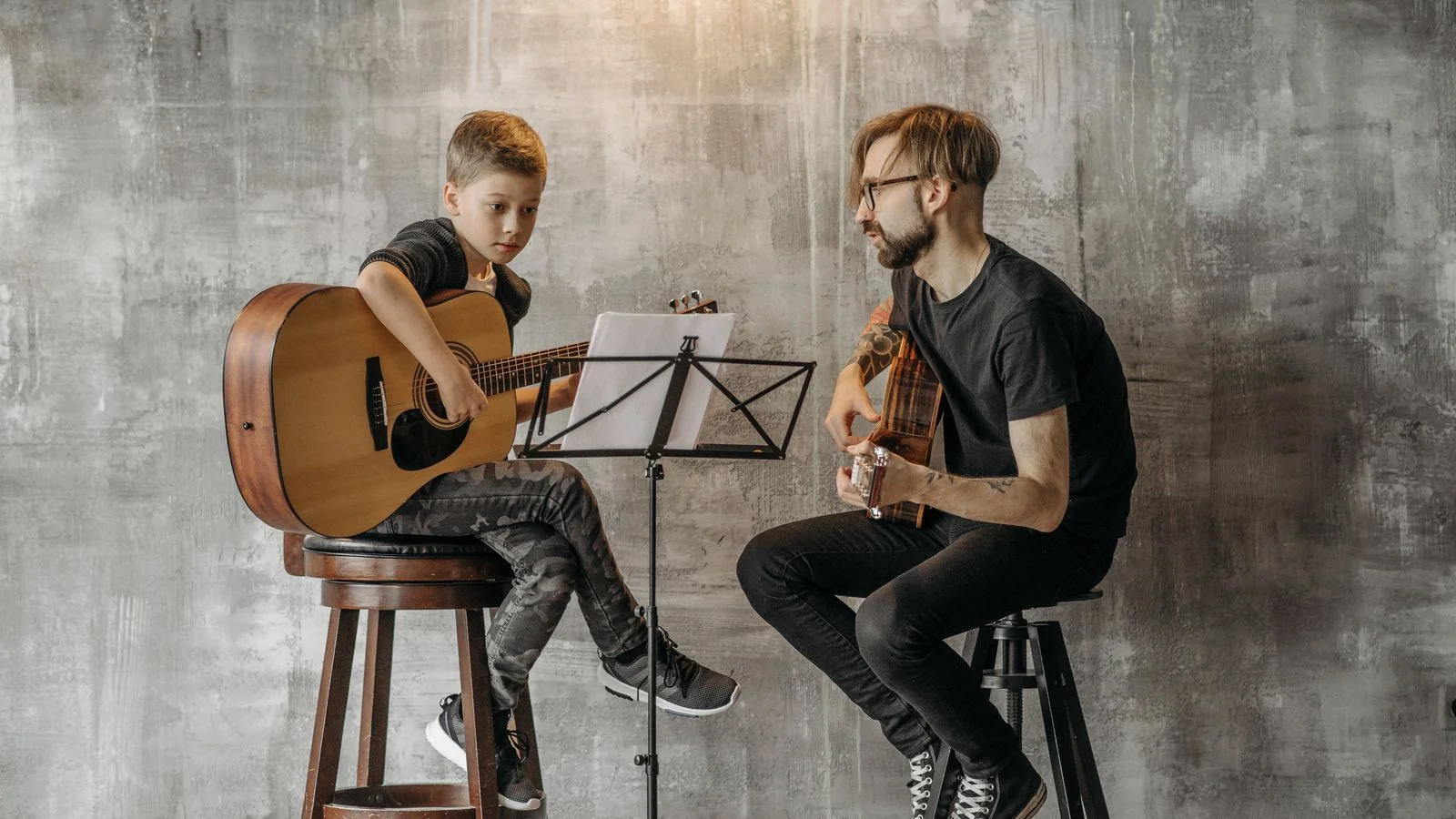
So change what gets recorded. Ordinary lessons, with consent, kept short. A teacher explaining one concept. A student attempting something and not getting it, then getting it. Thirty to ninety seconds, phone footage, no editing beyond trimming. The lack of polish is the point, because polish reads as advertising and a shaky clip of a real room reads as evidence.
Get the consent architecture right before you start, because retrofitting it is miserable. Written, specific, opt-in at enrollment, naming where footage may appear, and revocable on request without argument. Keep a simple record of who has consented, and build the habit of checking it before anything goes out.
What does a parent search before they call a music school?
Decisions, almost entirely, and hardly any of them are about you.
What age should a child start piano. Is my child too young for violin. Should we rent or buy. How much should a beginner practise. What do we do about a child who wants to quit. Is group or individual better for a six-year-old. Which instrument suits a kid who cannot sit still.
Those searches happen weeks or months before anybody looks up a school, and almost nothing useful exists to meet them. What does exist is written by instrument retailers with an obvious interest, or by national organisations in a register nobody reads. A local school that answers these plainly, with a named teacher’s byline, owns the moment before the decision, which is far more valuable than competing at the moment of it.
Write them from your own experience rather than from research. Your teachers have watched three hundred children start an instrument and know things that are not written down anywhere: which instruments suit which temperaments, what the second month looks like, when quitting is a phase and when it is information. That knowledge is the asset.
Answer directly and early in each piece. A parent wants the recommendation in the first two sentences, then the reasoning, then the exceptions. Burying the answer under four paragraphs of context loses both the reader and the assistant that might otherwise have quoted you.
Collect the questions from your own enquiry inbox rather than from a keyword tool. Every phone call you take in August contains two or three of them, phrased the way a parent actually phrases them, and those phrasings matter more than search volume does now that most of this asking happens in a chat window rather than a search box. A page titled with the parent’s own sentence gets retrieved when somebody types that sentence to an assistant. A page titled “Choosing the Right Instrument” does not.
There is a second category worth writing and almost nobody does: the questions parents are embarrassed to ask. Whether it is too late to start at eleven. Whether their child is unmusical. Whether the money is worth it when the child is mediocre and happy. Answer those with warmth and without flinching and you will find they get forwarded between parents more than anything else you publish.
The Seven Assets
Here is the set I build with music schools, ordered by how much work each one does.
The first is a library of short ordinary-lesson clips, tagged by instrument and age. The second is a teacher page for every member of staff with a photograph, a real bio in their own voice, and one clip of them teaching. The third is a set of decision pages answering the searches above. The fourth is a first-lesson walkthrough describing minute by minute what happens, for both children and adults. The fifth is a practice-at-home guide that is honest about how hard it is. The sixth is a small number of properly told student stories, with consent, covering a full arc rather than a highlight. The seventh is a seasonal enrollment page that goes live six weeks before each intake and comes down afterwards.
Five of those are built once and maintained. That matters for a business with no slack during term, and it is why a plan built around weekly posting collapses every October.
Build them in that order too, because the first two make everything else easier. Once you have clips and teacher pages, every other asset has something concrete to point at, and the decision pages stop being abstract advice and start being advice with a face attached.
The seventh asset is the one schools most often get backwards. An enrollment page that sits up all year, unchanged, reads as a business with vacancies. One that appears six weeks before an intake, names the actual dates and the actual number of places by instrument, and comes down when the intake closes, creates a real deadline out of a real constraint. Do not invent scarcity. Just stop hiding the scarcity you already have.
Those seven are what content marketing for music schools looks like when it is built rather than published. None of them require a writer and all of them require access to your own rooms.
Film the room, not the recital
Give one teacher a small stipend and the job of capturing two clips a week, and give them a simple rule about what qualifies.
The rule I use: film the moment just before something clicks, and keep filming through the click. That is the only footage parents genuinely respond to, because it shows the mechanism of teaching rather than the result of it. A child playing a piece well is nice. A child failing at a bar three times while a teacher adjusts one thing, then getting it, is persuasive.
Keep the teacher’s voice in. Parents are choosing an adult who will spend an hour a week with their child, and tone of voice communicates more about that adult in ten seconds than any bio. A teacher who is warm when a student gets something wrong is the entire product, and it cannot be described, only shown.

Do not chase virality and do not optimise for reach. These clips are not advertisements, they are evidence, and their job is to be there when a parent who is already considering you goes looking. A clip with two hundred views that closes three enrollments has outperformed one with forty thousand views from people in other countries.
Write the practice-at-home problem
The single most valuable piece a music school can publish is an honest guide to practising at home, because it is the thing every family struggles with and nobody talks about truthfully.
Most advice on this subject is useless because it assumes compliance. Fifteen minutes a day, at the same time, in a quiet space. Any parent who has tried knows the actual problem is a negotiation with a tired child at seven in the evening, and advice that skips the negotiation is advice from somebody who has forgotten what it is like.
So write the real version. What to do when a child refuses. How short a useful session can be, which is much shorter than parents assume. Whether to sit with them. What to do when the parent cannot read music. How to tell the difference between a bad week and a bad fit. When to let a child stop, which is a question every school avoids and every parent wants answered.
That last one is worth a page of its own. A school that publishes an honest account of when quitting is the right call gets trusted with everything else it says, and in practice it loses almost nobody, because the families reading it are looking for permission to continue rather than to stop.
Pair the written guide with two or three clips of a teacher demonstrating what a good five minutes looks like at home, for a beginner, with a parent in the room. Parents copy what they can see far more reliably than what they can read, and a teacher modelling the interaction solves a problem that no amount of written instruction has ever solved.
Send it to enrolled families as well as publishing it. Retention is cheaper than enrollment in this business, and most attrition traces back to a family who quietly stopped practising, felt bad about it, and let the lessons lapse rather than say anything. A guide that normalises a bad fortnight keeps more students than any recruitment campaign brings in.
Why adult beginners need their own shelf
Adults are the growth segment most music schools under-serve, and the reason is that they are being sold to as if they were parents.
An adult beginner is not aspirational, they are embarrassed. They think they are too old, that they will be bad in a way that wastes a teacher’s time, that everyone else in the building is a child or a prodigy, and that they will quit within a month and feel foolish. Almost nothing on a typical music school site addresses any of that.
Give them their own section, written in a completely different register. Show adult students who are visibly beginners. Have a teacher say out loud that adults learn differently and how. Be specific about the first three months. State plainly that nobody will be listening through the wall in judgement, because a surprising number of adults genuinely worry about that.
The conversion rate on this material tends to be higher than anything else on the site, partly because the competition is doing nothing and partly because an adult making this decision is making it alone and needs more reassurance than a parent does.
Adult enrollment is the part of content marketing for music schools with the widest gap between effort and return, because almost nobody in the category is doing it properly.
Keep it running when term starts
Build a calendar once, tied to your intakes, and accept that production stops during the busy weeks.
Six weeks before each intake, the enrollment page goes live and the decision pages get refreshed. Four weeks before, the clip library gets promoted to your existing families, who are your best referral channel and the cheapest distribution you have. Two weeks before, the first-lesson walkthrough goes out. During term, nothing new is produced except the two clips a week, which take twenty minutes and can survive a busy month.
That is the whole system. Film the ordinary lessons, answer the decisions parents are making before they look for a school, write honestly about practice and about quitting, give adults their own shelf, and run the seasonal pages on a calendar rather than on inspiration. Eleven open slots in August is a content problem that had to be solved in June.