
The cocktail photograph is the most expensive worthless asset in the spirits industry.
It costs a shoot day, a stylist, a bartender’s time and a photographer’s invoice. It produces a square image of a coupe glass with a citrus twist in nice light, indistinguishable from the ten thousand other coupe glasses posted that week. It generates likes from people who follow cocktail accounts for the pictures and will never buy a bottle, and it tells a bar manager, a distributor rep or a shop buyer precisely nothing they can use.
Meanwhile the thing that would actually move product costs nothing but the distiller’s attention, and almost no distillery publishes it.
Cocktail photography is not content marketing

The confusion comes from importing a playbook that belongs to a different business. Consumer packaged goods brands with national distribution and mass media budgets use lifestyle imagery to build recognition at scale. It works for them because they have the reach to make recognition pay and the shelf presence to convert it.
A distillery producing a few thousand cases into a three-tier system has neither. Your bottle is not on most shelves. Your buyer usually cannot order it online, because spirits direct-to-consumer shipping is prohibited in most American states, unlike wine. Recognition without availability converts at close to zero.
What you actually need is not awareness among strangers. It is conviction among a small number of gatekeepers: distributor reps, bar managers, shop buyers, and the enthusiasts whose recommendations carry disproportionate weight in a category where most people feel underqualified to choose.
Those people are persuaded by evidence, not atmosphere. And evidence is the one thing a working distillery generates in abundance and throws away daily.
Write for the three people who decide
Before anything else, name the audience honestly, because content written for everybody reaches nobody in a category this constrained.
The first reader is the distributor rep. They carry hundreds of brands, they sell what they can explain, and they are chronically short of material. What they need from you is a single page they can read in ninety seconds and repeat in one sentence: what it is, what makes it different in checkable terms, who it sells to, what it costs, and one fact that sticks. Most distilleries have never made this page. The ones who have get sold harder by their own distributor than their competitors do, which is an extraordinary return on an afternoon’s work.
The second reader is the bar manager or bartender. They care about behaviour in a glass. How the spirit holds at forty percent dilution. Whether the proof survives a stirred drink. What it does against sweet vermouth versus dry. Whether it plays in a sour. Which of your expressions belongs on a back bar and which belongs in a well. Publish that and you have written the only piece of brand content a bartender has ever wanted to read.
The third reader is the enthusiast, who is a smaller group than the industry pretends but has outsized influence because they answer other people’s questions in forums, on social platforms and in shops. They want production specifics: mash bill percentages, fermentation length, still type, cut points, barrel entry proof, warehouse conditions, age. They want it stated plainly and they will check it.
Notice that none of the three want a cocktail photograph. All three want facts, presented with enough specificity that the facts could be wrong.
The proof content nobody publishes
Here is the model. Call it the Proof Ladder, and it has four rungs ordered by how hard each one is to fake.
The bottom rung is the claim. Small batch, handcrafted, traditional, premium. Anybody can say it, nothing can disprove it, and it persuades nobody who has heard it before. Almost all distillery content lives here.
The second rung is the detail. Copper pot still, open-top fermenters, local grain. Better, because it is at least specific, but still easy to assert and still common enough to blend in.
The third rung is the number. Five-day fermentation. Seventy percent corn, twenty rye, ten malted barley. Entry proof of 110. Barrels aged on the fourth floor of an uninsulated rickhouse for six years. Ninety gallons of heads discarded per run. Numbers are harder to fake because a competitor can evaluate them and an expert can tell whether they cohere.
The top rung is the document. The actual gauging record. A photograph of the cut being made with the hydrometer reading visible. The barrel dump sheet. The lab result. The rejected batch and what was wrong with it. This is content that cannot be invented, and it is the rung almost nobody climbs.
The commercial point is that persuasion scales with the rung. A shop buyer reading a claim feels nothing. A shop buyer reading the mash bill and the entry proof and seeing a photograph of the barrel dump sheet believes the brand is what it says, and belief is what converts in a category saturated with brands that are not.
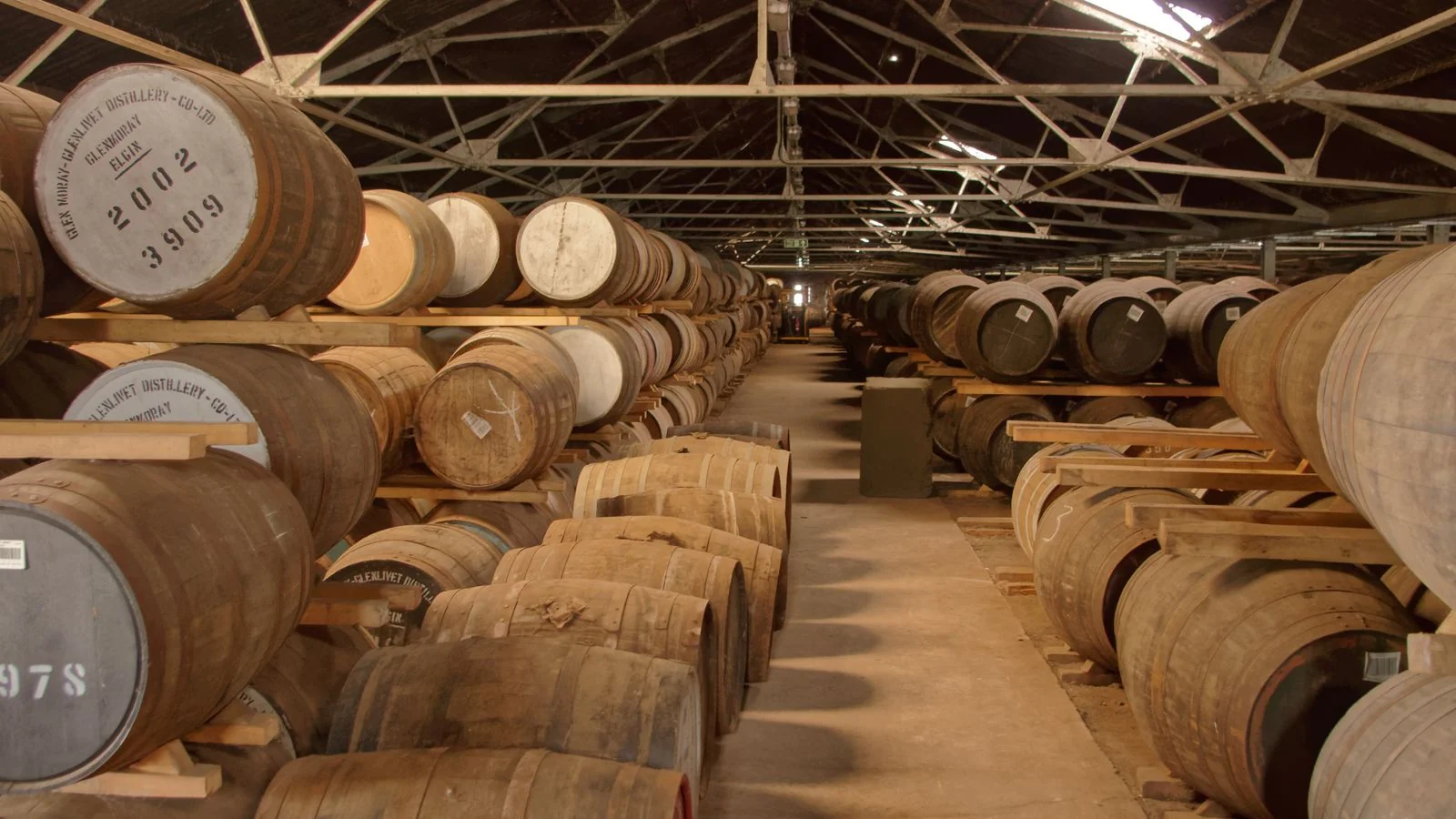
Climbing the ladder costs almost nothing. Every one of those artifacts already exists in your distillery. They are generated by law and by practice, sitting in binders and on phones, and they are being thrown away because nobody recognised them as the most persuasive marketing material the business produces.
Start with a simple habit. Every production run, capture three things: one number that surprised you, one decision you made and its trade-off, and one image of the actual process rather than the finished drink. That is a content programme, it takes four minutes per run, and it produces material nobody else in your category has.
The same discipline applies to the things that went wrong. A post explaining that you dumped a barrel because it went too oaky, with the reasoning, does more for credibility than a year of medal announcements. Admissions are the most expensive signal available, which is exactly why they work.
There is a legal caveat worth stating plainly, because it stops some distilleries before they start. Alcohol marketing is regulated, label claims require approval, and several of the things you might want to publish about health, strength or comparative quality are restricted in ways that vary by state and by platform. None of that prevents you from publishing production facts. Mash bills, fermentation times, entry proof, cut points, barrel age and rejected batches are descriptions of how the product was made rather than claims about what it does to the drinker, and that distinction is where the Proof Ladder lives. When in doubt the test is whether the statement describes the process or promises the consumer something.
A second objection is competitive: does publishing your mash bill and fermentation schedule hand your method to a rival? In practice it does not, for the same reason publishing a recipe does not make someone a baker. The variables that matter are equipment, water, yeast handling, warehouse conditions and a thousand small judgments made over years. What publication actually does is make it impossible for a competitor to claim your specifics as theirs, because yours are on the record with a date attached. Distilleries who stay quiet to protect a secret usually find the secret was never the asset.
Distribute where spirits buyers actually read
Publishing into your own feed is the weakest available distribution and the one most distilleries treat as the whole strategy.
The strongest is the distributor’s inbox and the rep’s phone. A short, useful, forwardable document sent to the people who sell your brand outperforms every consumer impression you will ever buy. Do this monthly and you will be the brand the rep reaches for.
Next is the trade and enthusiast press, which is small, underfed and reachable. Spirits publications, regional business journals covering manufacturing, podcasts in the category, and the writers who cover drinks for city publications all need producers who talk in specifics and answer the phone. A distiller who supplies numbers becomes a source, and sources get quoted repeatedly for years.
Then the forums and communities where people ask what to buy. Not to promote, which gets you removed, but because the answers given there by other people are shaped by whatever information exists publicly. A brand whose production details are documented and easy to find gets recommended accurately. A brand with nothing published gets described from guesswork or not mentioned.
That last point has grown teeth. When somebody asks an assistant which independent distilleries in their state are worth trying, or what the mash bill of your rye is, the answer is assembled from published text. A distillery that has climbed the Proof Ladder in public has supplied that answer. A distillery that has published only cocktail photographs has supplied nothing, and gets summarised as one of several regional producers, which is the commercial equivalent of not existing.
Your own channels still matter, but as an archive rather than a broadcast. The production page, the expression pages with full specs, the wholesale page with real terms, the archive of what you did each run. That is the material that gets found, cited and repeated.
Email deserves a specific mention because it is the one direct channel the three-tier system does not stand between you and your drinker. You cannot ship them a bottle in most states, but you can tell them when an allocation drops, which bars just took it, and what you are about to release. A list of four thousand people who like your whiskey is worth more than a hundred thousand followers, because you own it, it arrives, and it converts into the one action that actually helps: somebody asking for your brand by name at a bar or a shop. That request, repeated, is what makes a buyer reorder, and it is the only consumer behaviour in this industry that reliably moves distribution.
Build the list from the tasting room, from tours, from events and from every piece of content above, and then write to it like a person rather than a brand. The distilleries that have done this well treat the newsletter as the place the founder thinks out loud about production, which is the same material as everything else in this article, delivered to the people most likely to act on it.
So: stop shooting cocktails. Write for the rep, the bar manager and the enthusiast, because those three decide whether your bottle reaches anybody. Climb the Proof Ladder from claims to details to numbers to documents, using artifacts your distillery already produces and currently discards. Capture one number, one trade-off and one process image per run. Send it to the people who sell you, give it to the writers who cover you, and publish it where it can be found and quoted. The category is full of brands saying handcrafted. The gap in the market is the one telling the truth in numbers.