
The counterintuitive thing about a personal brand one-pager is that the document everyone treats as marketing collateral is actually an operational tool. The founders who use a one-pager as a deck-style flex (high-design, low-information, lots of headshot real estate) are using it wrong. The founders who use it the way good chiefs of staff use briefing memos (high-information, fast-scan, pre-answered objections) are the ones who get the warm intros, the podcast invites, the speaking slots, and the press calls. The document is doing work. It needs to look like it.
This article walks through the nine sections that show up in every effective personal brand one-pager I have seen used over the last three years across roughly 80 founders and CEOs I have worked with on press placement and personal positioning. The order matters. The lengths matter. What you cut matters more than what you include.
Section 1: the headline statement (one line)
The first line of the document is a single sentence that states who you are, what you do, and the specific differentiator that justifies the introduction. “Maria Sanchez, founder of Acme Veterinary, is the only veterinarian operating a 24/7 mixed-animal triage network across rural East Texas.” That sentence does five jobs in nineteen words. It names the person. It names the venture. It names the operational mechanism. It names the geographic scope. It implies the differentiator.
The mistake most founders make is opening with “Maria Sanchez is a passionate entrepreneur and visionary leader” or some variant. That sentence does no work. The reader has read it 400 times. It is filler that costs you the first ten seconds of attention. The opening line has to be doing real informational work or it should be cut entirely.
The discipline is to write the line by combining four elements: name, title or venture, operational verb, specific differentiator. If you cannot identify a specific differentiator that is true and verifiable, the entire one-pager is premature. The differentiator does not have to be world-historical. “The only veterinary practice in this region with after-hours mixed-animal coverage” is differentiator enough.
Section 2: the credibility anchors (three bullets, three to seven words each)
Below the headline, three short bullets that establish bona fides. The discipline is short. Three bullets, three to seven words each, no exceptions. “20 years in mixed-animal veterinary medicine.” “Past president, Texas Rural Veterinary Association.” “Founder, Acme Veterinary (operating since 2019).” Done.
The reason for the format is that the reader is scanning, not reading. Three bullets at scannable length register in two seconds. The same information in a 60-word paragraph registers as a paragraph that needs to be read later. The scan-friendly version gets the introduction. The paragraph version gets filed for later and forgotten.
The pitfall is overstuffing the bullets with adjectives. “Accomplished veterinary leader with 20 years of distinguished service across diverse practice settings” is the same information as “20 years in mixed-animal veterinary medicine,” but the second version reads as credible and the first reads as overcompensating. Cut every adjective that does not survive the “is this verifiable?” test.
Section 3: the operational story (one paragraph, 80 to 120 words)
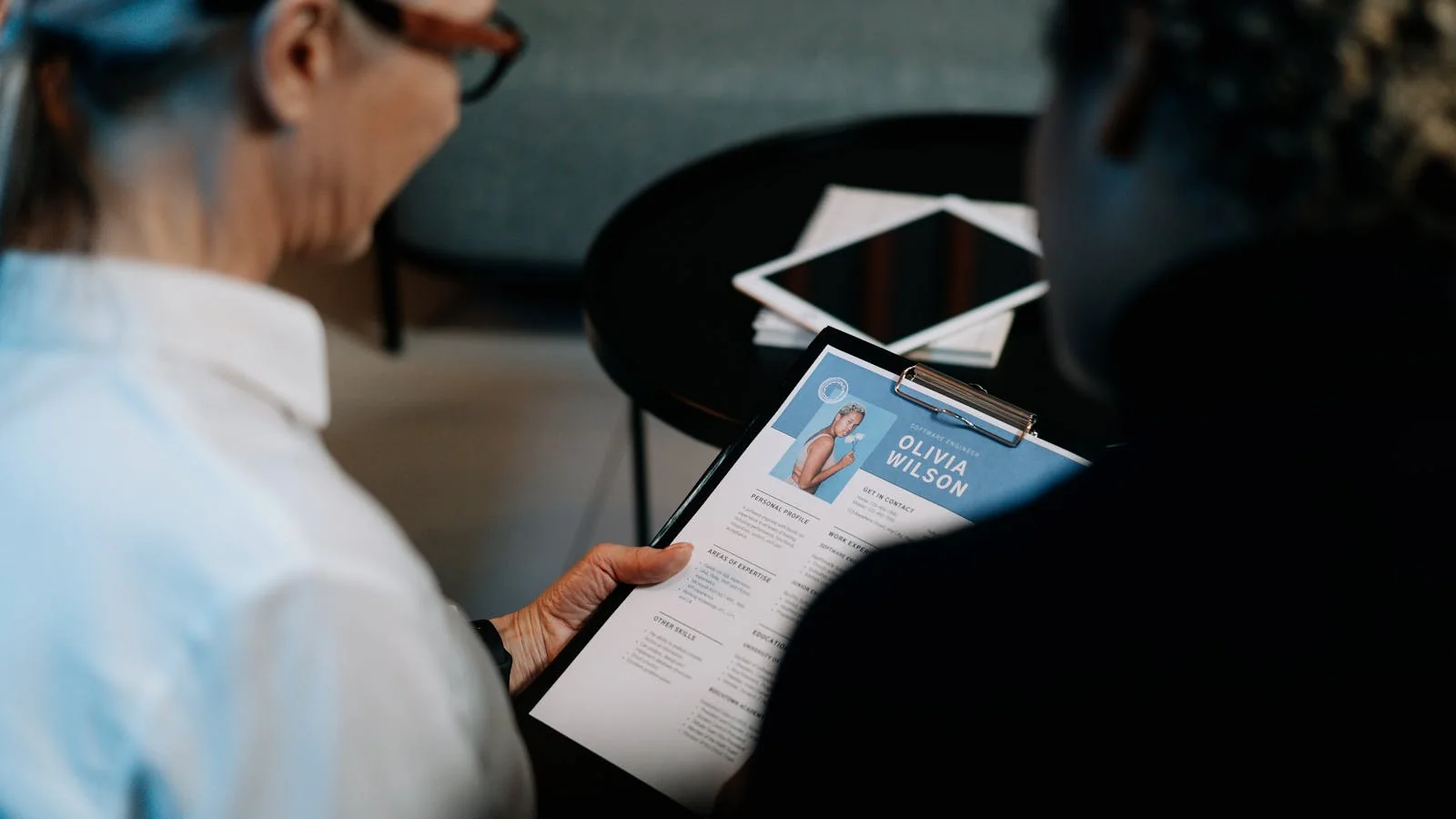
The third section is the operational story, which is the part most one-pagers butcher. The story is what you do, how you do it, for whom, and what the measurable outcome has been. It is not the founder narrative. It is the operational thesis. “Acme Veterinary operates a 24/7 remote triage line staffed by licensed veterinarians, paired with a regional emergency dispatch network covering 12 counties in East Texas. Over the past 18 months, the practice has handled 4,800 after-hours cases, reduced lost-patient calls in the partner clinics by 86%, and added six new partner clinics to the network. The model is self-funded and grew 140% YoY in 2025.”
That paragraph in 80 words tells the reader what you do, who benefits, and what the results are. It also pre-answers the three questions every introduction recipient asks: is this real, does it work, and is it growing. The paragraph closes those loops before they open.
The mistake is replacing this with a founder narrative. “Maria grew up on a ranch and always wanted to help animals” is fine for a different document. The one-pager is for someone deciding whether to introduce you, book you, fund you, hire you, or write about you. They need to know what the operation does. The childhood story comes later, in a conversation, after the meeting has been booked.
Section 4: the press footprint (logos and one-line citations)
The fourth section is the press strip: logos of publications that have covered you, organizations that have featured you, or institutions that have endorsed you, paired with one-line citations. “Featured in: Texas Monthly (March 2025), Veterinary Practice News (six features 2023-2025), DVM360 podcast (Episode 412, Q4 2025), KETK East Texas evening news (twice quarterly, 2024 to present).”
The reason this section matters is social proof under scanning. The introduction recipient reads the logos and citations in three seconds and updates their assessment of whether you are real. The same information delivered as “extensively covered in the press” does not move the assessment because the claim is unverifiable. Logos paired with citations are verifiable, and the verifiability is the entire signal.
Two cautions. First, do not include press that doesn’t actually exist or that doesn’t directly feature you (a one-line quote in a competitor’s profile does not count). The introduction recipient occasionally checks, and getting caught padding press kills the entire document. Second, lead with the most recognizable name and the most specific citation; not every one-pager belongs to a person who has been in The New York Times, and a credible regional or trade-pub footprint is more useful than a single mention in a top-tier outlet from five years ago.
Section 5: speaking and media history
The fifth section lists speaking engagements and media appearances in a compact format. Three to seven items maximum, organized by recency. “Keynote, Texas Rural Veterinary Conference 2024, ‘The After-Hours Coverage Gap.’ Panel speaker, AVMA national 2024, ‘Workforce Strategies for Rural Practice.’ Guest, The Vet Practice Podcast (Episode 89, March 2025).”
The discipline is to list only engagements that an outside observer would recognize as substantive. Internal company events, vague “thought leadership webinars,” and lunch-and-learn sessions for clients are not credibility-anchoring. They dilute the section. A one-pager with two strong speaking lines is more credible than a one-pager with eight weak ones.
If the speaking history is genuinely thin (early career, just-launched venture, or a founder who has not done public speaking yet), cut this section entirely rather than padding it. A missing section reads as “still building this side” which is fine. A padded section reads as “trying to look bigger than the work justifies” which is not.
Section 6: contact and access information
The sixth section is the contact block: email, mobile or office phone, LinkedIn URL, website, and the best way to schedule a meeting. The format is utilitarian. Right column or footer. Bookers, journalists, and prospects who have decided to engage need to be able to reach you in one step.
The mistake founders make is hiding their contact information behind a calendar link or a “please reach out through my assistant” note. Both work for some contexts. Both also lose 30% to 50% of the introductions that would have completed if the contact path had been direct. The one-pager is the front door. Make the door easy to open.
If privacy or volume management is a real concern, include both a public contact email and a calendar link, and let the user pick. The default is to make the path as short as possible.
Section 7: the photograph
The seventh section is the photograph, which deserves its own line of attention because most founders use the wrong photo. The right photo is a professionally shot, well-lit headshot with neutral background, subject facing the camera, current within the last two years, with sufficient resolution (minimum 1200x1200, ideally 2400x2400) that media outlets can use it without re-shooting.
The wrong photo is a selfie, a heavily filtered shot, a group photo cropped down to one person, a stock-feeling corporate headshot from 2018, or a casual lifestyle photo. Each of these signals something the founder does not want to signal. Selfies signal “did not invest in this.” Filtered shots signal “trying too hard.” Old corporate headshots signal “not actively maintaining the brand.” Lifestyle photos signal “this is a personal social account, not a professional document.”
The good news is that a usable headshot session costs 200 to 500 dollars with a competent photographer and takes about 90 minutes. The investment pays for itself the first time a publication wants to run the photo and you do not have to scramble.
Section 8: a 30-second self-introduction script
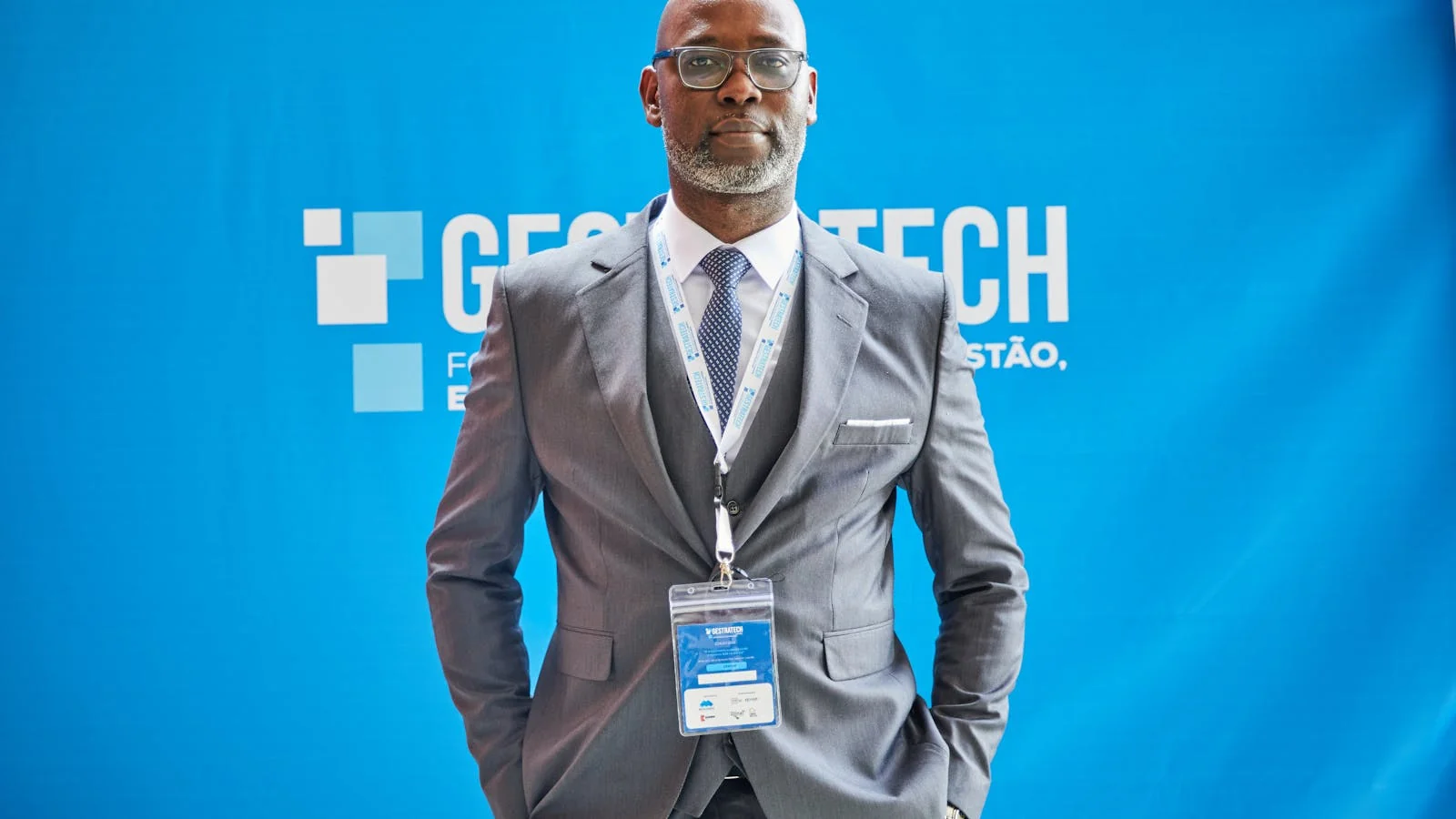
The eighth section is the 30-second self-introduction script. This is the line you (or someone introducing you) reads in the first 30 seconds of a podcast, a panel, a speaking intro, or a sales meeting. It is not the same as the headline statement. It is fuller. “Maria Sanchez is a veterinarian, the founder of Acme Veterinary, and the operator of the only 24/7 mixed-animal triage network in rural East Texas. Over the past five years, her practice has handled nearly 5,000 after-hours cases and added six partner clinics to its emergency dispatch network. Maria spent twenty years in mixed-animal practice before launching Acme in 2019, and she is the past president of the Texas Rural Veterinary Association.”
The script is 80 to 100 words. Read aloud, it lands in 25 to 35 seconds. It is paced for the intro slot. The format on the one-pager labels it “Suggested introduction” or “30-second intro” so podcast hosts and event MCs can lift it directly.
This is the most-used section by everyone who introduces you publicly. Hosts of podcasts do not write your intro from scratch. They read what you sent them. If your one-pager includes a clean, lift-and-read intro, that is what gets read on the recording. If it does not, the host invents a version that often misses your positioning entirely.
Section 9: links and supporting documents
The ninth section is a links block at the bottom, pointing to the deeper materials: your full bio (longer-form), your press kit, your high-resolution photo download, your existing media coverage page, your published articles or research, your booking calendar, and your most recent talk. Five to eight links maximum, each with a clear label.
The link block is the back door to depth. A reader who wants more than the one-pager can find it. A reader who wants to scan and decide can ignore the links. The two needs are served by the same document without crowding.
What to cut
The one-pager is a one-pager. Every founder who builds one wants it to be a two-pager or a three-pager. The discipline is to cut. If a section does not earn its space against the criteria above, it goes. The most common cuts: the founder’s personal mission statement (move to the website), the company values list (move to the company’s About page), the list of every podcast the founder has ever appeared on (keep three to seven, cut the rest), the long-form bio in the middle (move to a separate document the links section points to), the inspirational closing quote (delete entirely).
A finished one-pager fits on a single side of US Letter or A4 at 11pt body type with comfortable margins. If yours does not fit, cut until it does. The constraint produces the document. The unconstrained version produces clutter that no one reads in full and no one uses for introductions. The well-constrained version produces a document that actually does the work of opening doors, which is what the document is for.