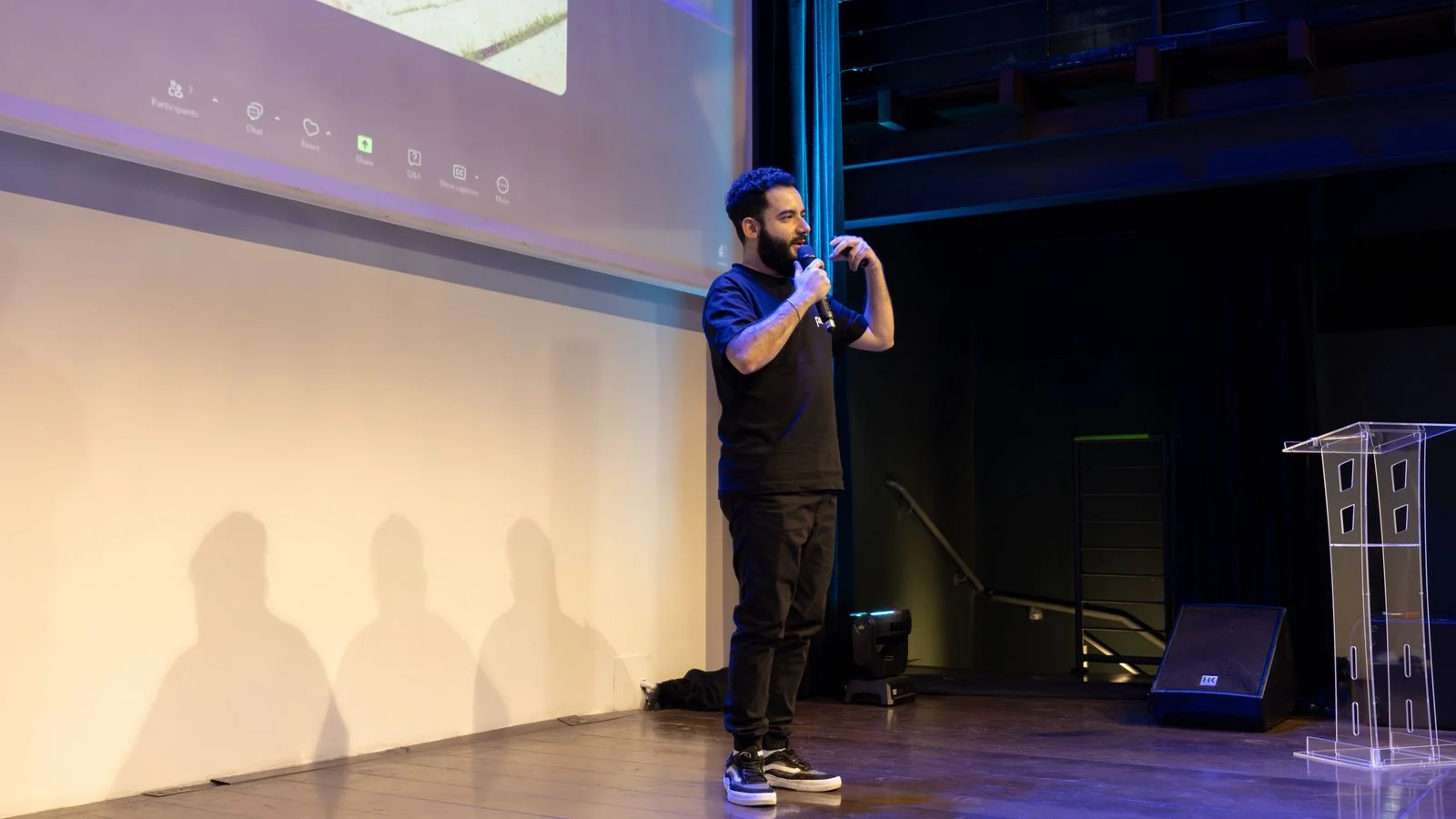
At Instant Press Co., the pattern that repeats across clients is almost boring in its consistency: the founder who gets placed in a credible publication stops having to explain why they are worth taking seriously. Before the placement, every sales conversation started cold, with the prospect quietly wondering whether this person was legitimate. After it, the same conversations started warm, because a third party the prospect already trusted had vouched, and the founder could skip straight to the substance. Nothing about the founder’s actual expertise changed between the two states. What changed was that the expertise was now visible and endorsed, and visible, endorsed expertise is a different asset entirely from the private kind. That gap, between being an expert and being a recognized one, is the whole territory of authority marketing.
Authority marketing is a strategy that builds your reputation as a trusted expert so thoroughly that buyers arrive already convinced, and demand comes to you instead of you chasing it. It inverts the usual direction of marketing. The default model pushes messages at prospects and tries to persuade them you are worth buying from, spending energy to overcome doubt one prospect at a time. Authority marketing does the trust-building once, in public, so that doubt is resolved before the prospect ever reaches out. The persuasion is front-loaded and broadcast rather than repeated and private, which is why, once it is working, it feels less like marketing and more like fielding interest.
Trust first, ask second

The core inversion of authority marketing is sequence: you earn trust before you ask for anything, where conventional marketing asks first and tries to build trust on the way to the sale. This sounds like a small reordering and it changes everything, because a buyer who trusts you before you pitch evaluates the pitch completely differently from one who is still deciding whether you are credible. The trusting buyer is looking for reasons to say yes; the skeptical one is looking for reasons to say no. Authority marketing works by making sure that by the time you ask, the buyer is already in the first state, which you achieve by giving real value with no immediate ask attached.
Giving before asking feels inefficient to people trained on direct-response tactics, because there is a delay between the value you give and the return you get, and the return is not attributable to any single act of giving. You publish useful thinking for months, and then demand shows up, and you cannot point to the one post that caused it. This ambiguity is exactly why many people abandon authority marketing early: the feedback loop is slow and diffuse, so it feels like nothing is working right up until it works. The trust you are building is real and accumulating the whole time; it is just invisible until it crosses the threshold where it starts producing inbound.
The reason the trust-first sequence pays off is that trust, once established, does work that no amount of persuasion can replicate. A trusted expert’s recommendation is taken at face value, their price is questioned less, and their claims are believed without the proof a stranger would demand. All of that lowers the friction on every future transaction, so the investment in trust keeps returning long after it is made. Authority marketing is expensive up front in patience and cheap forever after in conversion, which is the opposite of lead-chasing tactics that are cheap to start and expensive to sustain because every lead must be persuaded from zero.
The Authority Flywheel

The engine that makes authority marketing compound is best understood as the Authority Flywheel, a loop where each turn makes the next one easier. The loop has four stages: you demonstrate expertise, which earns recognition, which attracts endorsement and opportunity, which gives you bigger platforms to demonstrate expertise on, which earns more recognition, and around it goes. The critical property of a flywheel is that it is hard to turn at first and then builds momentum, so the early turns feel like pushing a heavy wheel that barely moves, and later turns feel like the wheel pulling you along. Most people quit during the heavy early turns, never reaching the momentum.
The first stage, demonstrating expertise, is the only one you fully control, and it is where all the early effort goes. You show your thinking in public, share specific knowledge, and prove your competence through visible work, without much return at first because the wheel is barely turning. The second stage, recognition, begins to appear as the right people notice you are consistently useful, and it is the first sign the flywheel is catching. The temptation is to judge the whole strategy by the first stage’s poor returns, but the first stage is supposed to feel unrewarded, because its job is to build the recognition that opens the later stages.
The later stages are where the flywheel starts giving back more than you put in. Recognition attracts endorsement, other credible people vouching for you, and opportunity, invitations to bigger stages, and both of those amplify your next demonstration of expertise far beyond what your own effort could reach. A post you write is read by hundreds; the same idea shared from a stage or endorsed by a trusted name reaches thousands, and reaches them pre-trusted. Each turn of the flywheel widens your reach and warms your audience simultaneously, which is why authority marketing accelerates rather than plateaus. The person who has been turning the wheel for two years is not working twice as hard as the beginner; they are getting many times the return per unit of effort, because the flywheel is doing the multiplying.
The channels authority runs on
Authority marketing is a strategy, not a channel, and it runs across several, each contributing a different kind of proof. Owned content, your posts, articles, and site, is the base layer, the place where you demonstrate expertise on your own terms and at your own pace. It is fully in your control and it compounds, but on its own it carries only the authority you claim for yourself, which the market discounts. Owned content is necessary and insufficient, the foundation that the other channels build on top of.
Earned channels, press coverage, podcast appearances, speaking, and endorsements, add the third-party credibility that owned content cannot, because they represent someone else vouching for you. When a credible publication features you or a respected host puts you on their show, their audience extends you a portion of the trust they have in the source, which is why earned authority converts so much harder than claimed authority. This is the specific value of press in an authority strategy: it is borrowed credibility, a trusted institution telling its audience you are worth listening to, and that transfer is something no amount of self-published content can manufacture. The strongest authority marketing pairs a steady base of owned content with a deliberate pursuit of earned credibility, so that your own voice and other people’s endorsements reinforce each other.
How to start turning the wheel
If you are starting from nothing, the mistake to avoid is trying to launch all channels at once, which spreads thin effort across a wheel too heavy to move. Start with the one channel you can sustain, almost always owned content in the single lane where you have real depth, and commit to it long enough for the flywheel to catch. Publish specific, useful thinking for your exact audience on a cadence you can hold for a year, and resist judging it by the quiet early returns. The first months build the recognition that everything else depends on, and there is no shortcut past them.
Once the base is turning and recognition appears, add the earned channels that convert claimed authority into endorsed authority: pitch the press, say yes to the podcasts, take the speaking slots, and pursue the vouches from people whose audiences you want. Each earned placement makes your owned content land harder, and each piece of owned content makes you a more credible guest and source, so the two channels feed each other once both are moving. Authority marketing is not a campaign you run and finish; it is a wheel you start turning and keep turning, and the people who win with it are simply the ones who did not stop pushing while the wheel was still heavy.