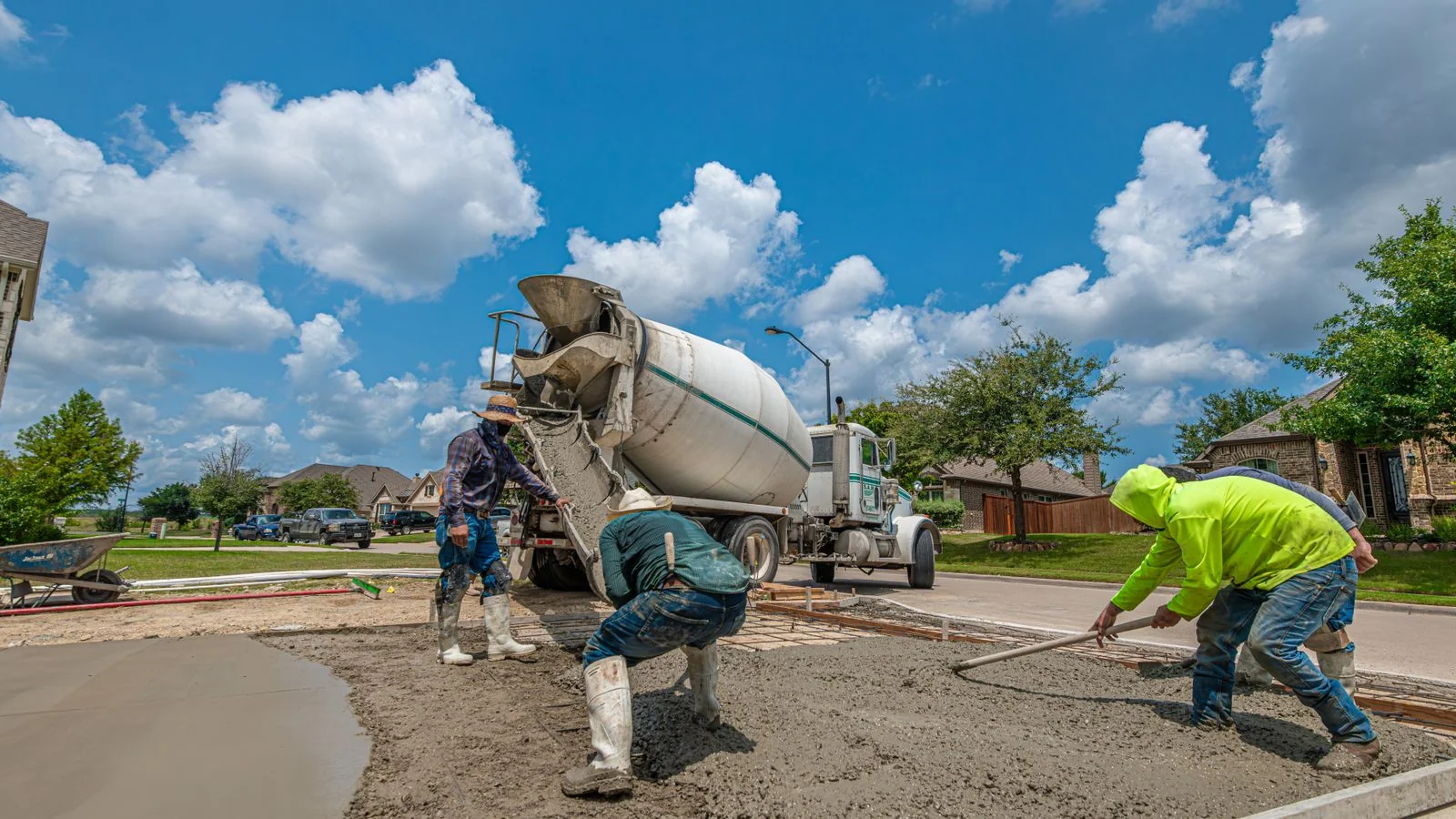
When a homeowner decides they want a new concrete driveway, what actually happens in the weeks before they call anyone? They do not pick up the phone. They open a browser and start reading. What does this cost? Stamped or broom finish? Concrete or pavers? How long should it last? How do I avoid getting ripped off? By the time they finally reach out to a contractor, the research is mostly done and a shortlist is mostly formed. The only question is whether you were part of that research or invisible to it.
That gap between the first search and the first call is where jobs are won and lost, and it is exactly the territory content marketing for concrete contractors is built to own. Most concrete companies skip it entirely, showing up only at the bidding stage and competing on price against everyone else who did the same. The contractor who publishes the answers buyers are hunting for gets to build trust for weeks before a competitor even knows the job exists. Here is the map for doing it.
The concrete buyer researches long before they call
Concrete is a considered purchase, not an impulse one. It is expensive, permanent, and impossible to redo cheaply, so buyers approach it carefully and spend real time getting educated before they commit. That research period, often weeks, is the single biggest opportunity in your marketing, and it is one most contractors never even try to influence.
The company that shows up during research earns a compounding advantage. Every helpful answer a buyer reads from you builds familiarity and trust, so when they finally compare bids, yours arrives from a contractor they already feel they know. Price stops being the only lever, because you have added something the anonymous competitor cannot match: a relationship that started long before the estimate.
This is the part most contractors get backwards. They pour their whole budget into the final step, the ads and lead services that reach a buyer at the moment of decision, and ignore the weeks of research that shaped that decision before the ad ever appeared. By then the buyer has already formed opinions about cost, materials, and who seems trustworthy, and the ad is fighting uphill against a mind that is mostly made up. The contractor publishing helpful content during the research phase is the one shaping those opinions in the first place. When your name is attached to the answers a buyer found while they were still figuring out what they wanted, you are not interrupting their decision at the end. You are quietly authoring it from the start.

The Slab Research Ladder
Here is the model that makes content marketing for concrete contractors systematic instead of random. A concrete buyer climbs a predictable set of rungs on the way to hiring. First they are problem-aware, noticing a cracked driveway or dreaming of a patio. Then they research options and materials. Then they narrow finishes, costs, and styles. Finally they vet contractors. I call this the Slab Research Ladder, and each rung is a different question that a different piece of content can answer.
Most contractors publish nothing, or publish only bottom-rung “hire us” pages, and so they meet buyers only at the last step, where the competition is fiercest. The winning move is to place content on every rung: inspiration and problem-spotting content up top, material and cost guides in the middle, and comparison and vetting content near the bottom. Cover the whole ladder and you are present the entire climb, guiding the buyer upward with your name attached at every stage, so reaching you at the top feels inevitable rather than accidental.
Answer the questions buyers actually type
The simplest content strategy is to write down every question a customer has ever asked you and answer each one publicly. What does a concrete driveway cost in this area? How long before I can drive on it? Why did my last one crack? Is stamped concrete worth it? These are the exact phrases buyers type into search, and a clear, honest answer from you is a chance to be the source they trust.
Answer them plainly and specifically, the way you would explain it standing in someone’s driveway. Skip the fluff and give real numbers, real timelines, and real trade-offs. Buyers can tell the difference between a page written to help them and a page written to rank, and so can search engines. The contractor who answers the actual questions, without hedging or padding, becomes the obvious authority in a field where most competitors say nothing useful at all.
Cost is the question everyone dances around, and the contractor brave enough to address it wins outsized trust. Most concrete companies refuse to publish any pricing, which forces buyers to hunt through forums and guesswork and leaves them suspicious of anyone who dodges the topic. You do not have to post fixed quotes to be helpful. Explain the ranges, and more importantly explain what drives them: square footage, thickness, finish, site access, prep, and reinforcement. A buyer who reads that comes away understanding why a proper job costs what it does, which both builds trust and quietly disqualifies the lowball competitor whose price now looks suspiciously cheap. Transparency about money, handled well, is one of the highest-converting kinds of content a concrete contractor can publish.

Show the work, not just words
Concrete is visual, so your content should be too. A wall of text about your finishes cannot compete with a gallery of real projects a buyer can scroll through and picture on their own property. Photograph every job in good light, capture before-and-after pairs, and shoot short videos that walk through a project from prep to cured result. Visual proof does what prose cannot: it lets the buyer see the outcome they are paying for.
Pair the images with just enough words to give them context and searchability. A project gallery with location, finish type, and a sentence about the challenge you solved becomes both persuasive and findable. This visual content also travels, getting shared and saved in ways an article rarely does, which extends your reach beyond the people already searching.
What content wins the local search?
Concrete work is local, so your highest-converting content is location-specific. Pages built around your actual service areas, paired with cost information and real local projects, catch buyers at the moment they add a town name to their search. A generic national article will never outrank a page that speaks directly to what a driveway costs in the specific place someone lives.
Comparison and cost content wins too, because it catches buyers close to a decision. Stamped versus broom, concrete versus pavers, repair versus replace, honest breakdowns of each help a buyer choose and position you as the expert who helped them. Combine local pages with these decision-stage guides and you cover both the “where” and the “which” that dominate the bottom of the Slab Research Ladder.
Local content has a second advantage that pure information pages lack: it is nearly impossible for a distant competitor to fake. A national contractor can write a generic article about driveway costs, but they cannot speak to what a permit runs in your county, how the local freeze-thaw cycle affects a pour, or which neighborhoods you have already worked in. That specificity is exactly what a nearby buyer is searching for, and it is exactly what search engines reward when someone adds a town name to their query. The more your content reflects the real conditions and real projects of your actual service area, the more it separates you from the anonymous, everywhere-and-nowhere competitors, and the more it convinces a local buyer that you are the contractor who understands their particular job.
Feed the AI answer engines
Buyers increasingly ask ChatGPT, Perplexity, and Google’s AI results for concrete advice and recommendations instead of scrolling through links. Those systems build their answers from clear, specific, well-structured content, and they favor sources that answer a question directly and completely. Content written as plain answers to real questions is exactly the raw material they pull from.
So structure your content to be quotable. Lead with the direct answer, then explain. Use clear headings that match how buyers phrase things. Keep your company details consistent across the site so the model recognizes you as a coherent entity worth naming. Content marketing for concrete contractors now pays off in two places at once, the traditional search results and the AI answers, and content built to be genuinely useful tends to win in both.
Turn one job into a week of content
The biggest objection is time, and the fix is repurposing. A single project can produce a week of content: before-and-after photos, a short pour video, a written breakdown of the job, a cost explainer, and an answer to a common question the job raised. You did the work once. Document it once. Then slice it into multiple pieces across your site and social channels.
This is how a busy contractor sustains a content habit without hiring a marketing team. The material is already there in the work you do every day. The only new discipline is capturing it as you go and reshaping it afterward, which turns marketing from an extra job into a byproduct of the job you already have.
The trick is to capture at the moment of work, not to reconstruct it later. Keep the habit simple: a few photos at each stage, one short clip of you explaining a decision, and a quick voice note of any question the client asked. Those raw pieces are the seeds of every format you will need, and gathering them adds minutes to a job, not hours. The contractor who builds this small capture habit never faces a blank page, because the week’s content is already sitting on their phone by Friday, waiting to be shaped rather than invented from nothing.
Measure what actually books jobs
Finally, watch the right numbers. Views and likes feel good but pay nothing. Track the metrics that connect to revenue: calls, form fills, and quote requests, and where they came from. Which pages bring in leads? Which topics turn into booked pours? Let those answers steer what you publish next.
The contractor who measures leads instead of vanity learns quickly which content earns its keep, and doubles down on it. That feedback loop is what turns content marketing for concrete contractors from a hopeful experiment into a reliable source of warm, low-cost leads. Start this week with one thing: pick the single question you get asked on every estimate, write the clearest answer on the internet to it, and publish it under your name. That one page is the first rung of the ladder, and the rest builds from there.