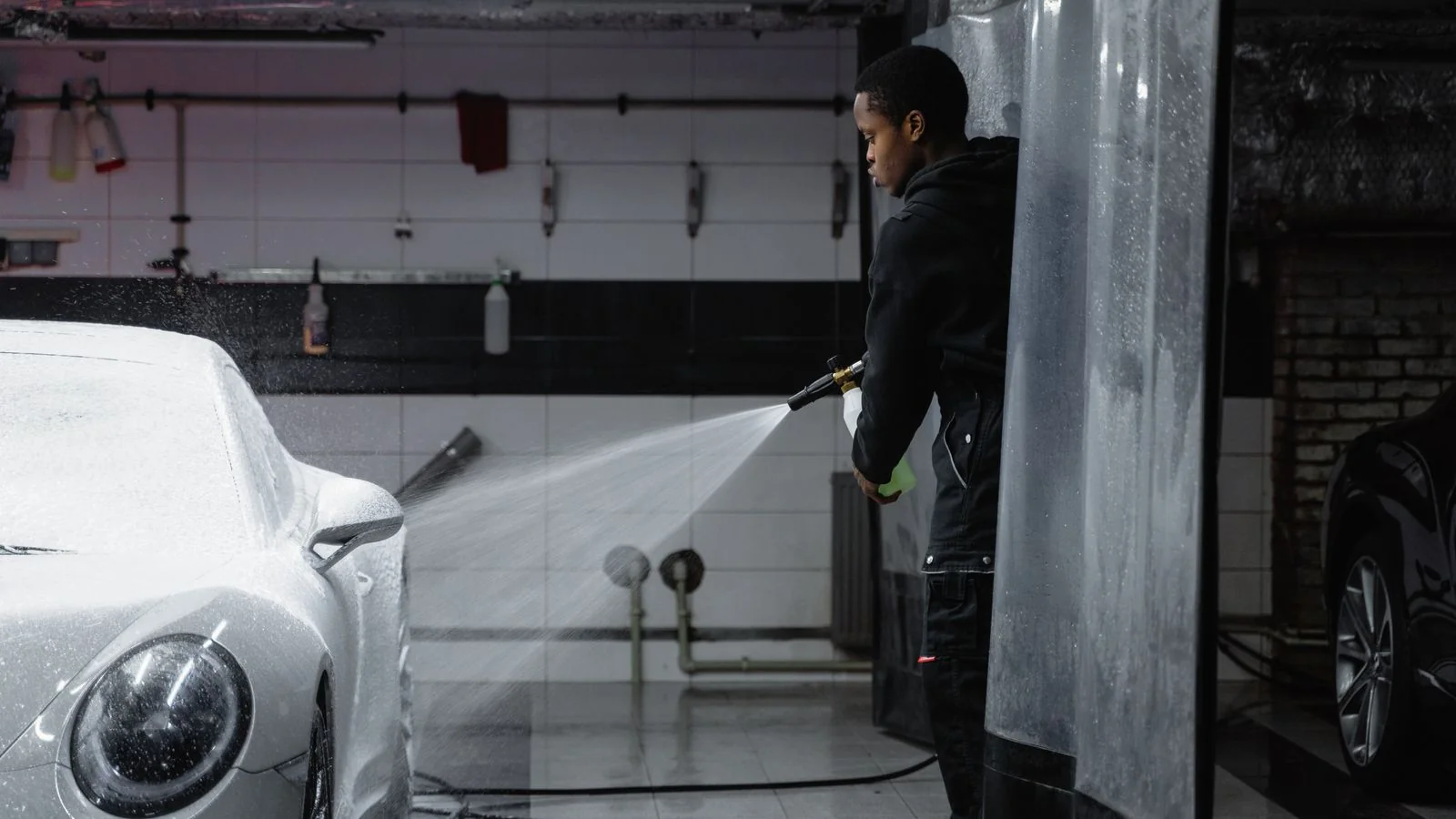
Can a pressure washing company be a thought leader? Yes, and it is the cheapest competitive moat available to you, which is exactly why almost none of your competitors have bothered to build it. The pressure washing trade has a brutal shape: low barrier to entry, a rented machine and a truck, and a flood of new operators every spring who compete the only way they know how, by dropping their price until the whole market bleeds. You cannot win that fight by cutting deeper. You win it by stepping out of it entirely, and thought leadership for pressure washing businesses is how you climb out.
Thought leadership here does not mean writing whitepapers nobody reads. It means becoming the recognized authority on a specific kind of cleaning, in a specific place, so that customers stop asking “who is cheapest” and start asking “who is the person who actually knows what they are doing.” The moment a customer asks that second question, price stops being the deciding factor, and you have already answered it.
Stop selling a service and start owning a subject
Most pressure washing marketing sells the same undifferentiated promise: we clean things, we are reliable, we are affordable. That message is invisible because every competitor sends it. The way out is to stop positioning yourself as a service and start positioning yourself as the person who knows a subject better than anyone in your market.
The subject is not “pressure washing.” It is the specific problem behind the request. A homeowner with black streaks on their roof does not want a pressure washer. In fact, a pressure washer would destroy their shingles, and if you know that and say so, you have just separated yourself from every hack who would blast the roof and cause a warranty claim. What they want is someone who understands roof cleaning, knows that soft washing is the correct method, and can explain why. Own that knowledge publicly and you become the obvious authority.
This is where thought leadership for pressure washing businesses starts to compound. Every time you explain the right way to treat a surface, and the risk of the wrong way, you are teaching customers to distrust the cheap operator who does not know the difference. You are not attacking competitors. You are simply being the one who knows, and letting that knowledge do the sorting.
Pick your surface and plant a flag
Here is a model to organize your positioning. Call it the Specialist Split. Instead of being a generalist who cleans everything for everyone, you split the market and claim the corner where your expertise is deepest and the competition’s is thinnest.
The splits are obvious once you look. You can specialize by surface, becoming the roof and exterior soft-washing authority who protects delicate materials rather than the driveway blaster. You can split by customer, owning commercial work like storefronts, fleets, and HOA common areas where reliability and insurance matter more than price. You can split by problem, becoming the region’s expert on a specific local scourge, whether that is algae in a humid climate, salt and grime near the coast, or oil-stained concrete in industrial areas. Each split gives you a flag to plant and a subject to lead on.
Planting the flag means committing in public. Your website, your profiles, and your content all say the same thing: this is what we know better than anyone here. A generalist who cleans “anything with a surface” reads as forgettable to both customers and the AI tools that now recommend local businesses. A named specialist reads as an authority, and authority is what gets remembered, quoted, and hired. Pick your split before you write another word of marketing.
Teach the thing your competitors hide
The fastest way to build authority is to teach openly what other operators treat as trade secrets. Most pressure washers guard their knowledge, terrified that if they explain the process, customers will do it themselves. The opposite happens. When you explain exactly how you clean a roof safely, the reader does not go rent a machine. They realize how easy it is to cause expensive damage, and they decide to hire the person who clearly knows the difference.
Teach the dangers most of all. Explain what too much pressure does to old mortar, to wood siding, to a roof’s granules, to window seals. Explain why the chemical and the dwell time matter more than the pressure on most jobs, a fact that surprises nearly every homeowner who assumes more force is always better. Every one of these lessons does two things at once: it proves you are the expert, and it quietly disqualifies the cheaper operator who would have caused the damage you just described.

This teaching is also what the AI answer tools reward. When someone asks an assistant how to clean a roof or whether pressure washing will damage their deck, the systems pull from content that reads like a genuine expert answering a real question. Publish enough of those answers, tied to your town and your name, and you become a source the machines lean on. Thought leadership for pressure washing businesses and modern search visibility turn out to be the same activity, done once.
Answer the questions homeowners are afraid to ask
A homeowner considering pressure washing is quietly worried about a handful of things, and almost no operator addresses them out loud. Will it damage my siding. Will it strip my paint. Is the chemical safe for my plants and my dog. Do I really need it, or is this a scam. The company that answers those fears directly, in public, becomes the trustworthy authority by default, because trust is built by naming a concern before the customer has to.
Turn each worry into a piece of content that reads like an honest expert talking a nervous neighbor through it. Explain, plainly, which surfaces should never see high pressure and why. Describe what you do to protect landscaping and pets during a job. Tell them honestly when they do not need the service yet, because the operator willing to say “wait until spring” is the one people believe when they say “you need this now.” Every one of these answers accomplishes the same two things: it proves you know more than the guy who just points a wand, and it quietly disqualifies the cheap operator who would have caused the damage the homeowner feared. This is the practical engine of thought leadership for pressure washing businesses. You are not bragging about your equipment. You are removing fear, and the person whose fear you removed remembers who did it.
There is a search dividend here too. These are the exact questions people type into Google and ask AI assistants before they hire. When your content answers “will pressure washing damage my roof” clearly and credibly, tied to your town and your name, you become the source both the worried homeowner and the machine reach for. The authority you build with humans and the visibility you build with answer engines turn out to be the same body of work.
Let your best work argue for you, on repeat
Authority is not a one-time announcement. It is a drumbeat, and consistency is what turns a competent operator into the recognized local name. The mistake is treating thought leadership as a campaign you run for a month and then abandon when the phone does not ring the next morning. It compounds, slowly at first and then all at once, and the operators who win are the ones who kept showing up after the ones who quit went quiet.
Build a rhythm you can actually keep. One genuinely useful piece a month, drawn from a real job and a real question, beats a burst of ten and then silence. Rotate through your specialist lane: a surface you protect, a mistake you see people make, a seasonal warning, a myth you want to kill. Each piece reinforces the same position, that you are the person in your market who actually understands this work, and repetition is what makes that position stick in the minds of neighbors, referral sources, and the review-reading, AI-querying customers who now decide who to trust before they ever call. A year of that drumbeat and you are no longer one of a dozen interchangeable pressure washers competing on price. You are the name people give when a neighbor asks who to hire, which is the entire prize.
The operators who resist this do so because the payoff is not immediate, and that impatience is exactly why the field stays open for the ones who commit. Nobody builds a reputation in a week. But the pressure washer who spends a year being the local authority on protecting surfaces, answering fears, and showing judgment ends that year in a position no amount of ad spend could have bought, while the discount competitor is still underbidding strangers for one-off jobs. Patience is the moat.
Show the process, not just the result
Every pressure washer posts the same satisfying before-and-after. Those images stop the scroll, but they do not build authority on their own, because they show the outcome without the expertise. The differentiator is showing the thinking. Narrate why you chose soft washing over high pressure on this roof. Point out the failing sealant you spotted and flagged for the owner before you started. Explain the order of operations that keeps runoff off the flowerbeds.
When you show the process, you are no longer a person with a machine. You are a professional making informed decisions, and the customer watching can see the gap between you and the operator who just points a wand and pulls the trigger. Process content is what converts a viewer who came for the satisfying spray into a lead who now believes you are the only one who should touch their property.
There is a compounding effect in showing your reasoning that most operators miss. When you explain why you chose a method, you are not just proving competence on that one job. You are teaching the reader how to judge every pressure washing company they will ever consider, and you are quietly setting the standard by your own approach. The homeowner who learns from you that pressure and chemical and dwell time all matter now walks into every other quote asking questions the cheap operator cannot answer. You have not just won a job. You have raised the bar for your whole market and positioned yourself as the one who set it. That is what authority does that advertising cannot: it changes how people evaluate the entire category, with you as the reference point.
Do this consistently and the position becomes self-reinforcing. The specialist who teaches, explains, and shows judgment becomes the name that neighbors pass along, that realtors and property managers keep on file, and that AI assistants surface when someone asks who to trust. Plant your flag on one surface, teach what the others hide, and by next season you will be the operator people describe by name instead of by price.