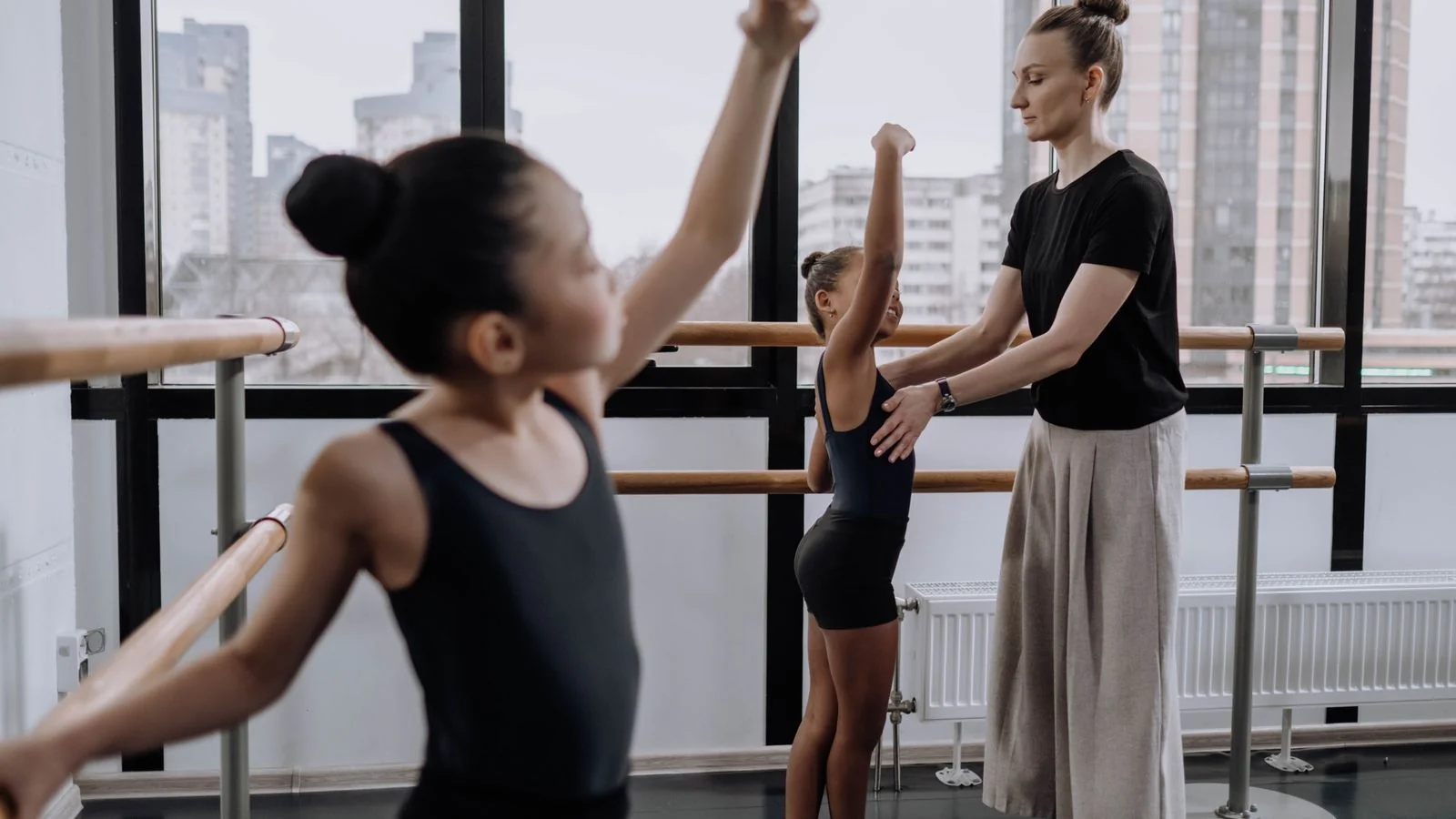
A reporter in your city is writing about youth sports injuries, screen time, or why children quit activities at eleven. She needs somebody who works with kids to say something intelligent. She does not call you.
She calls a paediatrician, a school counsellor, maybe a soccer club director. You have watched four hundred children move through puberty, seen exactly when they stop believing they are capable, and know things about child development that no clinician sees because clinicians do not get ninety minutes a week with the same child for nine years. None of that is written down anywhere she can find it.
That is the whole problem with thought leadership for dance studios. Studio owners hold genuine expertise and present themselves as a service. The town responds accordingly, treating the studio as childcare with better costumes, and price becomes the only axis anyone compares you on.
The Authority Ladder: four rungs, and most studios never leave the first
Authority in a local market is not a single thing you have or lack. It arrives in stages, and each stage requires a different kind of public work.
Rung one is competence. Parents believe your teachers are good. Almost every established studio has this, it comes from recital quality and word of mouth, and it is worth nothing in a comparison against another competent studio.
Rung two is philosophy. Parents can articulate what you believe about teaching children, and it differs from the studio across town. This is where differentiation starts and where most studios stop, usually with a paragraph on an About page nobody reads.
Rung three is expertise. People outside your customer base treat you as a source on how children learn, move and persist. Schools ask you to speak. Other studio owners ask you how you handle something. Local media quotes you.
Rung four is definition. Your framing of a question becomes the framing other people use. When your town discusses children and physical confidence, they use your language without attribution, which is the point at which you stop competing on price permanently.
Thought leadership for dance studios is the work of climbing from two to four deliberately rather than hoping reputation arrives on its own. The ladder matters because studios try to jump from one to four by posting more. Rungs are climbed by writing down what you already know, in public, in the order above.
Write the thing you say to every worried parent
Every studio owner has a speech. It is the one you give a mother in the lobby when her daughter is the only one in the class who cannot do the thing yet, and it is usually the most valuable five minutes of expertise you produce all week.
You have never written it down.
Do that first. Not as a blog post about the importance of patience, which is a nothing sentence, but as the actual speech with the actual specifics. That children acquire physical skills in plateaus followed by jumps, not smooth curves. That the child who looks behind at six is frequently ahead at nine because she is building a different thing first. That comparison between two seven year olds is close to meaningless because of relative age effects inside a single school year. What you tell a parent to look for instead of technical progress, which is usually whether the child is still choosing to move at home.
That one piece does more for your standing in a town than a year of recital footage, because it demonstrates a category of knowledge parents did not know you had.
There will be four or five more of these. The speech you give the parent pushing a child into competition too early. The one about why you will not move a seven year old into pointe work no matter who is asking. The one about the child who is technically gifted and miserable, and what you do about that. The one about what nine years of weekly classes actually builds in a person, most of which is not dance.
Each of those exists fully formed in your head. None of them exists in writing. Getting them written is the entire project, and it is closer to transcription than to authorship, which is why studio owners who think they cannot write usually can.
Set a pace you will keep. One piece a month for a year produces twelve, which is more considered public thinking than any competitor in an average town has produced in a decade.
Write them the way you speak. Studio owners hesitate here because they imagine the register has to change, so they reach for something formal and produce the flat institutional prose nobody finishes. The version that works is the one that sounds like you in the lobby: direct, specific, occasionally blunt about what parents get wrong. If a sentence is one you would never say to a mother standing in front of you, cut it.
Take a position that costs you something
Philosophy only reads as philosophy when it excludes something. A studio that believes in excellence and also in fun and also in individual growth believes in nothing legible.
Real positions in this industry have edges. Whether you enter competitions at all, and why. Whether you accept a nine year old into a competitive track, or think that decision belongs after puberty. Whether you teach turnout to five year olds. Whether you think most studios do too many recital numbers and what that costs the children. Whether you believe in cutting anyone.
Pick the ones you actually hold and argue them in public with your reasoning exposed. You will lose some families. The ones you keep will stop shopping you on price, and other professionals will start treating you as somebody with a view rather than a vendor with a timetable.
Go where the parents are rather than where the dancers are
Rung three requires audiences that are not yours.
The addressable rooms in a town are more available than studio owners assume. Elementary school parent associations need speakers and struggle to find them. Paediatric physiotherapy practices refer constantly and would rather refer to somebody whose approach they understand. Homeschool networks organise group activities and are actively looking. Library programming, local parenting groups, the youth sports coaching community that quietly worries about burnout and has no framework for it.
Offer something specific rather than availability. A twenty minute talk on why children quit activities at eleven and what keeps them. A short piece for a school newsletter on movement and attention. The talk matters less than the repetition of being the studio owner who shows up as an expert in rooms where nobody is selling.
Local press follows the same logic. Reporters keep a mental list of people who answer the phone and say something quotable. Getting on that list requires having published a view they can check, and then being reachable. The studio that writes one clear position piece a quarter and is easy to contact will get called within a year.
Write for the parents who are about to quit
There is a category of piece almost no studio produces, and it sits on the most valuable question in the business.
Children leave dance between ten and thirteen, in large numbers, and every studio owner has watched it happen and formed a private theory about why. Some of it is competing schedules. Some of it is that the recreational track stops feeling serious while the competitive track starts feeling punishing, with nothing in between. Some of it is a body changing faster than a child’s self-image can absorb. Some of it is a parent quietly deciding the money is better spent elsewhere.
You know which of these dominates in your studio because you have had the conversations. Write that down.
Not as a plea to stay. As an analysis, aimed at parents, of why children quit at that age and what a family can do about it, including the possibility that quitting is the right answer. A studio willing to say that some children should stop dancing and take up something else is, counterintuitively, the studio parents trust with the decision to continue.
This piece does three things at once. It retains families who were drifting, because it names the thing they were feeling. It reaches parents at other studios who are searching that exact question at eleven at night. And it puts you on rung three, because youth sport organisations, schools and reporters are all interested in attrition and almost nobody local has written intelligently about it.
Let the thinking compound instead of expiring
Social posts expire in a day. Authority compounds only if the work lives somewhere permanent and connected.
There is a sequencing point worth respecting. The ladder is climbed in order, and studios that try to skip rungs tend to fall off. Pitching yourself to local media before you have published a single considered position leaves a reporter nothing to verify, so she does not call. Offering to speak at a school before you can articulate a philosophy produces a talk that sounds like a sales visit, which is how studio owners get quietly removed from invitation lists.
Do rung two properly first. Publish the lobby speech, the position pieces, the attrition analysis. That body of work is what makes rungs three and four available, because it gives outsiders a reason to treat you as a source rather than a vendor. Six months of writing before any outreach is the right order, and it feels slow only in comparison to a shortcut that does not exist.
Keep the substantial pieces on your own website, in your own words, with your name on them, and link them to each other. The lobby speech links to the position on competition, which links to the piece on age-appropriate technique. Over two years that becomes a body of work rather than a feed, and it does something a feed cannot: it becomes retrievable. When a parent or a journalist or an AI assistant looks for somebody in your region with a considered view on children and dance, a connected body of work is what gets found and cited. Twenty scattered posts are not.
Understood properly, thought leadership for dance studios is not self-promotion at all. It is the act of making private expertise public, which is a different discipline and a more comfortable one for most owners. None of this requires you to be a better teacher than you already are. It requires you to write down the things you say out loud every week, in public, where somebody other than a paying parent can read them. The studio that does this stops being one of four options on a price comparison and becomes the one the town asks.