
A press release outline is a one-page plan that sorts your announcement into five blocks before you write a single full sentence: the headline, the lead, the proof, the quote, and the close. Fill those five blocks in order and the release almost writes itself. Skip them and you get what most editors delete in seconds, a warm-up paragraph about the company followed by the actual news hiding in paragraph four.
We review a lot of drafts at Instant Press. The pattern in the weak ones is never bad grammar. It is bad order. The writer started typing at the top, explained the backstory because it felt polite, and arrived at the news after 200 words. An outline forces the order decision up front, when it costs nothing to change.
Below is the template we use, which we call the Five-Block Outline, with the questions each block has to answer and a filled example you can copy.
What a press release outline is for
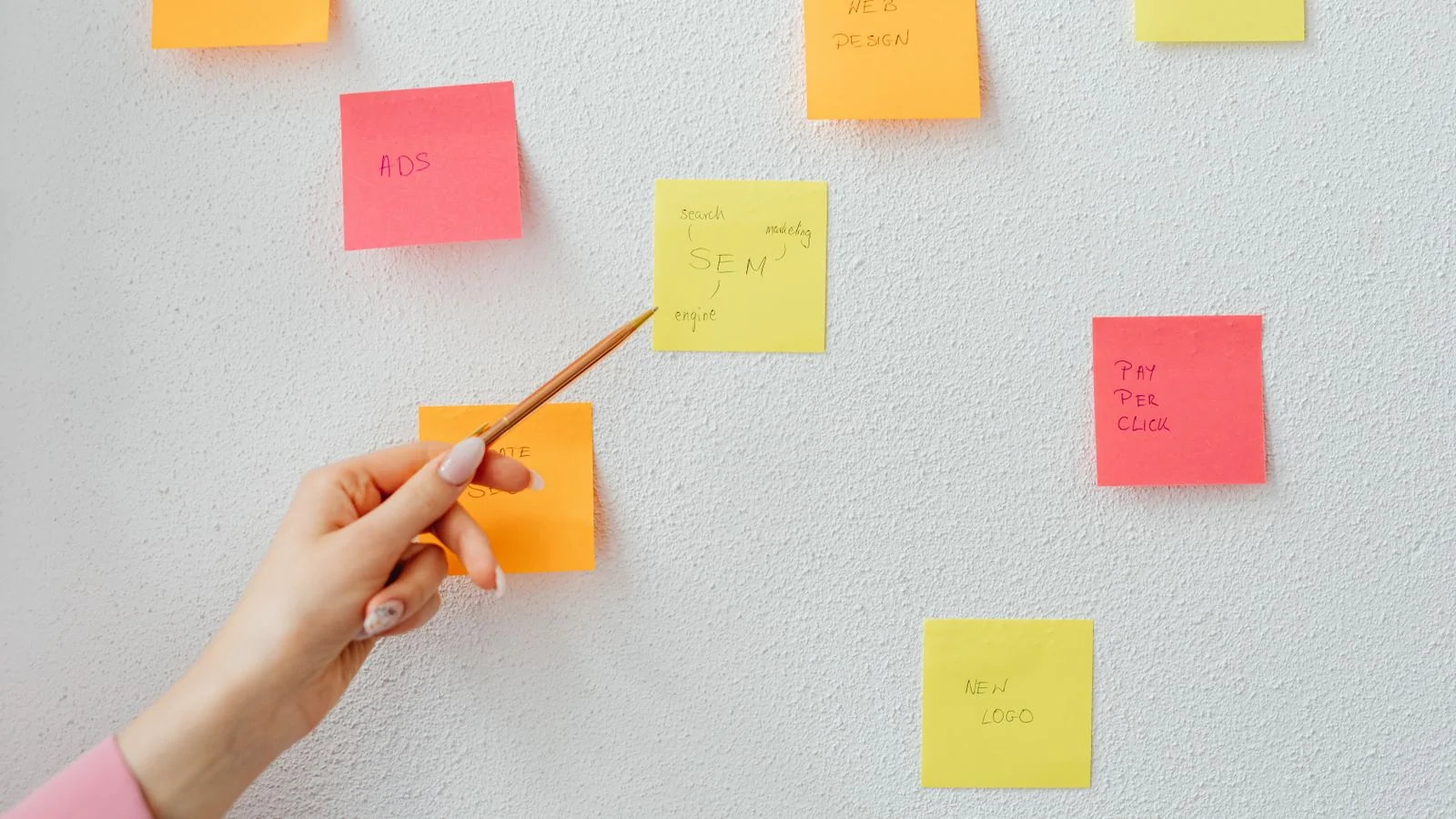
An outline does one job. It makes you decide what the news is before you decide how to say it.
That sounds obvious. In practice, a founder announcing a funding round will tell you the news is the round, the new product, the new hire, the new office and the customer milestone, all at once. A reporter reading the release will pick one of those, and it may not be the one you wanted. The outline makes you rank them. One fact leads. Two or three support it. The rest go to a second release or to your blog.
It also protects the release from committee edits. When the CEO, the head of product and outside counsel all mark up a draft, each one adds a sentence. By the third round the lead paragraph has 60 words and four clauses. If everyone signed off on a five-block outline first, you can point to it and ask which block the new sentence belongs in. Usually the answer is none.
Finally, it speeds up writing. A filled outline of about 120 words turns into a 400-word release in under an hour, because every paragraph already has a job and a source.
Block one: the headline and subhead
The headline block holds two lines. The first is the news in 10 to 14 words, written as a plain statement with a verb. The second is a subhead that adds the single most interesting supporting fact.
Questions to answer in this block: Who did what? What changed today that was not true yesterday? Is there a number that makes it concrete?
A weak working headline reads “Acme Announces Exciting New Partnership.” A strong one reads “Acme and Northwind Cut Freight Booking Time From Three Days to Four Hours.” The second version names both parties, states the change, and carries a number. Reporters can lift it straight into a story slug.
Write the working headline now, but do not polish it. You will rewrite it after the lead is final, so the two match word for word in their key phrase. That matching matters more than it used to. Search engines and AI assistants both treat the headline and first sentence as the clearest statement of what a page is about, and a mismatch makes the summary less precise.
Blocks two and three: the lead and the proof

The lead block is one paragraph, 35 to 50 words, that answers who, what, when, where and why. In your outline, write it as five short fragments, one per question. Then join them into two sentences. Most good leads are exactly two sentences: the first states the news, the second explains why it matters to someone outside the company.
The dateline goes at the start of this block: city, state abbreviation in AP style, and the date. Do not skip it. Wire services and many newsrooms still filter on it.
The proof block holds three supporting facts, and only three. For each one, note the source in brackets so a fact-checker on your team can verify it fast. A typical proof block for a product launch might carry the customer count in beta, the measured result one customer saw, and the price and availability date. For a funding round it might carry the amount and lead investor, what the money will fund, and current revenue or headcount if you are willing to share it.
Each proof point becomes one short body paragraph. If you find yourself wanting a fourth, ask whether it supports the lead or starts a new story. In our reviews, the fourth proof point is the one that turns a 400-word release into an 800-word release nobody finishes.
Block four: the quote
Most release quotes are filler. “We are thrilled to announce” tells a reporter nothing, and no editor will use it. The quote block in your outline should capture an opinion, a reason, or a prediction that only the speaker could give.
Write down three things before you draft the quote. First, who is speaking and why that person, not someone else. Second, the one belief behind the decision. Third, a concrete detail from the speaker’s own experience. Then write the quote in two or three sentences that sound like a person talking.
Compare these. “We are excited to partner with Northwind to deliver value for our customers.” Versus: “Our dispatchers were spending most of Monday on the phone chasing rate confirmations. Northwind’s booking feed means that work is gone, and our team can spend Monday on the loads that are late.” The second one gives a reporter something to quote, because it explains the problem in plain words and names a real cost.
If a partner or customer will provide a second quote, add it here as a sub-block. Keep it to two sentences, and make it about results the customer saw, not praise for your company.
Block five: the close
The close block holds the boilerplate, the call to action, and the media contact.
The boilerplate is three or four sentences: what the company does, for whom, where it is based, and one credibility marker such as founding year, customer count or notable investors. Pull it from your last release and check every fact. Stale boilerplate is a common source of errors that reporters repeat, and AI systems repeat them too when they summarize your company.
The call to action is one line telling readers where to learn more or how to get the product. Use a clean URL, not a tracking link with five parameters.
The media contact needs a real name, a direct email and a phone number that someone answers during the news cycle. A generic info@ inbox signals that nobody is waiting for the reporter’s question.
End the release with the traditional ### mark centered under the last line, which tells editors there is nothing more.
The copy-ready template, filled in
Here is the Five-Block Outline as a fill-in template. Paste it into a doc and complete each line in a phrase, not a paragraph.
Headline: [Company] [verb] [specific change] [number if available]. Subhead: [the most interesting supporting fact]. Dateline: [CITY, ST], [Month Day, Year]. Lead fragments: who [ ], what [ ], when [ ], where [ ], why it matters outside the company [ ]. Proof one: [fact] [source]. Proof two: [fact] [source]. Proof three: [fact] [source]. Quote speaker: [name, title, why this person]. Belief behind the decision: [ ]. Concrete detail: [ ]. Second quote, optional: [customer or partner, result they saw]. Boilerplate: [what, for whom, where, credibility marker]. Call to action: [one clean URL]. Media contact: [name, email, phone].
And here it is filled in for a fictional freight software company, so you can see the level of detail each line needs.
Headline: Acme and Northwind cut freight booking time from three days to four hours. Subhead: Integration live for 140 Acme carriers starting today. Dateline: COLUMBUS, Ohio, Nov. 5, 2026. Who: Acme Logistics and Northwind Freight. What: direct booking integration. When: live today. Where: all US lanes. Why it matters: shippers get confirmed capacity the same day instead of waiting through the weekend. Proof one: 140 carriers connected at launch, from Acme’s carrier dashboard. Proof two: beta shipper cut average booking time from 72 hours to 4, from beta logs. Proof three: no added fee for existing customers, from the pricing page. Quote speaker: Acme’s head of operations, because she ran the beta. Belief: dispatchers should spend time on problems, not paperwork. Detail: the Monday phone backlog. Boilerplate: four sentences, verified. Call to action: acme.example/northwind. Contact: a named communications lead with a direct line.
That outline is 190 words. The finished release will run about 420.
How the outline changes for different announcements
The five blocks stay the same for every release, but what goes in them shifts with the type of news.
For a product launch, the proof block should lead with availability and price, because that is what a reporter needs to tell readers what to do next. For a funding round, the proof block leads with the amount and the investor, and the quote block should explain what the money changes for customers, not how excited the founder feels. For an executive hire, the headline block names the person and the role, the proof block carries two facts about their record, and the quote comes from the person hired, explaining why they joined. For a research or survey release, the headline carries the single most surprising number, the proof block holds the method (sample size, dates, who ran it), and the close links to the full data.
A crisis statement is the exception. It still uses the outline, but the lead block must state what happened and what the company is doing about it, in that order, with no promotional language anywhere in the press release outline or the release itself.
Common outline mistakes
The first is leading with the company instead of the change. “Acme, a leading provider of logistics software founded in 2014” is boilerplate in the wrong place. Move it to block five.
The second is a proof block full of adjectives. “Industry-leading,” “best-in-class” and “innovative” are not facts. If a proof line has no number, name or date in it, it is not proof.
The third is writing the quote last as an afterthought. Because the quote is the only part of a release a reporter might reuse word for word, it deserves the outline step most writers skip.
The fourth is outlining two announcements at once. If your lead fragments for “what” contain the word “and,” check whether you are bundling. Two smaller releases a week apart usually get more total pickup than one crowded release.
Your next step is simple. Open a blank doc, paste the template above, and fill in only the headline and the five lead fragments for your next announcement. If you cannot fill those six lines in ten minutes, the news is not ready, and that is the most useful thing a press release outline can tell you.