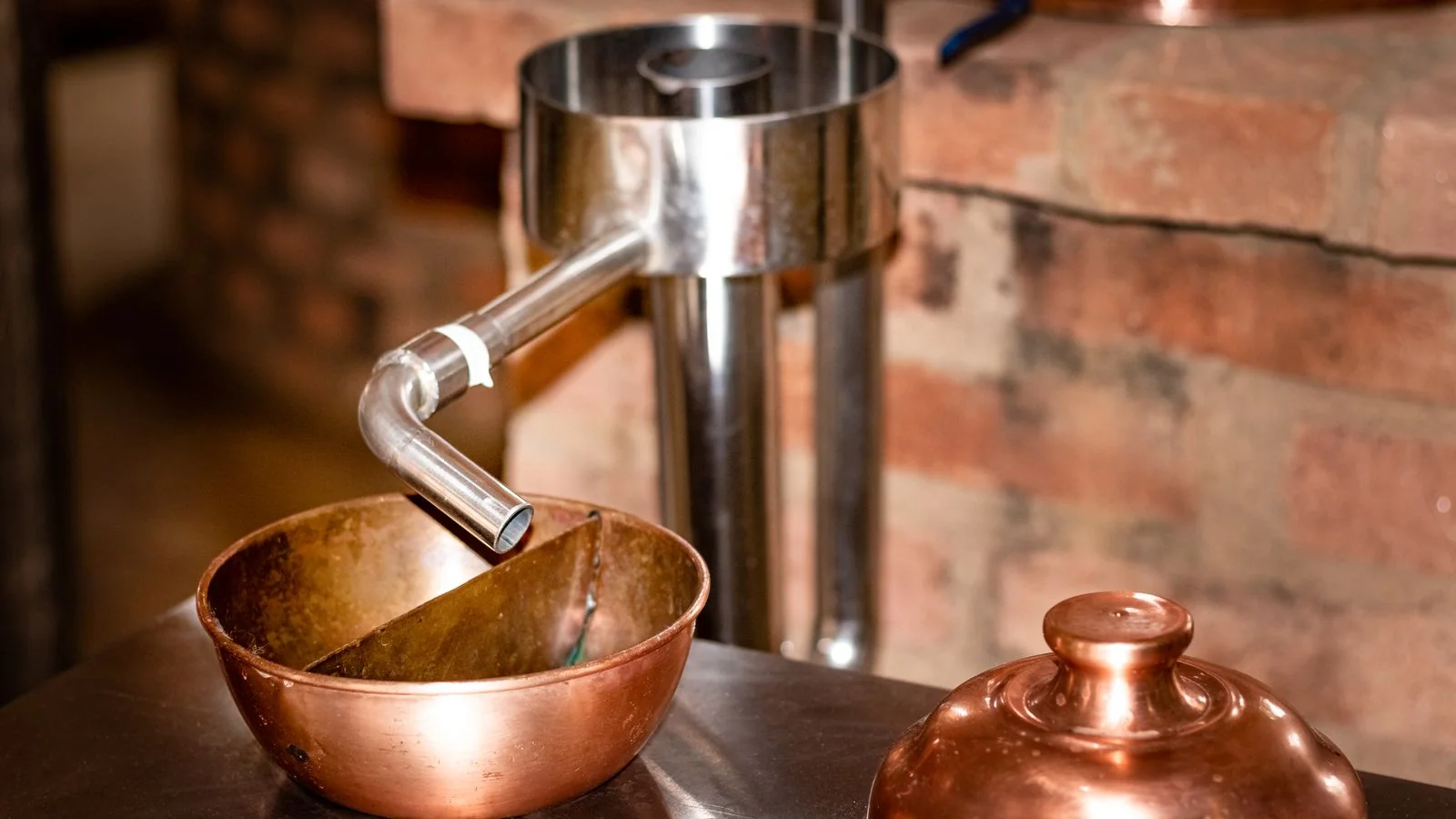
Federal standards of identity require that bourbon be made from a grain mixture of “not less than 51 percent corn.” They also dictate the barrel, the distillation proof, the entry proof and the bottling strength.
Read that again as a marketer rather than a distiller. The government has written the product specification for you, and for every one of your competitors, in identical terms. Within those walls the room for meaningful differentiation is narrow, and every craft producer in the country is standing in it, saying the same four things about small batches, family recipes, local grain and hand-crafted care.
The liquid cannot separate you. The regulations made sure of it. What is left is the person who made it, and almost nobody is using that properly.
Why every craft spirit sounds the same
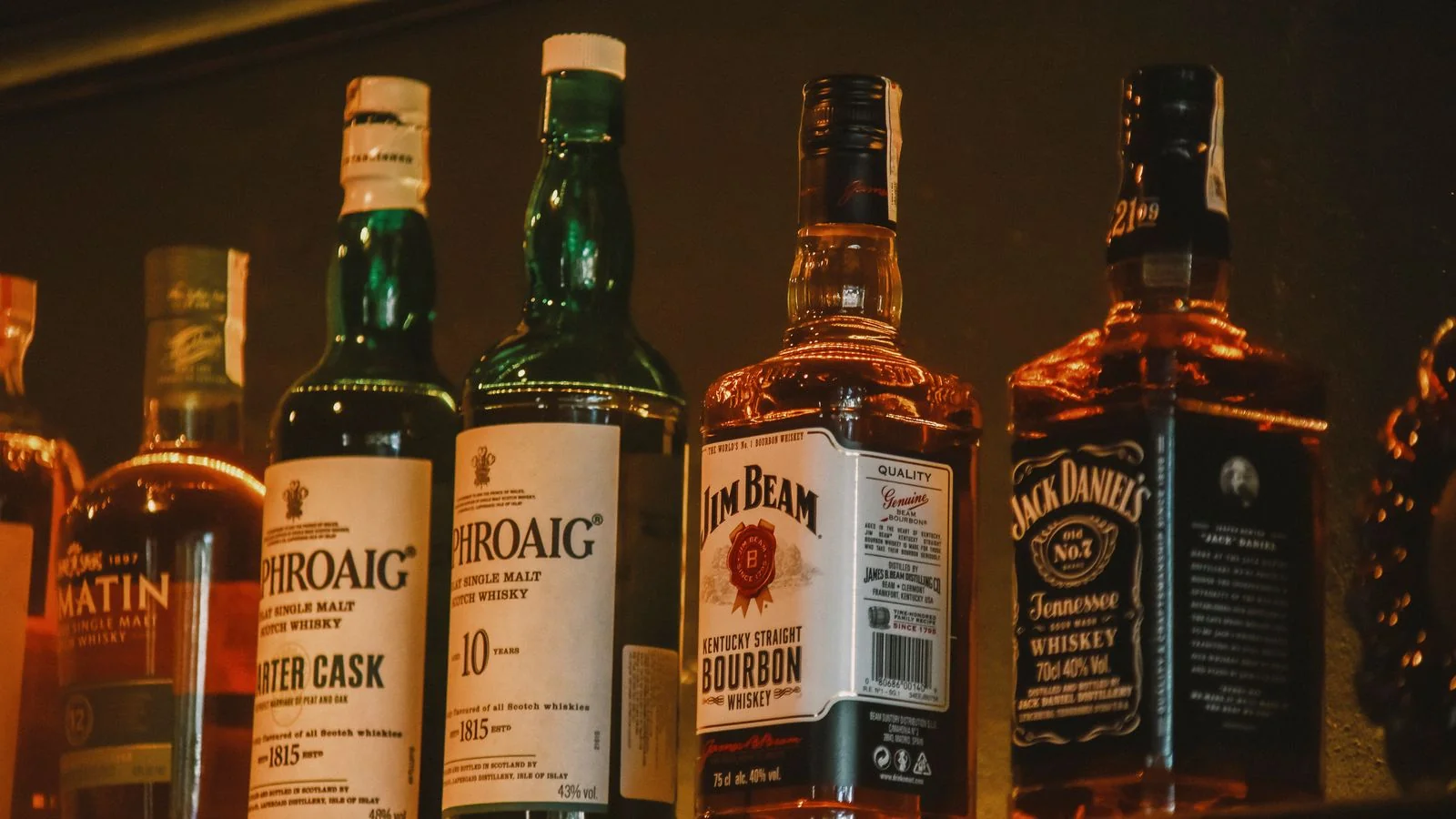
Stand at a back bar and read the labels. Handcrafted. Small batch. Traditional methods. Locally sourced. A founding year rendered in a serif face. A drawing of a still, a wheat sheaf or a mountain.
None of those words mean anything, and several of them have no legal definition at all. Small batch is not defined. Handcrafted is not defined. A consumer reading forty bottles encounters forty variations of the same sentence and learns nothing that helps them choose.
Worse, these claims are unfalsifiable, and unfalsifiable claims carry no persuasive weight with anybody experienced. A bartender who has heard small batch four thousand times hears nothing. The claim occupies label space and does zero work.
The distilleries that break out of this do one thing differently. They say something that could be proven wrong.
The founder is the only thing not commoditised
Every input to your business is available to your competitors. Grain from the same suppliers. Stills from the same three manufacturers. Yeast from the same labs. Barrels from the same cooperages. Bottles from the same glass companies. Even the liquid itself is available, which we will come to.
The one input nobody can buy a copy of is the person making the decisions and the reasoning behind them. That is not a sentimental observation. It is a structural one about where durable differentiation can exist in a regulated commodity category.
Consider who actually decides whether your bottle gets bought. A distributor rep with three hundred brands in the bag, who will sell the ones they can describe in one sentence. A bar manager choosing between six ryes at similar cost. A shop buyer with limited shelf space. A consumer standing in front of the wall.
Every one of those people is looking for a shortcut, and a memorable person attached to a specific claim is the most efficient shortcut available. The rep who can say “that’s the guy who does the four-grain with the long fermentation, he used to be a chemical engineer” has a sale. The rep holding a bottle that says small batch has warehouse space.
The choice of who carries this has one non-negotiable criterion: it must be someone who made the liquid and can answer technical questions without help. Spirits is a category where the audience tests authority quickly. A bartender will ask about cut points, barrel entry proof or fermentation length within two minutes, and an owner who defers to someone off-camera has just damaged the brand rather than built it.
Make one claim, and make it checkable
Here is the framework. Call it the Distiller’s Checkable Claim, and the test is one question: could a knowledgeable stranger prove this false?
“We use traditional methods” fails the test, because there is nothing to disprove. “We ferment for five days when most producers ferment for three, which is why there is more fruit in the nose and why we make less whiskey per year than we could” passes, because a competitor could examine that, argue with it, and be wrong or right.
The checkable claim usually lives in one of four places.
Grain: a named variety, a named farm, the distance, the reason you chose it over the commodity option, and what it costs you. Heirloom corn varieties, rye grown within fifty miles, a farmer you have worked with for eight years.
Process: fermentation length, open versus closed fermenters, whether you use a doubler or a thumper, where you make your cuts and why, barrel entry proof, warehouse position, whether you rotate barrels or let the rickhouse do what it does.
Constraint: what you refuse to do. No chill filtration. No colouring. No sourced liquid. No age statement games. Every refusal costs money, and a refusal with a price attached is the most credible thing you can say.
Person: the path in, the prior life, who taught you, what you ruined learning. A distiller who spent twelve years in food science or ran a farm or came out of a family that made something else has an origin that no competitor can duplicate.
Pick one. Not four. A distillery known for one specific thing beats a distillery vaguely associated with quality, because the human memory being competed for holds roughly one fact per brand.
What the three-tier system does to your name
American spirits distribution puts a wall between you and the person who drinks your whiskey. You sell to a distributor, the distributor sells to a retailer or bar, and the retailer sells to a human. In most states you cannot go around it.
This is usually discussed as a logistics constraint. It is also a branding constraint, and a more consequential one, because it means the person representing your product to buyers is not you and does not work for you.
That rep has hundreds of brands. They have a limited number of sentences available per sales call. Whether your brand gets one of those sentences is decided almost entirely by whether you gave them something repeatable and whether they remember you personally.
So a large share of distillery personal branding effort should point at the distributor, not at consumers. Ride with reps. Do their sales meetings. Give them one sentence about the liquid and one about you, and make both specific enough to survive retelling. Send them the thing they can forward. Answer their texts on a Friday.
Distilleries spend enormous energy on consumer social media while ignoring the fifteen people who actually decide whether the bottle reaches a shelf. That allocation is backwards in almost every case.
Bartenders are your first audience
After the rep, the audience that returns the most per hour spent is standing behind a bar.
A bartender who likes you recommends your spirit dozens of times a week to people who trust their judgment and are already buying a drink. There is no advertising equivalent to that, at any price, and it is available to a founder willing to show up in person.
Bartenders respond to process, not story. They want to know what makes the liquid behave the way it does, how it holds up in a stirred drink, whether the proof survives dilution, what it does against a specific vermouth. Show up with that and a bottle and you have a relationship. Show up with a brand deck and you have wasted an afternoon.
This is also the audience most likely to spread a personal reputation by word of mouth, because the bar community is small, connected and highly verbal. A founder known as generous, technically serious and not full of nonsense gets talked about across a city in a way no campaign achieves.
Guest shifts, staff trainings, competition sponsorship at the local level, and simply drinking in the bars that carry you all do more per dollar than anything on a media plan.
Say the quiet part about sourcing
Here is the uncomfortable one, and it is the most consequential decision a new craft brand makes about its public identity.
A large share of American craft whiskey is not distilled by the brand on the label. Contract distilling is a legitimate and long-standing part of the industry, and Midwest Grain Products in Lawrenceburg, Indiana has supplied liquid to a great many brands that people think of as craft. There is nothing wrong with sourcing. Aging, blending and selecting barrels are real skills, and some of the best-regarded products in the category are sourced and blended.
What causes damage is obscuring it. The DSP number appears on the bottle. Production statements are regulated. Enthusiasts and journalists have spent a decade checking these, and several brands have taken serious reputational damage when the gap between their marketing and their paperwork became a story.
The personal branding implication is direct. If you source, build your public identity around what you actually do, which is selection and blending, and say so plainly. A founder who says “we do not distil this, we taste through a hundred barrels and pick six, and here is what I am looking for when I do” has made a checkable claim and pre-empted the accusation. A founder who implies a still they do not own has built a brand with a fuse in it.
If you do distil, say that clearly too, because the category has enough ambiguity that the honest claim now carries weight it did not carry ten years ago.
Build the record a search can find
Somebody meets you at a tasting, likes the whiskey, and searches your name that night. What they find in the first screen decides whether the encounter compounds or evaporates.
It should establish who you are, what you make and what you claim, through sources other than your own website. Interviews. Podcast appearances. Trade publication coverage. A speaker or judge credential. Local business press about the distillery as a manufacturer.
This has become more urgent because the first result is now often a machine-written summary rather than a list of links. Ask an assistant who the notable independent distillers in your state are, or who runs your distillery, and you will get a paragraph assembled from whatever has been published about you anywhere.
Three things follow. If nothing has been written, you are absent from that paragraph while your competitors are named. If what exists is old, you are described as you were four years ago. If your claims are stated inconsistently across sources, the summary hedges, and hedging is indistinguishable from unremarkable.
So the objective is not volume. It is a consistent, current, third-party record in which your one checkable claim appears the same way every time.
Awards help less than you think
Spirits competitions are worth entering, but not for the reason most distilleries enter them.
The medal itself persuades almost no consumer, partly because several competitions award them broadly enough that a shelf full of gold medals conveys nothing. Bartenders are more sceptical still.
The value is downstream. A competition result produces third-party text: results pages, regional coverage, trade mentions, listings that persist and get indexed. That text does branding work for years, and it is text you could not otherwise buy.
So enter selectively, choose competitions with real editorial coverage attached, and then do the work the medal enables, which is pitching the story to your regional business press and trade publications with your name and your claim inside it. The medal is a reason to make the call, not the outcome.
The first ninety days
If you are starting from nothing, the sequence matters more than the effort.
In the first month, decide who carries the brand and write the one checkable claim. Test it on five people who know spirits and watch whether they can repeat it back a week later. If they cannot, it is not specific enough.
In the second month, take it to the distributor and to twenty bars. In person, with bottles, with the process detail. Build the fifteen relationships that decide placement.
In the third month, start the record. Pitch your regional business journal on the distillery as a manufacturing story with real numbers. Say yes to every podcast in the category regardless of audience size. Get your claim published somewhere that is not your own domain, in the same words each time.
That is a full quarter of unglamorous work that produces something no competitor can copy and no marketing budget can shortcut.
So here is the question worth sitting with before you spend another dollar on packaging. If a bartender described your distillery to a customer this evening, in one sentence, without you in the room, what would they say, and is there anything in it that could be proven wrong?