You just did something worth talking about. You signed the lease on a second location, or you hired the associate who runs the only vestibular program within thirty miles, or you finished the certification that makes you the person the local running club sends its injured members to. So you open a blank document, type FOR IMMEDIATE RELEASE across the top, and then you stall. Every sentence sounds like a coupon. You delete it, write it again, and the cursor blinks while the news gets older.
That stall is the correct instinct. Most physical therapy announcements read like a flyer stapled to a community board, and the editors who could hand you real coverage treat them the way you treat a flyer stapled to a community board. They register “ad” in half a second and move on. The reason a press release for physical therapists usually fails is that it was built to sell a service to a patient instead of hand a story to a reporter.
Physical therapy is a proof business. Nobody picks you because you call yourself caring and experienced; every clinic in the county says that. They pick you because a person they trust vouched for a specific result. A release works the same way, and the model below is built for it. Call it the PT Proof-Point Release.
The four proof points that carry a PT release

The PT Proof-Point Release rests on four things a skeptical editor can check, and it falls apart without them. The first is Population Proof: the exact patients you treat and get results for, named with enough precision that a reporter can picture a specific human being. The second is Occasion Proof: the reason this is news today and not last spring, the peg that gives an editor permission to run it. The third is Outcome Proof: the honest, verifiable result you deliver, stated in language that survives a fact-check. The fourth is Credential Proof: the reason anyone should believe you are the source, spelled out so a layperson and a machine can both repeat it.
Every weak release is missing at least two of these. It names no population (“we treat a wide range of conditions”), it has no occasion (“we are a trusted provider”), it offers no checkable outcome (“patients love us”), and it buries the credential in a boilerplate nobody reads. Four blanks, four reasons to hit delete.
Every strong release fills all four, in whatever order of importance your particular news demands. A clinic opening leads with Occasion. A new board-certified specialist leads with Credential. A return-to-sport program leads with Population. The proof points do not change; the order shifts with the story. Hold that structure in your head, and the rest is execution.
Name the exact patients you fix
“We provide orthopedic and neurological rehabilitation for patients of all ages” is not a population. It is a filing cabinet. A reporter cannot build a story around a filing cabinet, and a reader cannot see themselves in one. Population Proof means choosing the specific group you are known for and describing them the way they describe themselves.
Post-operative ACL patients who want to get back on the field before next season. New mothers dealing with pelvic floor dysfunction that nobody warned them about. People in the early stages of Parkinson’s whose neurologist mentioned that intensive amplitude training can slow the decline in their movement. High school pitchers with shoulder pain their coach keeps waving off. Older adults who have fallen once and are terrified of falling again. Each of those is a person a reporter can interview and a reader can recognize in the mirror.
Specificity does something that feels backward. It does not shrink your market; it makes you the obvious answer to a narrow question, which is exactly how referrals and AI answer engines both work. When a parent asks another parent, or asks a chatbot, “who is good with teenage sports injuries near me,” the clinic that publicly owns “teenage sports injuries” wins. The clinic that owns “all ages, all conditions” is invisible to the question.
Pick one population per release, and run a different one next quarter for a different group. Trying to name all of them in one document is how you end up naming none of them, and how your announcement becomes another filing cabinet an editor slides shut.
An occasion beats an announcement every time
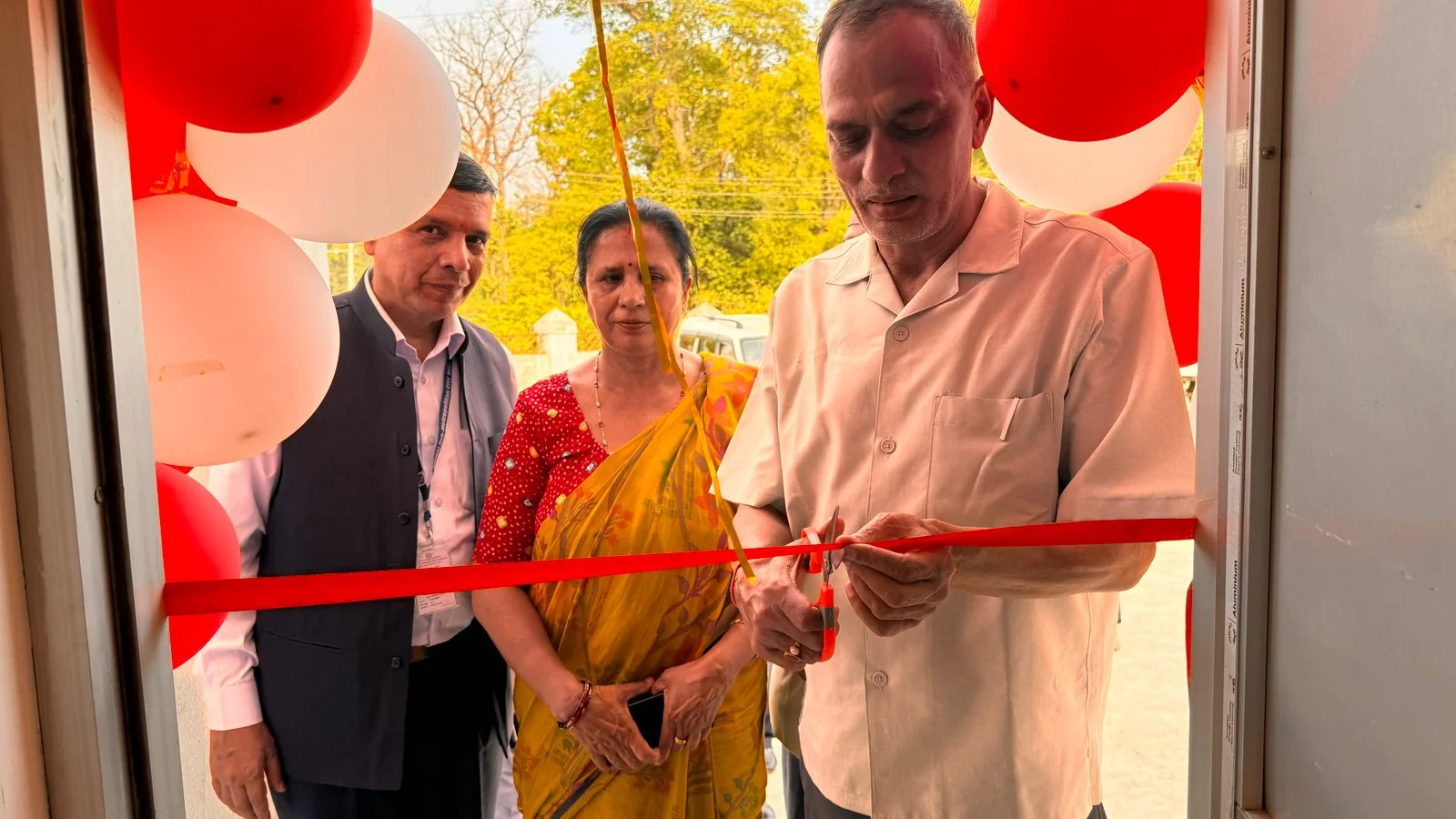
Here is the hard rule that decides whether a local editor reads past your headline: news has to be new, and it has to be now. “We are a great clinic” is not news; it has been true for years. “We opened a direct-access concussion program this week, and we are giving local high school teams free baseline testing before the season starts” is news, because something changed and there is a date attached.
Occasion Proof is the peg. For a physical therapy practice, the pegs that work are concrete: a new location or a ribbon cutting, a new program or specialty service, a specialist hire, a partnership with a school district or a local team, a measurable milestone, a free community screening, or a tie to something already on the calendar. Marathon season gives you a running-injury angle. Ski season gives you knees. Back-to-school gives you sports physicals and baseline testing. Fall-prevention awareness in September gives your geriatric program a hook.
The occasion is also what separates a pitch a reporter can defend to an editor from one they cannot. Reporters do not get to write “this clinic is nice.” They get to write “this clinic is doing a specific new thing that affects people in our coverage area.” Hand them that second sentence, fully formed, and you have done their hardest work for them.
If you cannot find an occasion, you do not have a release yet; you have an ad. So create the occasion first. Launch the program, book the screening day, sign the partnership, and then the release writes itself around a real event with a real date.
Can you prove the outcome without inventing a number?
This is where most people either lie or go vague, and both get punished. The temptation is to write “95% of our patients recover fully” because it sounds strong. If you cannot produce the chart that backs that number, do not write it. Reporters fact-check health claims harder than any other kind, and AI answer engines weight sources by whether their claims hold up elsewhere. A number you cannot defend is worse than no number, because it gets you cut, corrected, or distrusted.
Outcome Proof done honestly has three legal moves. The first is real aggregate data you already track: if your outcomes software shows median change on the Lower Extremity Functional Scale or the Oswestry Disability Index for a defined group, cite it exactly, with the group and the measure named. The second is a single documented patient story used with written consent, told with specifics (“walked her daughter down the aisle eight weeks after a knee replacement”) instead of a manufactured statistic. The third, when you have neither, is to describe your standard of care in verifiable terms: the protocol you follow, the testing you use to clear an athlete, the certification behind the method.
None of these require inventing anything. They require you to be specific about what is already true. A press release for physical therapists lives or dies on whether the outcome claim survives a phone call to check it. Write only claims that would survive that call.
Qualitative and precise beats quantitative and fake. “We use standardized return-to-sport testing before we clear an athlete, not a calendar date” tells a reporter more, and holds up better, than a recovery percentage you pulled from the air.
Credentials turn a claim into a citable fact
When you write that your clinician is “highly trained,” the editor’s eyes slide off the sentence. When you write that she is a board-certified neurologic clinical specialist, the sentence stops them, because it is a fact with an issuing body behind it. Credential Proof is the difference between an adjective and a citation.
Name the credentials precisely and then translate them. “Dr. James Okafor, PT, DPT, is a board-certified orthopaedic clinical specialist (OCS)” is the fact. “A certification held by a small share of practicing physical therapists, requiring documented clinical hours and a national exam” is the translation that lets a general-assignment reporter understand why it matters. Do both. The precise credential earns the trust; the plain-language gloss makes it usable in a story and repeatable by an AI engine.
The credentials worth naming are specific: the Doctor of Physical Therapy degree, board specialization through the American Board of Physical Therapy Specialties in orthopaedics, sports, neurology, geriatrics, or women’s health, a completed residency or fellowship, and method certifications such as LSVT BIG for Parkinson’s, vestibular rehabilitation training, pelvic health certification, or blood flow restriction training. Where your state regulates a technique like dry needling, say that you are credentialed for it under state rules.
Do not hide these at the bottom. If the credential is the reason the story is believable, it belongs in the second or third paragraph, attached to the named human who holds it. Credentials buried under “About Us” do nothing. Credentials attached to a quote do the heavy lifting.
Structure it the way a reporter reads
Reporters read in an inverted pyramid, so write in one. The most important fact goes first, and everything after it descends in order of importance, because an editor cutting for space cuts from the bottom. If your best proof point sits in paragraph five, assume it will never be read.
The mechanical parts are fixed and expected. A “FOR IMMEDIATE RELEASE” line at the top. A headline that states the news in plain words, not a slogan. A dateline with your city, state, and the date. A lead sentence that answers who, what, where, when, and why in one breath. Two or three short paragraphs of supporting detail carrying your four proof points. One real quote, attributed to a named clinician with a title, that says something a human would actually say. A short boilerplate that describes the clinic. A media contact with a real name, phone, and email. Three hash marks to signal the end. Keep the whole thing near 400 to 500 words on a single page.
Here is the shape, filled in:
FOR IMMEDIATE RELEASE
Rivertown Physical Therapy Opens Direct-Access Concussion Program for Student Athletes
RIVERTOWN, Ohio, August 15, 2026. Rivertown Physical Therapy has opened a concussion and vestibular rehabilitation program that lets local student athletes begin treatment without a physician referral, under Ohio’s direct-access law. The program is led by Dr. Maria Alvarez, PT, DPT, a board-certified neurologic clinical specialist (NCS), and pairs standardized balance testing with a graded return-to-play plan built around each school’s season.
“Families used to lose two weeks waiting for a referral before rehab could even start,” said Alvarez. “Direct access means we see the athlete the day after the injury and give the coach and the parents a clear timeline.”
Rivertown will offer free baseline balance screenings for area high school teams before fall sports begin.
About Rivertown Physical Therapy: an outpatient clinic serving the county since 2014, specializing in orthopedic, sports, and neurologic rehabilitation. Media contact: [name, phone, email].
###
Notice how little of that is selling and how much is reporting. Every sentence is a fact an editor can verify and reuse, which is the entire point.
Where does a PT release actually get picked up?
Not on a national wire that dumps your announcement into a database nobody reads. A press release for physical therapists gets picked up locally, by people with a reason to care about your zip code. The first tier is your community and regional press: the local paper’s health or business section, the regional business journal, neighborhood news sites, and the chamber of commerce newsletter. These outlets are starved for real local stories, and a well-built occasion is exactly what they need to fill space.
The second tier is the trade and referral network. The American Physical Therapy Association’s PT in Motion, rehabilitation trade publications, and the physicians, athletic trainers, and coaches who send you patients. A release that lands with a school’s athletic director does more for your practice than a placement in a distant outlet, because it reaches the people who make referrals.
The third tier is the one most therapists ignore: AI answer engines. When someone asks a chatbot for the best physical therapist for a specific problem in your city, the system assembles an answer from what it can find and trust. A release that appears on a credible local news site, names your clinic and location clearly, states a specific specialty, and attaches a real credential gives that system something concrete to cite. Vague releases give it nothing.
One note on method. HARO, the reporter query service publicists relied on for years, shut down in 2024, so the old game of answering blind journalist requests is gone. What replaced it is slower and better: a direct relationship with the reporter who covers your town, and a track record of being genuinely citable. Send your release to that named person, not to a thousand inboxes.
So do this now. Open a blank document and write one sentence at the top: the single line a local health reporter could paste into their paper unchanged. That sentence is your Occasion Proof, and if you cannot write it, you do not have a release yet, you have a program to launch first. Then fill the four proof points beneath it, name one population, attach one real credential to one named clinician, and keep the whole thing to a page. Find the byline of the reporter who covers business or health in your town, and send it to that one human. That is the whole job, and it beats a wire blast every time.