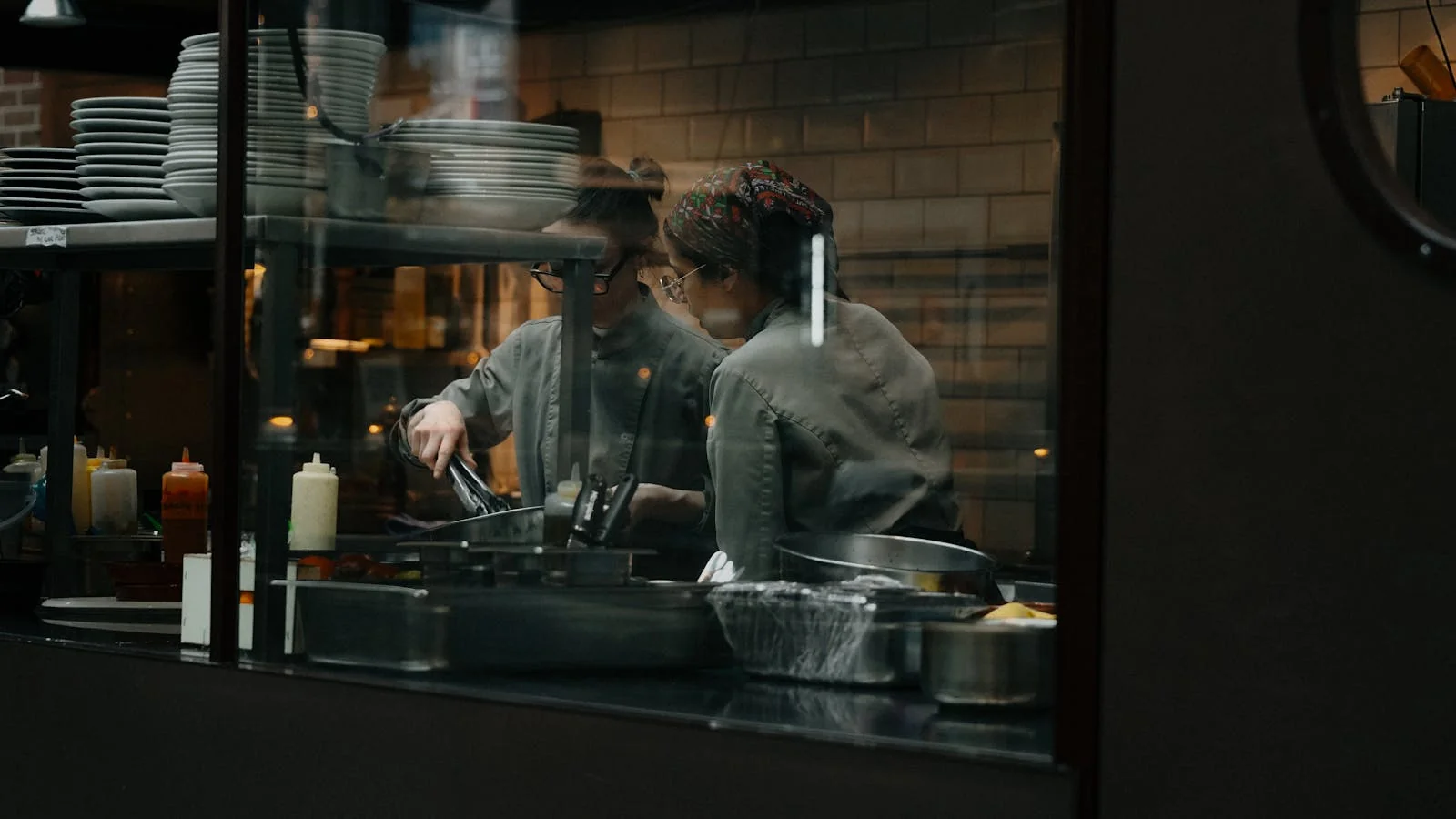
“I’ve gotten 800 restaurant pitches this month and the only ones I’ve opened past the first sentence were the ones that told me something new about the city.” That is a sentence from a working metro-paper food editor describing what her inbox actually looks like. She did not say it to be cruel. She said it because she has 90 minutes a week to cover restaurants and she cannot spend any of it on pitches that read like everyone else’s.
Restaurant press is harder to crack than almost any other PR beat because the supply is endless and the editor headcount has been falling for ten years straight. The James Beard Foundation Media Award shortlist has not grown. The Eater 38 still has 38 slots. The New York Times still publishes one star review a week. Every chef in the city is fighting for the same finite real estate, and most of them are pitching their grand opening, their seasonal menu, or their new pastry chef as if those are stories. They are not stories. They are calendar updates. The hooks below are what stories look like.
The 7 hooks that actually open restaurant inboxes
Food press hooks fall into seven repeating patterns. Most working food editors will recognize all seven. Pitch outside these patterns and the response rate is roughly 1%. Pitch inside them with credible specifics and the response rate runs closer to 18 to 25%, which is the actual working number for restaurants with strong PR representation.
Hook 1: The neighborhood reframe. A restaurant that is bringing a regional cuisine, a price tier, or a service model to a neighborhood that did not previously have it. Not “fine dining comes to Bushwick” written by every other restaurant. Specific: “the first Sichuan dry-pot restaurant in a 12-block radius of the Bed-Stuy A-train corridor.” The reframe is geographic and operational. The editor’s reader cares because the editor’s reader lives near that A-train stop.
Hook 2: The chef migration story. A chef leaves a named, recognizable institution and opens or joins your restaurant. The institution has to be specific and recognizable to the local food press. “Sous chef from Cosme opens his own taqueria in Greenpoint” is a story. “Award-winning chef joins our team” is not. The hook only works when the institution carries name weight in the city where you are pitching, and only when the chef will give a quote that connects the old role to the new one in a substantive way (not “I learned so much there”).
Hook 3: The ingredient story with a single, specific source. Your menu is built around a product you have a direct, documented relationship with the producer for. Not “locally sourced” or “farm-to-table,” which every restaurant in America claims. Specific: “all four lamb dishes use Pat LaFrieda’s heritage Dorset crosses, finished on a pasture in Northern Westchester the chef visits twice a month.” Name the producer. Name the breed. Name the geography. The story is the relationship, not the protein.
Hook 4: The format invention. You have built a service model, a menu structure, or a hospitality rhythm that does not exist elsewhere in the city. A 16-course tasting menu under $90. A Friday-night-only kaiseki. A walk-up window doing offal that the same kitchen serves at fine-dining prices on the weekend. A reservation system that allocates a third of the room to walk-ins on principle. The format has to be inventive and operationally real. Editors check by booking the table.
Hook 5: The economic story. Your restaurant has done something specific and quantifiable about an industry-wide economic problem that food editors are already writing about. You closed the wage gap between front and back of house. You publish your menu prices and your food cost percentage transparently. You moved to a service-included no-tipping model and have 18 months of actual data on what it did to staff retention. The hook only works if you have real numbers and you are willing to put them in the pitch. Wishful versions of this hook die on contact because every editor has heard them.
Hook 6: The cultural specificity story. Your restaurant is doing something culturally specific that the chef can speak to from a position of authority and direct lineage. A second-generation chef cooking her grandmother’s Tashkent Uyghur food using techniques her family carried out of Soviet Central Asia. A Haitian chef opening the first Haitian fine-dining restaurant in a city. The hook requires the chef to be willing to do the interview personally. Cultural-specificity stories told by hired publicists rather than by chefs in their own voices read as inauthentic and get killed.
Hook 7: The succession or comeback story. A historic restaurant changes hands, a closed restaurant reopens under new ownership, a chef who left the industry comes back. The structural news is the discontinuity, not the food. “Beloved 1970s East Village dim sum room reopens after a 14-year closure, with the original owner’s daughter behind the wok” is a story. The food editor will write 2,000 words on the family business before tasting a single dumpling.
The hooks compound. A restaurant pitch that combines two of the seven (chef migration plus format invention, or neighborhood reframe plus cultural specificity) gets disproportionate response because the story has multiple narrative entry points. The pitch that pretends to combine but actually just lists features dies the same way single-feature pitches die.
How to write the actual pitch document
The pitch email is 180 to 240 words. Not 800. Not 80. The structure that gets opened past the first sentence works like this.
Subject line: one declarative sentence that states the hook in the most specific form. “Sous chef from Cosme opening a 14-seat taqueria in Greenpoint, December 7 soft open” beats “New restaurant opening you’ll want to cover.” The first version specifies who, where, what, and when. The second version specifies nothing. Food editors filter inbox by subject line because they have to.
First paragraph: one sentence on the hook, one sentence on the proof of the hook. “Maria Hernandez left her sous chef role at Cosme in October and opens her own taqueria, La Bandera, on Manhattan Avenue in Greenpoint on December 7. She is bringing the open-fire suckling-pig technique she developed at Cosme into a $14-per-plate format her former colleagues are already booking tables for.”
Second paragraph: the operational specifics. Address. Soft-open date. Hard-open date. Menu structure. Price tier. Reservation policy. Reservation link. Who the publicist is and how to reach the chef directly for an interview.
Third paragraph: the access offer. What you are offering the editor that she cannot get on her own. A walk-through with the chef before service. A tasting of two dishes that will not be on the public menu. First-look photography rights. An embargo if she wants exclusivity. The access has to be real. Offers of access that turn out to be the same access any diner gets are how PR people lose access to editors permanently.
Attachments: one. A single PDF press kit with the menu, the chef bio with one named lineage detail per former employer, two to four high-resolution photos that look like editorial photography, not Instagram content, and a one-paragraph fact sheet with everything an editor would need to fact-check. The press kit is for after she has decided the pitch is interesting. It is not the pitch.
What to leave out: every adjective. “Stunning,” “innovative,” “incredible,” “must-try.” Working food editors read these the way medical professionals read homeopathy claims. Specificity reads as credible. Adjectives read as marketing.
The relationship cycle no publicist explains
Restaurant press is a relationship business in a way that few other PR beats remain. The food critic at the Los Angeles Times has covered the Los Angeles dining scene for 16 years. She remembers every pitch you sent her. She remembers which ones overstated their case. She remembers which publicists fed her bad tips. She is going to be the food critic at the LA Times for another decade.
The relationship cycle that works for restaurant press has four phases. Most restaurants only think about phase one and wonder why their critics never come back.
Phase one is the opening pitch, the hook, the soft open invite, the access offer. This is what most restaurants and their PR teams treat as the entire job. It is roughly 15% of the actual work.
Phase two is the follow-up that does not ask for anything. After the critic visits or covers the restaurant, send one short email two weeks later thanking her by name for the review, and pointing out one specific thing in the review that the chef found accurate. Not flattering. Accurate. Critics know the difference. This builds the relationship in a way that pays off two years later when the chef opens her next restaurant.
Phase three is the off-pitch contact. Once a quarter, send a single email to the critic with one piece of information that is useful to her work and has nothing to do with your restaurant. A new producer at the farmers’ market who is doing something interesting. A sous chef who just left a notable kitchen for an unexpected destination. A neighborhood permit change that will affect which restaurants can serve outdoors next year. You are functioning as a source, not as a publicist, in these emails. Critics value this and remember it.
Phase four is the embargo trust. Once the relationship is real, you can offer the critic exclusives in exchange for coverage timing she prefers. Not as a trade. As a courtesy. A critic who has worked with you for three years will give you a fair shot at her review calendar in a way that a stranger never will. This is the eventual goal of the cycle and the reason most restaurants never reach it: they treat phase one as the entire game and burn out the relationship by month three.
The specific named example worth studying is Jonathan Gold’s archive of LA Times Counter Intelligence columns, particularly the way he wrote about chef-driven hole-in-the-wall openings during the 2010s. The restaurants Gold covered most often were the ones whose chefs and PR contacts handled the relationship cycle correctly. He published several pieces about the operational practices behind that pattern, and they are still the cleanest documented example of how restaurant press relationships actually work over a decade-long span. Read his archive before you write your next pitch.
So which hook are you actually sitting on, and which phase of the relationship cycle have you done zero work in?