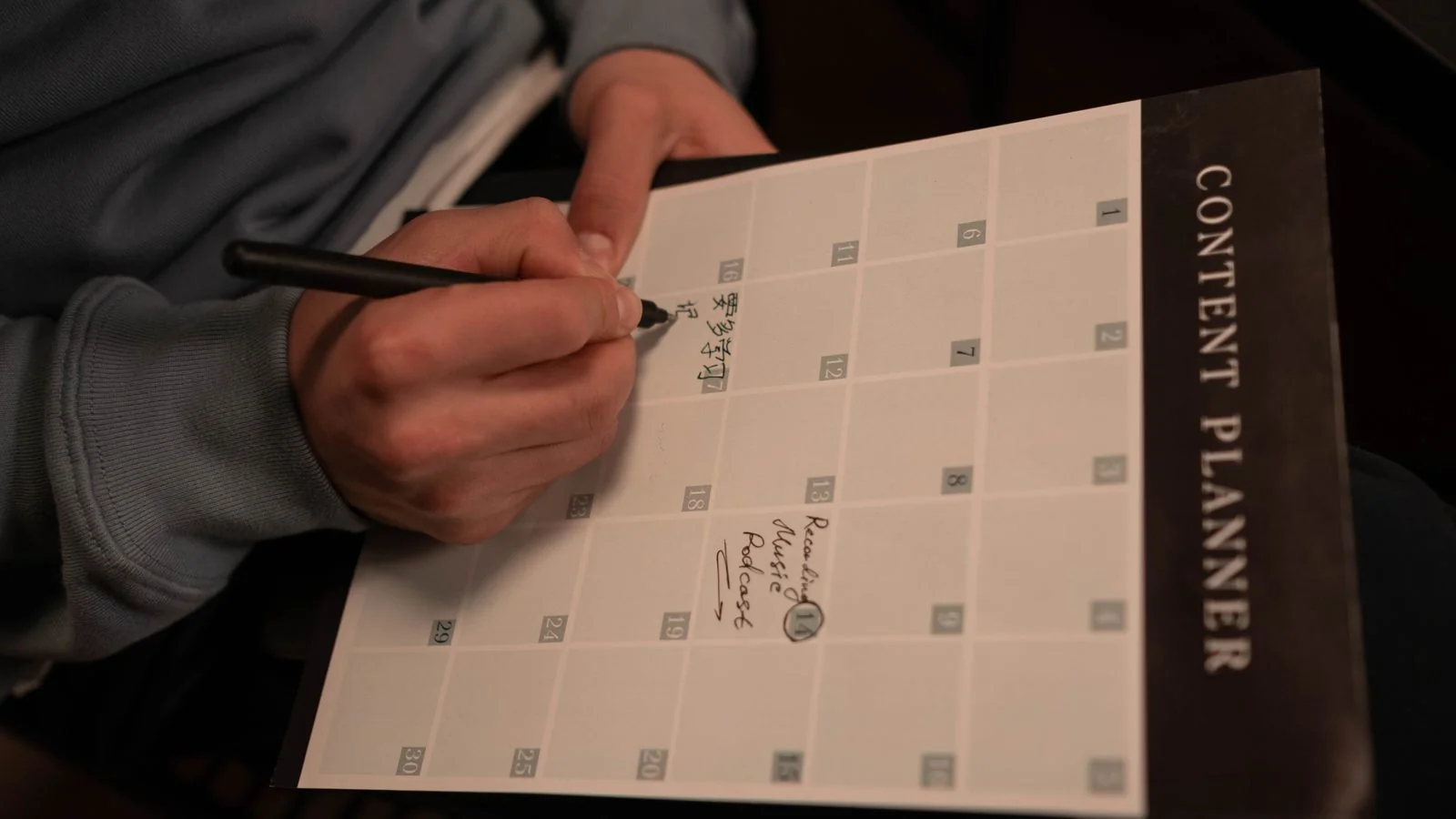
The counterintuitive truth about content is that creating it every day is the least efficient way to create it. Daily creation keeps you in a permanent state of low-grade panic, switching between deciding what to make, making it, and publishing it, all under the pressure of a clock that resets every twenty-four hours. That constant switching is where your time and your sanity leak out. The people who publish the most consistently almost never create daily. They batch.
Batching means doing one type of task in a concentrated block instead of spreading it across every day. When you batch create content, you plan a month of topics in one sitting, draft them in another, and schedule them in a third, so that a single focused day produces weeks of output. Here is how to actually do it, from empty calendar to a full queue.
Start by separating the four jobs content actually requires
Most people treat content creation as one activity. It is four: deciding what to say, creating it, editing it, and publishing it. Each uses a different part of your brain, and jamming all four into every single day forces your mind to change gears constantly, which is exhausting and slow. The whole gain from batching comes from doing one of these jobs at a time, in bulk.
So the first move is to stop thinking of “make content today” as the task. The tasks are plan, create, edit, schedule, and you are going to do each of them in its own block. When you batch create content this way, you are not just saving time; you are giving each job the mental mode it needs. Planning wants a wide, strategic head. Creating wants a loose, generative head. Editing wants a sharp, critical head. Trying to hold all three at once is why daily content feels so much harder than it should.
Run a single planning session for the whole month
Sit down once with the goal of deciding every topic for the next month before you create a single piece. Pull from the questions your audience actually asks, the themes you want to be known for, the things you keep explaining in emails and calls. Write them all down as a list of specific topics, each one concrete enough that you could start creating from it without thinking further.
This planning block is the highest-impact hour of the entire process, because a good plan makes creation fast and a missing plan makes it grind. The reason daily content is so painful is that you are planning and creating in the same breath, staring at a blank screen while also deciding what should go on it. Separate them. When you arrive at your creation block with thirty decided topics, you never face the blank screen, because the hard thinking is already done.
Create in one long generative block, without editing

With your topics decided, block a stretch of uninterrupted time and create, and create only. Draft every piece back to back without stopping to polish, second-guess, or publish. The rule for this block is momentum: get the raw material down, move to the next, and keep the generative gear engaged.
The mistake that kills batching is editing while you create. The moment you stop to fix a sentence, you switch from the generative mode into the critical mode, and switching back is costly. Let the drafts be rough. You will fix them later, in a block built for exactly that. This is also why a single format helps: if today’s batch is all short posts, you stay in one groove instead of jumping between a video, an article, and a caption. Pick one lane per creation block and stay in it. A person who plans well can draft twenty to thirty short pieces in a focused session, because there is nothing to decide and nothing to fix, only to make.
Edit everything in a separate critical pass
Once the drafts exist, switch modes deliberately and edit them all in one pass. Now you are in the sharp, critical head: cutting weak lines, tightening openings, fixing what the generative block left rough. Because you are editing a stack rather than one piece, you develop a rhythm and a consistent standard across everything, which is hard to achieve when you edit each piece in isolation days apart.
This separation is the quiet secret to why batched content often reads better than daily content, not worse. The draft got full creative attention and the edit got full critical attention, instead of both being squeezed into a rushed daily session where neither happened properly. When you batch create content, quality tends to rise because each piece passed through two focused states rather than one distracted one.
Schedule the whole queue and buy back your month
The final block is pure logistics. Take your finished, edited pieces and load them into a scheduler, spacing them across the coming weeks according to your plan. This is low-brainpower work, which makes it perfect for a separate block: you are not deciding or creating, just placing finished things onto a calendar.
When this block ends, something changes about your entire month. The content is done. It will publish on schedule whether you are inspired, busy, sick, or on vacation, and you are free to spend your days on the work that actually requires you to be present. That freedom is the real payoff of learning to batch create content. You trade the daily anxiety of feeding an endless feed for a few concentrated days of focused work, and you get consistency without the burnout that daily creation guarantees. Do it once and the difference is obvious. Do it every month and content stops being the thing that owns your calendar and becomes the thing you handle in a day.