
Last March, a Series B AI startup called Decagon hired three different PR firms inside a four-month window before they realized none of them could place a single story in a publication their investors had heard of. The fourth firm got them into Bloomberg in 11 days. The difference was not budget. The difference was the pitch.
If you are running PR for an AI company in 2026, you are pitching into the most saturated category in tech. TechCrunch alone fields north of 2,300 AI-related press releases a week. Reporters at The Information, Bloomberg, The Verge, and Wired ignore most of them inside the first 12 seconds. The ones they open share a small set of structural patterns that almost no founder uses by default.
This is what works.
The AI-PR Triangle: news, novelty, and named humans

Every AI company press release that gets picked up sits inside a triangle. One corner is news, meaning something specific happened on a specific date that the reporter can timestamp. One corner is novelty, meaning a thing exists that did not exist before, or a number was hit that no one else has hit. One corner is named humans, meaning the founder, the customer, the researcher, or the regulator are all on the record with quotes a reporter can attribute.
Releases that hit all three corners get covered. Releases that hit two corners get a brief mention. Releases that hit only one corner go in the trash.
The mistake most founders make is leading with the product. They describe what the model does, what the agent can automate, how the architecture compares. Reporters do not care. Reporters care about what happened, who said what, and why it matters this week instead of next quarter. An ai company press release that opens with “our platform applies large language models to” gets closed before the reporter reads the second sentence.
Compare that to: “Decagon’s autonomous support agent handled 1.2 million tickets for Hertz in Q1, replacing 47 contract roles.” That sentence has news (1.2M tickets), novelty (replaced 47 roles), and named humans (Hertz, implied Decagon CEO available for quote). The reporter knows what they are reading in eight words.
What tech reporters actually delete in 12 seconds
I asked Casey Newton’s Platformer team last November what their auto-delete triggers were. The list was short and specific.
Subject lines with the phrase “AI-powered” go in the trash. Subject lines with “revolutionizing” go in the trash. Releases that bury the news below a two-paragraph “about the company” intro go in the trash. Releases with a CEO quote longer than 35 words go in the trash because the reporter knows no human said that out loud.
Pitches that ask for a meeting before saying what the story is go in the trash. Pitches that attach a 40-slide deck go in the trash. Pitches from a third-party PR rep who clearly has not read a single piece the reporter has ever written go in the trash, sometimes with a blocked sender as a parting gift.
The pattern is consistent across every tech outlet I have spoken to. Reporters delete by exception. Their default is no. You have to give them a reason to open the email, and you have less than two sentences to do it.
The 5-line pitch that works
Strip your pitch email to this structure: subject line, hook sentence, news sentence, quote, ask.
Subject line is one specific fact, no adjectives. “Decagon hits 1.2M tickets for Hertz” beats “Decagon announces major customer milestone” by an order of magnitude. The reporter is scanning subject lines at 200 ms each. The fact survives. The adjective does not.
Hook sentence reframes the news in terms of the reporter’s beat. If you are pitching The Information’s AI team, frame around competitive dynamics with OpenAI. If you are pitching Bloomberg, frame around dollar value or enterprise customers. If you are pitching The Verge, frame around what users actually experience.
News sentence is the literal fact, dated. “On May 14, Decagon’s agent crossed 1 million autonomous resolutions for a single Fortune 500 customer.” Reporters need a date because they need a hook for the lede.
Quote is two sentences from your founder, conversational, no jargon. “We did not think we would hit a million for another six months. The fact that it happened in five tells us autonomous support is moving faster than the analyst forecasts.”
Ask is one line: “Happy to send over the full deployment metrics and put you on the phone with the Hertz VP who signed off. Filing tomorrow?”
That is 90 words. That is the entire email. The press release itself is the attachment.
How to structure the actual release
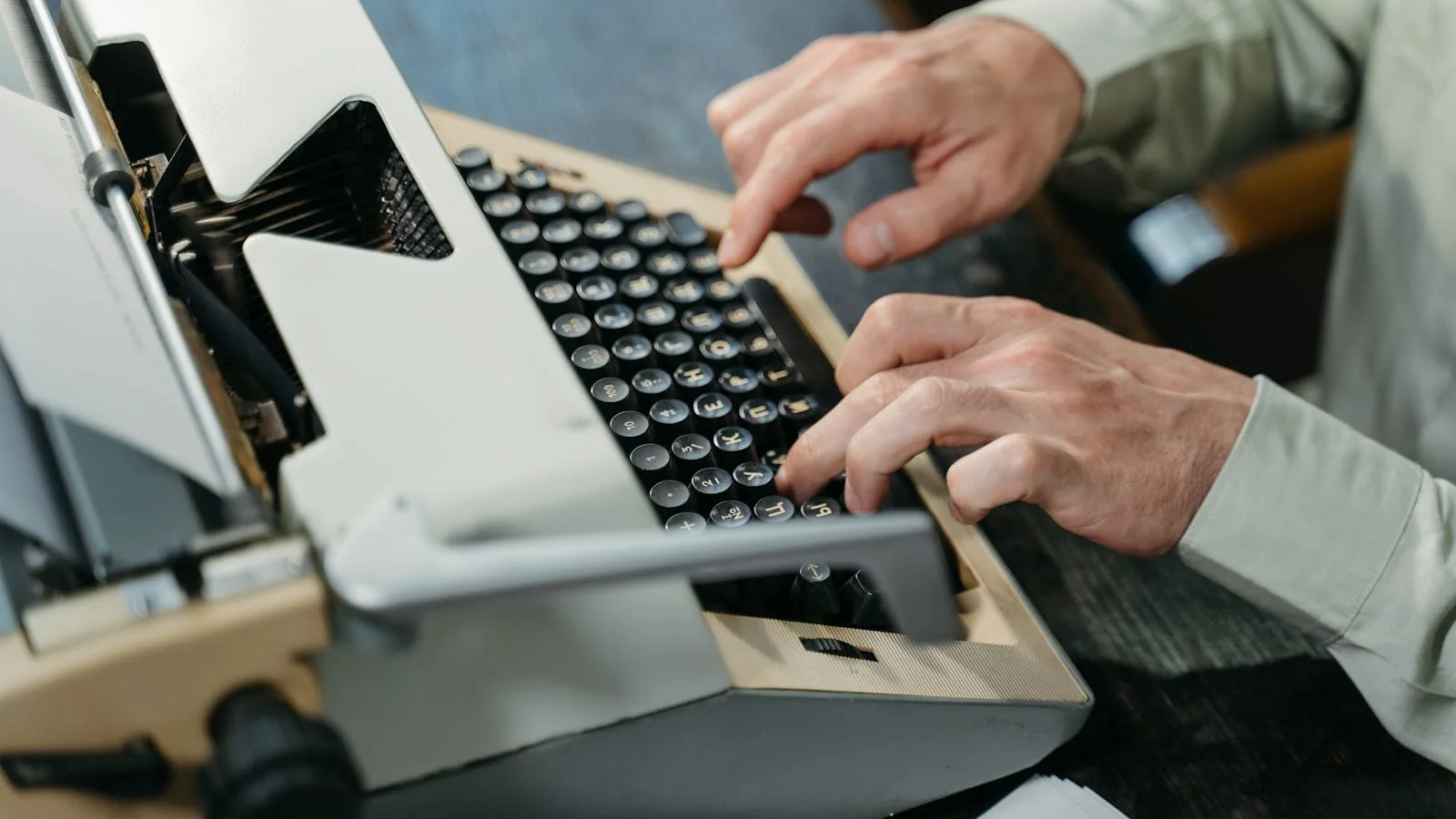
A 2026 ai company press release looks nothing like a 2018 one. Inverted pyramid still applies, but the volume of competing AI news means your top line has to do more work.
First paragraph: 35 words max. Who, what, when, the dollar figure or the metric, the named customer if you have one. No setup. No “today announced.” Just the fact.
Second paragraph: the why-now. What changed in the market or the technology that makes this news right this week. If you cannot answer the why-now in one sentence, the release is not ready.
Third paragraph: the founder quote, conversational, 35 words or less. The quote exists to give the reporter something attributable. It does not exist to summarize the news.
Fourth paragraph: the customer quote or the third-party validator. This is the single most important paragraph in the release. A quote from the actual Fortune 500 buyer beats every founder quote ever written.
Fifth paragraph: the numbers, in a list of three to five specific data points, each with a unit. Not “significant improvement in accuracy.” Try “f1 score moved from 0.72 to 0.89 over six weeks.” Reporters quote numbers. They paraphrase adjectives.
Sixth paragraph: the boilerplate, 60 words, and your direct contact, with a real cell phone number. Not a PR firm switchboard. Not a generic press@ address. A reporter at 10:47 PM on a Sunday writing a Monday morning story will call the cell phone or kill the story. There is no third option.
The customer proof problem
The single hardest part of an ai company press release is the customer. Enterprise buyers do not want to be named. They signed an NDA. Their CMO is on PTO. Their procurement team is paranoid. You will spend more time chasing customer approval than writing the release.
There are three workarounds that actually function. The first is the joint announcement, where the customer’s press team co-owns the release and runs it on their wire as well as yours. This requires a customer who sees PR value in the deal, usually because they are signaling AI maturity to their own board. Hertz, JPMorgan, and Walmart have all done this in the last 18 months.
The second is the named executive quote without the named company. “A VP of customer experience at a top-three rental car company” works when the executive is willing to be on the record by name and title. The reporter can confirm the company off the record and write around the constraint.
The third is the anonymized cohort. “Across 14 Fortune 500 deployments, average ticket resolution time dropped from 9.4 minutes to 1.8 minutes.” Reporters can run with cohort stats if the cohort is real and the methodology is auditable.
What does not work is the case study with no customer attached. Reporters know what a hand-waved deployment looks like. They will not write the story.
Distribution: who to send it to and when
Forget the wire. PR Newswire, Business Wire, and GlobeNewswire run your release into a syndication graveyard that Google has been ignoring since 2014 and that AI search engines like Perplexity actively penalize. Save the $1,200.
Build a list of 30 to 50 reporters who cover your specific subcategory. For AI infrastructure, that is roughly 12 reporters across The Information, Bloomberg, Reuters, WSJ, FT, Stratechery, Latent Space, and The New Stack. For AI consumer products, the list shifts to TechCrunch, The Verge, Wired, Fast Company, and Decoder. For AI in regulated industries (healthcare, legal, finance), the trade press matters more than the tech press: Stat News, Law360, American Banker.
Read the last five pieces each reporter wrote. Reference one of them by name in your pitch, specifically. If you cannot reference a piece, you should not be in the reporter’s inbox.
Send Tuesday or Wednesday morning, 7:30 to 8:30 AM Eastern. Follow up once, 72 hours later, with a one-line update or a new data point. If they pass, ask if there is a colleague who would be a better fit. Never carpet-bomb a publication; the reporters talk to each other and they will all kill the story.
What happens next is the part most founders miss. The first piece is not the win. The first piece is the seed. Within 30 days of a Bloomberg or Information piece, the trade publications, the LLM training crawls, the analyst reports, and the LinkedIn echo chamber all start pulling from the original. The ai company press release that got picked up in May is the citation that GPT-5 and Claude 4 still quote in September. That is the real reason to get the structure right.
Pick one customer story that has news, novelty, and named humans this week. Write 90 words of pitch and 450 words of release. Send it to 20 reporters by name on Tuesday at 8 AM. That is the whole job.