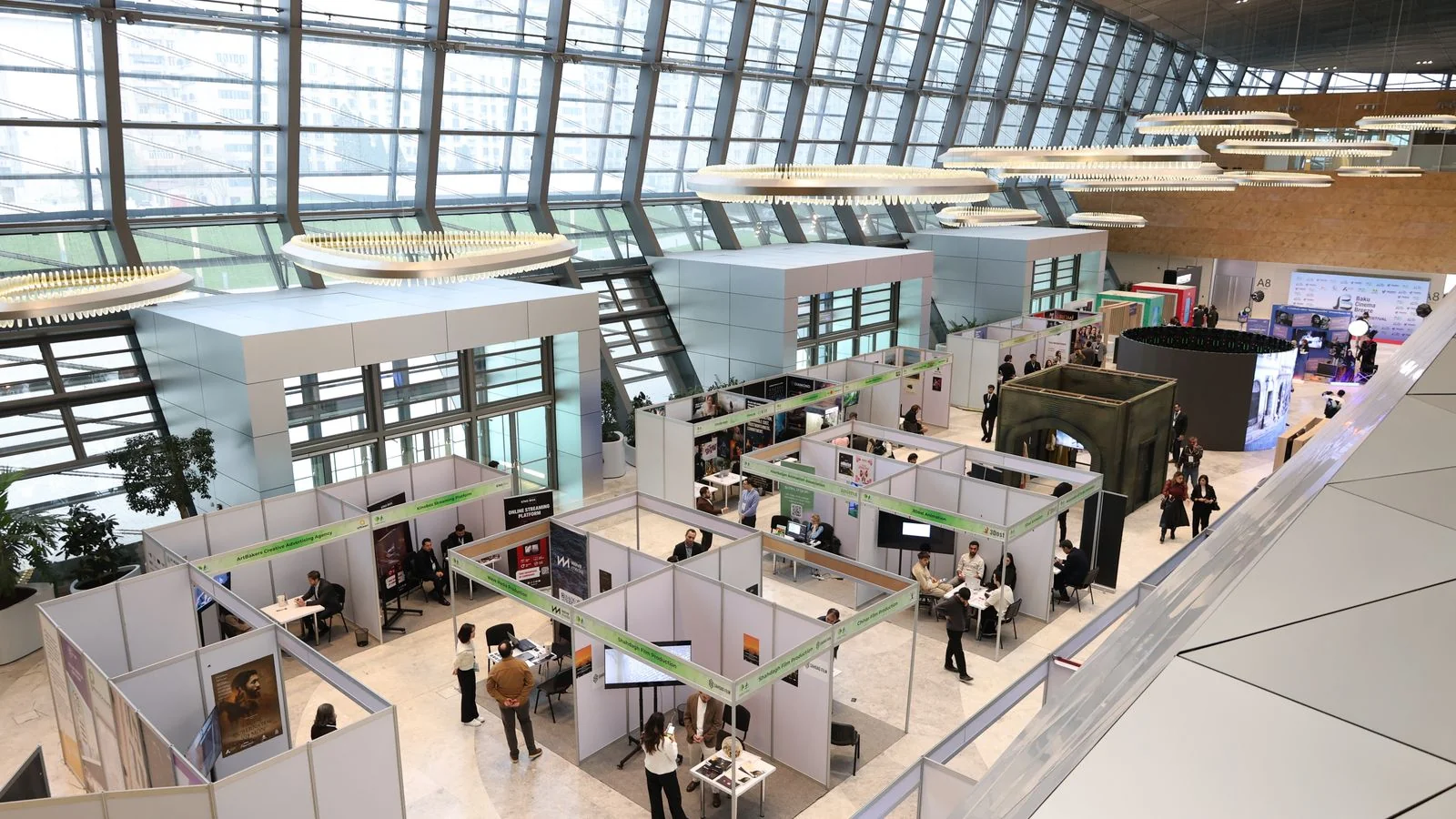
It is the second week of December. The booth graphics are at the printer, the demo unit finally boots without crashing, and someone in the Monday meeting asks the question nobody planned for: who is writing the press release? You have a product, a hall, a booth number and about three weeks. You also have the same problem as every other exhibitor in the building. CES alone recorded 7,037 media attendees at its 2026 edition, according to the show’s own media page, and every one of them walked in with an inbox already full of booth announcements.
Here is the working plan for that moment: a test for picking the angle, six angles that hold up at big shows, what CES, NAB Show and IFA give exhibitors, a fill-in template, and a calendar built around how long placements take.
Why most trade show press releases never get read

The reporters are not the problem. Cision’s 2026 State of the Media Report, which surveyed 1,899 journalists across 19 markets in January and February 2026, found that 66% rely on PR-supplied content such as press releases and pitches for story ideas, while 72% say fewer than a quarter of the pitches they receive are relevant. Journalists want your material. Most of what arrives is aimed at the wrong person or says nothing new.
Cision’s 2025 report (more than 3,000 journalists) was sharper: 86% said they would reject a pitch outright if it did not match their beat or audience, and 72% named press releases as the single most useful resource a PR team can offer. The release is not dead. The generic release is.
At a trade show the generic release announces that a company “will exhibit,” lists three features, quotes the CEO being “excited,” and closes with a booth number. Swap in the name of the company in the next booth and nothing changes. That release gets deleted by noon. Cision’s 2026 report also found 49% of journalists named shrinking budgets and heavier workloads as their biggest obstacle, up from 29% a year earlier. Nobody is digging through your release to find the story.
The BOOTH Test for picking your angle
Before anyone opens a document, score each candidate announcement on five questions. I call it the BOOTH Test, and it forces the step most show releases skip: deciding whether there is a story at all. Each letter is worth zero, one or two points, for a maximum of ten.
B is for Buyer consequence. Does someone who buys in this category have to change a decision because of this news? A new price tier, a spec that beats the category leader, or availability in a new market scores two. A new color scores zero.
O is for Only here. Is the news tied to the show, so that announcing it on a random Tuesday in March would lose something? A first public demo, a reveal at CES Unveiled or a partner signing on the floor scores two. A product that shipped in September scores zero.
O is for On-record proof. Is there a number, a named customer, a test result or an independent source a reporter can cite without calling you first? Cision’s 2026 report lists original research and credible data among the inputs journalists value most, and 42% said they are looking for verified subject matter experts. Proof plus a named expert scores two.
T is for Touchable. Can a reporter see it, hold it, try it or watch it work at the booth? Trade shows are the one time a year when the product and the press are in the same building. A hands-on demo with a booked time slot scores two. A slide scores zero.
H is for Hook to a beat. Can you name three specific reporters, by beat, who would care? If the answer is “tech press,” you score zero. If the answer is “the smart home writer at a named outlet, a broadcast trade reporter and the automotive desk at a regional business paper,” you score two.
Eight to ten points earns a wire release, a media list pitch and paid placements. Five to seven belongs in the show daily, your own newsroom and a short pitch to two or three beat reporters. Below five, it is a social post, and that is fine. Run the test across every idea on the whiteboard, build the trade show press release around the highest scorer, and fold the rest into the follow-up.
Angles 1 and 2: the floor-only launch and the data drop
Angle 1, the floor-only launch. This is the default angle and the most crowded, so it has to be specific: the product, the one capability new to the category, the price, the ship date, and the fact that the show is the first place anyone can touch it. “Acme unveils X” is weak. “Acme’s X is the first under-$300 robot vacuum to map stairs, shown publicly for the first time at CES 2027” gives a reporter the comparison, the price and the reason to walk to your hall. If you do not have a price or a ship date yet, say when you will, because “pricing to be announced” reads as “not ready.”
The launch scores well on Only here and Touchable by default and loses points on On-record proof. Add one claim you can defend (battery life under a stated test, a benchmark against a named predecessor) and the score jumps.
Angle 2, the data drop. This is the most underused angle at trade shows and the one with the best odds. Reporters covering a show need context pieces as much as product pieces, and a short survey or usage analysis timed to the show hands them that context with a source attached.
The data does not have to be large. A survey of your own customers, anonymized usage from your platform, or a count of something nobody else counts all work if the method is stated in one plain sentence. Lead with the most surprising finding, add two supporting numbers, and only then mention the booth. Reporters can quote the finding in a trend story without writing about your booth at all, and the booth gets the visit later.
Angles 3 and 4: the customer on record and the hands-on demo
Angle 3, the customer or partner on record. A named customer saying what changed for them beats any adjective your marketing team can produce, and at a show the customer is often in the building. A deployment, distribution deal or joint product, with a quote from the other company and an offer to interview both sides at the booth, gives a reporter two sources and a scene.
Get written approval for the quote and the name before anything goes out, and make the quote specific (a number, a before and after, a reason they switched). “We are thrilled to partner with Acme” is filler from both sides. “We cut fleet charging time by a third in the pilot” is a sentence a reporter can use.
Angle 4, the hands-on demo invitation. Some news is only news if you see it. For hardware, displays, audio and anything that moves, the release works as an invitation with real logistics: demo schedule, booking link, hall and booth, and the mobile number of the person who will meet the reporter. CES lets exhibitors list booth demos on CES.tech and the show app under “Exhibitor Scheduled Events” and offers media briefing rooms in the LVCC and the Venetian on January 6 and 7, first come, first served. NAB Show offers a complimentary, fully equipped Press Briefing Room that it promotes to attending media.
This angle scores a two on Touchable by design, so spend your effort on Buyer consequence. “See our new lineup” is not a reason to come. “Watch the camera hold focus on a subject at 120 frames per second in the dark booth we built for this test” is.
Angles 5 and 6: the stage moment and the human story
Angle 5, the stage moment. A keynote slot, a panel seat, an innovation award or a spot on an official show floor tour is borrowed credibility. The organizers picked you, and the release can say so. CES runs official show floor tours where an exhibitor can be a featured stop for curated groups of buyers, media and analysts, and IFA gives selected exhibitors press conference slots during its Media Days.
The trap is announcing the honor and nothing else. If your CTO is speaking, state the argument she will make and one piece of evidence behind it. If you won an award, say what the judges tested and what your product did that the others did not.
Angle 6, the human or local story. Regional business papers, local TV stations and university outlets cover the hometown company that made it to Las Vegas or Berlin. That story is about people: the founder who built the prototype two miles from the newsroom, the startup that hired in a city that lost a plant, the student team whose capstone is now on the show floor.
This angle scores low on Only here and high on Hook to a beat, which is the right trade. Those reporters are not competing with 7,000 others for the same booth tour. Send this version of your trade show press release to the business desk and the TV assignment editor in your home market, not to the national tech list.
What CES, NAB and IFA actually give exhibitors
Every major show runs a press program for exhibitors, and most companies use a fraction of it. The details below come from the shows’ own exhibitor pages as of October 2026. Deadlines move, so confirm them in your exhibitor portal.
CES. The CES exhibitor PR page says CES 2027 media list information will be in the Exhibitor Dashboard as of December 1. The list holds media who opted in, and the guidance is blunt: research each journalist, filter by category, write short personal emails, and never blast the whole list. PR Newswire is the official wire, and releases sent through it post automatically to the CES Exhibitor Media Center, the virtual press office attending media browse. An exhibitor B-roll upload for journalists is listed as coming in December 2026, and the Official CES Daily considers editorial coverage only from submitted press releases. For dates, CES 2027 runs January 6 to 9 in Las Vegas, with Media Days on January 4 and 5 and CES Unveiled Las Vegas on January 4.
Booth numbers at CES. CES booth numbers encode the hall. In the 2026 LVCC welcome letter, West Hall booths ran from 3000 to 7650, North Hall from 8000 to 11199, Central Hall from 14000 to 22250 and South Hall from 30000 to 36629. Use the full convention the show uses, as Shiftall did in its CES 2026 release: “LVCC, Central Hall Booth #14654.” A reporter planning a route through four halls reads the hall first.
NAB Show. Exhibitors can download the media list from the Exhibitor Dashboard via “Download the Media List & Connect.” Releases posted to the Exhibitor Directory are browsed by media partners, though NAB notes you need at least a Silver directory listing upgrade to draw that interest. The NAB Show Daily, published by Future plc on the Sunday through Tuesday mornings of the show, takes exhibitor news submissions, asks that embargoed news be marked clearly and prominently, and does not guarantee coverage. For the April 2026 show the submission deadline was noon Pacific on Friday, April 17.
IFA Berlin. IFA’s press program centers on Media Days before the doors open (in 2025, September 3 and 4 ahead of the September 5 to 9 show), with press conferences from selected exhibitors. The press office contact is press@ifa-management.com. ShowStoppers was named to produce official IFA press events for 2026 through 2028, which gives exhibitors outside the press conference lineup a paid route to the same reporters.
The trade show press release template
Use this as a skeleton, not a script. Replace every bracket with something a reporter can verify, and if you cannot fill one, cut the line.
FOR IMMEDIATE RELEASE
[or: EMBARGOED UNTIL 6:00 a.m. PT, Tuesday, January 5, 2027]

HEADLINE (under 100 characters):
[Company] [verb: unveils / reports / signs] [specific news + the one
number that matters]

SUBHEAD:
[Second fact that supports the headline]. See it at [Show], [Venue],
[Hall], Booth #[number], [show dates].

DATELINE: [CITY, State or Country], [Month Day, Year] --

LEAD (one or two sentences):
Who did what, the single most important number, and why a buyer in
this category should care. No "excited to announce."

PROOF PARAGRAPH:
The test result, survey finding or customer outcome, with the method
in one plain sentence (sample size, date, who ran it).

QUOTE 1 (your executive):
One opinion or prediction a reporter cannot get elsewhere. Not a
restatement of the lead.

QUOTE 2 (customer, partner or analyst, optional):
A specific before and after, approved in writing.

AT THE SHOW:
Demo times, briefing room bookings, who is available for interviews,
and how to book (link plus a named contact with mobile number).

AVAILABILITY AND PRICING:
Price, regions, ship date. If not set, say when it will be announced.

MEDIA ASSETS:
Link to a press kit folder with high-resolution product images,
headshots, a 30 to 60 second B-roll clip and a one-page spec sheet.

ABOUT [COMPANY]:
Three sentences. What you make, for whom, and one proof point
(customers, years, footprint). Website.

MEDIA CONTACT:
[Name], [Title], [email], [mobile, reachable on the show floor]

###
The embargo line only means something if the reporter agreed to it before you sent the release. KQED science reporter Danielle Venton told pr.co that “if the journalist does not agree to the embargo before receiving the material, there simply is no embargo.” Always give the lift time with a time zone, because a show in Las Vegas with reporters from Seoul, Berlin and New York turns “Tuesday at 6” into four different moments.
The media assets line matters more than its length suggests. Cision’s 2025 report noted that press releases have more impact when paired with multimedia, and show reporters file from hotel rooms at 11 p.m. A folder of usable images is the difference between a mention and a mention with your product photo above it. The mobile number matters too, because show floor Wi-Fi fails and reporters text.
The timing calendar: 30 days out to 48 hours after
Standard wire advice says avoid Mondays and Fridays, send early, and pick an off-the-hour time. GlobeNewswire’s editorial team, writing for Notified, suggests something like 8:17 a.m. instead of 8:00 a.m. to avoid colliding with releases scheduled on the hour. That part holds at a show. The weekday rule does not. CES 2027 Media Days fall on Monday, January 4 and Tuesday, January 5, and when the reporters are all in one city on a Monday, you send on Monday.
The harder part is that coverage does not appear the moment you send, and this is where our own data helps. At Instant Press, standard placements across our catalog of 1,016 publications go live in one to three days, top-tier outlets take one to four weeks, and Fast Press publishes instantly to about 144 outlets for $49. Those lead times dictate the calendar more than any rule about Tuesdays.
Thirty days out. Lock the angle with the BOOTH Test, write the release, and book any top-tier placement now. At one to four weeks of lead time, a top-tier slot booked in the second week of December can still miss a January 4 media day. For CES 2027 the media list lands December 1, so start researching names and beats instead of building a mail merge.
Ten to seven days out. Send personal pitches to the 20 to 30 reporters who scored a two on Hook to a beat, each with an offer of an embargoed copy and a booth slot. Only send the embargoed release to the ones who say yes. Submit to the show daily before its deadline and list your booth events in the show’s scheduling tool.
Five to three days out. Book standard placements. With a one to three day turnaround they go live before the doors open, so a reporter who searches your company name on the plane finds published coverage, not just your website. Across our catalog, 96% of publications are Google-indexed and the mean Domain Authority is 62.3, which is why those pages tend to surface in that search.
Show day or media day morning. Send the wire release at an off-the-hour time in the show’s local time zone (6:17 a.m. Pacific works for CES). If anything changes on the floor, such as a new partner who signs at the booth, a Fast Press placement can publish the same day without waiting for the next news cycle.
Within 48 hours after. Send a recap release with what actually happened: demo counts, orders or letters of intent if you can disclose them, awards won and the best quote from a reporter or buyer who visited (with permission). Reporters writing “best of show” roundups the following week use these, and so do your search results for the next year.
More PR playbooks like this one live on the Instant Press blog.
Pick the story with the highest score, attach proof a reporter can use without calling you, put the booth number where a route planner will see it, and work backward from how long coverage takes to publish. So before you open the template: which of the ideas on your whiteboard would score an eight on the BOOTH Test, and which one have you been planning to send just because the show is coming?