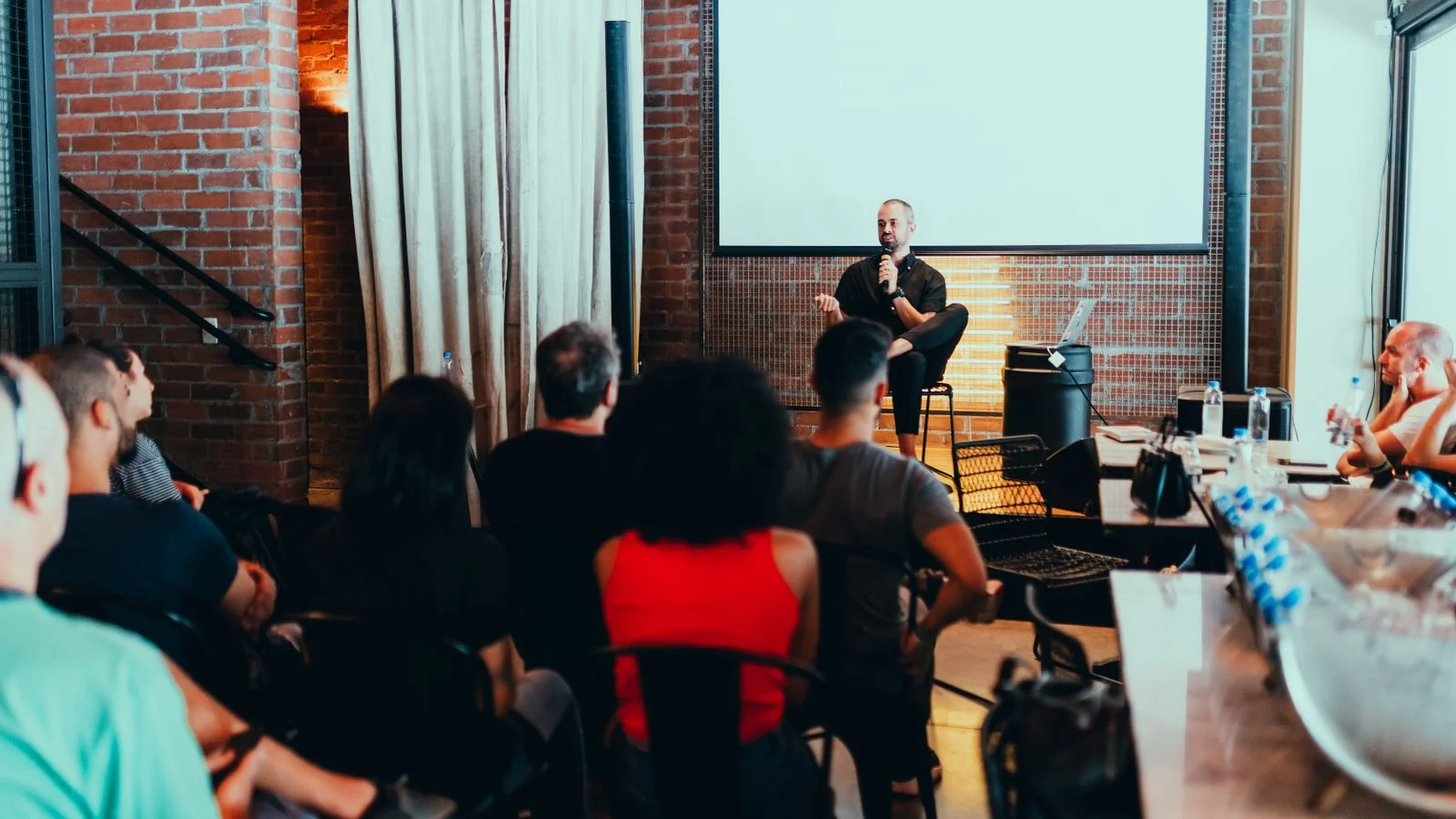
A speaking engagement is not news. What you say on stage might be.
That distinction is why most speaking engagement press releases go nowhere. They announce that a CEO will appear on a panel on a certain date, which is a calendar entry, not a story. Editors read it, see nothing a reader would care about, and move on. The releases that earn coverage do something different: they treat the talk as a delivery vehicle for a finding, a prediction, or a position worth reporting.
This guide gives you a template that works, a timing plan we call the 3-Window Release Plan, and the headline and distribution choices that decide whether anyone reads it.
When a speaking gig deserves a release
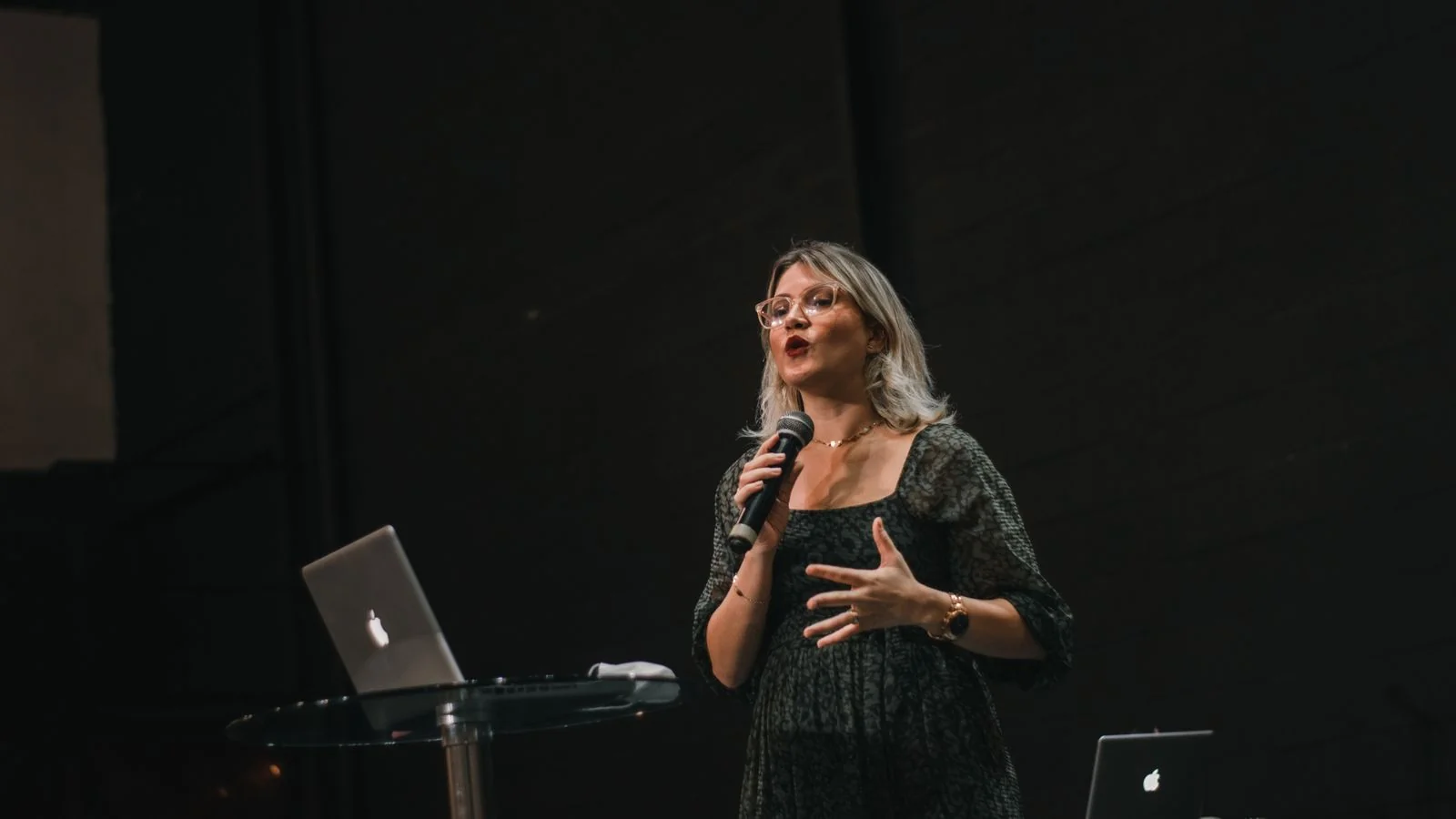
Not every talk earns a speaking engagement press release. Before you write one, check the gig against four questions.
Is the event itself known to your audience’s press? A keynote at CES, SXSW, Collision, or a major trade association’s annual meeting carries weight on its own. A breakout room at a regional meetup does not.
Will you say something new? A talk that debuts survey results, announces a product, or takes a public stand on an industry debate gives editors a reason to cover it. A talk that repeats your standard pitch deck does not.
Are you on stage with people journalists already cover? Sharing a panel with a regulator, a well-known founder, or a major brand’s executive can make your release relevant to their beat as well as yours.
Does your local market care? Hometown and regional business outlets often cover local executives speaking at national events. “Phoenix founder to keynote national fintech summit” is a story a local business journal may run when a national trade outlet would not.
If you can answer yes to two of the four, write the release. Three or four yeses means it is worth paying for wider distribution too, because the story has more than one audience. If not, publish a short post on LinkedIn and your site’s news page, and save the press release for a bigger moment.
The 3-Window Release Plan
Most people send one release, usually the week of the event, and it lands at the worst possible time. Editors covering the event are already flooded, and everyone else has no reason to care yet.
The 3-Window Release Plan spreads the work across three moments, each with a different job.
Window one is the announcement, three to four weeks out. Its job is to get you into event previews, trade calendars, and local business briefs. It should name the event, the session, the date, and one sentence that hints at what you will say. Trade editors building “who to see” lists use these.
Window two is the recap, within 48 hours after the talk. This is the release most speakers skip, and it is often the one that gets covered. Its job is to report the news you made on stage: the data you shared, the prediction you made, the announcement. Lead with that, not with the fact that you spoke. Include one strong quote from the talk itself.
Window three is the asset, one to three weeks later. Its job is to give the talk a second life. When the recording, slides, or a written version goes up, announce it with a short release or a media advisory pitched to podcasters, newsletter writers, and editors who missed the event. A link to a clean video clip of your best two minutes is worth more than the whole recording.
Each window can be small. Window one might go only to trade outlets and the organizer. Window three might be a pitch email rather than a wire release. The point is to plan three moments of news, not one.
Copy this template
Here is a template for the window one announcement. Replace everything in brackets, and cut any line that does not apply.
FOR IMMEDIATE RELEASE

[Name], [Title] of [Company], to [Deliver Keynote / Speak] at [Event] on [Topic Hook]

[Session focuses on / Talk will reveal] [the one newsworthy thing]

[CITY, State], [Date] / [Name], [title] of [Company], will [deliver the keynote / speak on a panel titled "Session Title"] at [Event Name] on [Day, Month Date, Year] at [Time, Time Zone] in [Venue, City]. [Event Name] brings together [number] [audience type] from [industries or regions].

In the session, [Name] will [share / present / argue] [specific finding, data point, or position]. [One sentence on why it matters to the audience now.]

"[Quote from the speaker that states a clear view, in plain language, two sentences at most]," said [Name]. "[Optional second sentence with a specific detail or number.]"

[Name] has [one-sentence credential: years in field, notable result, prior roles or recognitions].

[Optional: Co-panelists include [Name, Title, Company] and [Name, Title, Company].]

Attendees can find the session at [link to agenda]. [If recorded:] The session will be available to watch at [link] after the event.

About [Company]
[Two to three sentence boilerplate.]

Media Contact
[Name]
[Email]
[Phone]
###
For the window two recap, keep the same structure but flip the lead. The headline becomes the news, such as “[Company] CEO Tells [Event] Audience [X]% of Buyers Now Start Research in AI Assistants,” and the first paragraph reports what was said, not that it will be said. Move the event details down to the second or third paragraph.
To see the template filled in, here is a short example for a fictional company. Treat every name and number in it as made up for illustration.
Headline: “Lakeline Fleet Tech CEO Dana Wells to Share New Data on Driver Turnover at Midwest Logistics Summit.” Subhead: “Keynote will reveal results from a survey of 1,200 regional truck drivers.” First paragraph: “CHICAGO, IL, March 3, 2027 / Dana Wells, CEO of Lakeline Fleet Tech, will deliver the opening keynote at the Midwest Logistics Summit on April 8, 2027, at 9:00 a.m. CT at McCormick Place. The summit brings together 3,000 shippers, carriers, and logistics leaders from across the region.” Second paragraph: “In the session, Wells will present findings from the company’s survey of 1,200 regional drivers on why they leave carriers within their first year, and what the carriers with the lowest turnover do differently.” Quote: “Most carriers think drivers leave over pay. Our data says the first 30 days matter more than the first raise,” said Wells.
Notice what that example does. The news, the survey, is in the subhead and the second paragraph. The quote takes a position a trade editor could build a story around. And every logistics detail an editor needs is in the first paragraph, so nobody has to email to ask.
Keep the full release under 400 words. Editors skim, and a long speaking engagement press release signals that you could not decide what mattered.
Write a headline an editor will run
The headline decides whether anyone opens the release, so it deserves more time than the body.
Weak speaker headlines follow one pattern: “[Name] to Speak at [Event].” It tells the editor who and where, but not why. Strong ones add the hook.
Compare “Jane Ortiz to Speak at RetailNext Summit” with “Jane Ortiz to Share New Data on Gen Z Return Rates at RetailNext Summit.” The second gives a trade editor a reason to care and a story to write. If you have a number, use it. If you have a strong position, state it: “Logistics CEO to Argue Same-Day Delivery Is Losing Money for Most Retailers.”
Keep headlines under about 100 characters for wire services and email subject lines. Put the speaker’s name and company early, because local and trade editors scan for names they know. Avoid hype words like “renowned,” “visionary,” and “thought leader.” Editors cut them, and readers distrust them. Let the hook carry the weight instead.
Your subhead does the supporting work. Use it for the date, the venue, or the second most interesting fact. Never repeat the headline in different words.
Distribute where event coverage lives
A speaker release does not need the same distribution as a funding announcement. Match the channel to the window.
For window one, send it to the event organizer first. Many organizers publish speaker news on their own site and share it with registered media. Then send it to trade publications that cover the event’s industry, to local business journals and outlets in your headquarters city, and to your alumni and association newsletters. A paid wire release can help if you want the story indexed widely, but trade and local outreach usually does more.
For window two, pitch the recap directly to reporters who covered or attended the event. Many events publish a press list or a press room. A short email with the finding and an offer of an interview can turn into a quote in their event roundup.
For window three, pitch podcasts, newsletters, and LinkedIn creators in your field. They care less about timeliness and more about a strong idea and a clean clip.
After every window, publish the release on your own newsroom page and share it on LinkedIn. Owned copies build the trail that Google and AI assistants use when someone researches you. Over time, a steady record of talks and recaps becomes part of the authority signal behind your name, the same signal our clients build with earned placements.
Mistakes that sink speaker releases
A few errors show up again and again.
Burying the news is the first. If the data or announcement sits in paragraph four, editors will never reach it. Lead with the most interesting thing you will say.
Skipping organizer approval is the second. Using an event’s name or logo without permission can strain a relationship you need for next year’s invitation.
Sending only one release is the third. The recap is often the more newsworthy release, and most speakers never send it.
Generic quotes are the fourth, and they are everywhere. “We’re thrilled to be part of this important conversation” says nothing. A quote should sound like something a person would say on stage, and it should carry a view.
Wrong timing is the fifth. A release sent the morning of the event competes with every other speaker’s release and the event’s own news. Window one belongs weeks ahead, and window two belongs after the talk, when the noise has passed and editors are writing roundups.
Missing assets are the sixth. An editor who wants to run your story needs a headshot, a bio, and a contact today, not after two emails.
Your next talk is already on a calendar somewhere. Which of the three windows are you going to use for it, and what will you say on stage that an editor would want to report?