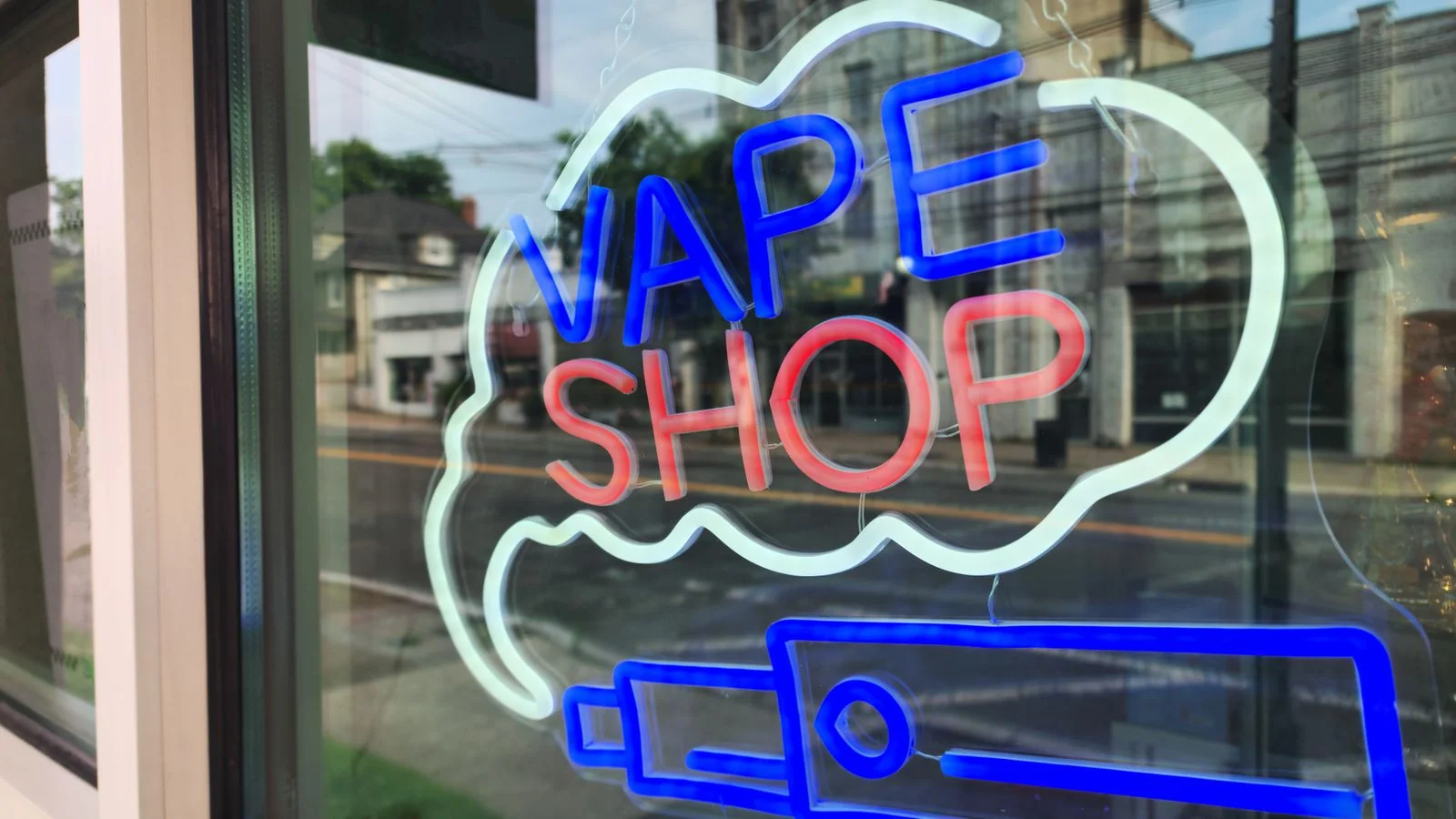
You have something to announce. A second location, a new line, a remodel, five years in business. You write it up, you find a distribution service, and the submission gets refused. Or it goes out, and nothing happens at all: no pickup, no calls, no traffic.
That has happened to most independent vape retailers who have ever tried, and the conclusion nearly all of them reach is that press is closed to the category.
It is not closed. It is filtered, and the filter is specific enough that you can write to it once you know what it is screening for. The mistake is writing the release you want to write instead of the release the system will pass.
The release you want to write is the one that gets rejected

Vaping products are regulated as tobacco products under the FDA’s 2016 deeming rule, which put electronic nicotine delivery systems under the same framework as cigarettes. Everything downstream of that fact shapes what you can publish.
Distribution services maintain restricted-category policies covering tobacco and nicotine. Advertising platforms prohibit the category outright. Mainstream newsrooms carry an editorial wariness built up over years of youth-vaping coverage. None of that is aimed at you personally, and all of it is standing between your announcement and a reader.
What gets through the filter is the same thing that gets through in cannabis, alcohol and firearms retail: business news that happens to involve a regulated product, rather than news about the product.
So the reframe is simple and uncomfortable. Nobody outside your customer base cares that you have a new flavor. A surprising number of people care what a state tax change does to a small retailer’s payroll, and a press release for vape shops built on the second thing gets distributed and covered.
Why this is a policy beat, not a product beat
Look at where vape retail actually appears in the press and a pattern emerges. It shows up in stories about legislation, enforcement, taxation, youth access, shipping rules and store closures. It almost never appears in product coverage, because product coverage would look like advertising for a restricted category.
The regulatory surface is large, which is good news for anyone looking for news hooks. The PACT Act amendments that took effect in 2021 extended reporting and shipping restrictions to vaping products and effectively ended USPS delivery of them, which reshaped how small retailers get inventory. The premarket authorization process has left most products on the market in an unresolved status. States and cities continue to pass flavor restrictions, licensing regimes and excise taxes on different schedules.
Every one of those is a story that needs a retailer to explain the practical consequence, and reporters covering them routinely end up quoting public health organizations and industry trade groups because no actual shop owner made themselves available.
That vacancy is the opportunity. You are not competing with other vape shops for coverage. You are competing with silence.
Six angles that clear the filters

The first angle is tax and pricing impact. When a state or city adds or raises an excise tax on vapor products, somebody has to explain what it means at the register. You know what it added to a typical basket, what it did to your volume, and whether customers shifted to cigarettes or to online sellers. Local business desks run this story every time.
The second angle is age verification and compliance. This is the strongest angle available to an independent retailer and the least used. Publish your own verification protocol, your staff training, your ID check rate, or the result of an independent secret-shopper audit you commissioned. A retailer voluntarily raising the standard is a story that surprises editors, because the expectation runs the other way.
The third angle is enforcement and the unregulated market. Licensed shops pay fees, collect taxes, check IDs and follow flavor rules while unlicensed sellers and offshore online operations do none of it. You are the compliant party being undercut, which is a legitimate and specific grievance with numbers attached.
The fourth angle is shipping and supply chain. The practical consequences of PACT Act restrictions for a small retailer, what freight now costs you, how lead times changed, what happens when a supplier exits. This reads as a logistics story rather than a vaping story, which is exactly why it clears filters.
The fifth angle is employment and local economics. Headcount, wages, what a closure would mean for a neighborhood, what a licensing change costs in compliance hours. Business journals cover small-employer stories constantly.
The sixth angle is store operations and community, but only the specific version. Not that you support the community. That you stopped selling a product category before you were required to, or changed your hours after a police request, or hired somebody in recovery. Specific, dated, verifiable.
None of these six mention flavor, nicotine or the experience of using the product. That is the point.
The words that get you rejected
Run your draft against this list before you submit anything.
Delete every flavor name. Delete every reference to nicotine strength, milligrams or salt versus freebase. Delete any comparison to smoking, including the implication that your product is an alternative to it, because that is a modified-risk claim and the FDA regulates those specifically. Delete anything about how the product feels, tastes or performs. Delete youth-adjacent language of any kind, including words like fun, cool, sweet or candy, regardless of context.
Then remove the softeners people reach for when they know they are on thin ice. Harm reduction. Smoke-free. Cleaner. Safer. Those are the phrases that turn a routine business announcement into a regulatory problem.
What is left should be facts about your business as a business: locations, headcount, dates, dollar figures, compliance measures, partnerships, regulatory changes. If nothing is left, you did not have news, and no wording would have saved it.
Structure, line by line
Headline. Under eighty characters, business fact only, company name first. “Cedar Street Vapor Adds Third-Party Age Verification Audits Across Four Stores” passes. “Cedar Street Vapor Launches Exciting New Flavor Lineup” does not.
Dateline and lead paragraph. City, date, then one sentence containing who, what and when. An editor should be able to decide from this sentence alone.
Second paragraph, the context. The regulatory or market development that makes this matter, stated neutrally with dates and jurisdictions. This paragraph is what converts a small-business announcement into a story with a peg.
Third paragraph, one quote from a named person. Keep it on the business decision. A quote explaining why you commissioned compliance audits is publishable. A quote about serving adult consumers who deserve choices is advocacy and will be read that way.
Fourth paragraph, specifics. Numbers, dates, partner names, the audit firm, the tax rate, the headcount. Reporters mine this paragraph, and its absence is the most common reason a release dies.
Boilerplate. Founding year, locations, employee count, what kind of retailer you are, stated factually. No mission language.
Contact. A real name, direct email, phone number answered by a human.
Four hundred to five hundred words total.
Where to send it
Start with trade publications, which understand the category and will engage. Tobacco Reporter and Vapor Voice cover the industry directly, and convenience retail outlets like CStore Decisions cover the retail operations side, since a large share of category volume runs through convenience stores.
Then local business media. Your metro business journal cares about employers, taxes and storefronts, and covers regulated industries without the editorial anxiety a general news desk brings.
Local news desks come third and only on the compliance, enforcement or tax angles. Lead with the angle, not with your business.
Wire distribution is worth buying for documentation rather than for pickup. Check the service’s restricted-category policy first, because paying for a submission that gets refused is the most common wasted dollar in this category.
What one piece of coverage is worth here
More than in almost any other retail category, for a reason that has nothing to do with customers reading the article.
Vape retailers operate in a permanent credibility deficit with landlords, banks, payment processors, insurers and local officials. Every one of those relationships involves somebody searching your business name and deciding whether you look like a serious operator or a liability. A trade publication piece about your compliance program changes that search result.
The same applies to AI assistants, which assemble their picture of a business from whatever independent sources exist. In this category almost nothing credible gets published, so a single factual trade piece naming your shop carries weight it would never carry for a coffee chain with a thousand mentions.
That is the real return. Not foot traffic from a news story, but the accumulated record that makes the next lease, the next processor application and the next licensing hearing go easier than the last one.