The short answer is that you write it about anything except the beer.
That sounds wrong to a brewer, because the beer is the work and the beer is what you are proud of. But a newsroom does not have a beer section. It has a business desk, a city desk and a features desk, and none of them can justify a story whose entire content is that a brewery has made another beer. Breweries make beer. That is not a development.
What a newsroom does have is appetite for a small manufacturer with real numbers, a neighbourhood story, a jobs story, a supply chain story, and a founder worth a profile. Every brewery has all five and most of them only ever send the sixth thing, which is the seasonal release announcement, over and over, until the reporter stops opening their email.
The news is rarely the beer
Here is the filter worth adopting. Call it the Taproom News Rule: if the story still works with the beer removed, it is news. If removing the beer leaves nothing, it is marketing.
Test it. A brewery opens a second taproom in a neighbourhood that has been losing retail for a decade, spends four hundred thousand dollars on the fit-out and hires eleven people. Remove the beer and you still have a story about a business investing in a struggling commercial strip. That runs.
A brewery releases a hazy IPA with a new hop from New Zealand. Remove the beer and there is nothing left. That does not run, and sending it costs you a little of the attention you will need later.
The rule is useful because it is fast and because it is honest about the asymmetry. You care enormously about the beer. The reporter cares about whether their editor will accept the pitch. Those are different questions and only one of them determines whether you get covered.
None of this means the beer never appears. It means the beer is the detail inside a story about something else. The brewery that spent four hundred thousand dollars is also the brewery whose flagship pale ale funded it, and that sentence belongs in paragraph four, where it will actually survive the edit.
Five angles that get run
The first is expansion and capital. A new facility, new tanks, a canning line, a taproom, a distribution deal, a barrel programme. Include the dollar figure, the square footage, the capacity change in barrels per year and the job count. Business journals run this category more reliably than any other because it is verifiable and locally consequential. A brewery going from three thousand barrels to eight thousand is a manufacturing story whether or not the product is beer.
The second is the input squeeze. Malt, hops, aluminium, CO2, freight, energy. Brewers sit downstream of several volatile commodity markets and upstream of a price-sensitive consumer, and that position makes you a useful source. If you can say what a pallet of cans cost in 2023 and what it costs now, and what you did rather than raise the pint price, a business editor has a story with a human end and a number at the front.
The third is the neighbourhood angle. Breweries anchor commercial districts. Taprooms bring foot traffic to blocks that had none. If you took a vacant building, if you are part of a rezoning, if your patio changed how a street works in the evening, that is a city desk story about urban economics that happens to involve beer.
The fourth is competition and credential. A medal at the Great American Beer Festival or the World Beer Cup produces coverage, and more usefully it produces a permanent, third-party, searchable statement that your brewery makes award-winning beer. That statement outlives the news cycle by years and gets repeated by systems that summarise your city’s breweries. Write the release even though the results will be published anyway, because your version is the one with your numbers and your quote in it.
The fifth is the people story. A head brewer with an unusual path in, a hiring practice worth describing, a training pipeline, a founder who is genuinely interesting for reasons unrelated to brewing. Features desks will take these when the person carries the story, and they produce the longest and most durable coverage of the five.
What does not run: a new beer, a can redesign, an anniversary, a tap takeover, a live band on Saturday, a collaboration brew with another brewery. These matter to your customers, which is what your own channels are for.
There is one exception worth knowing, and it is the reason brewers get confused about the rule. A beer becomes news when the beer is the vehicle for something else. A release brewed with a named local farm’s barley in a year that farm had a disaster. A beer made to fund something specific, with the amount raised published afterwards. A collaboration with an institution rather than another brewery, such as a university agriculture programme or a botanical garden. In each case the beer is present, but the story survives the Taproom News Rule because something outside the glass is doing the work.
The other category brewers over-pitch is the anniversary, and it deserves a specific note because it feels significant from the inside. Ten years in business is genuinely hard and genuinely worth celebrating. It is also not a development, because nothing changed. If you want an anniversary covered, attach a number to it that a business desk can use: total barrels produced over the decade, total paid in state excise tax, how many people have worked there, what the original loan was and when it was repaid. Turn the anniversary into a data story and it becomes reportable. Leave it as a milestone and it stays in your newsletter.
The template

One page. Never two.
The headline states the news, names the brewery and carries the number. “Fallow Field Brewing opens second taproom in Eastside, adds 11 jobs” tells a reporter everything needed to decide. Keep it to roughly twelve words, put the number in, and delete the word announces.
The first paragraph carries who, what, where, when and how much, in one or two sentences that a stranger could repeat accurately having read nothing else. No mission statement. No founding story. No adjectives about passion or craft.
The second paragraph gives scale or context: what this changes, what it follows, what it makes possible. This is where the beer can appear.
The third paragraph is the quote, and the quote has to say something. A brewer saying they are thrilled to serve the community will never be printed. A brewer saying the expansion was financed against three years of wholesale growth and that they held the keg price flat through two rounds of malt increases will be printed, because it contains an opinion and a fact.
Then a short block of hard facts under the body: barrels produced last year, barrels of capacity after this change, headcount before and after, year founded, number of accounts, counties or states distributed in, square footage, investment. This section is what lets a reporter finish the story without a follow-up email, and finishing the story today is usually what decides whether it gets written at all.
Then contact: a named person and a mobile number that person answers. Not an info address.
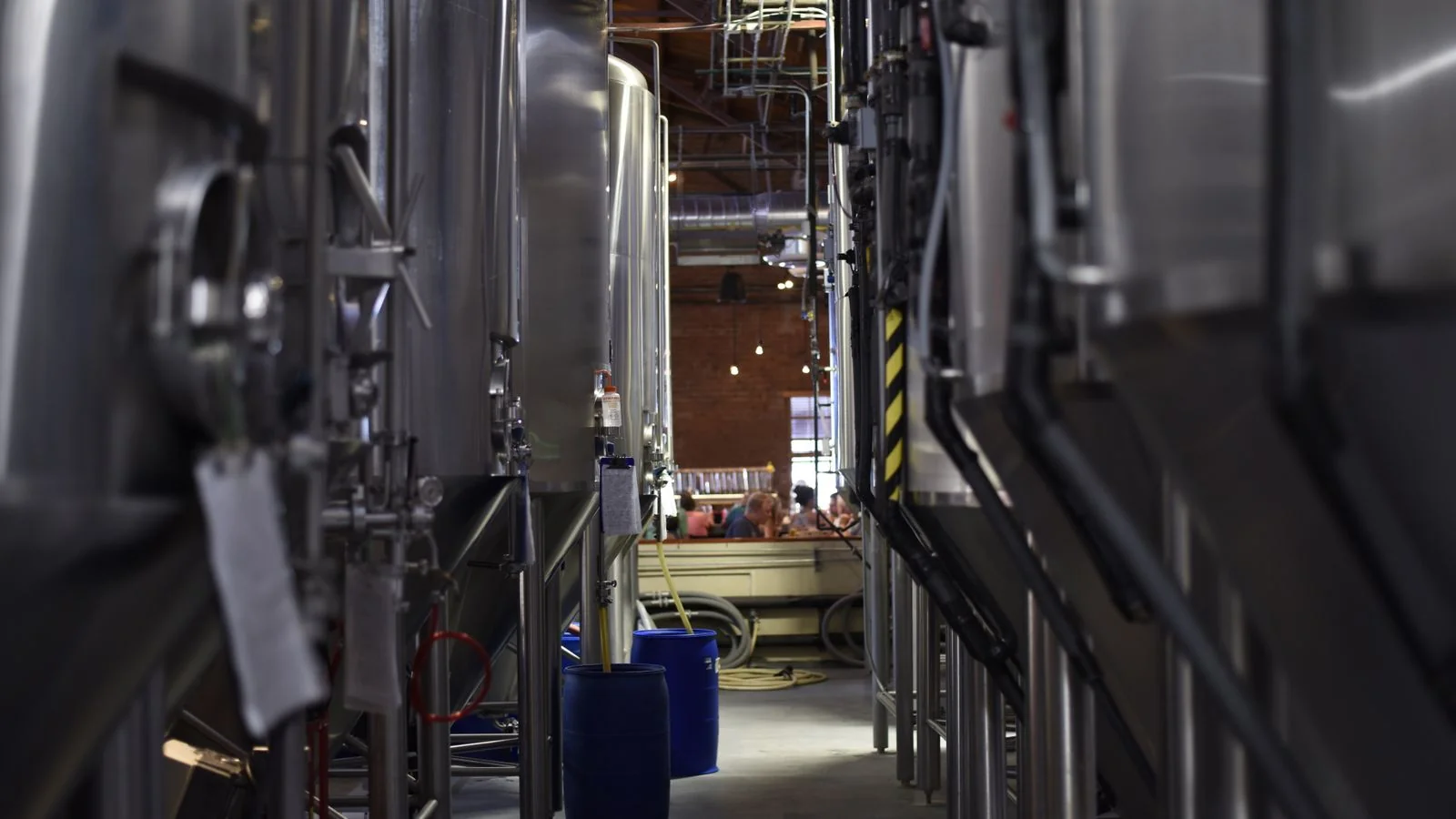
Then images: high resolution, captioned, credited, cleared for use. Tanks, the building, people working, the founder. A release without a usable photograph gets a shorter story than one that arrives with something the picture desk can use immediately.
The whole document should take a reporter ninety seconds to read and should leave them with no unanswered question required to publish.
Where to send it, and when
Build a list of named humans. Your metro business journal’s manufacturing or small business reporter. The daily paper’s food and drink writer. The alt-weekly or city magazine. Local television business segment producers. Two or three beer trade publications. Any podcast or radio show covering local business.
Twenty names, built once, maintained forever. Read something each of them wrote before you email them the first time, and reference it honestly in one line.
Send Tuesday through Thursday, in the morning, unless the news is pinned to a date. Put the headline and the first paragraph directly in the email body and attach the full release as a document. A reporter checking email on a phone will not download an attachment to find out whether an attachment is worth downloading.
Follow up once, after three or four days, with one sentence that adds something rather than repeating the ask. No second follow-up.
Two timing considerations are specific to breweries and worth planning around. The first is that local business desks run heavier coverage of food and drink manufacturing in the weeks before major drinking seasons, which means a capacity or facility story lands better in early autumn than in mid-January. The second is that competition results create a short, crowded window in which every brewery in the country is pitching the same news. If you medal, send within twenty four hours or accept that you are the fortieth email about the same competition, and consider leading with the local angle rather than the medal itself.
One more thing about the relationship, since it outlasts any single release. Reporters remember who wasted their time and who did not. A brewery that sends four releases a year, all of which pass the Taproom News Rule, becomes a brewery whose email gets opened. A brewery that sends eighteen, fourteen of which are about new beers, trains the same reporter to delete on sight, and that training is very hard to undo. Restraint is not modesty here. It is the mechanism that makes the important release work.
One final habit that costs nothing. Keep a running file of the numbers a reporter might ask for, updated quarterly: barrels produced, capacity, headcount, accounts, counties distributed in, year founded, investment to date. When a story breaks that you could reasonably comment on, and something in this industry breaks every few months, you can respond within an hour with real figures while every other brewery is still looking them up. Being first and specific is most of what decides who gets quoted.
So: apply the Taproom News Rule and only send when removing the beer leaves a story standing. Pick from the five angles that editors actually run, which are expansion, input costs, neighbourhood, credentials and people. Write one page with the number in the headline, a quote that says something, and a fact block that lets a reporter finish. Send it to twenty named people on a Tuesday morning. Then use the coverage for the next three years, because a story about your brewery in a publication you do not own is worth more than anything you can publish about yourself.