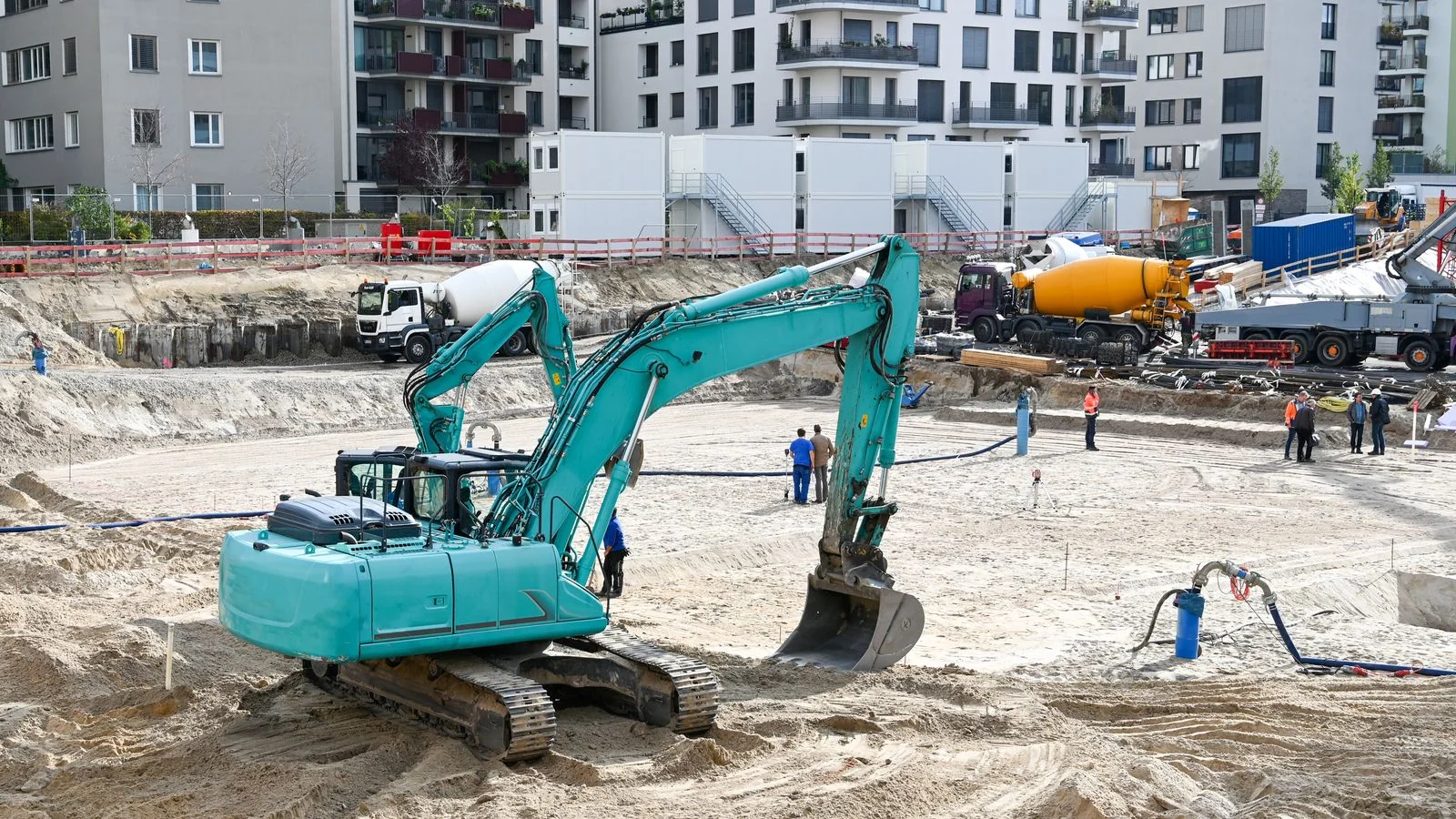
When was the last time a ceremony with gold shovels made the front page? Almost never, and not because local editors hate construction news. They love it. A new hospital wing, a mixed-use block, a manufacturing plant or a school is exactly the kind of story readers care about, because it changes where they work, shop and send their kids. What editors do not love is a groundbreaking press release that buries that story under thank-yous to the board.
A good groundbreaking press release does one job: it tells the community what will exist that did not exist before, when it will open, and why it matters. The ceremony is the occasion, not the news. Everything below, including the template and the filled-in sample, is built around that distinction.
Know what the groundbreaking actually announces
Most groundbreaking events mark a moment that was decided months earlier. Financing closed, permits cleared, a contractor signed on. The ceremony is the first public chance to talk about all of it at once, which is why so many releases try to say everything and end up saying nothing.
Start by listing the facts a reader would want: what is being built, where, how big, at what cost, who is paying, who will build it, how many jobs it creates during construction and after, and when it opens. If the project replaces something, such as a vacant lot, a demolished mall or an old school, say so. Change is the story. A reader who drives past that lot every day wants to know what is coming and when the traffic cones will disappear.
Then decide which one or two facts lead. For a hospital, it is usually the services and capacity: 48 new beds, the county’s first pediatric emergency department. For a factory, it is jobs and wages. For housing, it is units and affordability. The lead fact should be the one that matters to the most people who will read the story, not the one that matters most to the developer’s investors.
The Shovel Test: five rules editors check
We run every groundbreaking press release through what we call the Shovel Test before it goes out. It is five questions, and each one maps to something a local editor or reporter will look for in the first thirty seconds.
The first rule is to name what will exist. The headline and first sentence must say what is being built, in plain words, with a number. “Northside Health breaks ground on $62 million pediatric tower” passes. “Northside Health celebrates milestone” fails.
The second rule is to give the opening date. Readers and editors both want to know when. If the date is a range, give the range: “expected to open in spring 2028.” A release without a date reads as a project that might never finish.
The third rule is to answer why the community cares. One sentence, high in the release, should explain the public benefit: shorter drives to specialty care, 180 permanent jobs, 120 apartments with 30 set aside for households under a stated income limit. If you cannot write that sentence, the project may not be news outside the trade press.
The fourth rule is to keep the quotes few and useful. Two or three quotes at most, each adding something new. A quote from the mayor that only says “this is a great day for our city” can be cut. A quote that says the project is the first new hospital construction in the county in thirty years adds context a reporter can use.
The fifth rule is to make it easy to cover. Include a named contact with a mobile number, links to high-resolution renderings and site photos with captions and credits, and a line offering interviews. Reporters on deadline choose the story that requires the fewest phone calls.
Send the advisory before the release
A groundbreaking usually needs two documents, not one. The media advisory goes out five to seven days before the event. It is short: a headline, then who, what, when, where and why in a few lines each, plus parking instructions, a note about the photo opportunity and a contact number. Its job is to get a photographer or reporter to show up.
Send a reminder the day before, ideally early in the morning, to the same list. Assignment editors build the next day’s schedule in the afternoon, and a reminder that lands before that meeting is far more useful than one that lands after.
The press release itself goes out the morning of the ceremony or right after it ends. That timing matters, because many outlets will not send anyone. A release that arrives with ceremony photos, captions and quotes already in hand lets those outlets run the story anyway. Upload the photos to a shared folder within an hour of the event and send the link in a short follow-up email.
Identify every person in your photo captions, left to right, with their titles. A caption that reads “officials break ground” sends a reporter back to you with questions. A caption that names everyone means the photo runs as is.
Pick the right day and time for the ceremony with coverage in mind. Midweek mornings, roughly 10 a.m. to 11 a.m., give camera crews time to shoot, edit and air the same day, and give print reporters time to file. Friday afternoons and evenings compete with weekend planning and thin staffing. If an elected official’s schedule forces a bad slot, it is still worth asking whether a different day works, because the official’s presence matters less than whether anyone covers it.
Plan the visual, too. A row of people in hard hats holding shovels is the default photo for a reason, but it is interchangeable with every groundbreaking ever held. Add one element that only your project has: the future nurse holding a child’s drawing of the building, a banner-sized rendering staked into the dirt behind the speakers, or a student who will attend the new school turning the first shovel. Photographers look for the shot that tells the story in one frame.
Use this template
Copy the structure below, fill every bracket and delete any line that does not apply. Keep the full release under 600 words if you can.
FOR IMMEDIATE RELEASE

[Organization] Breaks Ground on [Number + Plain Description of Project] in [City]

[Subhead: one line on the public benefit and the opening date]

[CITY, State, Month Day, Year] [Organization] today broke ground on
[project], a [size, cost] [type of building] at [location] that will
[main benefit with a number]. The project is expected to open in
[season/year].

[Paragraph 2: what replaces what, who pays, who builds, how many
construction and permanent jobs.]

"[Quote 1: owner or developer, adds a new fact or the why]," said
[Name], [Title] of [Organization].

[Paragraph 3: one or two details residents will ask about, such as
road closures, timeline phases, public spaces, local hiring.]

"[Quote 2: elected official or community leader, adds context]," said
[Name], [Title].

"[Optional Quote 3: future user, such as a nurse, tenant or student]."

[Paragraph 4: funding sources, partners, design firm, sustainability
features if verified.]

Renderings and ceremony photos: [link]
Interviews: [Name, title, mobile, email]

About [Organization]
[Two to three sentence boilerplate.]
See it filled in
Here is how the template reads for a hypothetical project, so you can see the Shovel Test applied end to end.
The headline reads: “Northside Health Breaks Ground on $62 Million Pediatric Tower in Fairview.” The subhead reads: “Six-story building will add the county’s first pediatric emergency department and 48 inpatient beds when it opens in spring 2028.”
The first paragraph says that Northside Health broke ground Tuesday on a six-story, 140,000-square-foot pediatric tower on the east side of its Fairview campus, and that once it opens the building will mean families no longer drive 70 miles to reach a dedicated children’s emergency department. The second paragraph explains that the tower replaces a surface parking lot, that it is funded through a bond issue and a $15 million gift from a local foundation, and that the general contractor expects about 400 construction jobs and 210 permanent positions.
The first quote, from the health system’s chief executive, says the system transferred more than 1,100 children to out-of-county hospitals last year and that the new tower will keep most of those families close to home. The second, from the county commission chair, notes that it is the largest health care investment in the county’s history. The third, from a pediatric nurse, describes what it means to stop loading sick kids into ambulances for a two-hour ride.
The closing paragraphs cover the parking plan during construction, the design firm, the photo link and a media contact with a mobile number. Nothing in it thanks the board, lists every donor or describes the weather at the ceremony.
Then distribute it with care. Send the release to the local daily, the business journal that covers your metro, the local TV assignment desks, any neighborhood or community outlets and the trade publication for your sector, such as a health care, education or construction title. Post it on your own newsroom page the same morning, so reporters who search for the project find the official version first. A wire service can add reach, but for a groundbreaking, the five local reporters who cover development are worth more than five hundred syndicated pickups nobody reads.
After the shovels go back in the truck
The release is not the end of the story. Construction milestones give you three or four more chances to earn coverage: topping out, the first major hire, a ribbon cutting and the first patient, tenant or student through the door. Each one should follow the same rules, with a number in the headline and a clear reason the community should care.
If a reporter does cover the ceremony, read the story the day it runs and correct any factual error politely and quickly, with the right figure and a source. A wrong opening date or a garbled budget number will be copied by every outlet that follows, so fixing it early protects every story after it.
Keep the media list from the groundbreaking and add the reporters who covered it. Send each of them a short note thanking them and offering a hard-hat tour when the structure is up. Reporters who wrote the first story are the most likely to write the next one, because they already know the project.
Before you send your own groundbreaking press release, read the headline out loud to someone who has never heard of the project. If they can tell you what is being built and when it opens, send it. If they ask “what’s the milestone?”, rewrite it until they don’t.