The federal Historic Rehabilitation Tax Credit returns twenty percent of qualified rehabilitation costs on a certified historic structure, and claiming it means filing a documented application through your State Historic Preservation Office and the National Park Service. If your boutique hotel occupies an old building and anyone took that credit, a paper trail exists describing exactly what the building was, what condition it was in, and what was done to it. Most hotel owners have never read their own file.
That file is a better press release than anything a marketing department will write, and the reason is simple. It contains verifiable facts about a physical place, which is what editors publish. A press release for boutique hotels fails when it describes the hotel and works when it describes the building the hotel is in.
Nobody covers a hotel opening
Sit with the arithmetic for a moment. A travel editor at a national title receives openings from every property in every market, permanently. She can cover a handful a year. The filter she applies is not quality, because the properties pitching her are all good. The filter is whether there is a story that is not “a nice hotel exists now.”
Look at what actually gets written about small hotels and the pattern is consistent. The piece is about a neighborhood that is changing, or a building that was almost demolished, or a designer whose work people follow, or a chef, or a family, or a preservation fight. The hotel appears throughout, with the rates and the room count in the final paragraph, and the owner is delighted. But the hotel was never the subject. It was the setting.
Once you accept that, pitching gets easier rather than harder, because you stop trying to make an ordinary business event sound important and start looking for the story your property is already sitting inside.
What is the Provenance Lead?
Open every release with the building’s documented history and put the hotel second. That inversion is the Provenance Lead, and it is the single highest-return change most properties can make to their press materials.
The mechanics are strict. Your first sentence names what the building was, when, and to whom it mattered, with a date and a verifiable detail. Your second sentence says what happened to it in between, usually the decline. Your third sentence introduces the hotel as the current chapter. Only then do you get to room counts and rates, and those belong near the bottom.
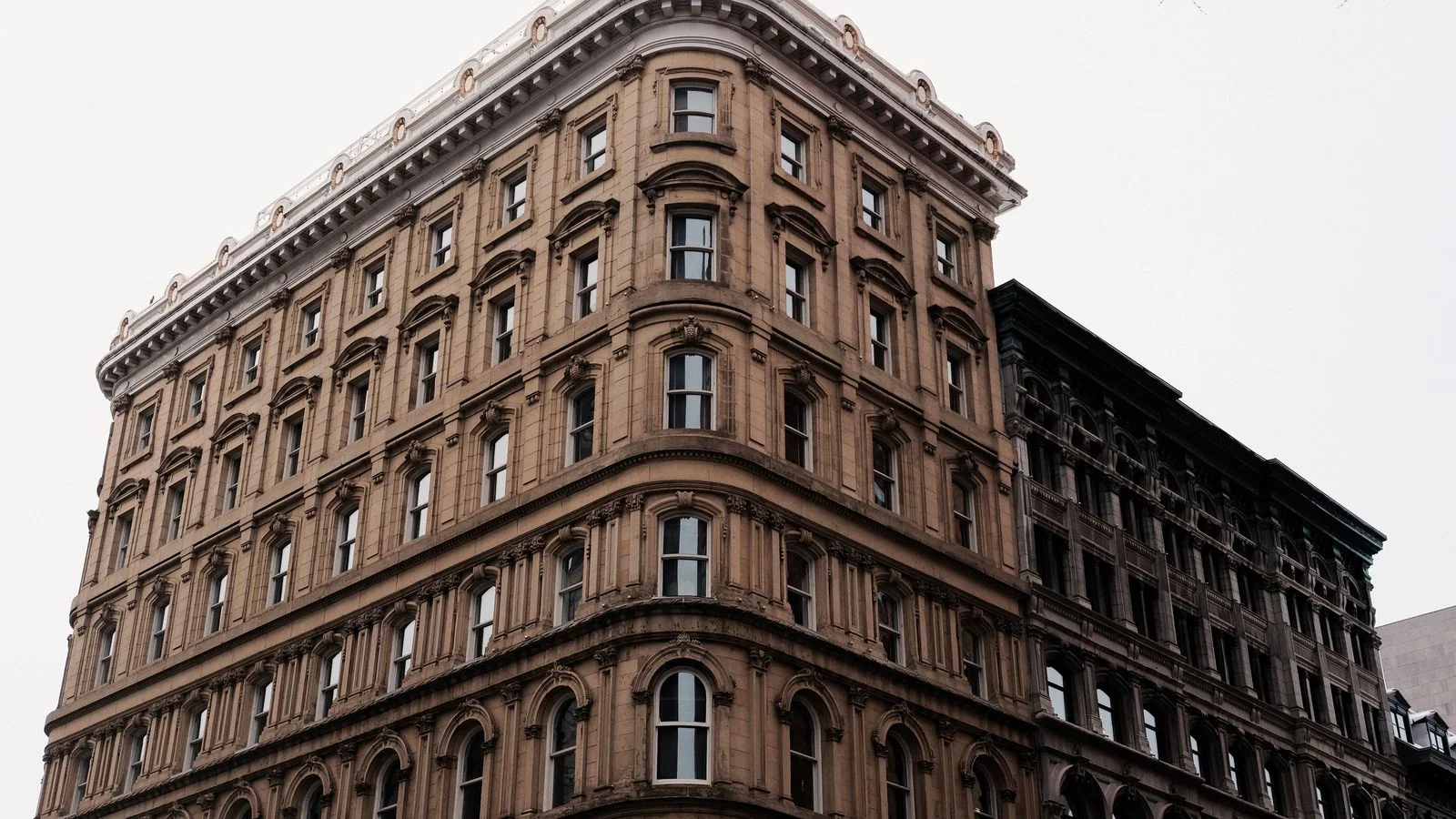
The reason this works is that provenance is the one asset a boutique hotel has that cannot be substituted. Another property can copy your design, your service model, your amenity list, and your price. Nobody else can be the 1908 mercantile bank on that corner. Every sentence you write about thread counts is a sentence competing on ground where you can be beaten, and every sentence about the building is a sentence only you can write.
Provenance also solves the verification problem. An editor who receives a claim about a beautiful renovation has no way to check it and no reason to care. An editor who receives a claim that the building was the city’s first department store, designed by a named architect, listed on the National Register in a specific year, can confirm all of it in four minutes and now has a story with a spine.
Where to find your building’s paper trail
Five sources will produce more usable material than any copywriter, and four of them are free.
The National Register of Historic Places is the first stop. If your building or your district is listed, the nomination document is public and often runs to dozens of pages of architectural and social history written by someone who did the research for you. Search the register by address. Even a district listing that mentions your building in passing gives you a citable date and a style attribution.
Your State Historic Preservation Office holds the tax credit applications and survey files. If the building was rehabilitated with credits, Part 1 and Part 2 of that application describe its significance and its condition in detail. Ask for the file. Owners are frequently surprised to learn it exists.
Sanborn fire insurance maps are the third and the most fun. These were produced for tens of thousands of American towns to document building footprints, materials, and uses block by block, and large numbers have been digitized by the Library of Congress. You can watch your corner change across decades and find out that your restaurant was a livery stable.
The county recorder’s deed chain gives you the ownership history, which is where the human stories are. Names, dates, transfers, foreclosures. Follow an unusual name into a newspaper archive and you often find the person.
Local historical societies are the fifth and the one that pays back most per hour. Someone in that room has been waiting years for a person to ask about your building, and they frequently have photographs nobody has published.
Newspaper archives sit alongside that fifth source and deserve a mention of their own. Most metro dailies have digitised runs going back a century, and your address will appear in them: the opening announcement, the fire, the bankruptcy, the wedding held in the ballroom, the labour dispute. Search by street address rather than by business name, because the businesses changed and the address did not.
Two rules govern how you use all of this. First, verify before you publish, because a hotel that overstates its history gets corrected in public and the correction is the story. If the attribution to a well-known architect is uncertain, say the building is attributed to him rather than designed by him. Second, keep the sources with the claims. When you send a release stating that the building opened in 1908 as a mercantile bank, include where that comes from. Reporters have been burned by hotel history before and the ones who have not will still check.
The material you find should live in two places. A short, punchy version goes in the press release. A long version goes on your own site as a permanent page about the building, which is worth having for guests and turns out to be the page that gets linked when anyone writes about you.
The design desk needs names, not adjectives
Design and architecture publications are the most accessible national coverage available to a small hotel, and they have precise requirements that most hotel releases ignore.
They need names. The architect, the interior designer, the lighting designer, the garden designer, the specific artisans who did the plasterwork or the millwork or the tile. Named credits are the currency of design press and a release without them is unusable, because the story a design editor writes is about practitioners.
They need materials and sources. Which stone, from which quarry. Which mill produced the textiles. Whether the terrazzo was original and restored or new and matched. What was salvaged from the building and reused, with specifics: the original teller windows became the bar back, the freight elevator doors are now the entrance to the private dining room.
They need constraints and how you solved them. Design editors find problems more interesting than results. The load-bearing wall that could not move and what you did instead. The preservation requirement that forbade touching the facade. The nine-foot ceilings on the third floor that forced a different room layout. Write those up honestly and you have handed a writer her structure.
And they need photography that meets their standard, shot by a professional, delivered at high resolution, with clear usage rights and correct credits. More design stories die at the image stage than at the pitch stage.
The food angle carries the property
If your hotel has a restaurant or bar worth visiting, that is often the fastest path to coverage, because food media is larger, hungrier, and faster-moving than travel media.
Pitch the chef rather than the hotel. Where she trained, what she is doing that is specific, which local producers she buys from by name. A food editor will cover a restaurant in a hotel and mention the hotel in the second paragraph, which is a placement most properties would pay well for and can get free by pitching the right desk.
This also has a useful side effect on the travel side. A travel editor deciding between two properties for a roundup will pick the one with a restaurant already covered elsewhere, because the coverage functions as external validation and because it gives her a second thing to write about.
When you have no history at all
New construction and unremarkable buildings are common and not fatal. Provenance can come from three other places.
The site has a history even if the structure does not. Something stood there. Find out what, and if the answer is interesting, the demolition and replacement is itself a story, particularly if you retained anything.
The neighborhood carries the narrative for many new properties. If your block is genuinely changing, you are evidence in a story a local reporter is already trying to write, and being a source for it beats being the subject of a story nobody wants.
The makers give you the third path. Commission real work from named local craftspeople, document their process with photographs while it happens, and you have manufactured legitimate provenance. It is not a substitute for a hundred-year-old building, and it is a genuine story about people making things, which is a story that runs.
Send it to a person, not a list
Everything above is wasted if the release goes out as a blast. Build a list of individual journalists by name, with the beat they actually cover and one line about something they wrote recently, and keep it to fifteen or twenty people who could plausibly write about your property.
Send each of them the version that fits their beat. The design editor gets the credits and the materials. The local business reporter gets the investment figure, the job count, and the renovation timeline. The food editor gets the chef. The travel editor gets the neighborhood and the building. Same property, four genuinely different documents, and every one of them opens with something other than your room count.
Writing four versions sounds like four times the work and is closer to one and a quarter, because the research underneath them is shared. You did the archive afternoon once. What changes between versions is which two hundred words go at the top and which quote you use. Treat the provenance research as the raw material and each press release for boutique hotels as a different cut of it.
Time the sends against the lead times rather than against your opening date. The print design and travel titles need pitching three to six months out, which means you are pitching from a construction site with renderings and progress photographs rather than finished rooms. That feels premature and it is the only way to make the window. Local and digital outlets get the same story two to four weeks before opening, when you have real photography.
Then keep going after the opening, because the opening is the weakest news you will ever have. A hotel generates story opportunities continuously once you learn to see them: the restaurant’s first seasonal menu change, an artist residency, a preservation award, the annual anniversary of the building rather than of the hotel, a partnership with a local institution, a room named after someone the archives turned up. Each of those is a smaller pitch to a warmer list, and the cumulative coverage is worth more than the single opening piece everyone fixates on.
Keep a running record of who wrote about you and what they covered, so the next pitch to that writer builds on the last one rather than starting over. The design editor who covered your millwork should hear about your next commission first, and addressing her by reference to her own previous piece puts you ahead of every other release in her inbox that morning.
A press release for boutique hotels that leads with provenance, names the people who did the work, includes photography an editor can publish, and arrives addressed to one person who covers exactly this, will get answered at a rate that makes the research afternoon at the historical society the best-spent time in your entire marketing year.