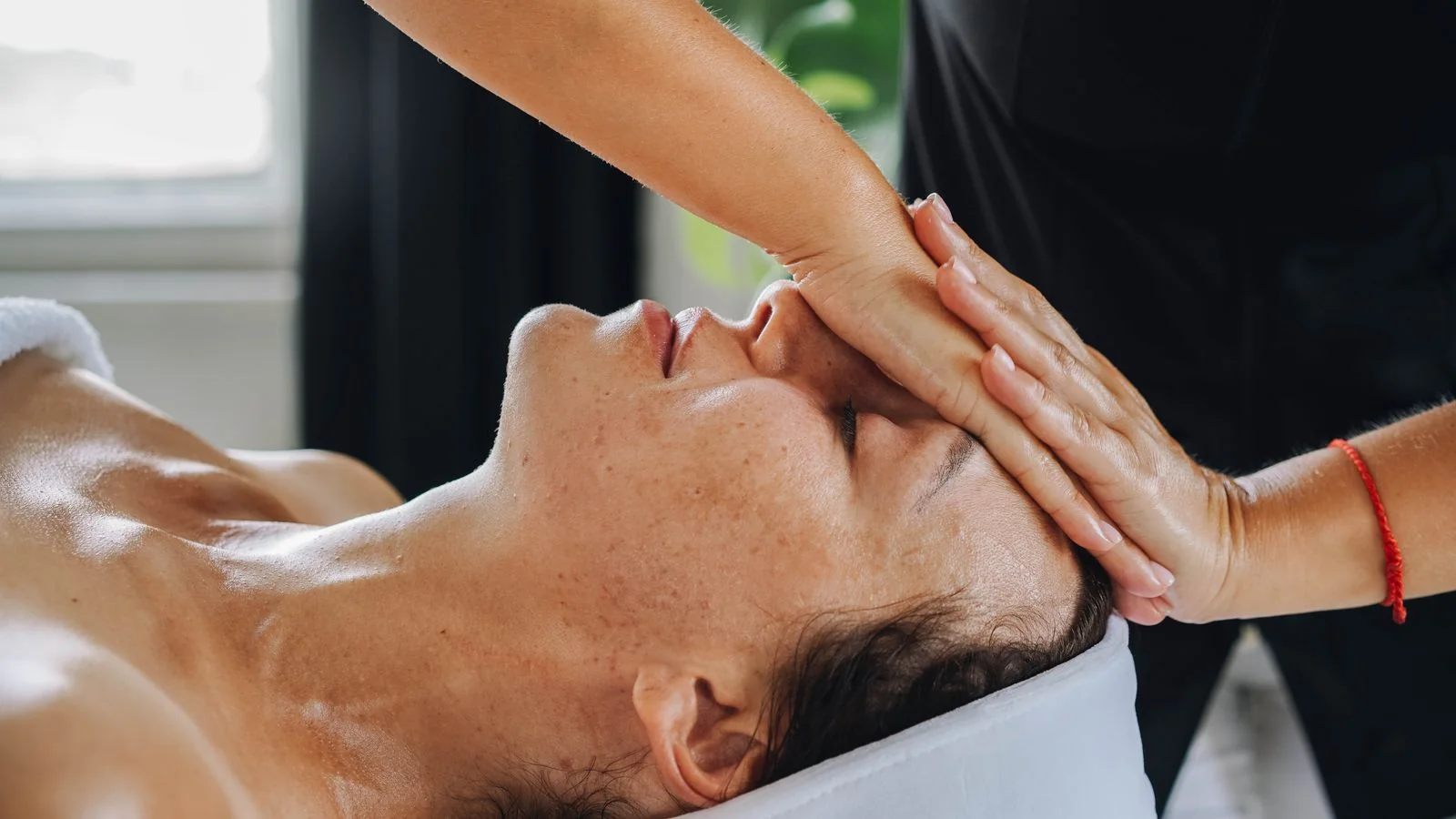
The American Massage Therapy Association’s consumer research has landed on the same finding for years running: a large majority of Americans, in the region of eighty-six percent, think massage should be considered a form of health care, and around three quarters say they would like insurance to cover it.
Read that twice, because it tells you which desk your story belongs to. Your clients already file massage under health. Most therapists still write their announcements as though it were beauty, then send them to a features editor who files them under advertising.
A press release for massage therapists works when it arrives as a health story with a local fact attached. It fails when it arrives as a brochure.
Your last release died because it announced a service
Here is the release almost everyone writes. Local therapist announces the addition of hot stone therapy to her treatment menu. She is delighted to offer clients a deeper level of relaxation. Appointments are available now.
There is nothing wrong with any of those sentences except that none of them is news. A new item on a menu is a change inside your business. News is a change outside it, or a change inside it that reveals something about the outside.
Editors apply four tests without thinking about them. Is it timely, is it local, is it useful to the reader, does it have a human centre. A new treatment passes none. The same therapist, saying that she has added evening slots because a third of her enquiries now come from people who cannot get a daytime appointment through their existing care, passes at least three.
The service is the same. The frame is the story.
The Access Angle
Here is the model. Call it the Access Angle. Health desks do not run stories about treatments. They run stories about access, meaning who can get care, how long they wait, what it costs, and what happens to the people who cannot.
Rewrite every announcement you have as an access story and most of them start working. A new treatment becomes the first place in the county offering it. A price change becomes what happens to demand when a session crosses a psychological threshold. Longer hours become a response to people who work shifts and have no daytime options. A new location becomes coverage arriving in an area that had none.
The Access Angle has four levers, and a release needs at least one. Availability, meaning wait times, opening hours, and whether you are taking new clients. Cost, meaning price, insurance, concessions, and what people do when they cannot afford the full course. Geography, meaning who is served and who is not. And referral, meaning how people arrive, whether clinicians send them, and what that says about pressure elsewhere in the system.
Pull the lever, attach a number, and you have a release. Skip the lever and you have a menu.
The lever you pull should be the one you have evidence for, not the one that sounds most impressive. Availability is the easiest to evidence because your diary is the evidence. Cost is next, because your price list and your card terminal both keep records. Geography is straightforward if you can describe the area you serve and name what is absent from it. Referral is the hardest to evidence and the most valuable when you can, because it requires another professional to confirm it, which is exactly why a reporter trusts it.
A caution about the availability lever, since it is the one most people reach for. Do not overstate a waiting list. Journalists check, and a therapist who claims a six-week wait and can offer a slot on Thursday when the reporter’s colleague calls will never be quoted by that title again. Local journalism runs on a small number of reliable sources, and getting removed from that list is close to permanent.
Build the fact file before you need it
Most therapists write a release in a panic, which is why the numbers are vague. The fix is to spend one hour a quarter recording things you already know, so that when a story presents itself the evidence is sitting there.
Track five things. New enquiries per month and where they came from. What people named as their reason for booking, grouped into rough categories. How far ahead your first available appointment is, checked on the same day each month. Your price and the date it last changed. And any referral arriving from a named clinician or organisation, with their permission to say so.
Twelve months of that produces a document no competitor has and no reporter can get anywhere else. It turns “demand has gone up” into “enquiries about desk-related neck pain went from four a month last autumn to eleven a month this spring”, which is the difference between a pitch that gets skimmed and one that gets commissioned.
It also protects you. Every number in your press release for massage therapists should be traceable to something you wrote down at the time, because the one question a good reporter always asks is how you know.

What goes in the headline
The headline does one job, which is to let a busy editor decide in under two seconds. It should read like a headline they would print, not like a subject line from a marketing platform.
State the change and the local fact. “Evening massage appointments added in Bridgeton as daytime waits reach six weeks” works. “Local Massage Therapist Expands Services to Meet Growing Demand” does not, because it contains no information. Capitalising every word makes it worse, because it signals promotional copy before anyone has read it.
Keep it under about twelve words. Put the place name in. Put the number in if you have one. Avoid every word that appears in marketing and nowhere in journalism, which in this category means holistic, transformative, bespoke, journey, and wellness as a standalone noun.
Write the headline first, before the body, and write six of them. The exercise is diagnostic. If you cannot produce a headline a real newspaper would print, you do not have a story yet, and discovering that after ten minutes is considerably better than discovering it after a week of silence.
Can a sole practitioner really issue a press release?
Yes, and you have an advantage a clinic does not, which is that you can speak without clearance.
Local reporters are chronically short of people who will say something concrete on the record. Big providers route everything through communications teams, and what comes back is sanded down to nothing. A single therapist who will state her actual waiting time, her actual price, and what she sees walking through the door is a better source than an organisation ten times her size.
What you lack is scale, and scale is not what local health desks need. They need a named human in the patch who knows something. Being small makes you faster to quote and easier to photograph, and both of those help a reporter close a story before deadline.
Do not pretend to be bigger than you are. A release written in the third person about a one-person practice reads oddly, and reporters notice. Use your name, say what you do, and let the specificity carry it.
Write the lead paragraph as five facts
The first paragraph of a press release for massage therapists should survive being the only paragraph anyone reads. Editors frequently run exactly that and cut the rest.
Load it with five facts: who, what changed, where, when, and the number. One sentence if you can, two if you must. No scene-setting, no adjectives, no throat-clearing about the importance of self-care.
A working example. “Sarah Whitfield, a sports massage therapist in Bridgeton, has added Tuesday and Thursday evening clinics from October 1 after enquiries from shift workers rose from roughly one a week to nine a week over the past year.” That is who, what, where, when, and a number, in a form a reporter can paste and then build on.
The paragraphs after it add context in descending order of importance. Why the change happened. What the wider picture looks like, with a source if you have one. What it means for someone reading. Then stop. A release that runs past four hundred and fifty words is telling the editor you do not know what matters in your own story.
The quote is where most releases collapse
Almost every quote in almost every press release is unusable, and editors treat the quote section as filler because of it.
The unusable quote says the business is delighted, excited, or thrilled, and then restates the headline. “We are excited to offer this new service to our wonderful clients” tells a reader nothing and will never be printed.
A usable quote does one of two things. It says something only you could say, from inside the work. Or it takes a position someone could disagree with. “Most of the people booking evening slots are not treating themselves, they are managing an injury they cannot get seen for anywhere else, and they are paying out of pocket to do it” is printable. It is specific, it is arguable, and it carries the story forward rather than repeating it.
Write two quotes, both short. One factual, one with a point of view. Let the reporter choose.
Five angles that actually run
The first is the demand shift. You have booking data nobody else has, and any genuine change in it is a story about local health pressure.
The second is the referral story. If clinicians, physiotherapists, or midwives in your area started sending you people, that says something about capacity elsewhere, and reporters covering health services want exactly that.
The third is the cost story. What you charge, what you had to raise it to, what clients dropped first when they tightened up, and whether people are stretching intervals rather than stopping. Cost-of-living desks run this every month and are always short of operators willing to put numbers to it.
The fourth is the population angle. Work with a defined group, whether that is pregnant clients, older adults, cancer patients in remission, or a local sports club, and the story becomes about that group rather than about you. Those stories get picked up because they have a subject beyond the business.
The fifth is the seasonal hook attached to something real. Marathon week, harvest for agricultural areas, exam season, the January return to the gym. Pitch these at the lead time the outlet works to, which for a weekly local title means six to eight weeks ahead, not the week itself.
Send it to a person, then stop
Find the reporter by name. Read three of their stories. Put the release in the body of the email rather than as an attachment, because attachments from unknown senders get left unopened. Subject line equals headline. Mobile number at the bottom, and answer it.
Send once. Follow up once, seven days later, one short paragraph. Then leave it. Chasing a third time gets you remembered for the wrong reason, and local journalism is a small world.
The whole discipline compresses to this: find the thing that changed, attach a number to it, frame it as access rather than as a service, write four hundred words, and send it to one named human who covers health in your town. Do that four times a year and you will be the therapist that paper calls when it needs a quote, which is worth considerably more than any single article.