
Every guide to pitching The Next Web you will find through a search is wrong, and most of them are wrong in the same two ways. They tell you the Financial Times owns it, and they point you at a contributor program that no longer operates. Both facts were true once. Neither has been true since December 2025.
This matters more than a factual nitpick, because TNW almost ceased to exist last year and the thing that replaced it works differently. If you pitch it the way the old guides describe, you are writing to a publication that was wound down and sold.
The Financial Times Sold It
Here is the actual chain of ownership, which is worth having straight.
TNW was founded in Amsterdam in 2006 by Boris Veldhuijzen van Zanten and Patrick de Laive. The Financial Times bought a majority stake, not the whole company, on 5 March 2019, and its stated motive at the time was the live events business rather than the publication. Boris stepped down as chief executive on 6 September 2021, with former chief operating officer Myrthe van de Erve taking over.
Then on 29 September 2025, Boris published a farewell post titled “Ending graciously,” written as founder and board member. In it he wrote that “the events and media business is being wound down, and only TNW Spaces will live on,” and, bluntly, “There won’t be another TNW Conference.” Jobs were eliminated including his own.

What happened next is why the publication is still here. On 10 December 2025, Tekpon acquired the TNW media and events brands from the Financial Times. Tekpon is a Romanian-founded software marketplace, and its founder and chief executive Alexandru Stan said TNW “is one of Europe’s most respected technology brands.” Terms were not disclosed. The Financial Times retained only TNW Spaces, the Amsterdam coworking business.
You can verify the current position from the site’s own footer, which reads “A Tekpon Company” with a copyright line naming Cogneve, INC. and the familiar “Made with love in Amsterdam.” So the publication is alive, publishing at a high frequency, and under new ownership with a new editorial team. The Financial Times connection that half the pitch guides still cite is gone.
Is There an Editorial Pitch Email?
No, and I want to be direct about that rather than fill the gap with something plausible.
There is no published editorial pitch page for TNW. There is no editorial submissions address listed anywhere I could find. The partnerships page routes to a generic contact form. The only email address published anywhere on the site is conference@thenextweb.com, which handles events rather than editorial. Anyone who hands you a TNW editorial email has either got it from a private relationship or invented it, and a guide that prints one without saying where it came from should make you suspicious of everything else in it.
The named editorial leadership is similarly thin, and that is a signal rather than a research failure. Ana-Maria Stanciuc is editor in chief, which she states in her own bio: she covers technology “not as a parade of launches and valuations, but as a system of influence, persuasion, and change,” writing about startups, venture capital, digital policy and the European ecosystem. Her author page slug implies a Tekpon email address, which tells you editorial is staffed from the parent company. Beyond her, no current masthead is published anywhere. This is a small post-relaunch team and the absence of a staff list reflects that.
Her relaunch letter, dated 16 December 2025, sets out editorial policy in a line worth knowing before you pitch: “Every article we will publish will be created by a human writer who is accountable for the facts.” She also wrote to expect “more features, interviews, and narrative-driven pieces.” That is a publication signalling longer, reported work rather than quick aggregation, which should shape what you offer it.
TNW Council Is the Contributed Route, and It Is Paid
If your goal is a byline on TNW rather than coverage of your company, there is exactly one documented route and you should understand what it is before you pursue it.
TNW Council was announced on 14 January 2026 by Alexandru Stan. It is a private membership network for founders and executives, capped at 1,000 vetted members globally. Eligibility requires being a founder or executive in a decision-making role at a technology company with a minimum of one million euros in annual revenue, and applications are reviewed by an internal committee. Membership is annual and paid, and the price is not published.
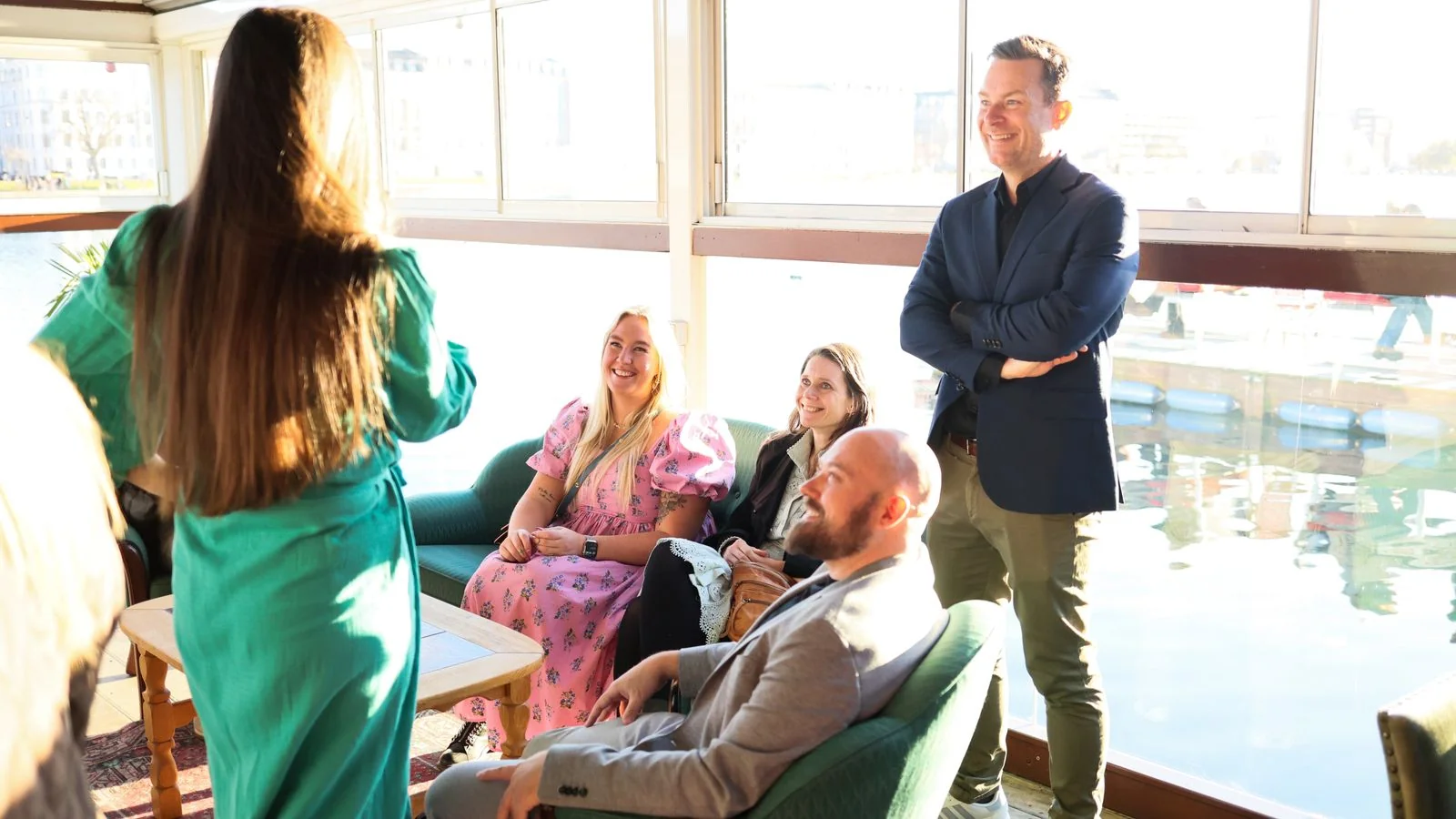
What members get, in TNW’s own words, is that they “publish articles under their own name with a Council byline on The Next Web,” with topics agreed with the team and every piece published to TNW’s standards.
Now read the disclosure TNW publishes alongside it, because it is the most important sentence in this entire article: “Editorial coverage on The Next Web is decided independently by the newsroom and is not part of membership.”
That is unusually clean, and it deserves credit. TNW is telling you plainly that paying for Council access buys you a byline channel and buys you nothing from the newsroom. Your company does not become more likely to be written about. A reporter does not become obliged to take your call. If a consultant pitches you Council membership as a route to editorial coverage of your business, they are selling you something TNW itself has explicitly denied exists.
Whether it is worth the money depends entirely on what you want. A recurring byline on a respected European technology brand, with a Council label attached that readers can interpret as they like, has real value for a founder building a personal profile in that market. It is not press coverage and should not be budgeted as press coverage.
Stop Using the Old Contributor Program
The advice you will find most often is to submit through TNW’s contributor program, sometimes called Podium, via a Typeform, at 600 to 1,200 words.
That explainer page is dated 27 November 2017. It points at a Growth Quarters sub-brand that no longer anchors the site and a form whose current status I could not verify. Given the September 2025 wind-down and the December 2025 relaunch under new ownership and a new editor, treat Podium as defunct. I am not going to reprint the form link, because sending work to a submission channel that may route nowhere is worse than knowing you have no channel.
There is also naming confusion worth clearing up. Boris’s September 2025 post refers to TNW Programs as something previously sold, continuing outside TNW. The current partnerships page markets three things: TNW Media for brand storytelling, TNW Council, and events. Nothing called TNW Programs. If a guide tells you to apply to TNW Programs, it is describing a divested business.
On the conference, be careful what you believe. TNW’s own site still presents TNW Conference 2025, held 19 and 20 June 2025 at NDSM in Amsterdam, with retrospective content, and its events page shows no upcoming TNW events. Boris said there would not be another one. Tekpon said at acquisition that it planned an expanded TNW Conference for 2026. Several third-party event directories list a TNW Conference 2026, contradicting TNW’s own site. As of now there is no officially announced or listed edition, so do not build a plan around speaking at one.
What the Newsroom Is Actually Buying
Separate from the paid route, the newsroom is publishing, and it is publishing specific things. If you want earned coverage, this is where to aim.
The section structure tells you the beats: deep tech, sustainability, ecosystems, data and security, fintech and ecommerce, and future of work. The homepage mix in practice runs broader than Europe, carrying United States AI and policy stories alongside European startup coverage, but the differentiated material is clearly the European angle. Stanciuc’s own bio emphasises the European ecosystem and “how Europe is learning to speak in a louder voice of its own.”
The most distinctive thing I see on the site is the European funding exclusive, the kind of piece headlined as an exclusive on a specific company’s round with a specific figure in euros. That is a format where TNW competes directly and wins, because a European Series A is undercovered by American technology press and TNW is positioned exactly where that story lives.
Tekpon has also signalled new SaaS and AI programme tracks, which fits its own business as a software marketplace. Expect the publication’s centre of gravity to keep drifting toward software and AI coverage with a European lens.
One more consequence of the ownership change deserves a mention, because it affects how you should read anything TNW publishes about software.
Tekpon’s own business is a software marketplace. It makes money helping buyers find and compare SaaS products. That does not make TNW’s journalism suspect, and the editor has stated in writing that coverage is decided independently by the newsroom. But it does mean the parent company has a commercial interest in software discovery content, and Tekpon has said it plans new SaaS and AI programme tracks.
For a pitching decision, this is mostly useful as a signal about direction rather than a warning. A publication whose owner sells software discovery is a publication likely to keep investing in software coverage, which makes it a better long-term target if you work in SaaS and a worse one if you work in hardware, biotech or consumer. Read the ownership as a map of where the attention will go.
Pitch the European Funding Exclusive
So the practical play, if you want editorial rather than a paid byline, is narrow and achievable.
Have a European angle that is real. Not a United States company with a London sales office. A company headquartered, funded or operating meaningfully in Europe, or a policy development with European consequences. The European framing is TNW’s reason to exist post-relaunch and the thing nobody else covers as well.
Offer exclusivity on something with a number in it. A funding round, a hiring figure, a revenue milestone, an acquisition. TNW’s own homepage shows it running these as exclusives, which means it values being first, which means a genuine first-look offer carries weight. Say the word exclusive in the subject line and honour it.
Accept that you have no published email, which means the route runs through the editor in chief’s public presence or through a relationship. Reading her work and responding to a specific piece she wrote is a legitimate approach. Mass-mailing a generic release to a form is not.
And match the stated format. A newsroom that has committed in writing to human-written, fact-accountable, narrative-driven features and interviews is telling you it wants a story with people in it, not a product announcement. Offer the founder, offer the data, offer the access.
TNW has been wound down and restarted inside twelve months with a new owner, a new editor and a team small enough that no masthead is published. That is a publication still deciding what it is, which makes the next year the easiest window anyone has had in a decade to become one of the voices it relies on.