A story breaks in your sector at 11:40 on a Tuesday. By 13:15, three people who know less about it than you do have explained it on Sky News, and you have not been asked. That gap is not about expertise. It is about whether a producer had your name before the story broke.
Sky News runs a rolling schedule, which changes the entire logic of getting on it. A weekly programme books ahead. A rolling news channel books in the gap between a story developing and the next bulletin, and that gap is routinely under three hours. Nobody is reading a pitch you sent that morning. They are scrolling a contacts list they built weeks ago.
So the work is not pitching. The work is being already findable, already vetted, and already easy. Here is how that gets built.
Why Does Rolling News Change the Rules?
Because the booking decision happens under time pressure, which selects for safety rather than for the best available expert.
A producer filling a two-way in ninety minutes has a short list of acceptable risks. They need someone who will turn up, who will speak in sentences that end, who will not say something that triggers a complaint, and whose line will hold. An unknown name with perfect credentials is a risk. A known name with adequate credentials is not.
That is uncomfortable if you are the better expert, and it is also the opening. The bar is not brilliance. It is reliability, demonstrated in advance.
It also means the calendar runs differently. There is no submission window, no editorial meeting you can time your email to. There is only the moment a story moves, and whether you are in the list when it does.
Who Actually Books Guests?
Not the presenter, and not the person whose name is on the programme.
The decision sits with producers and bookers attached to specific output. A producer on the business output, a producer on the political output, a broader guest booker who services multiple programmes. These are different people with different lists, and getting onto one list does not put you on another.
This matters because most outreach goes to the wrong place entirely. A note to a presenter’s public account reaches someone who does not book. A note to a general press address reaches a corporate communications function that has nothing to do with editorial guests.
The route that works is narrower and slower. Identify the output that would cover your subject. Find the producers and bookers credited on it. Follow them, read what they are working on, and reach them where they actually work rather than through a switchboard.
What Goes In the First Message?
Short, concrete, and built for a contacts list rather than for a commissioning decision.
A producer reading your introduction is not deciding whether to book you today. They are deciding whether to save your details. That reframes everything about what the message should contain.
Three things earn the save. A one-line description of exactly what you can speak to, specific enough to be useful and narrow enough to be credible. A link to sixty seconds of you talking, so they can hear whether you are usable without taking a risk to find out. And a mobile number, in the message, because a producer who has to look for your number in a thread will book someone else.
What loses the save is everything a press release contains. Company background, client list, awards, a biography written in the third person, an offer to “discuss how we might work together.” None of that answers the only question being asked, which is whether you can talk coherently about one thing at short notice.
The Three Moves That Make You Bookable
This is the part that actually changes outcomes, and all three are preparation rather than pitching.
The first move is a two-minute clip that exists before anyone asks for one. Record yourself answering a single question in your subject area, in ninety seconds, framed and lit the way a remote hit would be. Not a showreel, not a company video. One clean answer. This is the single highest-return asset for broadcast work and almost nobody has one, because it feels like work you do after you get booked rather than before.
The second move is a running view on your sector that you could deliver cold. Producers call when something happens, and the thing that happens will not be the thing you prepared for. What you need is a standing position on the two or three live tensions in your field, updated as they move, so that any developing story can be answered from a position you already hold rather than invented on the call.
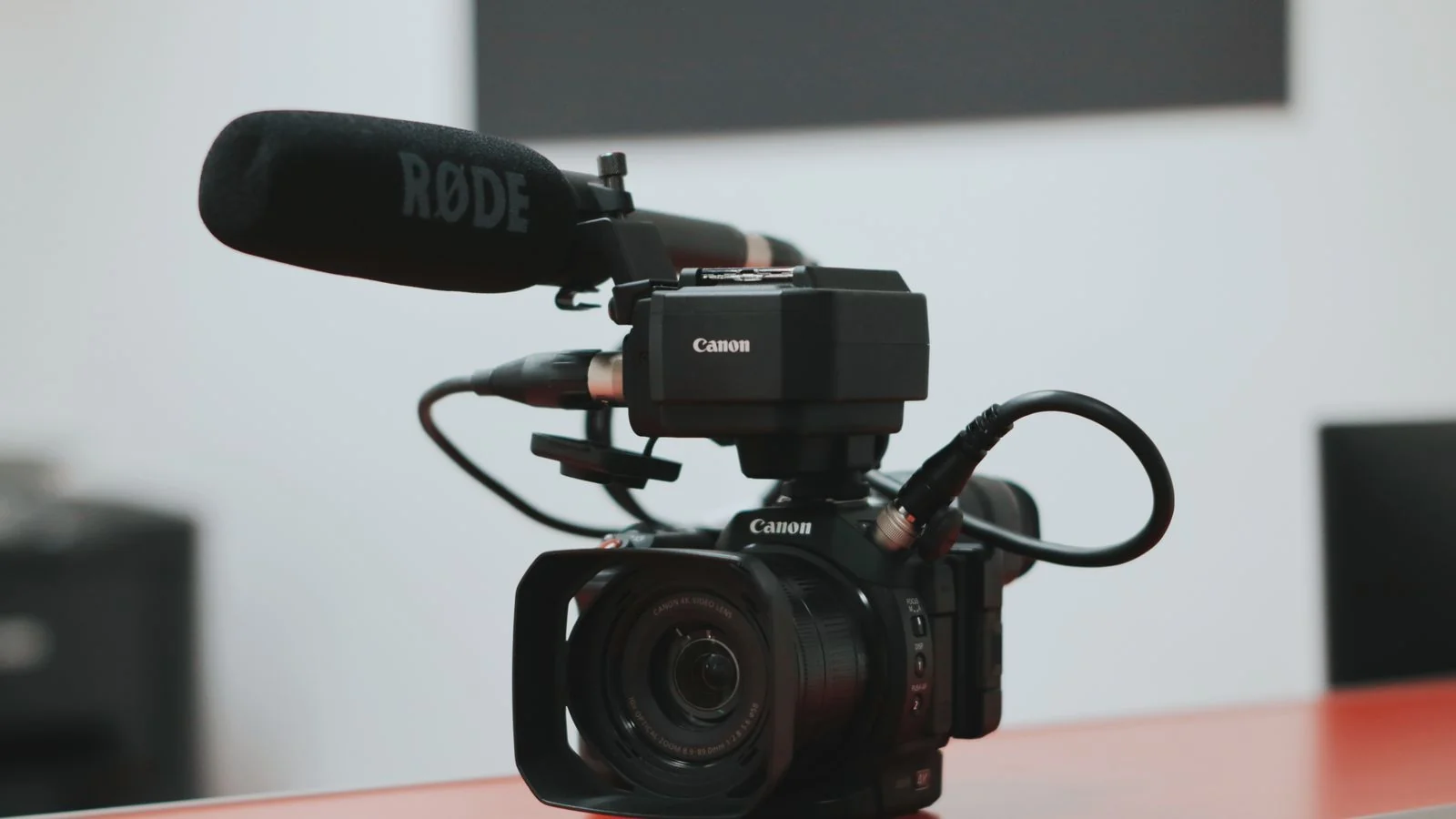
The third move is a working remote setup, tested. A wired headset microphone rather than laptop audio. A hardwired connection rather than wifi. A window in front of you, a plain wall behind you, and a camera at eye level. Test it on a video call with someone willing to be honest. A producer who gets a bad line once will not use you again, and that is the only unforgiving part of the process.
What Should You Say Yes To?
Not everything, and the discrimination matters more as you get asked more often.
A rolling news channel has a lot of airtime and a permanent shortage of people willing to fill it. Once you are on a list, the requests that come will not all be good for you. A two-way on a story at the edge of your competence is how experts get caught out, and being caught out once on live television undoes a year of careful positioning.
The rule that holds up is simple. Say yes when the question falls inside the thing you would be comfortable being quoted on in print, under your own name, with no opportunity to clarify. Say no, quickly and warmly, when it does not, and offer a name who is better placed. Producers remember a fast honest no almost as fondly as a yes, because it saves them twenty minutes, and the referral buys you goodwill with two people at once.
Say no also when the format is wrong rather than the subject. A six-way panel discussion with ninety seconds of total speaking time distributed across six people is not an opportunity, it is a logistics exercise. A one-on-one two-way on a developing story is worth rearranging your afternoon for. Learning to tell them apart from the booking email is a skill that takes about five appearances to acquire.
The other thing to guard is your own framing. A producer will often propose the angle, and the angle will sometimes be the one that makes the segment work rather than the one that is true. You can decline the framing while accepting the booking, in the pre-call, in one sentence. Doing that early is normal and expected. Doing it on air is not.
Can You Buy Your Way In?
No, and the clarity here is worth spelling out because the paid-media market is good at implying otherwise.
Instant Press runs a catalog of 1,016 publications spanning $150 to $200,000, across genres from News to Crypto, and 96% of it is Google-indexed. UK broadcasters are not in it. Neither are the UK nationals. That is not a gap in the catalog, it is a description of how that side of the market works: broadcast guest slots are editorial, they are not inventory, and no amount of budget creates a listing that does not exist. Anyone selling you a route to how to get on Sky News for a fee is selling something they cannot deliver.
What budget does buy is adjacent credibility. A producer vetting an unfamiliar name searches it. What they find decides whether the risk feels acceptable, and a search result that shows a Knowledge Panel, a few indexed bylines, and a coherent professional identity reads very differently from one that shows a LinkedIn profile and nothing else. That is a real and purchasable advantage, and it is the honest version of what paid media contributes to broadcast bookings.
How Do You Turn One Hit Into Ten?
By treating the first appearance as an audition for the contacts list rather than as the win.
The behaviours that get you re-booked are unglamorous. Answer the question that was asked rather than the one you prepared. Stop talking at ninety seconds. Do not plug your company, because a producer who gets plugged on air will not call again and will tell the producer next to them. Thank the producer by name afterwards, briefly, and do not attach anything.
Volume helps here in a way that feels unfair. The producers who book for rolling news talk to each other, sit near each other, and inherit each other’s contact lists when they move output. One good appearance gets noticed by more people than the one who booked you, which is why the compounding is steeper than it looks from outside. Two or three clean hits and the question of how to get on Sky News stops being a question you have to work at.
Then stay useful between stories. When something moves in your sector, send the producer two sentences on what it means, with no ask attached. Do this four or five times and you stop being a contact and become the person they think of first, which is the entire objective.
There is a document worth building once and keeping current, and almost nobody has it. Call it a one-page availability note: what you speak to, in three bullets you never send as bullets but keep for yourself, your mobile, your time zone, your typical notice requirement, and a link to the clip. When a producer asks for your details at 11:50 on a Tuesday, you paste it and it takes eleven seconds. When you have to assemble it from scratch, it takes four minutes, and four minutes is frequently the whole window.
One more thing worth being honest about: the first booking is usually the slowest and the least satisfying. A ninety-second two-way on a story you half care about, at short notice, that nobody you know sees. Take it anyway, because it is the only thing that converts you from an unknown risk into a known quantity.
So the question to sit with is not how to get on Sky News in the abstract. It is whether a producer working a story in your sector right now could find your clip, your number, and your view inside ninety seconds. If the answer is no, that is the work, and none of it requires anyone’s permission.