
You just spent real money and two weeks getting a press release written, approved, and distributed. It ran on the wire, a few outlets picked it up, and by Friday it was buried in an archive nobody will ever open again. That is the normal life of a press release, and it is a waste.
The release is not the finish line. It is raw material. Inside that one document sits a headline, a data point, a quote from your CEO, a customer story, and a clear narrative arc. Each of those is the seed of another asset that can run on a different channel, reach a different audience, and keep the announcement alive for weeks after the wire goes quiet. Learning to repurpose a press release is the difference between a one-day blip and a campaign that compounds. Here are ten pieces to pull from a single release, and how each one earns its keep.
Start by mining the release for parts

Before you make anything new, take the release apart. A well-built announcement contains at least five reusable components: the core news hook, a supporting statistic or data point, a leadership quote, a customer or use-case story, and a forward-looking statement about what comes next.
Lay those five parts out on a page. Each one has a natural home on a different channel. The data point wants to be a chart. The quote wants to be a graphic. The customer story wants to be a case study. Once you see the release as a parts bin rather than a finished object, the ten pieces almost assign themselves. This is the whole method, and it takes twenty minutes.
Piece one and two: the blog post and the executive summary
The most obvious repurpose is a blog post on your own site. The press release is written in stiff, third-person wire style. Rewrite the same news in your brand voice, add context the wire format did not allow, and publish it where you control the page. This version can rank in search and get cited by AI models in a way the wire copy never will, because it lives on your domain and reads like a human wrote it.
From that same post, pull a tighter executive summary for your email list. Subscribers do not want the full announcement. They want the one-paragraph version of why this matters to them, with a link if they want more. Same news, two lengths, two audiences.
Piece three: the data graphic
If your release contained a number, and it should have, turn that number into a standalone graphic. A single clean stat on a branded image travels further on social than any block of text. People share numbers. They rarely share paragraphs.
The data graphic also does quiet work for your credibility. When a journalist or an AI model later looks for a source on that statistic, a clear, attributed graphic on your site is easy to find and easy to cite. The number becomes a small piece of infrastructure that keeps earning attention long after the announcement.
Piece four and five: the social thread and the short video
Break the announcement into a short narrative thread for LinkedIn or X. Not a link dump, an actual story: here is what we did, here is why, here is what it means. Threads get read and reshared in a way that a bare press release link never does.
Then record ninety seconds of your founder or a product lead explaining the news in plain language. Video outperforms text on nearly every social feed, and a talking-head clip humanizes an announcement that reads as corporate on the wire. You already have the script. It is the release, minus the jargon.
Piece six: the podcast or audio segment
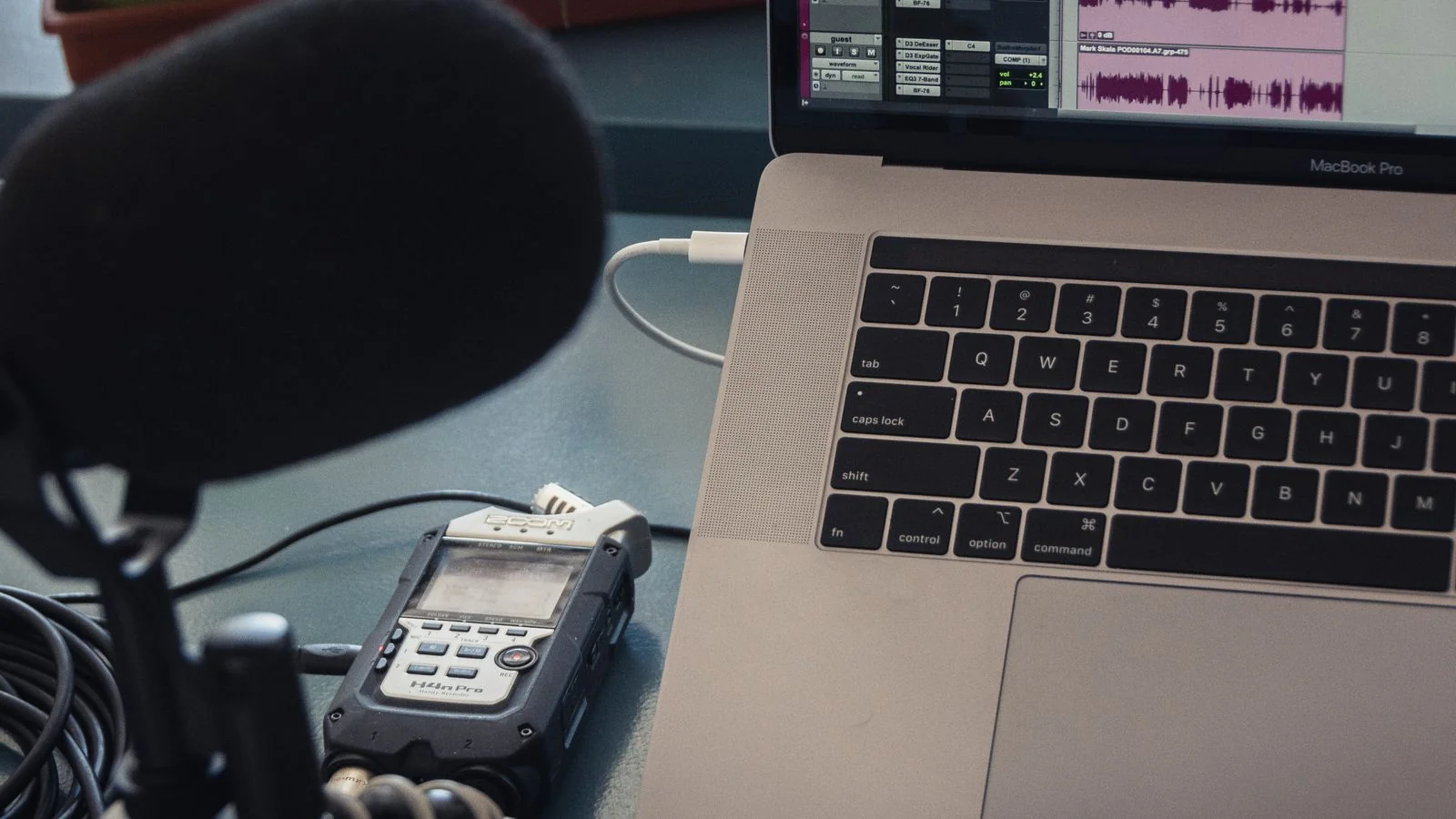
If you run a podcast, or appear on others, the announcement is a natural talking point. Even a five-minute segment where you explain the backstory of the news, the decision behind it, the obstacle you overcame, gives the announcement a depth the release could never carry.
Audio also reaches people during commutes and workouts, moments where they will never read a press release. Repurposing into audio is not about repeating the news. It is about telling the story behind the news to an audience that consumes differently.
Piece seven and eight: the FAQ and the sales enablement doc
Every announcement raises questions. Turn the predictable ones into an FAQ on your site. This does double duty: it answers real reader questions, and it feeds the AI search engines that increasingly pull direct question-and-answer pairs into their responses. A clear FAQ built from your announcement is some of the most citable content you can publish.
Then hand your sales team a one-page version framed for prospects. What changed, why it matters to a buyer, and how to bring it up on a call. Your announcement is not just PR. It is a reason for sales to re-engage every open opportunity.
Piece nine and ten: the pitch angle and the roundup contribution
The release contained a news hook. Reshape that hook into a fresh pitch angle for journalists who cover your space but did not run the original. Not the release again, a new angle on it, tied to a broader trend. Reporters ignore announcements but respond to trends their readers care about.
Finally, use the announcement as your entry into industry roundups and expert-source queries. When a journalist asks for comment on your category, your recent news makes you a timely, relevant source. The announcement becomes the credential that gets you quoted somewhere new.
How to schedule the ten pieces across a month
Producing ten assets is only half the work. Firing them all on the same day wastes them. The announcement that ran on the wire on Monday should still be surfacing in a new form three weeks later, because most of your audience missed it the first time and the ones who saw it have forgotten. Spacing the pieces out turns a one-day event into a month-long presence with almost no extra production cost.
A simple cadence works. Lead with the blog post and the wire release on day one, when the news is freshest. Roll out the data graphic and the social thread over the next few days while the topic still feels current. Save the video, the podcast segment, and the case study for the second and third weeks, when a fresh angle keeps the announcement alive without repeating yourself. Hold the journalist pitch and the roundup contribution for whenever the news cycle gives you a relevant opening, which might be weeks later. Each surface reaches a different slice of your audience at a different moment, and the announcement compounds instead of spiking and dying.
The mistake to avoid is treating repurposing as a checklist to clear in an afternoon. The value is in the spacing. An announcement that reappears in a new format every few days trains your audience to see momentum, and momentum is what makes a brand feel bigger than it is. Map the ten pieces onto a calendar the moment the release is approved, assign each a date, and let the campaign breathe across the whole month.
Ten pieces, one release. The framework I hand clients is the single-source-ten-surfaces model: one announcement, engineered on purpose to appear on ten different surfaces where ten different audiences live. The press release was never meant to be the whole campaign. It was meant to be the seed. Plant it ten times.