What does a buyer do in the seven months between deciding they want a new-construction home and walking into your model? They are not sitting still. They are on YouTube watching framing walkthroughs from builders three states away, on Reddit reading horror stories about change orders, on Google typing “cost to build a house in” plus your county, and increasingly asking ChatGPT which builders in the area have a reputation for finishing on time. By the time they visit your model, they have consumed dozens of hours of content and formed opinions about builders they have never met. If none of that content came from you, you are starting the conversation from behind.
The Census Bureau counted about 680,000 new single-family homes sold in the United States in 2024. Every one of those buyers went through some version of that research window. Content marketing for home builders is the work of being present during it, with answers to the questions buyers are asking, at the stage they are asking them. The floor plan PDF and the gallery of finished kitchens do not do that job. They arrive too late in the process and say too little.
Map the buyer’s questions to the build

A new-construction purchase moves through a predictable sequence, and each step produces a predictable question. I call the full sequence the Lot-to-Keys Arc, and it has seven stages: Dreaming, Budgeting, Land, Design, Contract, Build, and Move-in. A buyer in the Dreaming stage wants to know whether building is even realistic for them. A buyer in Budgeting wants the real number. A buyer in Land wants to know what makes a lot buildable. A buyer in Design wants to know what “standard” means. A buyer in Contract wants to know what can go wrong. A buyer in Build wants to know what is happening behind the fence. A buyer at Move-in wants to know what the warranty covers.
Most builder content clusters at Dreaming (lifestyle photography) and Design (floor plans and finishes), and ignores the five stages where the buyer is nervous and searching. Those five stages are where trust is won. The rest of this piece walks each stage with the content that belongs there.
Answer the cost question before anyone else in your market does
The single most-searched question about building a home is what it costs, and the single most common builder response is to hide the number behind a “contact us for pricing” form. Buyers read that as either arrogance or a bad number. Meanwhile, the first builder in your market to publish an honest piece titled with your county and the phrase “cost to build a house” collects the search traffic for years.
Write it the way a buyer would want it explained by a friend in the business. Give a starting price per square foot for your base plans and an all-in range that includes the items buyers forget: lot prep, utilities, impact fees, driveway, landscaping, and the upgrade allowance a typical buyer ends up spending. Say which items vary most and why. Update the piece twice a year with a dated note at the top. A builder who publishes “our 2,400 square foot plan starts at this number and most buyers close between these two numbers” has said more useful things in one paragraph than most builder websites say in total.
Make the lot question answerable
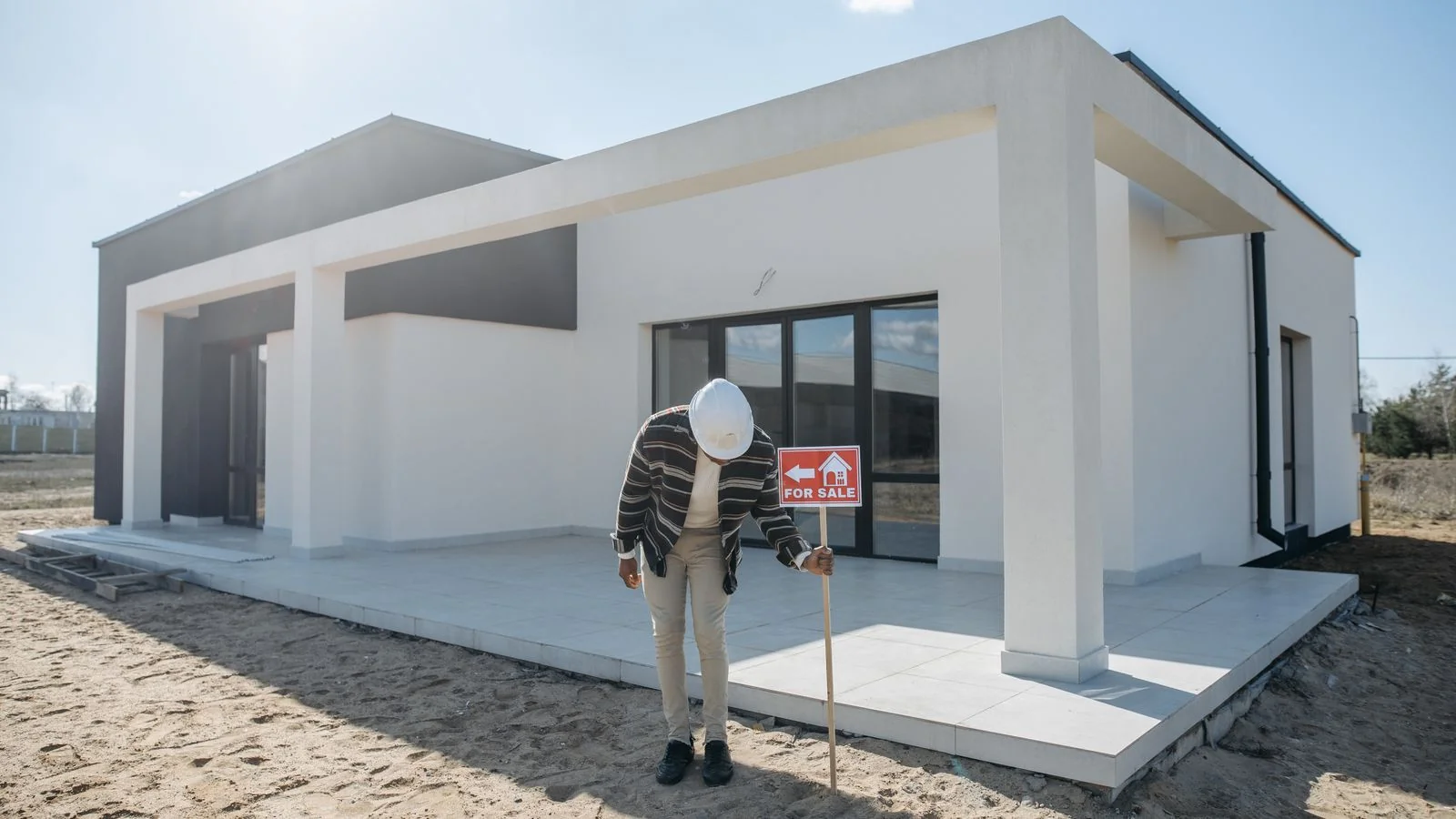
The Land stage is the one buyers understand least and builders explain worst. A buyer who has found a three-acre parcel on a listing site has no idea whether it can hold a house, what a perc test is, why the septic design costs what it does, or what “utilities to the lot line” means in dollars. Builders who work on scattered lots answer these questions by phone dozens of times a month and publish none of the answers, which means the buyer’s education comes from a real estate agent who may know less than the buyer.
Write the lot piece for your market. What makes a parcel buildable in your county: setbacks, well and septic requirements, flood zone status, access, slope, tree removal. What each of those costs when it goes wrong, using ranges from your own site work. What the buyer should ask before they close on land, and what you will check for them if they bring you a listing before they buy. A builder who publishes “bring us the listing before you make an offer and we will tell you what it will cost to build there” has turned a piece of content into a lead source, and the buyers who take the offer arrive committed before the first design meeting.
For builders working in their own communities rather than on scattered lots, the same section explains lot premiums: why the corner lot with the pond view costs more, what a walkout basement lot adds, and how the premium is set. Buyers assume lot premiums are arbitrary. A paragraph showing the logic removes a negotiation that would otherwise happen at contract.
Show the build, not just the finished house
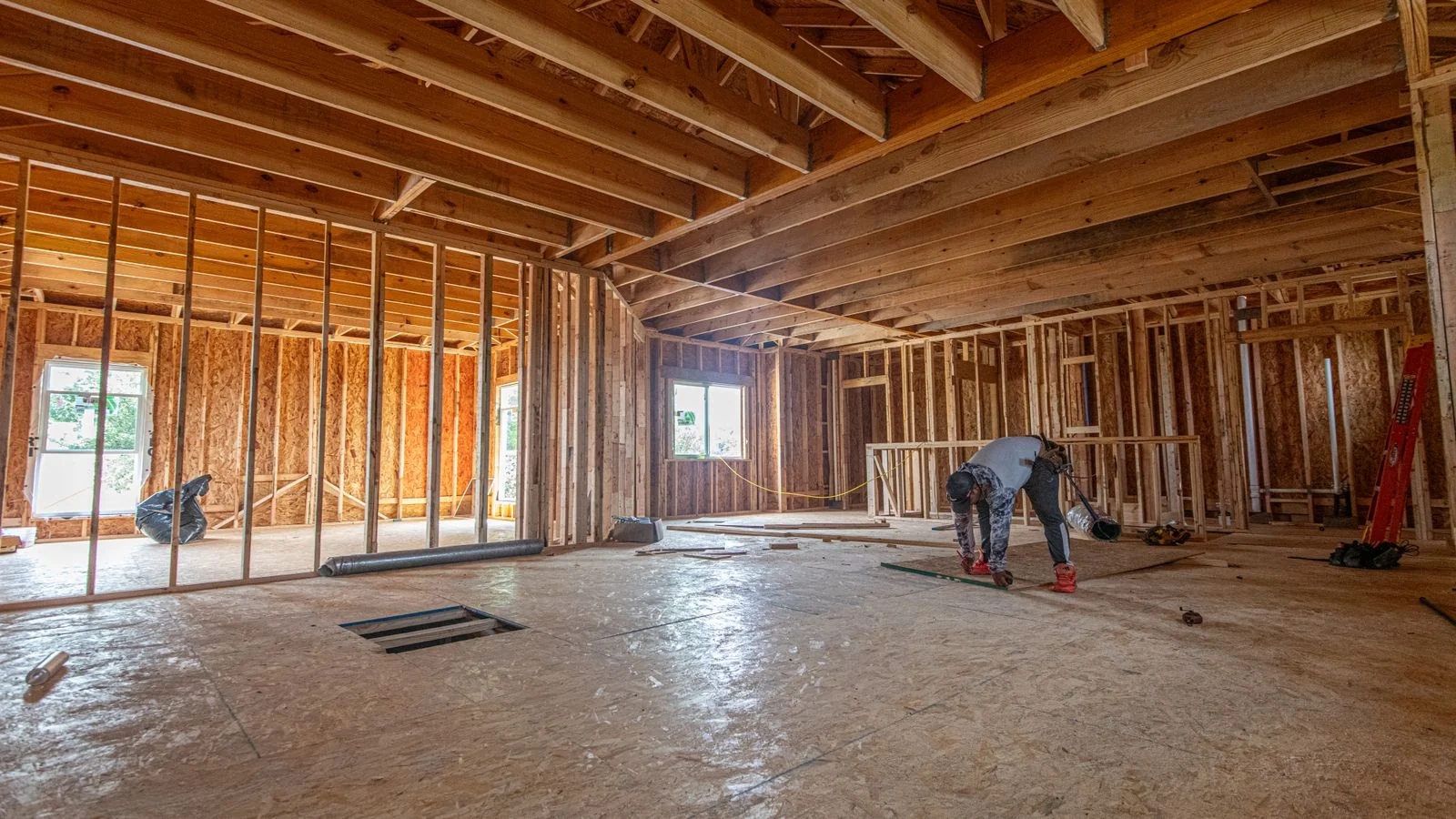
The Build stage is where content marketing for home builders has its biggest advantage over resale, and where most builders publish nothing. A buyer under contract is anxious for six to nine months, watching a fence and a pile of lumber, and every week without an update lets doubt grow. A buyer not yet under contract, meanwhile, has never seen the inside of a wall and wants to know what “quality construction” means in wood and wire.
Both get the same content: a short walkthrough, shot on a phone by the superintendent, at each major stage. Foundation, framing, rough mechanicals, insulation, drywall, finishes. Three minutes each. The super narrates what is being done and why, points out the things buyers cannot see later (the flashing detail, the sealed penetrations, the engineered lumber), and says what happens next. Publish them on YouTube with the stage and the city in the title, then embed them in a “how we build” page ordered by stage. Buyers watch these on repeat. So do the AI systems that now index YouTube transcripts when someone asks what a builder’s process is like.
Explain standard versus upgrade in writing
Ask a builder’s sales counselor what the most common source of buyer anger is and you will hear the same answer: the model home showed things that were not standard. The buyer fell in love with the quartz island, learned at the design center that it is a fourteen-thousand-dollar upgrade, and now distrusts everything. A piece that explains, in advance and in plain language, what is included at base price and what the model has that costs extra, prevents that anger and pre-qualifies buyers who cannot afford the upgrades.
This piece also does something more valuable: it signals honesty at the moment buyers are looking for signs of it. Every builder claims transparency. The one that publishes its included-features list with photos and its top twenty upgrades with price ranges is the one that proved it.
Write the change-order piece your competitors are afraid of
Buyers arrive at Contract stage having read stories about builds that ran forty thousand dollars over budget. They are looking for a builder who will tell them how that happens and how it is prevented. Write that piece. Explain what a change order is, the three or four situations that produce most of them in your builds (site conditions after excavation, buyer-requested design changes after framing, material substitutions when a product is discontinued), how each is priced, and what your process is for approving them. Include your policy on cutoff dates for selections.
A builder willing to explain change orders in public reads as a builder who has nothing to hide about them. That is worth more than any testimonial.
Put the superintendent and the design consultant on camera
Home builder websites feature the houses and hide the people, which is backwards, because buyers are choosing who to trust with the largest purchase of their lives for the better part of a year. Your superintendent and your design consultant are the people the buyer will talk to most. Introduce them. A short profile of each, a couple of the walkthrough videos described above with their face in the frame, and a line about how many homes they have delivered turns an anonymous company into a team the buyer can picture working with.
This is also where AI visibility gets built. When a buyer asks an assistant about builders in your area, the model draws on named people quoted in local press, reviews that mention staff by name, and content that shows a real team. A builder with visible people has a footprint. A builder with only renderings does not.
Turn every closing into two pieces of content
Move-in is the stage builders forget the moment the keys are handed over, and it is the cheapest source of content marketing for home builders there is. Each closing produces two pieces. The first is a short review request with a specific prompt: ask the buyer to mention one thing about the build process that surprised them, and route the review to your Google Business Profile so they compound. The second is a walkthrough of the finished home, ideally with the buyer present, that closes the loop on the framing-stage video from months earlier. A buyer at Dreaming stage who watches a home go from foundation to family in a series of six videos has seen the whole arc, and that is the story that sells the next contract.
The warranty page that reads like a promise
The last stage is the one buyers worry about after they have paid: what happens when something breaks. Most builder warranty pages are a PDF of legal terms. Rewrite yours as a plain explanation of what is covered in year one, year two, and the structural period, how to submit a claim, how fast you respond, and what is not covered and why. Add a short list of the most common warranty items and how you handle each. A buyer who reads a warranty page that sounds like a promise from a person, not a limitation from a lawyer, is a buyer who sends their friends.
Consider a regional builder in a mid-size Sun Belt market that publishes, every Friday, one three-minute superintendent walkthrough and one written answer to a question its sales counselors heard that week. Within a year it has fifty videos covering every stage of the arc, a cost page that ranks for its county, and a warranty page buyers screenshot and send to their parents. Its competitors still have a gallery of kitchens and a contact form. The buyers who spent seven months researching know exactly which one they trust.