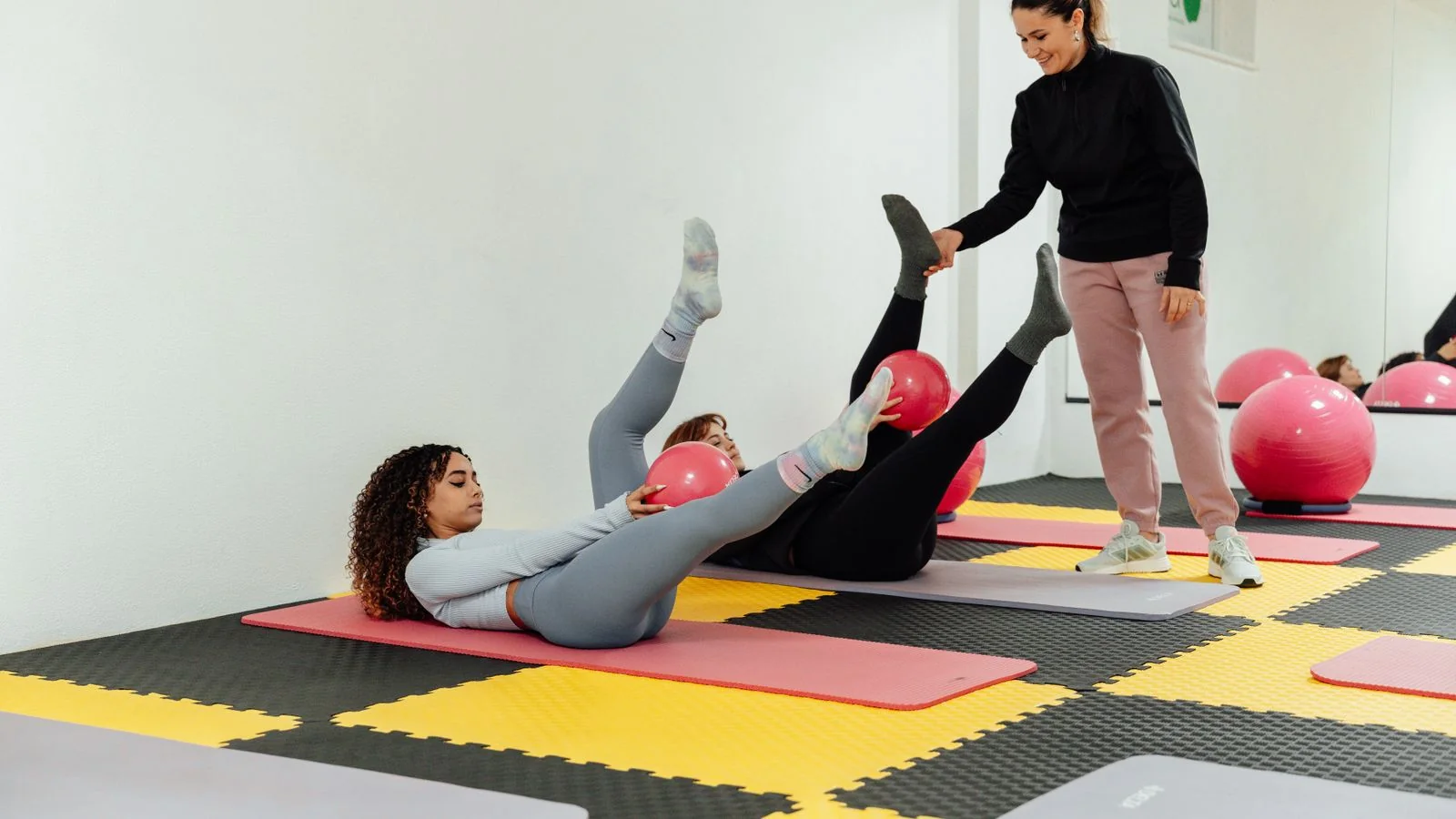
You have just finished the build out. Six new reformers, a tower, fresh flooring, and a space that finally looks the way it looked in your head three years ago. Someone suggests a press release, so you write one, and the headline says your studio has opened a beautiful new space in the neighbourhood.
Nothing happens. Not one reply.
The reason is not the writing. It is that you wrote an announcement, and announcements are not news. Here is the test that catches this before you waste a morning, and it takes about ten seconds. Read your second paragraph. If it is still about you, your studio, your equipment, or your opening, you do not have a story. Call it the Second Paragraph Test, and apply it before you send anything to anybody.
News has a subject that exists outside your business. Your studio is how a reporter gets at that subject locally. Get that order right and a press release for pilates studios starts working. Get it backwards and no amount of polish will save it.
Kill the announcement instinct first
Almost everything studio owners want to announce fails the test, and it is worth naming them so you stop writing them.
A new location. A new instructor. A refurbishment. An anniversary. A new class on the timetable. A new piece of apparatus. A rebrand. A milestone number of classes taught. Each of these is genuinely important to you and genuinely irrelevant to a reader who has never walked past your door, and the assignment editor knows that before the end of your first sentence.
The instinct behind them is understandable. Something happened, so it must be news. But a newsroom is not a noticeboard, and the only question being asked on the other end is whether a reader who does not know you will care.
There is one thing on that list that can become news, which is the closure or opening of a business in a district a reporter is already writing about. Even then the story is the district, not you, and you will be one paragraph in a piece about commercial rents or a changing high street. Take the paragraph. It is worth more than a release nobody ran.
Find the news peg hiding in your studio
Six angles clear the bar for a Pilates studio. Each one has a subject that is not you.
The first is a population nobody is serving. A programme built for post surgical clients, or for people with osteoporosis, or for pregnant and post partum clients in a town where the nearest equivalent is an hour away, is a health access story. The subject is the gap. You are the local answer to it.
The second is a partnership with a clinical referrer. A formal arrangement with an orthopaedic practice, a physical therapy clinic, or a cancer rehabilitation service is genuinely newsworthy, because it says something about how care is moving out of clinical settings. Get the partner’s press agreement first and pitch it jointly, which roughly doubles the chance it runs.
The third is original local data. You have an appointment book and nobody else has counted it. What proportion of your clients arrive on a practitioner referral, and how that changed. The age distribution of new clients, which in Pilates has usually shifted more than owners realise. How many started within a year of a surgery. Count carefully, say how many records it covers, and say what you cannot conclude.
The fourth is a free community programme with real numbers behind it. Classes for a group that cannot otherwise access them, run for long enough to report on, with attendance figures and an honest account of what worked.
The fifth is a person. An instructor who completed a demanding specialist certification that almost nobody locally holds, a client whose recovery is genuinely remarkable and who has given written consent, or an owner who changed careers in a way that connects to a broader story.
The sixth is a position on something contested in your industry. The gap between a weekend apparatus workshop and comprehensive training. Whether unregulated instruction is safe for post surgical clients. Whether the boutique equipment boom is producing instructors faster than it is producing competence. Contrarian positions get covered because they create two sides.
Write the headline before you write anything else
If you cannot write the headline, you do not have the story yet, and writing four hundred words will not produce one.
A working headline states what happened and why it matters, in under about twelve words, with no adjectives. Compare two versions of the same event. “Riverside Pilates Launches Exciting New Post Natal Programme” tells a reporter nothing and signals a marketing document. “Riverside Pilates opens county’s only post surgical Pilates programme after physio referrals rose” tells them the subject, the scope, and the peg.
Put your number in the headline if you have one. Numbers are what make an editor read the second line.
Then write the lead paragraph so that it contains the entire story. Assume it is the only sentence anyone reads, because frequently it is. Who, what, where, when, and the reason it matters, in one or two sentences, without warming up.
Use this structure, and steal the sample below
The format is settled and deviating from it only costs you. One page. Four hundred words maximum. Headline, dateline, lead, two or three supporting paragraphs in descending order of importance, one quote that says something, a short boilerplate, and contact details that reach a human on the first try.
The quote is where most releases die. A quote saying you are thrilled and excited to serve the community is filler and every reporter skips it. A usable quote contains information, an opinion, or a number, and sounds like a person talking. Give the reporter something they would want to print.
Here is a sample that passes the Second Paragraph Test.
FOR IMMEDIATE RELEASE
Physio referrals push Riverside Pilates to open county’s first post surgical programme
RIVERSIDE, [State], [Date]. Riverside Pilates will begin the county’s first structured post surgical Pilates programme on 14 October, after referrals from local physical therapy clinics rose from 9 clients in 2024 to 71 in the first nine months of 2026.
The eight week programme is limited to six clients per session and requires written clearance from the referring clinician. It is taught by Maria Okonjo, who holds comprehensive certification and a post rehabilitation specialisation, and was built with input from two orthopaedic practices in the county.
Clients finishing a course of physical therapy often lose access to supervised movement at exactly the point when consistency matters, and the gap between discharge and independent exercise is where many people stall or reinjure themselves.
“We kept getting the same call from physios, which was that their patients were being discharged into nothing,” said Maria Okonjo, lead instructor at Riverside Pilates. “Six people to an instructor, with clearance on file, is what it takes to do this responsibly. It is not a class you can run with twenty.”
Riverside Pilates is a fully equipped studio in Riverside, [State], operating since 2019 with four comprehensively certified instructors.
Contact: [Name], [mobile], [email]
Notice the second paragraph. It is about the programme’s structure and the clinical safeguard, not about how proud the studio is.
Send it to a person, not a wire
A press release sent to a distribution list is a press release sent to nobody.
Identify the specific reporters who cover health, local business, and lifestyle at your metro daily, your city magazine, your alt weekly, and the two largest broadcast newsrooms nearby. Read three of their recent pieces before you write. Send to one named person at a time, from your own email address, with the headline as the subject line and the release pasted into the body rather than attached, because attachments get filtered and nobody opens a PDF from a stranger.
Add two sentences above the release explaining why you are sending it to that particular reporter, referencing the specific piece of theirs your story extends. Keep it to six words of reference, not a paragraph of flattery.
Then stop. One follow up after five working days, never two.
Consider the wire separately. Paid distribution buys you a consistent, syndicated, citable record of what your studio is and does, which has become more useful as AI assistants lean on published sources when deciding whether a business is real. It does not buy you a reporter’s attention. Knowing which of those two you are purchasing is the whole decision.
Know when a press release is the wrong tool
Most of the time, it is.
If your news is genuinely local and modest, a three sentence email to one reporter outperforms a formatted release. If your story needs a person to be interviewed, offer the interview rather than the document. If your angle is a position on an industry problem, write it under your own name and pitch it as a contributed piece, which is often easier to place than coverage. If what you actually want is a searchable citation, buy the wire and skip the pitch.
Reserve the formatted release for when you have a dated, concrete, verifiable event with a peg that exists outside your business. That is two or three times a year for a healthy studio, and pretending otherwise is how owners train reporters to ignore them.
That last point is the one owners underrate. A reporter who has opened four of your releases and found nothing usable will not open the fifth, and the fifth is the one that mattered. Every non story you send spends credit you will want later. Treat your name in their inbox as an asset with a balance.
There is also a consent question specific to this category, and it deserves a hard line. Pilates stories are often strongest when a client is willing to describe a recovery, which means you are handling someone’s health information. Get written consent that names the outlet, states what will be shared, and says the client can withdraw at any point before publication. Never supply a client’s condition to a reporter before that consent exists, never treat a testimonial on your website as consent for press, and accept it gracefully when someone changes their mind at the last minute. Studios that get this wrong lose far more than a placement.
The short version. Apply the Second Paragraph Test before anything else. Pick a peg that is not you, from the six above. Write the headline first, with a number in it. Keep it to one page with one quote worth printing. Send it to one named reporter you have actually read. And when it is not really news, send the three sentence email instead.